ESP32-P4 Home Assistant MQTT Voice Assistant
This project provides local voice assistant firmware for the ESP32-P4 platform, built natively on ESP-IDF and integrated with Home Assistant's Assist pipeline. It utilizes WakeNet9 for wake-word detection, MQTT for control and discovery, and features a local MP3 player and web-based management dashboard.
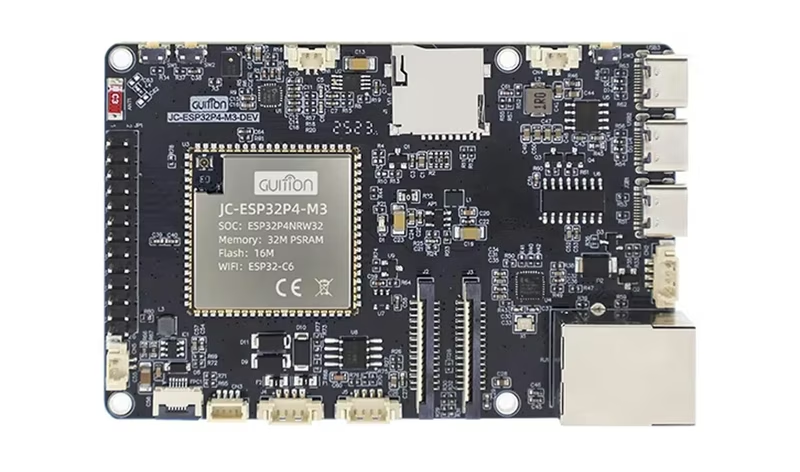
The ESP32-P4 Home Assistant MQTT Voice Assistant is a high-performance, local voice firmware designed for the Home Assistant ecosystem. Built natively on ESP-IDF v5.5, it targets the JC-ESP32P4-M3-DEV development board, leveraging the powerful ESP32-P4 microcontroller alongside an ESP32-C6 coprocessor to handle Wi-Fi and Bluetooth connectivity via SDIO. Unlike cloud-dependent assistants, this project focuses on privacy and speed by processing wake words and voice activity detection (VAD) locally before communicating with Home Assistant.
Local Intelligence with WakeNet9
At the heart of the system is the ESP-SR (Speech Recognition) framework. The firmware uses the WakeNet9 model wn9_heykira_tts3 to listen for the “Hey Kira” wake word. Users can adjust the detection threshold at runtime via MQTT or the web dashboard, ranging from 0.50 to 0.95, allowing for fine-tuning based on the acoustic environment. Once triggered, the device provides immediate feedback through a short beep and a visual state change on its RGB LED indicator.
Home Assistant Integration
The integration with Home Assistant is deep and multifaceted. It connects to the Assist pipeline over WebSockets, streaming audio for Speech-to-Text (STT) and receiving intent responses and Text-to-Speech (TTS) audio in return. To ensure the device remains manageable, it employs MQTT Home Assistant Discovery, automatically creating sensors, switches, and number entities within the HA dashboard. These entities allow users to monitor system health (IP address, free memory, uptime) and control hardware parameters like output volume, LED brightness, and Automatic Gain Control (AGC) targets.
Versatile Hardware Support
The project is optimized for the JC-ESP32P4-M3-DEV board, which features an ES8311 audio codec for high-quality microphone input and speaker output. The architecture supports both Ethernet and Wi-Fi, with a priority-based switching system. Notably, when the system falls back to Wi-Fi, it automatically unmounts the SD card to resolve SDIO pin conflicts between the ESP-Hosted Wi-Fi driver and the local file system.
Beyond basic voice interaction, the firmware includes several advanced features:
- Local Timer Fallback: If Home Assistant fails to parse a timer intent, the firmware can locally extract durations from Croatian keywords to set internal timers.
- MP3 Playback: A local MP3 player can stream music from an SD card using the Helix decoder, pausing the voice pipeline during playback to avoid resource conflicts.
- Web Dashboard: A built-in web server provides a real-time management interface and WebSerial logging for debugging without a physical USB connection.
Visual Feedback and Diagnostics
Status is communicated through a multi-color RGB LED (HW-478) and an optional SSD1306 OLED display. The LED uses specific patterns—such as pulsing blue for listening and fast-blinking red for errors—to keep the user informed of the assistant’s state. For developers and power users, the system includes a “Safe Mode” to protect against boot loops, a watchdog timer, and detailed reset diagnostics available via MQTT.
Getting Started
The firmware is built using the standard ESP-IDF toolchain. Configuration is managed via a main/config.h file (modeled after a provided example) where users define their Wi-Fi, MQTT, and Home Assistant credentials. Updates can be pushed over-the-air (OTA) using a local HTTP server or directly via the Home Assistant interface, making it easy to maintain the device once it is deployed in a smart home environment.
Related Projects
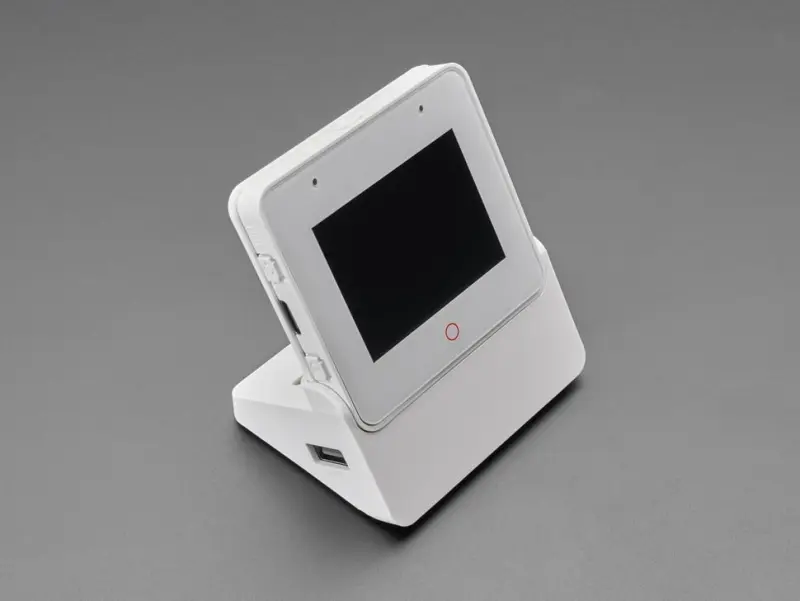
XiaoClaw: AI Voice Assistant with Local Agent Brain
XiaoClaw is an integrated firmware for the ESP32-S3 that combines voice interaction with a local AI agent. It utilizes the ESP-IDF framework and FreeRTOS to provide a complete system for voice I/O, LLM-powered reasoning, tool calling, and autonomous task execution.
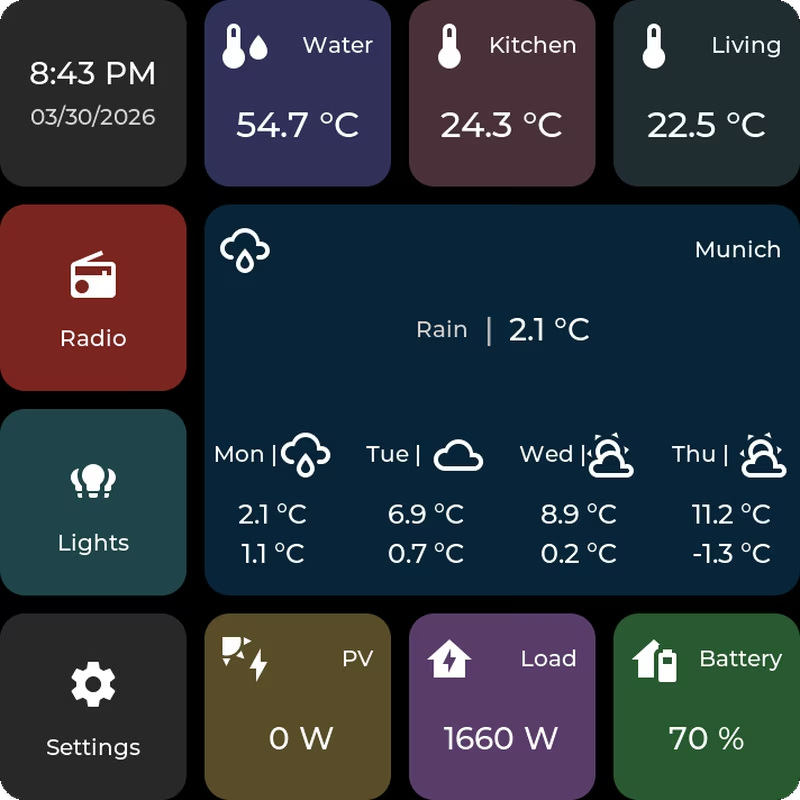
ESP32-P4 Home Assistant Display
A tile-based firmware for ESP32-P4 devices that creates a touch-first Home Assistant dashboard. It utilizes FreeRTOS and LVGL for the user interface, supporting MQTT integration and web-based configuration. The system targets ESP32-P4 hardware like the Waveshare B4 and M5Stack Tab5, featuring OTA updates and internal storage management via LittleFS.
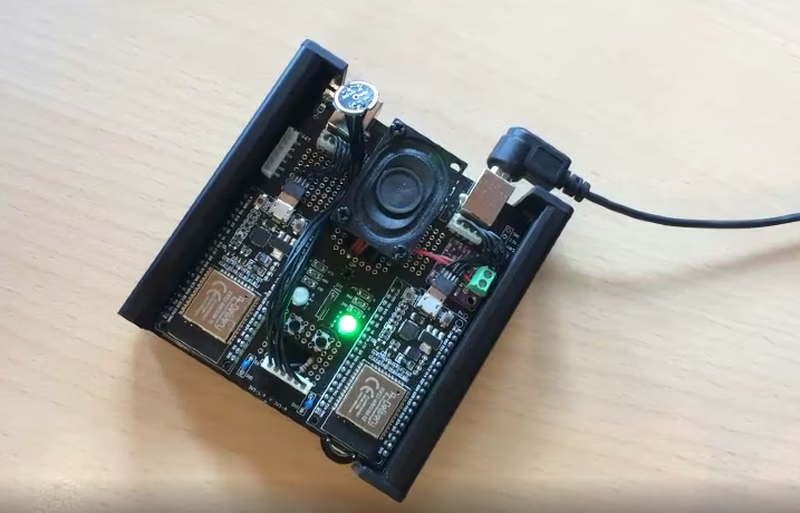
KALO ESP32 Voice Assistant
An ESP32-based voice assistant that integrates I2S audio recording, Deepgram speech-to-text, and multiple text-to-speech engines like OpenAI and Google TTS. It utilizes the latest ESP-IDF I2S drivers to handle digital microphones and amplifiers while managing audio storage on a microSD card.
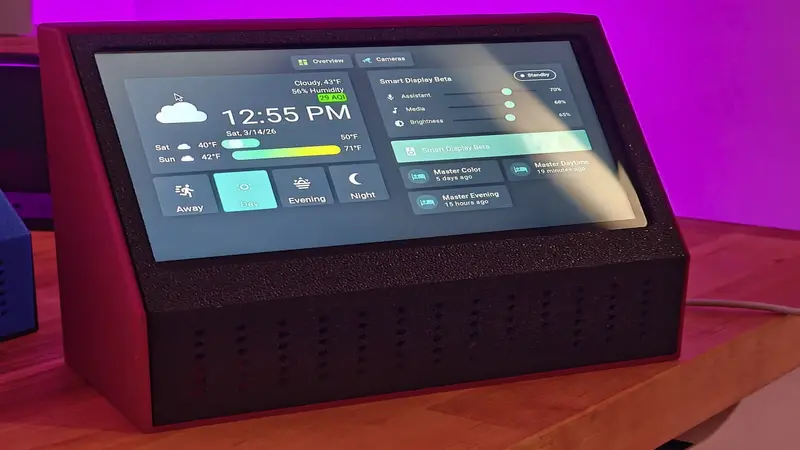
TuneoutDisplay
A countertop smart display project for Raspberry Pi 4B that integrates Home Assistant, voice assistant functionality, and high-quality audio playback. It features wake word detection via OpenWakeWord, MQTT auto-discovery for device entities, and a custom touch-to-scroll daemon for Wayland-based kiosk interfaces.