SPIFFS
0.3.7Features
-
Designed for low RAM usage on small embedded targets without dynamic memory allocation (heap).
-
Uses statically sized RAM buffers that remain independent of the number of files present.
-
Provides a POSIX-like API including open, close, read, write, seek, and stat functions.
-
Compatible with any NOR flash, including SPI flash and internal microprocessor flash.
-
Supports multiple SPIFFS configurations running concurrently on the same target or flash device.
-
Implements static wear leveling to prolong the life of flash memory by distributing erase cycles.
-
Includes built-in file system consistency checks to ensure data integrity after power loss.
-
Highly configurable through compile-time defines to adjust page/block sizes and features.
-
Supports optional file metadata for storing additional information alongside files.
-
Features index memory mapping to improve file reading performance and determinism.
-
Includes a temporal cache system to speed up file opening operations by caching file descriptors.
-
Offers a read-only build configuration to minimize the library’s binary footprint.
-
Provides both quick (non-intrusive) and full-scale (intrusive) garbage collection mechanisms.
-
Supports a flat file structure without directory support to minimize metadata overhead.
-
Includes API functions for file system formatting and retrieving usage information.
-
Allows for file renaming and explicit error code clearing via SPIFFS_clearerr.
-
Supports singleton mode to optimize performance and RAM when only one instance is used.
-
Configurable garbage collection heuristics to tune wear-leveling behavior.
-
Provides a HAL layer requiring only three basic functions: read, write, and erase.
Architecture
SPIFFS operates on a logical abstraction layer over physical NOR flash memory. It divides the flash into logical blocks, which are further subdivided into logical pages. A logical page is the smallest unit of data storage and metadata tracking. The system is designed to be entirely heap-less, relying on user-provided static buffers for work areas, file descriptors, and optional caches. This design ensures deterministic memory usage, which is critical for small embedded systems.
The file system utilizes a flat structure where filenames can include slashes to simulate paths, but no actual directory hierarchy exists. This minimizes the metadata overhead required for navigation. The architecture includes a Hardware Abstraction Layer (HAL) that requires only three primitive operations from the user: read, write, and erase. Internally, SPIFFS manages an object index to track file locations and a garbage collector that reclaims space from deleted or modified files while maintaining wear leveling across the flash blocks.
Core Components
- HAL Interface: The bridge between SPIFFS and physical flash hardware, handling address-based read, write, and erase calls.
- Object Indexer: Manages file metadata, including names, sizes, and the mapping of logical pages to physical locations.
- Garbage Collector: Implements heuristics to select blocks for erasure, balancing free space reclamation with wear leveling.
- Cache Subsystem: Provides optional read/write caching and a temporal file descriptor cache to improve performance on frequently accessed files.
- Consistency Checker: A built-in tool to verify the integrity of the file system structure and repair common issues caused by unexpected power loss.
Use Cases
This library is ideal for:
- IoT Sensors: Storing periodic sensor readings on small SPI flash chips where RAM is extremely limited.
- Configuration Management: Saving and updating device settings, calibration data, and network credentials in non-volatile memory.
- Bootloaders: Utilizing the read-only mode to load firmware images from flash while maintaining a minimal binary footprint.
- Data Logging: Efficiently appending logs to files with wear leveling to prevent premature failure of specific flash sectors.
- Embedded Web Servers: Storing static assets like HTML, CSS, and JavaScript files for local device management dashboards.
- Resource Storage: Storing UI assets, fonts, or lookup tables for microcontrollers driving small displays.
Getting Started
To integrate SPIFFS into an embedded project, begin by copying the source files from the src/ directory and the spiffs_config.h template into your build system. You must define basic integer types (e.g., u32_t, s32_t) in the configuration header to match your architecture. The integration requires implementing three HAL functions for your specific flash hardware: read, write, and erase.
Once the HAL is ready, initialize a spiffs_config struct with the physical parameters of your flash (start address, total size, and block sizes) and provide the necessary static RAM buffers for the work area and file descriptors. Call SPIFFS_mount to initialize the system. If the flash is unformatted or contains invalid data, SPIFFS_format must be called before a successful mount can occur. For detailed configuration options and performance tuning, refer to the SPIFFS Wiki.
Related Projects (190)
View All 190 Projects →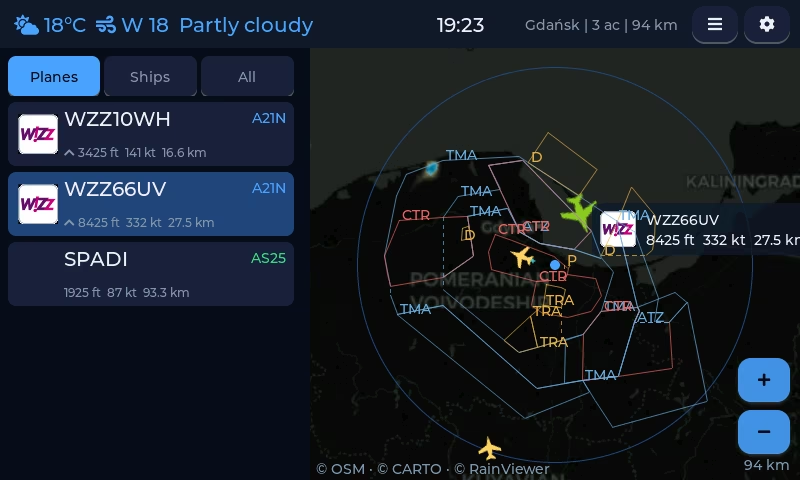
esp32flight
A standalone flight tracking dashboard for ESP32-S3 touchscreen devices that visualizes live ADS-B data, routes, and weather without requiring external servers or subscriptions. It utilizes the ESP-IDF framework, LVGL graphics library, and standard networking protocols to provide a rich, interactive aviation monitoring experience.
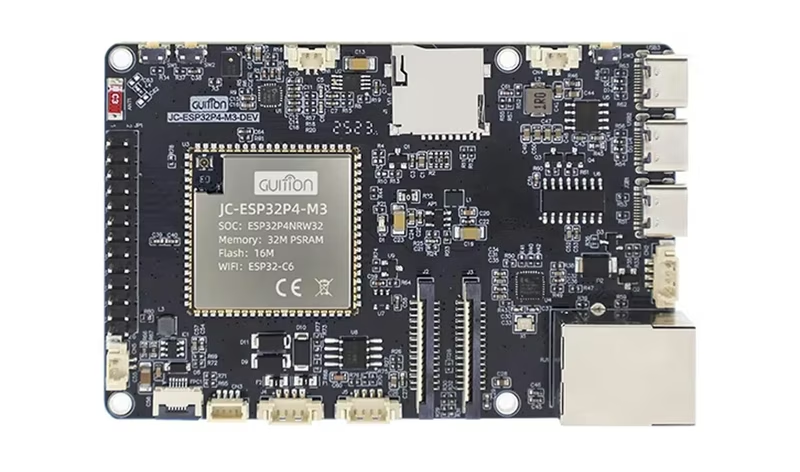
ESP32-P4 Home Assistant MQTT Voice Assistant
This project provides local voice assistant firmware for the ESP32-P4 platform, built natively on ESP-IDF and integrated with Home Assistant's Assist pipeline. It utilizes WakeNet9 for wake-word detection, MQTT for control and discovery, and features a local MP3 player and web-based management dashboard.
CYD Dashboard
A comprehensive multi-screen information dashboard for the ESP32-based 'Cheap Yellow Display' (CYD) featuring real-time amateur radio data, weather, and financial tracking. Built with a hybrid Arduino and ESP-IDF framework, it utilizes FreeRTOS for task management and LovyanGFX for high-performance rendering on 2.8-inch touchscreens.
IOnode
IOnode is a specialized firmware that transforms ESP32 microcontrollers into NATS-addressable hardware nodes, allowing GPIO, ADC, and I2C sensors to be reached over a network via simple request/reply messages. Built on the Arduino framework and FreeRTOS, it provides a 'no-SDK' approach to hardware control with features like fleet discovery, threshold events, and a built-in web UI.
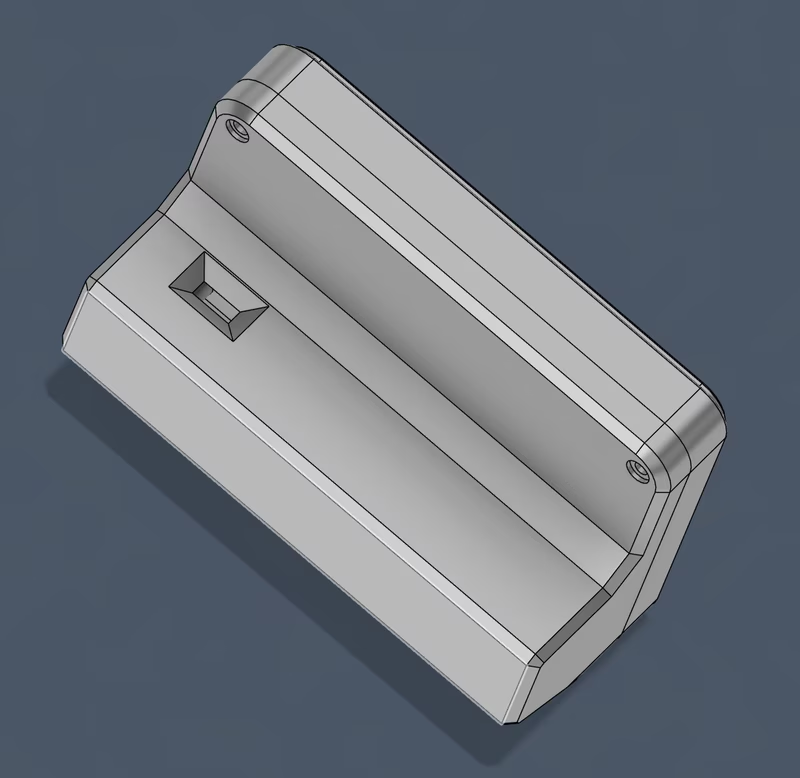
InkCast
InkCast is an ESP32-S3 firmware for a battery-powered e-paper weather station that balances high-density information with extreme power efficiency. Built using the Arduino framework on FreeRTOS, it features a web-based configuration portal and supports multiple weather providers to deliver a long-lasting, wall-mounted dashboard.
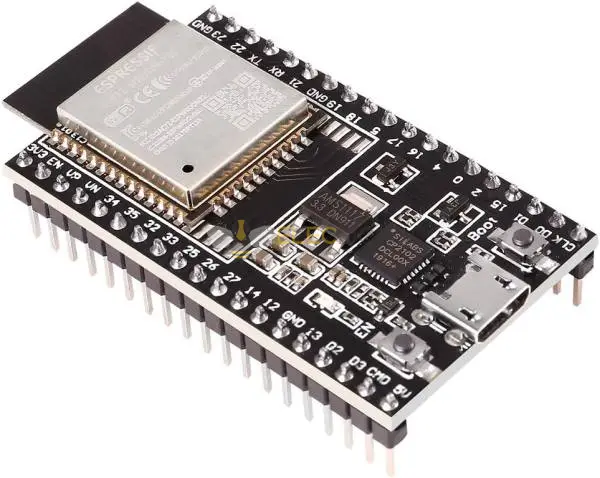
ESP32-PLC
ESP32-PLC is an open-source firmware project that transforms the ESP32 microcontroller into a functional Programmable Logic Controller (PLC) using ladder logic. Built on the Espressif IoT Development Framework (ESP-IDF) and FreeRTOS, it leverages the ladderlib library to execute industrial control programs and supports web-based logic editing and simulation.
Berbel BFB 6bT BLE Remote Control Emulator
An ESP32-powered emulator for the Berbel BFB 6bT remote control, designed to integrate Berbel kitchen hoods into smart home environments. It features real-time status decoding, MQTT auto-discovery for Home Assistant, and utilizes the NimBLE stack to optimize memory usage.
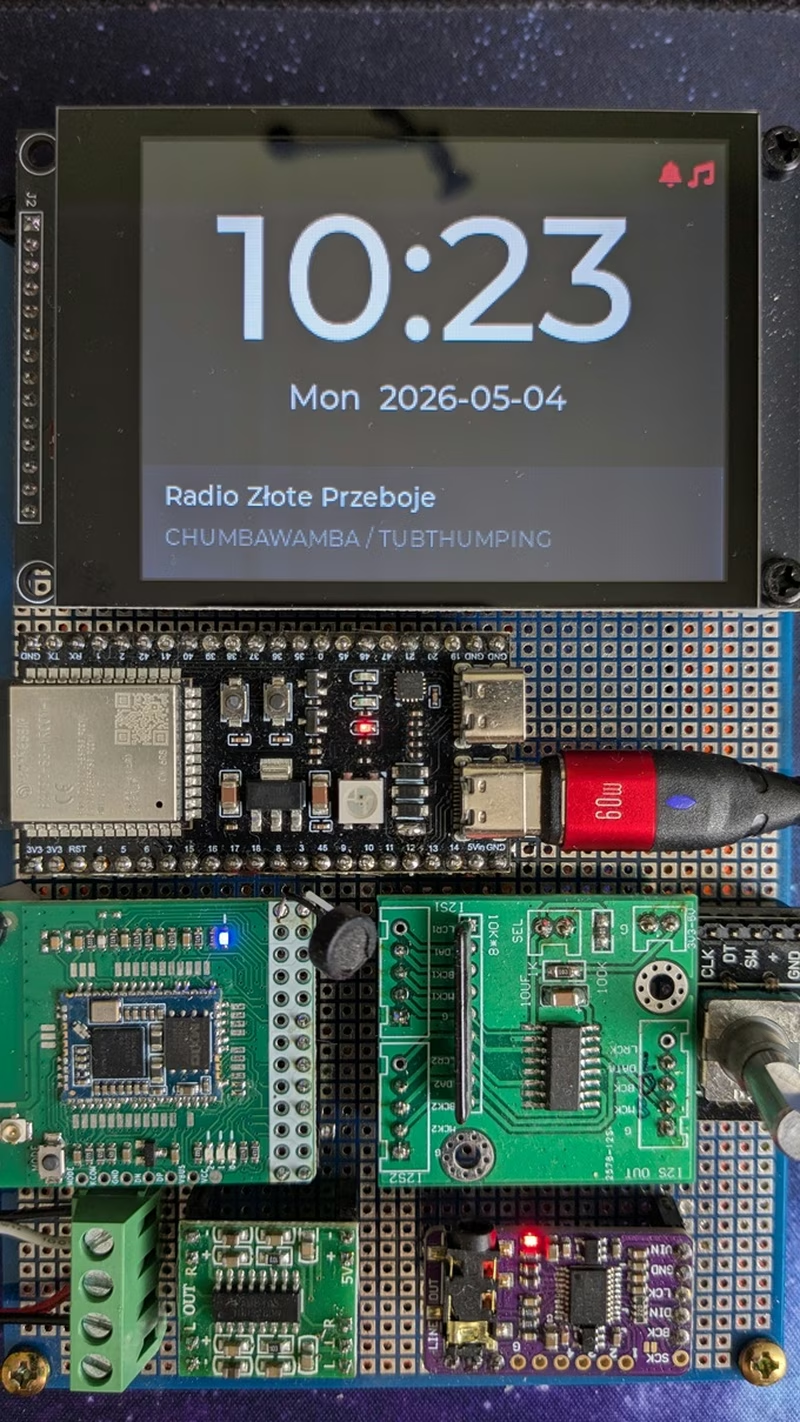
AtlasCube
AtlasCube is a feature-rich internet radio and smart clock firmware built for the ESP32-S3 using the ESP-ADF and LVGL libraries. It supports streaming various audio formats, Bluetooth A2DP/HFP via external modules, and local SD card playback, all managed through a comprehensive on-device GUI and a standalone web interface. The project is designed for independence from cloud services, offering local MQTT control, OTA updates, and a customizable event system.