Web3 Pi UPS
An open-source DC uninterruptible power supply designed specifically for the Raspberry Pi 5, featuring triple-input power paths and smart battery management. It utilizes a dual-MCU architecture with a CH32X035 for power delivery and an RP2040 for the user interface, while supporting remote monitoring via FreeRTOS and the lwIP stack.
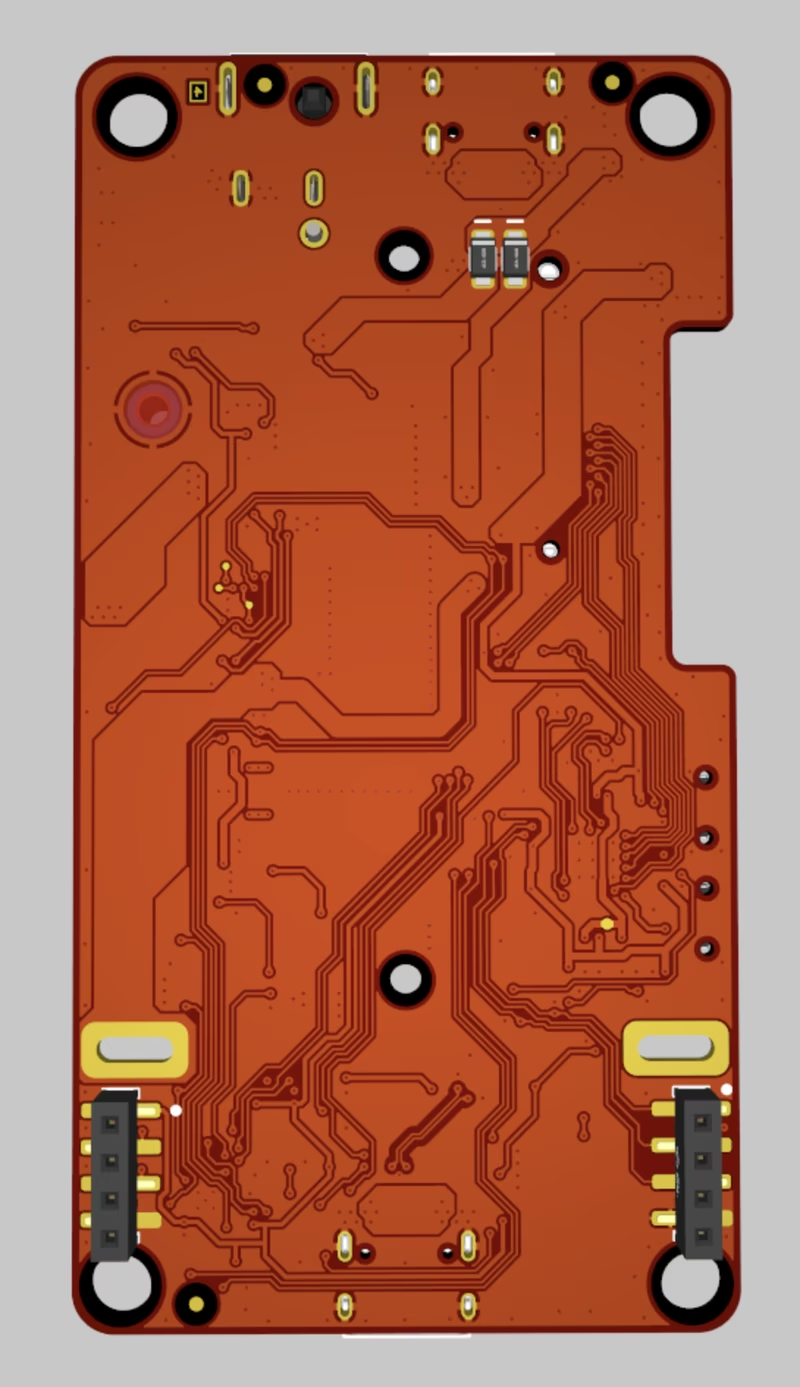
The Web3 Pi UPS is a purpose-built, compact DC UPS designed specifically for the Raspberry Pi 5. Born from the Web3 Pi project—a platform for running Ethereum nodes—it addresses a critical gap in the market. Running a blockchain node requires 24/7 uptime; power outages can corrupt databases and lead to financial penalties for solo stakers. This project provides a robust solution that actually fits the Raspberry Pi form factor.
Why a Specialized DC UPS?
Traditional UPS units are often oversized for small computers. They typically involve multiple energy-wasting conversions: converting mains AC to DC for battery charging, then inverting DC back to AC for output, only for the device’s power supply to convert it back to DC again. Furthermore, many HAT-style UPS boards stack via GPIO, which complicates mechanical assembly and enclosure compatibility.
The Web3 Pi UPS takes a streamlined approach. It sits between the charger and the Raspberry Pi, connected by a single USB-C cable. As a true DC UPS, power flows from input to battery to output without AC conversion, resulting in a compact, silent, and efficient device.
Versatile Power Sources
The system is designed to accept power from three independent sources, ensuring the output remains uninterrupted if any single source is active:
- USB-C PD input: Primary power from a 12-20V, 27W+ charger.
- DC barrel jack: An alternative 9-24V input for standard power supplies.
- Sony NP-F battery: Reliable backup power for when external sources fail.
Power switching is seamless and instant. When external power is lost, the battery takes over without any glitch in service. The choice of the Sony NP-F battery ecosystem allows users to leverage a globally available standard used widely in photography. These batteries are hot-swappable, allowing for continuous operation even during battery maintenance.
Integrated Communication and Telemetry
One of the unique features of the Web3 Pi UPS is its use of the Raspberry Pi 5’s USB-C data capabilities. A single cable carries both Power Delivery and a data channel. This link enables graceful shutdowns when the battery reaches critical levels, preventing filesystem corruption. It also provides real-time telemetry, including battery levels, charging status, voltage, and temperature.
For local monitoring, the UPS features a built-in UI panel consisting of an SSD1306 OLED display, two tactile buttons, and an onboard buzzer for audible alerts. This allows users to check system status without needing to SSH into the Pi.
Technical Architecture
The device is essentially a “Raspberry Pi for a Raspberry Pi,” as it uses a Raspberry Pi RP2040 microcontroller to manage the UI panel and system monitoring. The main power handling is managed by a CH32X035 RISC-V MCU, which features a built-in USB-PD 3.0 PHY for sophisticated power negotiation.
Electronics and Enclosure
The hardware is split into two primary assemblies:
- Main Board: A 4-layer PCB containing the USB-PD controller, an MP2762A charger for 2S Li-ion management, and a TPS55289 buck-boost converter capable of delivering up to 27W.
- UI Panel: A 2-layer PCB housing the RP2040, the OLED display, and control buttons.
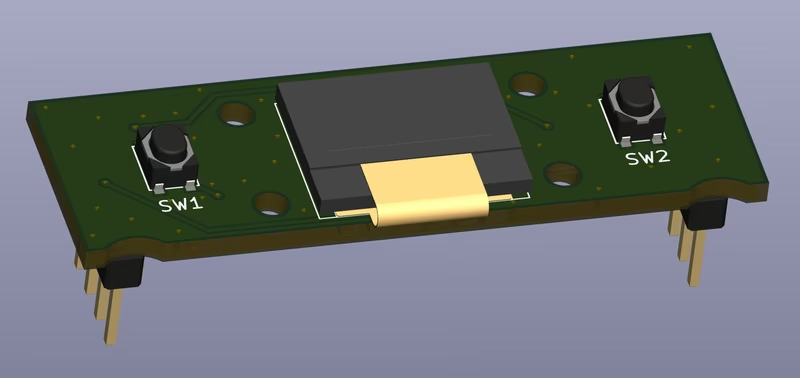
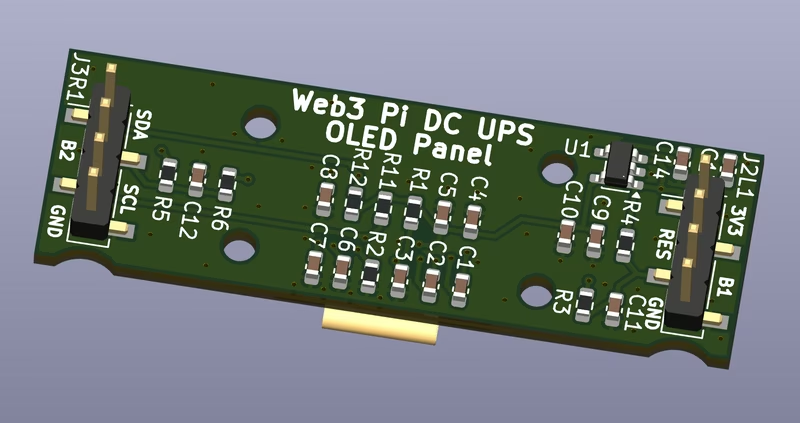
The system is housed in a multi-part 3D-printed enclosure designed for FDM printing, featuring a snap-fit battery latch and dedicated windows for the OLED display.
Firmware and Development
The repository contains multiple firmware components catering to the different processors on board. The RP2040 firmware is built using PlatformIO and the Arduino core, while the CH32X035 firmware utilizes the MounRiver Studio toolchain or riscv-none-embed-gcc. Additionally, for configurations involving cellular connectivity, the project includes an ESP32-S3 based firmware that leverages ESP-IDF, FreeRTOS, and the lwIP stack to handle secure MQTT communication and remote OTA updates.
Related Projects
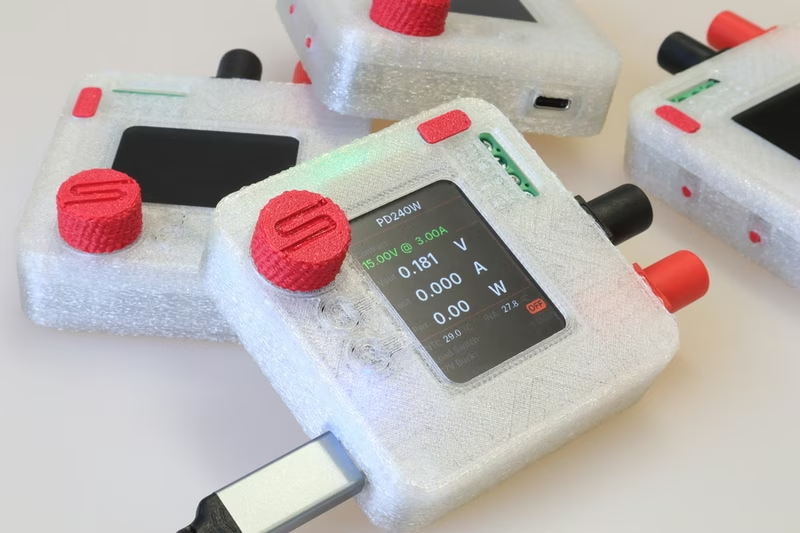
PD240W
PD240W is an adjustable power supply designed for motor drives, leveraging USB-C Power Delivery 3.1 to deliver up to 240W at 48V 5A. Built on the Raspberry Pi Pico (RP2040) platform, it features a custom C++17 firmware stack for high-voltage negotiation, hardware-level safety monitoring via the INA228 power monitor, and a rich LCD user interface.
Light Watcher
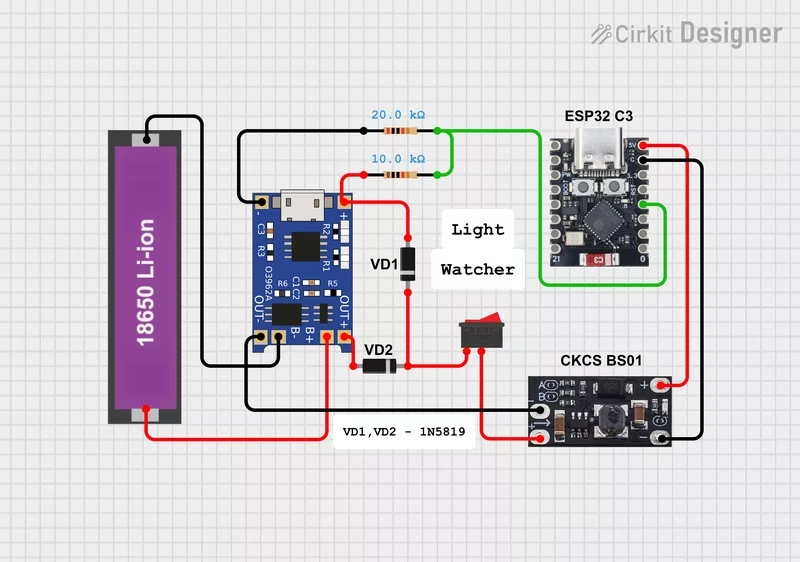
An ESP32-based IoT power monitoring system that tracks electricity outages and notifies users via a Telegram bot. The device features a battery backup system for seamless operation during blackouts and utilizes a captive portal for easy configuration of network and bot credentials.
USB PD Tester
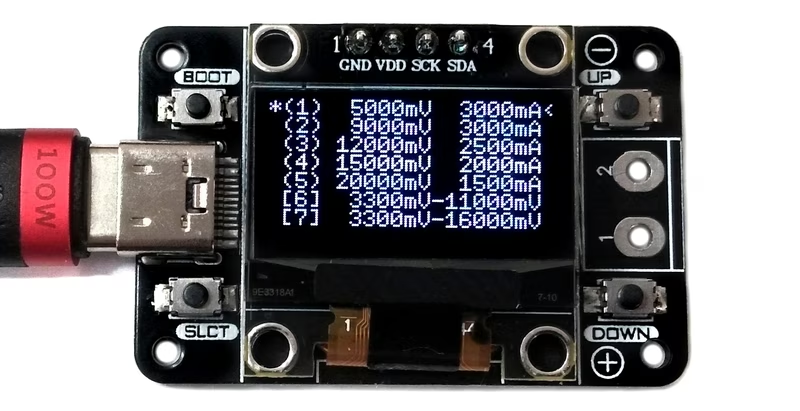
A monitoring and triggering device for USB Power Delivery built around the CH32X035 RISC-V microcontroller. It identifies power supply capabilities via PDOs, displays them on an OLED screen, and allows users to select specific voltages for output via a screw terminal. The project leverages the integrated USB PD PHY of the CH32X035 for a compact and low-cost hardware implementation.
USB PD Adapter
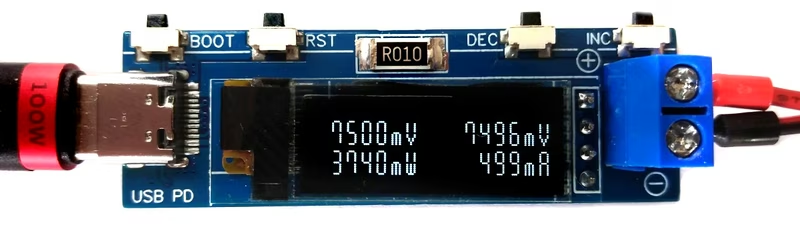
A compact variable power supply that utilizes the PPS feature of USB Type-C PD supplies to provide adjustable output voltages and currents. It is powered by the CH32X035 RISC-V microcontroller and includes an INA219 sensor for real-time power monitoring and an OLED display.
ESP32 Remote for Victron
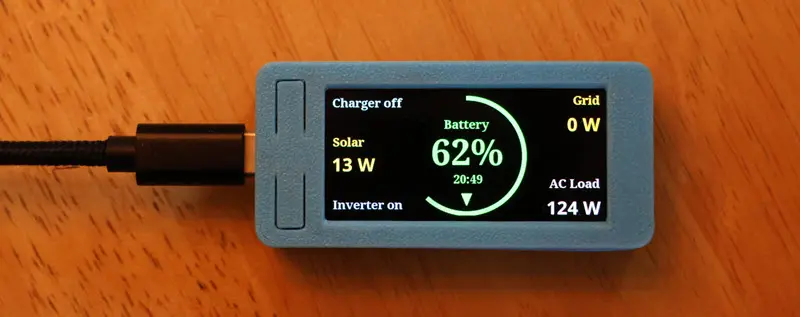
An open-source monitoring and control solution for Victron Multiplus II systems using the LilyGo T-Display S3 AMOLED. Built on the ESP32 platform, it provides real-time data on solar power, grid status, and battery health while allowing users to toggle charger and inverter functions.
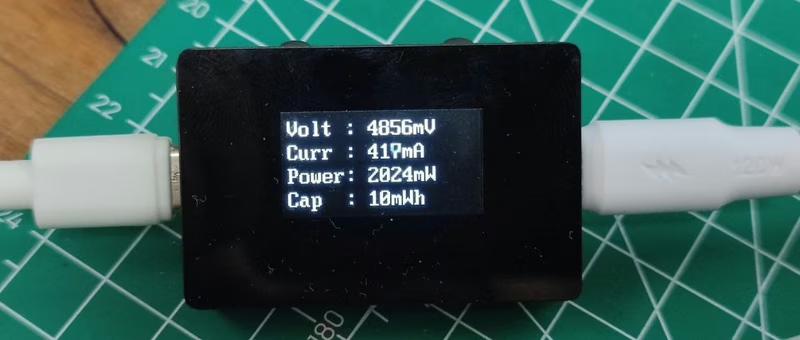
CH32V003 USB Meter
An open-source USB power meter based on the CH32V003 RISC-V microcontroller and INA219 sensor. It monitors voltage, current, and power (up to 100W/20V/5A) and displays data on a 0.96-inch OLED screen. The project features a compact design with PD 2.0 pass-through support and includes comprehensive hardware, firmware, and 3D enclosure files.