Light Watcher
An ESP32-based IoT power monitoring system that tracks electricity outages and notifies users via a Telegram bot. The device features a battery backup system for seamless operation during blackouts and utilizes a captive portal for easy configuration of network and bot credentials.
Light Watcher is an automated monitoring solution designed to provide real-time updates on the state of the local electrical grid. Built primarily for the ESP32-C3 SuperMini, this Telegram bot tracks the exact timing of power outages and restorations, offering essential data for users in regions experiencing frequent grid instability. It functions as a specialized IoT observer that logs outage durations and maintains statistics, ensuring users stay informed through instant messaging.
Key Features and Capabilities
The system is engineered with several failsafes to ensure reliability under difficult conditions. It calculates the precise duration of power absences and includes battery discharge protection logic. Even if the battery runs low during a prolonged outage, the device is programmed to notify the user as soon as power returns and calculate the total time it was offline.
The hardware architecture allows the ESP32 to switch to battery power seamlessly without rebooting, maintaining a continuous connection to the network. To ensure high availability, the firmware includes a connectivity watchdog that checks the Wi-Fi status every 30 seconds, attempting to reconnect automatically if the signal is lost. The bot is also capable of operating within group chats, allowing multiple users to receive simultaneous updates.
Telegram Interaction
Users interact with the device through a standard set of Telegram commands. The /status command provides the current system state, while /info offers general bot details. There are also maintenance commands for setting seasonal time (summer/winter), clearing historical statistics, or remotely restarting the microcontroller. Beyond formal commands, the bot is programmed to respond to natural language queries regarding whether the electricity is currently on or off.
Hardware Architecture and Wiring
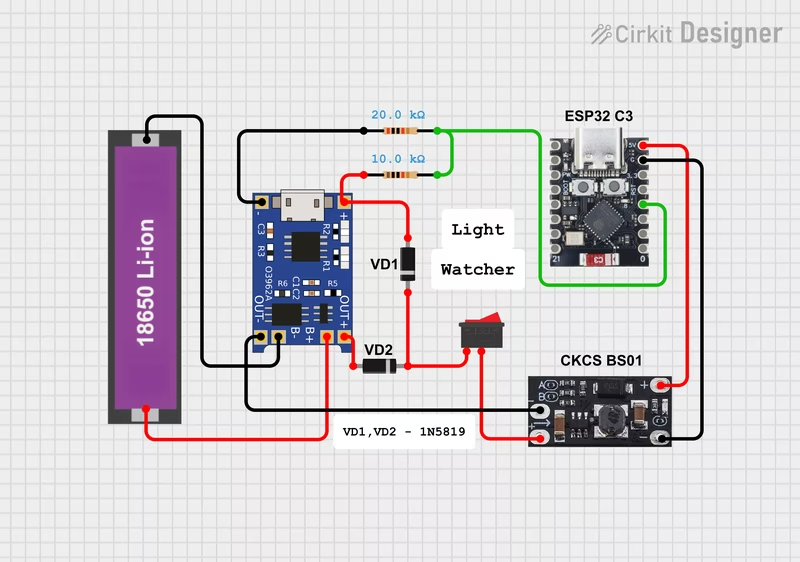
The physical device is built around the ESP32-C3 SuperMini, though versions for the ESP8266 are also available. The circuit is designed to manage power intelligently between a USB source and an 18650 lithium battery.
The components include a TP4056 charging module and a CKCS BS01 DC-DC boost converter to maintain a stable 5V rail. Schottky diodes (1N5819) are utilized for power path management, preventing backflow and ensuring the device draws power from the grid when available while keeping the battery charged. A simple voltage divider, consisting of 10kΩ and 20kΩ resistors, allows the microcontroller to monitor the grid status via an analog pin.
Software Design and Configuration
The firmware has evolved to simplify user setup. Starting with version 1.5, the project features a captive portal for configuration.
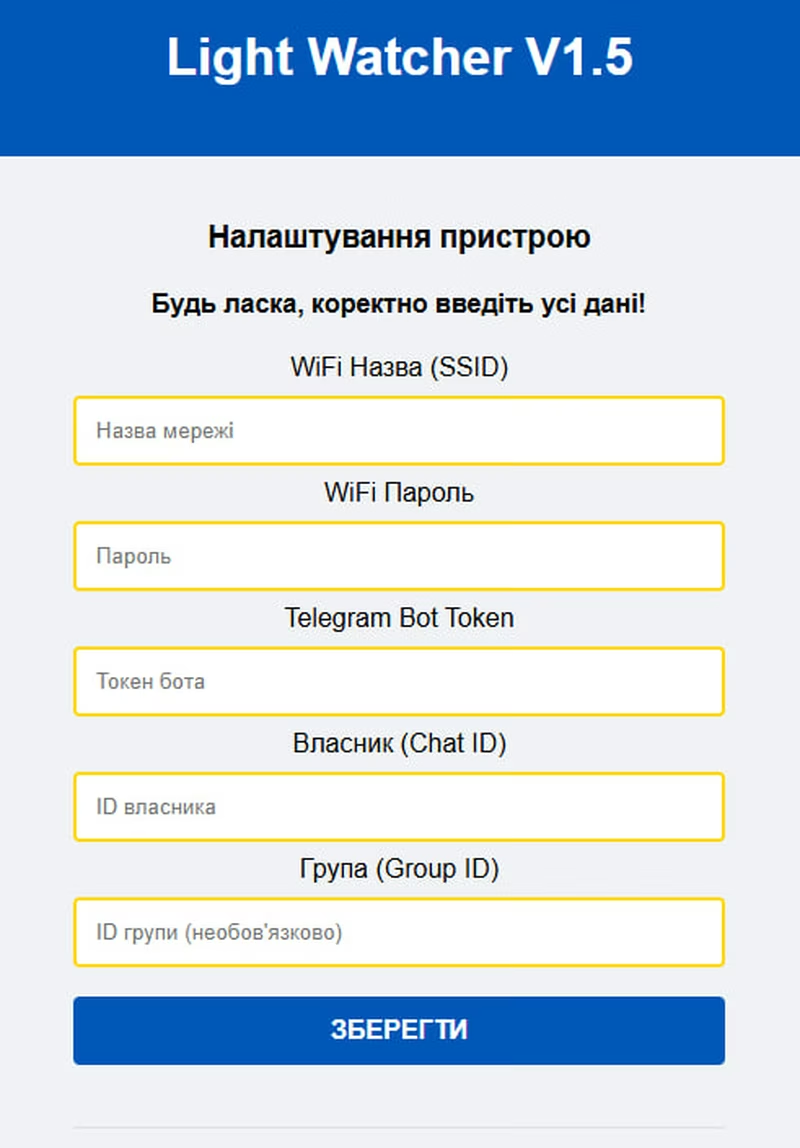
This web-based interface allows users to input Wi-Fi credentials, Bot tokens, and Chat IDs directly from a smartphone or computer without needing to hardcode them into the source code. The project relies on the UniversalTelegramBot library for API communication and uses the Preferences library (or LittleFS on ESP8266 versions) to store outage logs and configuration data in non-volatile memory.
Physical Construction and Assembly
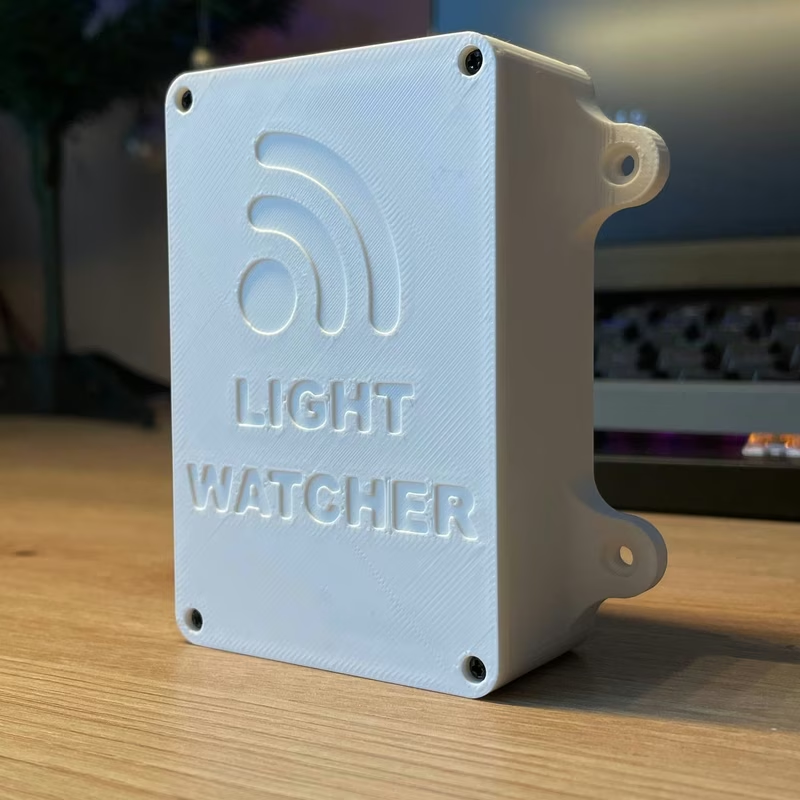
To house the electronics, a custom 3D-printed enclosure was developed. The case is designed to be compact (90 x 85 x 30 mm) while providing dedicated slots for the 18650 battery holder, the PCB modules, and a KCD11 power switch.
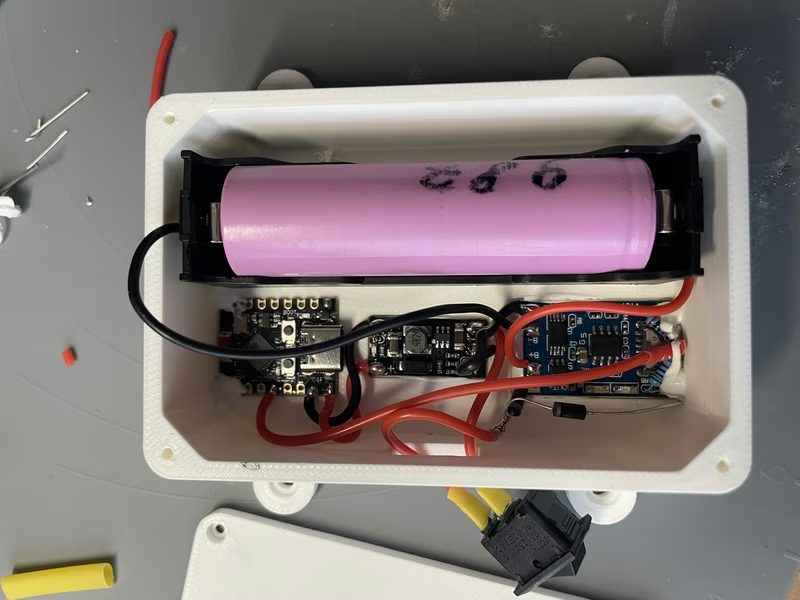
The assembly process involves mounting the modules into the 3D-printed base and securing them with M2 screws. The final result is a professional, self-contained IoT device that can be plugged into any standard USB power source for continuous, long-term grid monitoring.
Related Projects
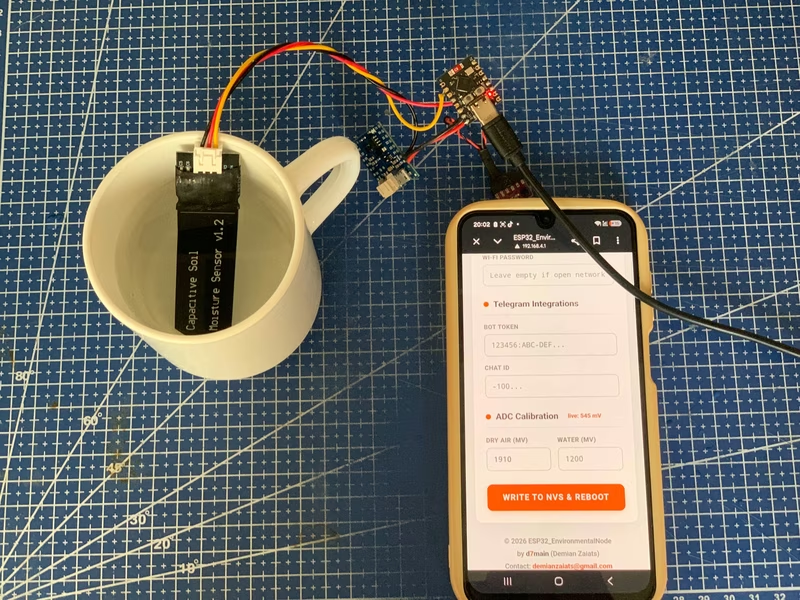
ESP32-C3 Environmental Monitoring Node
A high-efficiency, low-power environmental monitoring firmware developed using the native ESP-IDF v5.x framework for the ESP32-C3. It integrates deep sleep cycles with multi-sensor data collection and provides configurable alerts via Telegram, Discord, and custom webhooks. The system includes a built-in SoftAP web portal for runtime configuration, allowing users to manage Wi-Fi credentials and sensor thresholds without serial re-flashing.
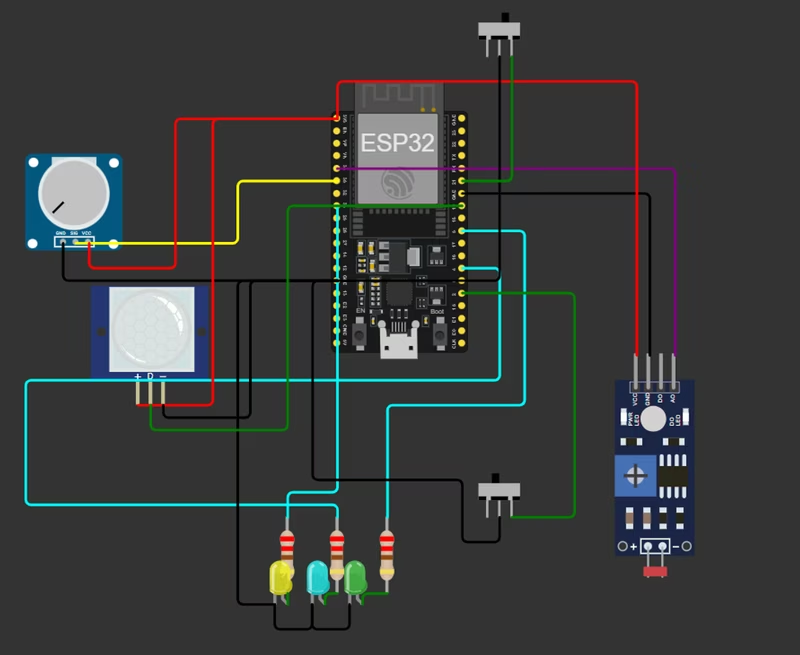
Smart Lighting System using ESP32
An automated lighting control system built for the ESP32 platform that optimizes energy consumption by managing lights based on human presence and ambient light levels. The system integrates PIR and LDR sensors with a potentiometer for manual sensitivity tuning, providing a practical solution for smart home and classroom automation.
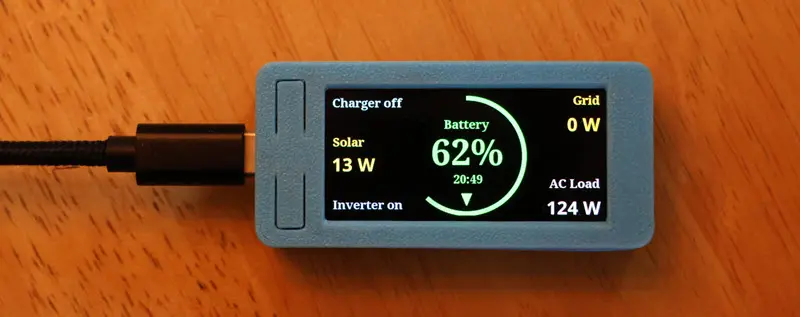
ESP32 Remote for Victron
An open-source monitoring and control solution for Victron Multiplus II systems using the LilyGo T-Display S3 AMOLED. Built on the ESP32 platform, it provides real-time data on solar power, grid status, and battery health while allowing users to toggle charger and inverter functions.
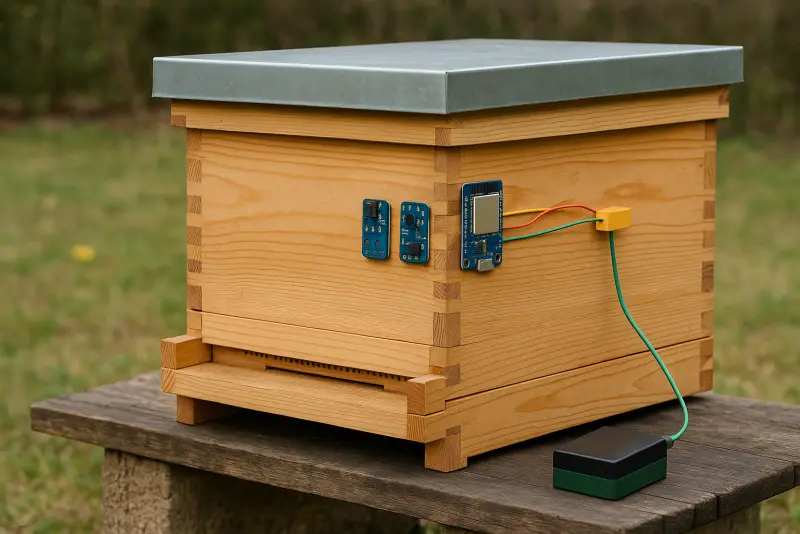
Smart Beehive Monitoring System
An ESP32-based IoT system designed to monitor beehive health by tracking environmental conditions, bee activity, and hive weight. It features solar power management and real-time data synchronization with Firebase for remote access via a web dashboard.