platformio-core
v6.2.0Features
-
Multi-platform build system supporting Windows, macOS, Linux, and ARM-based systems.
-
Unified package manager for automated installation of toolchains, frameworks, and libraries.
-
Advanced Library Dependency Finder (LDF) that automatically resolves and manages project dependencies.
-
Support for over 40 development platforms including Atmel AVR, Espressif (ESP32/ESP8266), and STM32.
-
Integration with 20+ frameworks such as Arduino, ESP-IDF, Zephyr, and FreeRTOS.
-
Built-in Unified Debugger providing a zero-configuration debugging experience for 300+ boards.
-
Static Code Analysis tools for automated firmware inspection and quality assurance.
-
Remote Development capabilities for deploying and testing firmware on remote devices.
-
Unit Testing framework supporting local and on-target test execution.
-
Serial Port Monitor for real-time communication with embedded hardware.
-
Firmware File Explorer and memory inspection tools for resource optimization.
-
Declarative project configuration via the ‘platformio.ini’ file.
-
Seamless integration with popular IDEs like VSCode, Eclipse, and Sublime Text.
-
Continuous Integration (CI) support for automated build and test pipelines.
-
Support for multiple architectures including ARM, AVR, RISC-V, and FPGA.
PlatformIO Core is built on a decentralized, modular architecture implemented in Python. It functions as an orchestration layer that abstracts the complexities of different hardware platforms and software development kits (SDKs). The system relies on a declarative configuration model where the platformio.ini file defines the project environment, including boards, frameworks, and library dependencies. This configuration triggers the Core to dynamically fetch required toolchains and libraries from the PlatformIO Registry, ensuring a reproducible build environment across different developer machines.
Core Components
- Build System: A SCons-based engine that handles compilation, linking, and firmware image generation across diverse toolchains.
- Package Manager: Manages the lifecycle of development platforms, toolchains, and libraries, handling versioning and updates.
- Library Dependency Finder (LDF): Analyzes source code to identify and include necessary libraries automatically, resolving complex dependency trees.
- Unified Debugger: A standardized interface for GDB-based debugging that works across various hardware probes and microcontrollers without manual configuration.
Use Cases
This library is ideal for:
- Cross-Platform Development: Managing embedded projects that need to be compiled for multiple different microcontrollers (e.g., AVR and ESP32) using a single codebase and configuration.
- Automated CI/CD: Integrating embedded firmware builds and unit tests into automated pipelines like GitHub Actions, GitLab CI, or Jenkins to ensure code quality.
- Library Management: Simplifying the process of finding, installing, and updating third-party libraries without manual file management or vendor-specific IDEs.
- Professional Embedded Engineering: Developing commercial-ready products by leveraging modern toolchains, static analysis, and unit testing methodologies.
Getting Started
To get started with PlatformIO Core, you can install it via Python’s package manager using pip install platformio. Once installed, you can initialize a new project by running pio project init --board <board_id> in your terminal, which generates the essential directory structure and the platformio.ini configuration file. For detailed guidance on commands and configuration, refer to the official PlatformIO Core Documentation and the Quick Start Guide.
Related Projects (39)
View All 39 Projects →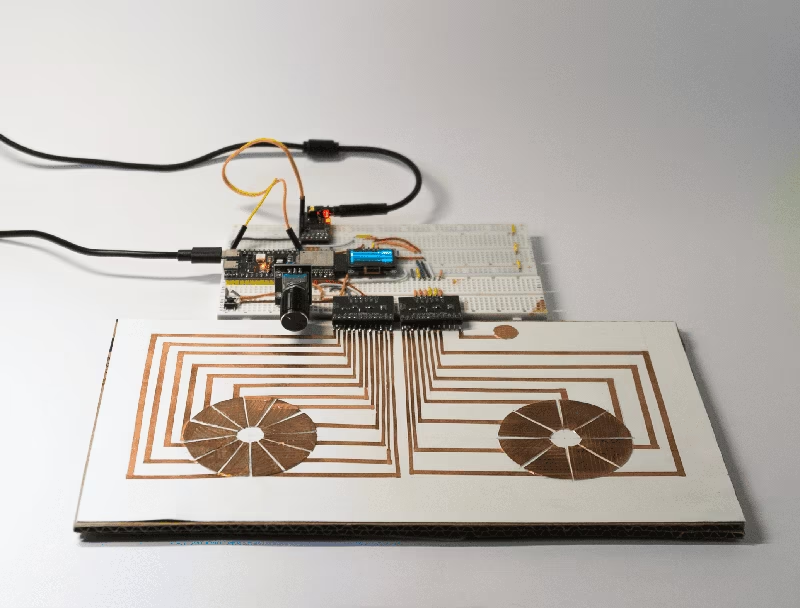
TYPE-2 Autonomous Polyphonic Synthesizer
The TYPE-2 is an ESP32-S3-based polyphonic synthesizer featuring a custom hybrid dual-rate DSP engine and analog-modeled filters. It utilizes FreeRTOS for task management, I2S for high-fidelity audio, and capacitive touch for a responsive user interface.

Midad
Midad is an open-source firmware for Xteink e-ink devices, specifically engineered for Arabic script and right-to-left languages. Running on the ESP32-C3 platform with FreeRTOS, it provides a comprehensive e-reading experience with advanced text shaping, OTA updates, and a unique suite of integrated applications like a gym logger and Tasbih counter.
Tamagooshi
An ESP32-based pixel-art virtual pet platform for M5Stack devices that reflects live metrics from sources like Datadog and PostHog. The system uses a Python-powered hub to communicate over BLE or MQTT, allowing the mascot to react to technical telemetry or AI agent activity. It is built using the Arduino framework on FreeRTOS and features a modular configuration system for custom assets and HID functionality.
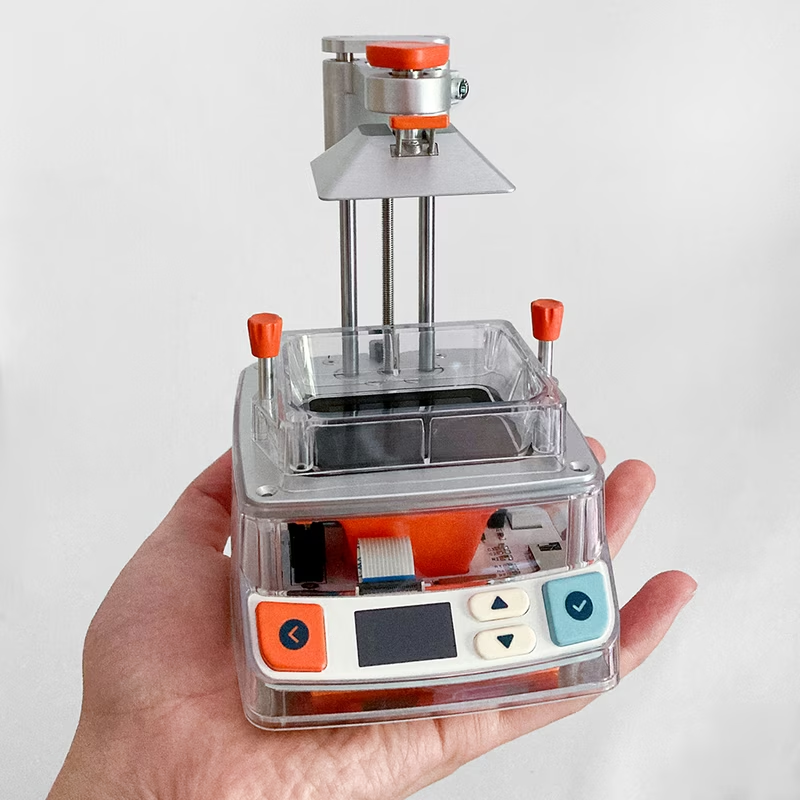
TinyMakerWifi
TinyMakerWifi is an enhanced firmware for the TinyMaker MSLA resin 3D printer that introduces WiFi connectivity, a web-based dashboard, and direct integration with PrusaSlicer. Built on the ESP32 platform using the Arduino framework and FreeRTOS, it features advanced resin tracking, power-loss recovery, and over-the-air (OTA) updates.
Clawdmeter Plus
An embedded desk display project using the Waveshare ESP32-S3-Touch-AMOLED-2.16 to track live Claude Code usage, local weather, and background agent health. The system leverages the LVGL graphics library for its UI and connects to a host computer via Bluetooth LE using the NimBLE stack.
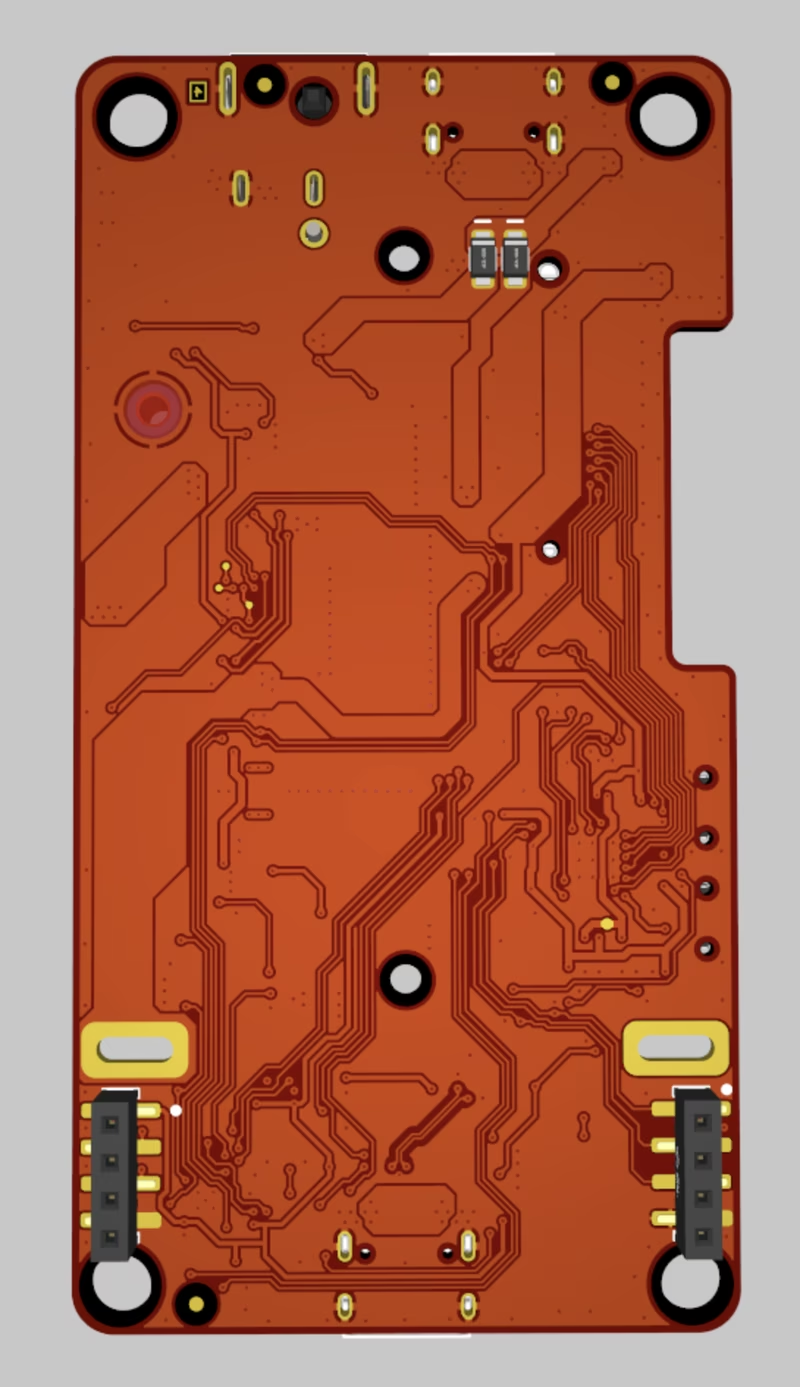
Web3 Pi UPS
An open-source DC uninterruptible power supply designed specifically for the Raspberry Pi 5, featuring triple-input power paths and smart battery management. It utilizes a dual-MCU architecture with a CH32X035 for power delivery and an RP2040 for the user interface, while supporting remote monitoring via FreeRTOS and the lwIP stack.
Berbel BFB 6bT BLE Remote Control Emulator
An ESP32-powered emulator for the Berbel BFB 6bT remote control, designed to integrate Berbel kitchen hoods into smart home environments. It features real-time status decoding, MQTT auto-discovery for Home Assistant, and utilizes the NimBLE stack to optimize memory usage.
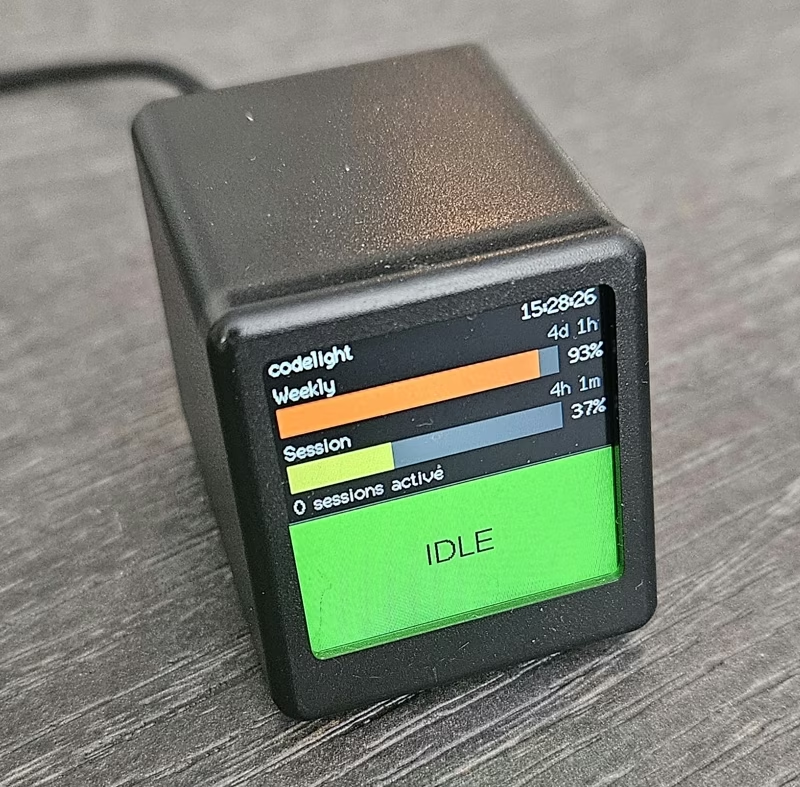
Codelight
Codelight is a multi-platform monitoring and remote control system for AI coding agents such as Claude Code, GitHub Copilot, and Cursor. It utilizes a Python companion daemon to broadcast agent status and manage interactive prompts across ESP8266-based desk screens, Android devices, and desktop environments via WebSockets and D-Bus.