Slave I
Slave I is a wireless research firmware for the M5Stack Tab5, utilizing a dual-chip architecture with the ESP32-P4 and ESP32-C6. It provides a toolkit for Wi-Fi, BLE, and 802.15.4 protocol analysis, built on FreeRTOS and featuring a sophisticated LVGL-based touch interface.
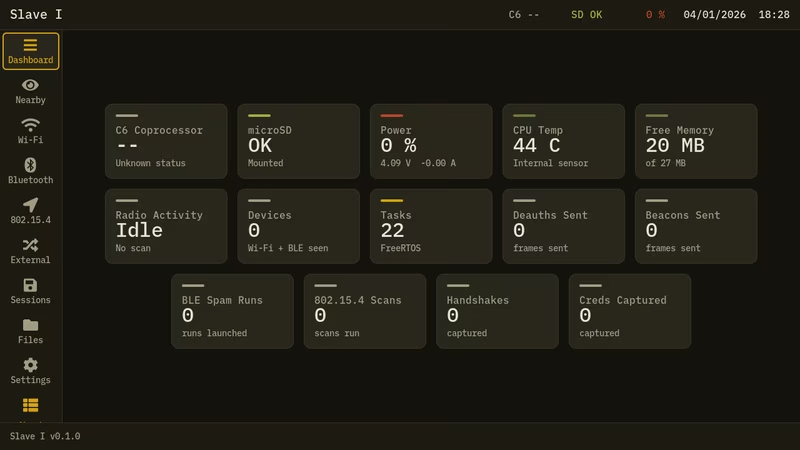
Slave I is a specialized firmware project designed for the M5Stack Tab5, serving as a comprehensive wireless research and education toolkit. The project is engineered to leverage the unique dual-MCU capabilities of the ESP32-P4 and ESP32-C6 platform, providing researchers with a powerful handheld device for protocol analysis and security auditing.
Dual-Chip Architecture
The technical foundation of Slave I is its sophisticated split-processing architecture. The system orchestrates tasks between two distinct Espressif microcontrollers:
- ESP32-P4: Serves as the primary application processor, managing the high-resolution LVGL user interface, file system operations, and overall logic orchestration.
- ESP32-C6: Functions as the dedicated radio engine, executing low-level wireless tasks across Wi-Fi, Bluetooth Low Energy (BLE), and 802.15.4 (Zigbee/Thread) protocols.
These chips communicate via an RPC protocol over an esp_hosted SDIO link. This design ensures that the user interface remains responsive even during high-bandwidth radio operations or intensive signal processing tasks.
Wireless Protocol Analysis
Slave I provides a suite of tools for interacting with and analyzing various wireless environments. Its capabilities include:
- Wi-Fi Research: Supports scanning across both 2.4 GHz and 5 GHz bands, handshake and EAPOL capture to
.pcapformat, and the deployment of captive portal templates for security testing. - BLE Discovery: Features a scanner with vendor resolution, utilizing a built-in company-ID and OUI database to identify nearby Bluetooth devices.
- 802.15.4 / Zigbee: Includes an energy scanner and device sniffer capable of identifying PAN IDs, EUI-64 addresses, and frame types. It supports raw frame capture for analysis in external tools like Wireshark.
- Unified Radar: A “Nearby” mode provides a real-time visualization of the local wireless spectrum, sorting Wi-Fi and BLE signals by signal strength (RSSI).
User Interface and Development
The firmware features a touch-optimized UI built with the LVGL graphics library, supporting themes and live KPIs. Beyond the touch interface, Slave I is designed for field use with support for physical keyboard navigation via I2C or USB HID.
For developers, the project includes a desktop emulator that uses SDL2 to render the UI on a standard PC. This allows for rapid iteration of the interface and domain logic without requiring physical hardware for every build. The firmware is built using the ESP-IDF 5.4.2 framework, leveraging FreeRTOS for task management and the NimBLE stack for Bluetooth connectivity. It also incorporates a robust file management system for handling captures and logs on a microSD card.
Related Projects
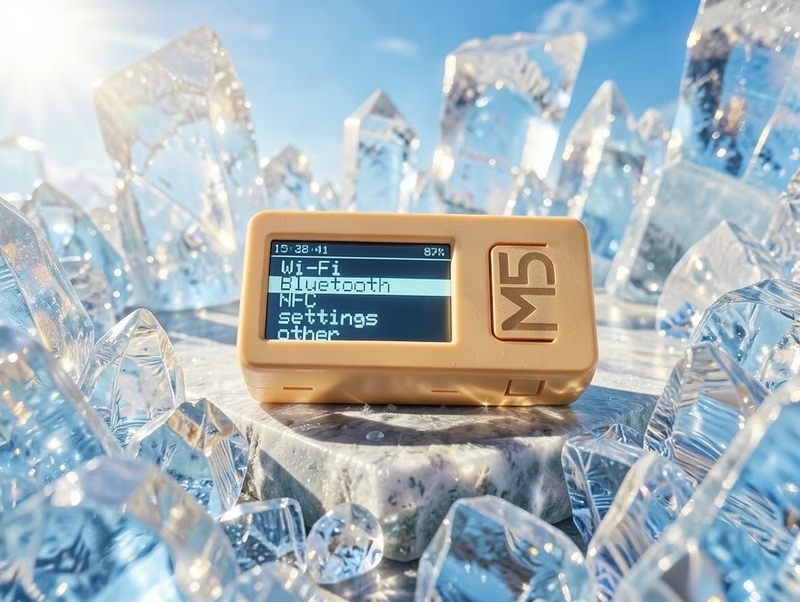
M5_Crystal
M5_Crystal is a modular firmware for M5Stack devices like the M5StickCPlus2 and Cardputer, providing a suite of tools for Wi-Fi, NFC, and Bluetooth interaction. It utilizes the M5Unified and M5GFX libraries for hardware abstraction and is built on a custom wrapper system designed for rapid feature development.
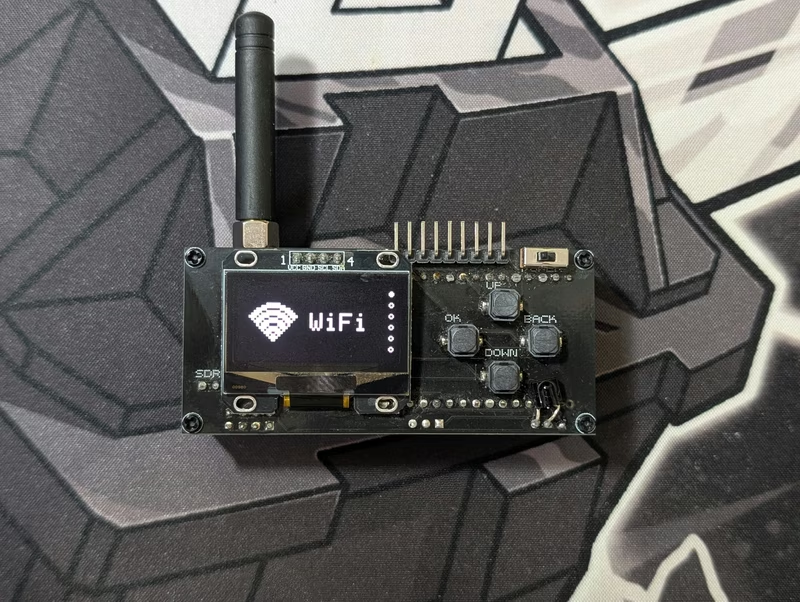
ESP-HACK FW
ESP-HACK is a versatile wireless research and pentesting firmware for the ESP32 platform, targeting Sub-GHz, Bluetooth, and Infrared protocols. It utilizes the Arduino framework and NimBLE stack to provide tools for signal analysis, protocol exploration, and GPIO integrations. The project is designed for use with custom hardware including CC1101 transceivers and OLED displays.
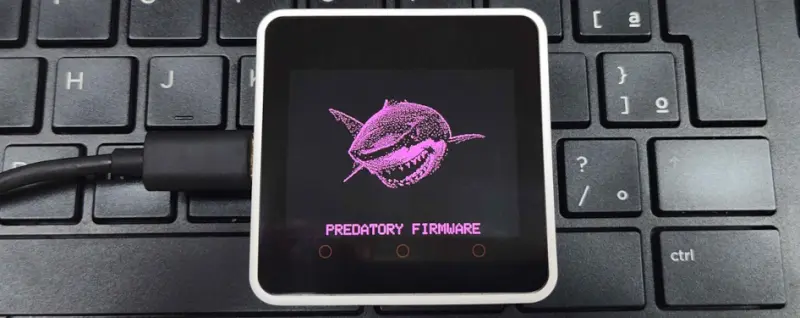
Bruce Firmware
A versatile ESP32-based firmware designed for offensive security and Red Team operations. It supports a wide range of hardware including M5Stack and Lilygo devices, providing features for WiFi attacks, BLE manipulation, RF/RFID interaction, and a built-in JavaScript interpreter.