M5_Crystal
M5_Crystal is a modular firmware for M5Stack devices like the M5StickCPlus2 and Cardputer, providing a suite of tools for Wi-Fi, NFC, and Bluetooth interaction. It utilizes the M5Unified and M5GFX libraries for hardware abstraction and is built on a custom wrapper system designed for rapid feature development.
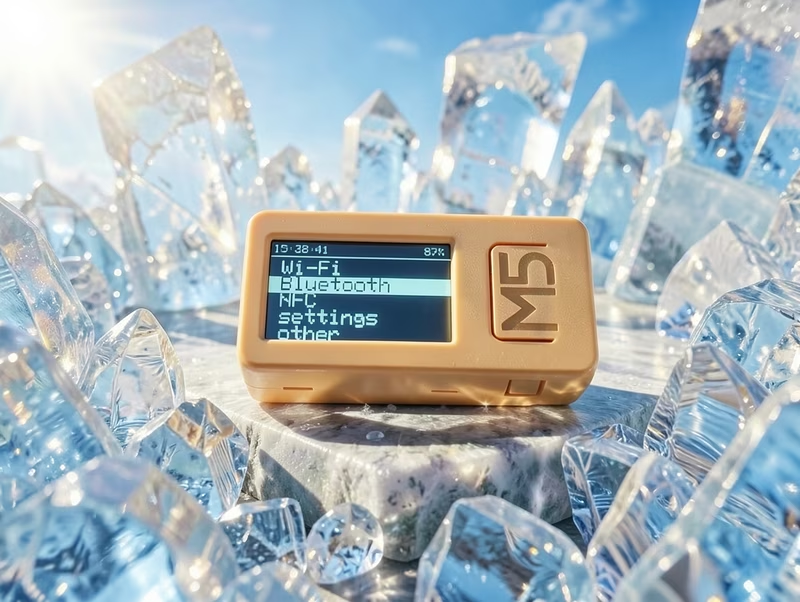
M5_Crystal is a versatile and extensible firmware designed specifically for the M5Stack ecosystem, targeting devices such as the M5StickCPlus2 and the Cardputer-ADV. It provides a comprehensive suite of utilities ranging from network security testing to daily productivity tools, all packed into a portable form factor.
Versatile Feature Set
The firmware is organized into several functional domains, making it a Swiss-army-knife tool for developers and enthusiasts:
- Wi-Fi Capabilities: The system includes a Wi-Fi scanner, deauthentication tools, weather reporting, and network information displays. It also supports time synchronization and standard Wi-Fi connection management.
- NFC Interaction: By leveraging the PN532 module, the firmware can read and write UIDs, enabling basic interaction with NFC tags.
- Bluetooth and HID: The Bluetooth suite is particularly robust, offering BLE scanning and “BAD BLE” functionality powered by LittleFS. It also allows the device to act as a gyro-based mouse or keyboard, a media presenter, or a remote camera shutter for phones.
- System Utilities: Beyond connectivity, it includes a clock, flashlight, battery monitor, level tool (utilizing the onboard gyroscope), and a sound meter.
- Global Support: To accommodate a wide user base, the interface is localized into seven languages: English, Italian, Spanish, Indonesian, German, Russian, and Ukrainian.
Installation and Deployment
There are multiple ways to deploy M5_Crystal to a supported device. The most user-friendly method is via M5Burner, the official firmware management tool from M5Stack. Users can simply select the STICK or CARDPUTER category, search for the firmware by name, and burn it directly to their hardware over USB.
For developers or those who prefer manual control, the project supports building from source. This can be done using the Arduino CLI or within VS Code using the Arduino Community Edition extension. The repository includes detailed configuration examples and documentation for flashing binary files directly.
Design Philosophy and Architecture
M5_Crystal is built following the KISS (Keep It Simple, Stupid) principle. The software architecture is designed to be extremely structured yet simple to navigate.
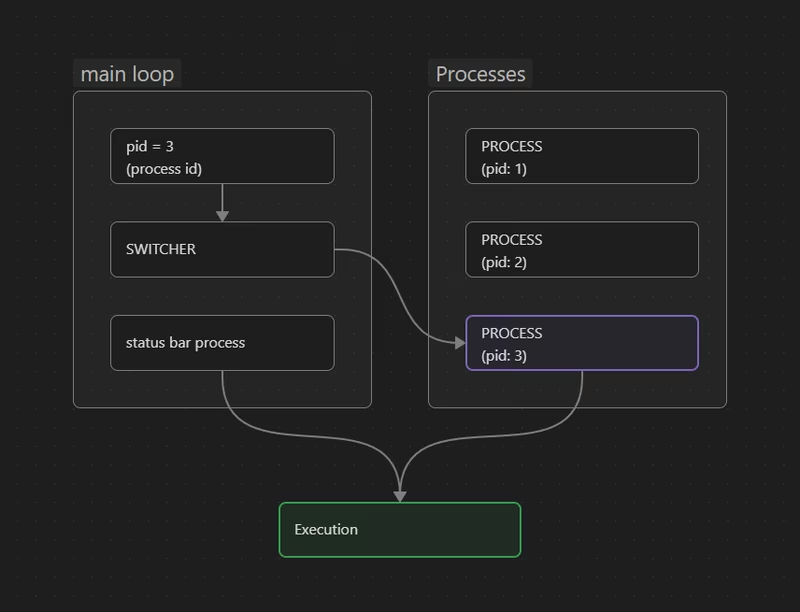
Central to this design is the use of custom wrappers. These wrappers abstract the complexities of the user interface and hardware interaction, allowing developers to focus entirely on the logic of new “programs” or features. This approach effectively turns the firmware into a framework for M5Stack development. Adding a new function is as simple as creating a new entry in the functions/ folder and following the established wrapper patterns.
Technical Foundation
The project relies on several key libraries to manage the hardware and communication protocols:
- M5Unified & M5GFX: These serve as the core hardware abstraction layers, ensuring the firmware can run across different M5Stack hardware revisions with minimal changes.
- ESP32-BLE-Combo: This facilitates the advanced Bluetooth HID features, allowing the device to emulate various peripherals.
- Adafruit PN532: Used for interfacing with the NFC hardware.
- U8g2: Provides high-quality graphics and font support for the display.
- LittleFS: Manages the internal file system for storing BLE payloads and system settings.
Maintenance and Extensibility
The project is actively maintained with a focus on structured development. This includes the use of Process IDs (PIDs) to categorize functions and a rigorous approach to documentation. Recent updates have improved the level tool based on gyroscope data, added more NFC features, and expanded device support. The modular nature of the code ensures that as new M5Stack hardware is released, the firmware can be adapted to support new sensors or display configurations.
Related Projects
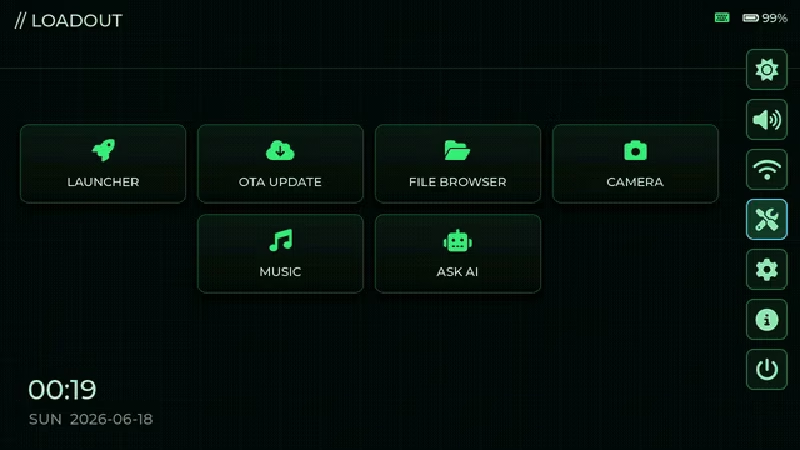
LOADOUT for M5Stack Tab5
LOADOUT is a comprehensive firmware launcher and hardware toolbox designed for the M5Stack Tab5 (ESP32-P4). Built on the ESP-IDF framework and FreeRTOS, it features an LVGL-based UI that provides access to on-device tools, OTA updates, and a microSD-based firmware bootloader.

Saturn
Saturn is a multi-functional firmware for the M5Stack Cardputer designed for wireless security testing, infrared device interaction, and portable utility tasks. Built on the ESP32-S3 platform, it features Wi-Fi deauthentication tools, Bluetooth LE spoofing, and a comprehensive infrared remote control library.
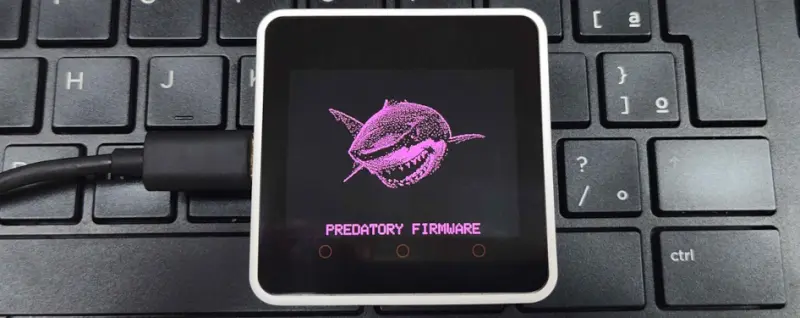
Bruce Firmware
A versatile ESP32-based firmware designed for offensive security and Red Team operations. It supports a wide range of hardware including M5Stack and Lilygo devices, providing features for WiFi attacks, BLE manipulation, RF/RFID interaction, and a built-in JavaScript interpreter.