ESP-HACK FW
ESP-HACK is a versatile wireless research and pentesting firmware for the ESP32 platform, targeting Sub-GHz, Bluetooth, and Infrared protocols. It utilizes the Arduino framework and NimBLE stack to provide tools for signal analysis, protocol exploration, and GPIO integrations. The project is designed for use with custom hardware including CC1101 transceivers and OLED displays.
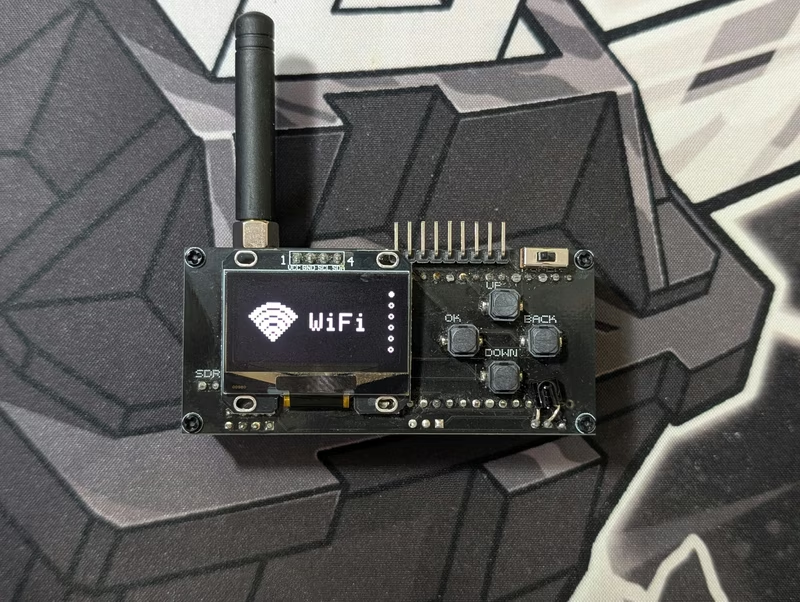
ESP-HACK FW is a powerful universal firmware developed for the ESP32, specifically tailored for RF research and pentesting across various wireless spectrums. It serves as a comprehensive tool for enthusiasts and security researchers interested in exploring radio frequencies, Bluetooth Low Energy (BLE), infrared signals, and direct GPIO integrations. While the firmware is stable for its primary functions, it remains an active project with several experimental features in development.
Core Capabilities and Features
The firmware organizes its functionality into several specialized modules based on the communication technology used.
Wireless and Bluetooth Research
For WiFi operations, the system supports beacon spamming, wardriving, and packet analysis. The Bluetooth suite leverages the NimBLE stack to provide BLE-Spam capabilities across iOS, Android, and Windows platforms, alongside BadBLE and mouse emulation features.
Sub-GHz and Infrared
The Sub-GHz module is a cornerstone of the project, requiring a CC1101 transceiver. It supports reading, sending, and recording RAW signals, as well as a spectrum analyzer and bruteforce tools for common protocols. Supported modulations include Princeton, RcSwitch, Came, Nice, Holtec, Ansonic, Chamberlain, StarLine, and KeeLoq. The Infrared module complements this by providing signal reading and transmission for controlling consumer electronics like TVs and air conditioning units.
GPIO and Peripheral Integration
Beyond wireless, the firmware integrates with physical hardware interfaces. It includes support for iButton reading and writing, NRF24 spectrum analysis and jamming, and a serial interface currently under development.
Hardware Architecture and Building
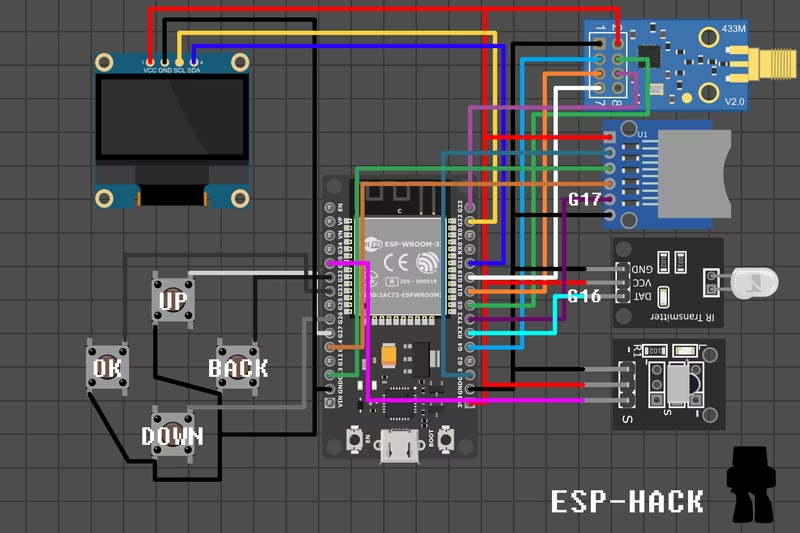
The project is designed to be built on a custom PCB that consolidates the ESP32-WROOM with several peripheral modules. The hardware stack includes a CC1101 module for Sub-GHz communication, an SH1106 OLED display for the user interface, and an SD card module for data storage and signal recording.
Connection and Pin Configuration
The firmware uses a specific pin mapping to manage multiple SPI and I2C peripherals. The display operates on the I2C bus (G21/G22), while the CC1101 and SD card share the high-speed SPI pins with dedicated Chip Select (CS) lines. Navigation is handled via a set of physical buttons mapped to specific GPIOs for Up, Down, OK, and Back actions.
Software Implementation and Diagnostics
Built using the PlatformIO ecosystem, the project utilizes the esp32dev environment with the Arduino framework. To accommodate the extensive feature set and multiple libraries, the build configuration uses a huge_app.csv partition table, maximizing the available flash space for the firmware binary.
To assist with hardware assembly and debugging, the firmware includes built-in diagnostic error codes. These codes help identify initialization failures in critical components:
- 0x000: SD-Card initialization failure, usually requiring FAT32 formatting.
- 0x001: CC1101 initialization failure, indicating wiring or module issues.
- 0x002: NRF24 initialization failure, suggesting pin configuration errors.
The final device provides a portable, handheld solution for field-based radio research, combining high-level protocol analysis with low-level signal manipulation.
Related Projects
ESP32 Bit Pirate
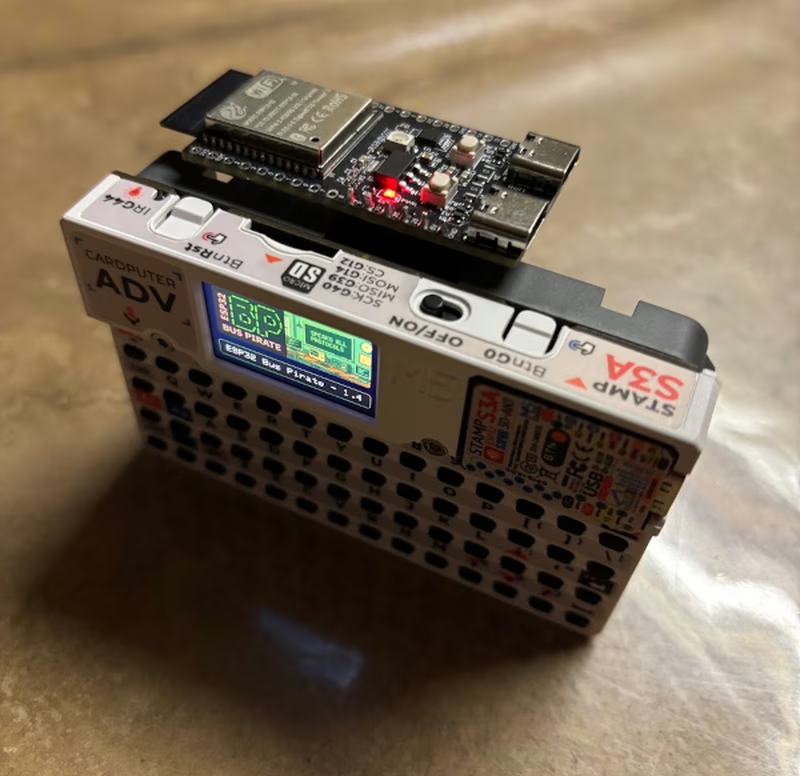
ESP32 Bit Pirate is an open-source firmware that transforms ESP32-S3 development boards into multi-protocol hardware hacking tools. It provides extensive support for digital protocols like I2C, SPI, and UART, as well as radio communications including Wi-Fi, Bluetooth, and Sub-GHz, utilizing FreeRTOS and LittleFS for robust device interaction.
Bruce Firmware
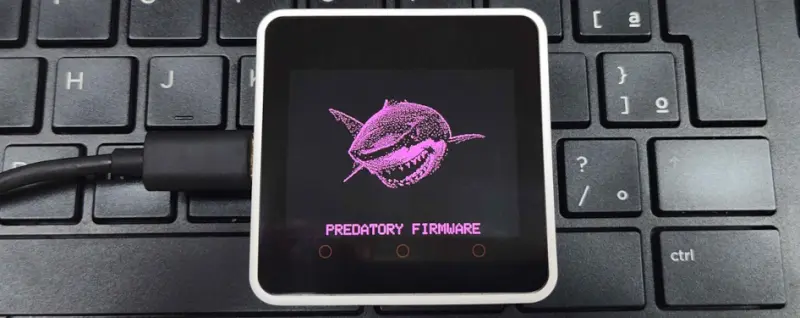
A versatile ESP32-based firmware designed for offensive security and Red Team operations. It supports a wide range of hardware including M5Stack and Lilygo devices, providing features for WiFi attacks, BLE manipulation, RF/RFID interaction, and a built-in JavaScript interpreter.
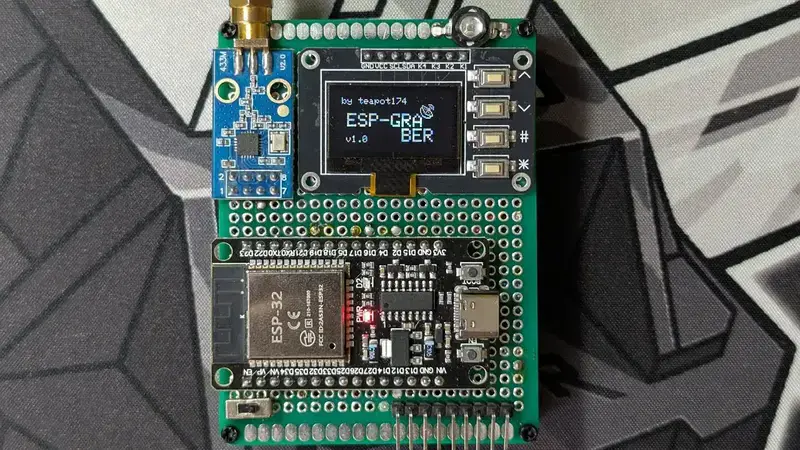
ESP-GRABER
A versatile Sub-GHz radio frequency tool for the ESP32 platform using the CC1101 transceiver. It enables reading, replaying, and storing signals across 315, 433, 868, and 915 MHz frequencies, supporting protocols like Princeton, KeeLoq, and StarLine.