E-Paper Climate Logger (Weathergotchi)
A comprehensive environmental monitoring system built on the ESP32-S3 platform, featuring an e-paper display for high-visibility, low-power data visualization. The project integrates the GxEPD2 library for display management and includes full PCB schematics and CAD designs for a complete hardware-software solution.
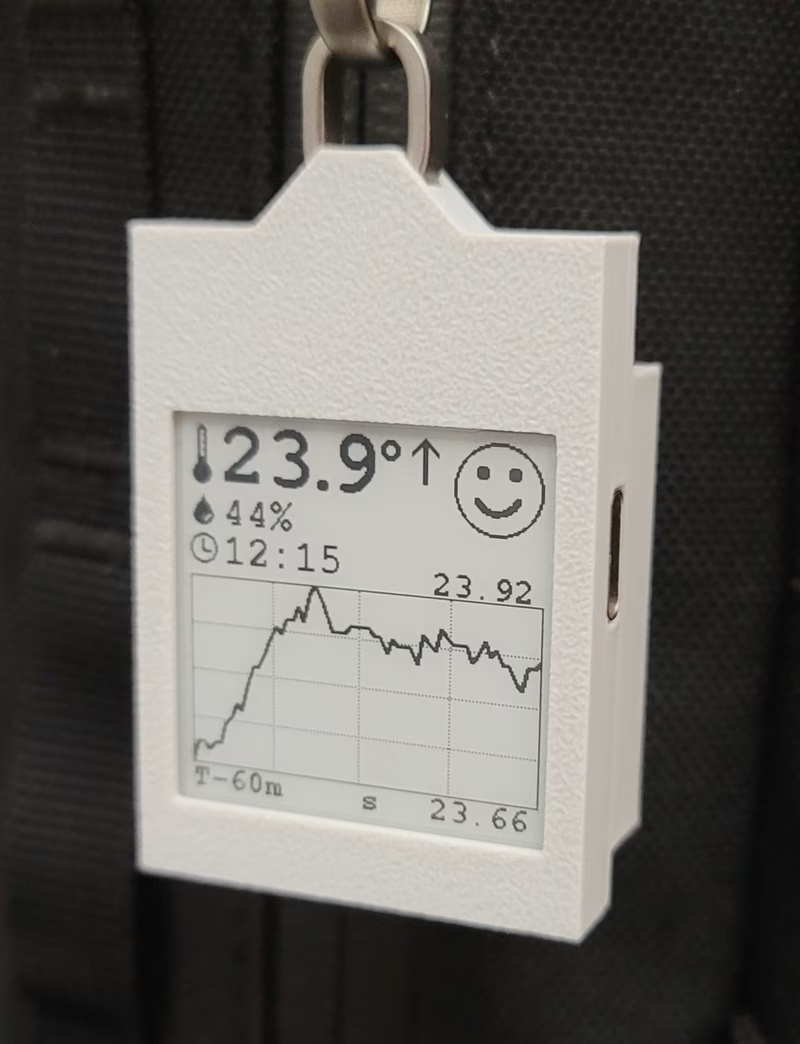
The E-Paper Climate Logger, affectionately known as the “Weathergotchi,” is an open-source project designed to provide a robust and visually clear solution for tracking environmental conditions. This repository serves as a one-stop shop for the project, containing not only the firmware but also the professional-grade PCB schematics and CAD files required to build the physical unit.
At its core, the Weathergotchi is designed to solve the problem of persistent environmental monitoring. By using an e-paper (E-Ink) display, the device ensures that climate data remains visible even without active power to the screen, significantly extending battery life and providing a paper-like reading experience that excels in bright environments.
Hardware Architecture
The project is built around the ESP32-S3 microcontroller, a powerful chip that provides the necessary processing power and wireless capabilities for modern IoT logging. The specific hardware implementation uses a custom board definition referred to as templog-v1.
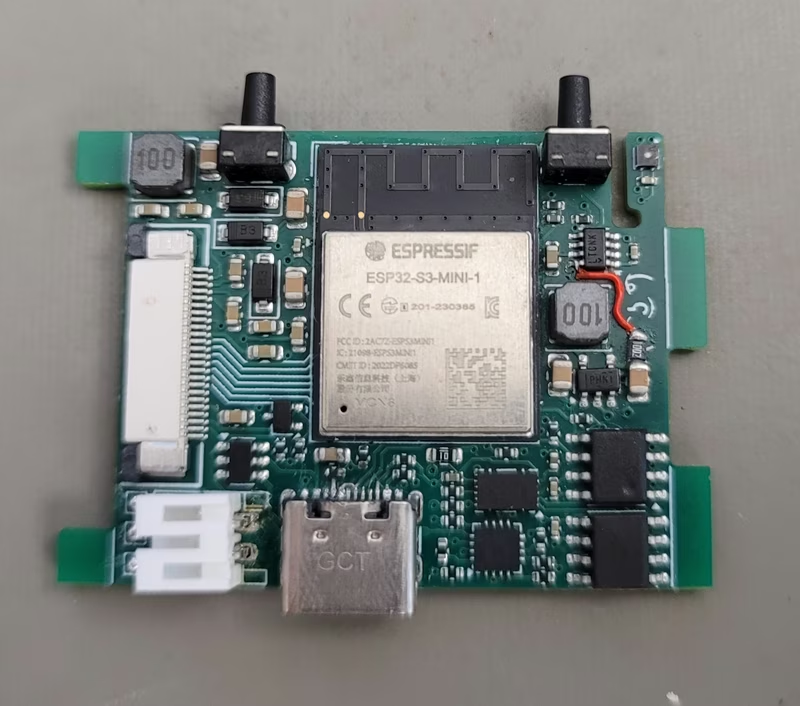
Key hardware characteristics include:
- Microcontroller: ESP32-S3 with QIO QSPI memory mapping.
- Display: High-contrast E-Paper screen.
- Optimized Memory: The system is configured to run without PSRAM (
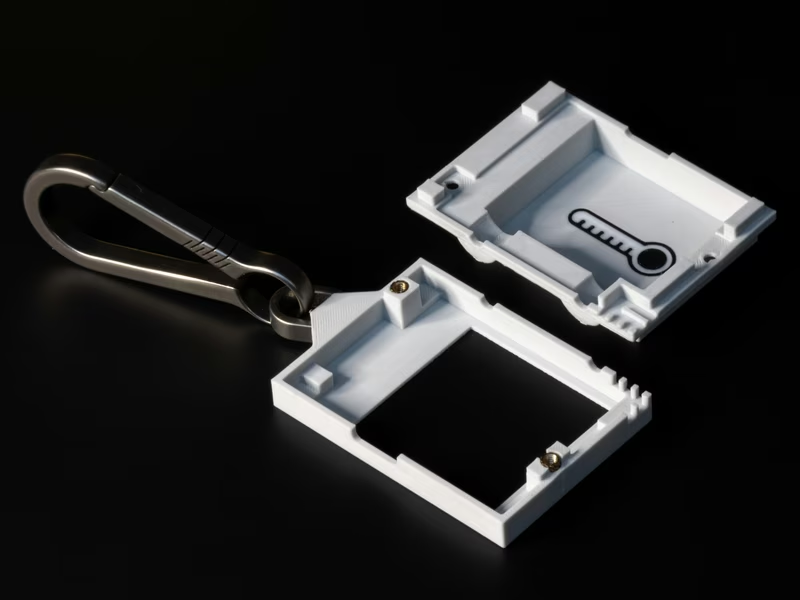
BOARD_HAS_NO_PSRAM), indicating a lean and efficient firmware design focused on core logging tasks. - Mechanical Integration: The repository includes full CAD files, allowing users to 3D print or manufacture a custom enclosure that fits the PCB perfectly.
Firmware and Software Design
The firmware is developed using the Arduino framework within the PlatformIO ecosystem. This choice allows for a balance between high-level ease of use and low-level hardware control. The system relies heavily on the GxEPD2 library, which is a specialized driver for E-Ink displays, providing the logic needed to handle partial updates and complex graphical rendering on the e-paper panel.
Technical highlights of the firmware implementation include:
- Error Management: The build is configured with a debug level set to
ESP_LOG_ERROR, ensuring that the system remains performant by only processing critical system messages. - Build System: Utilizes PlatformIO with custom extra scripts (
extra_script.py) to handle pre-build processes, ensuring a consistent environment across different development setups. - Monitoring: Standardized serial communication at 115200 baud via
/dev/ttyACM0for easy debugging and data retrieval during development.
Getting Started
To build the firmware, developers should use PlatformIO. The configuration is pre-set to target the templog-esp-s3 environment. The project manages its own dependencies, specifically requiring the GxEPD2 library (version 1.6.4 or higher). Because the repository includes the full PCB and CAD files, the transition from firmware development to a fully realized hardware product is streamlined for the user.
Related Projects
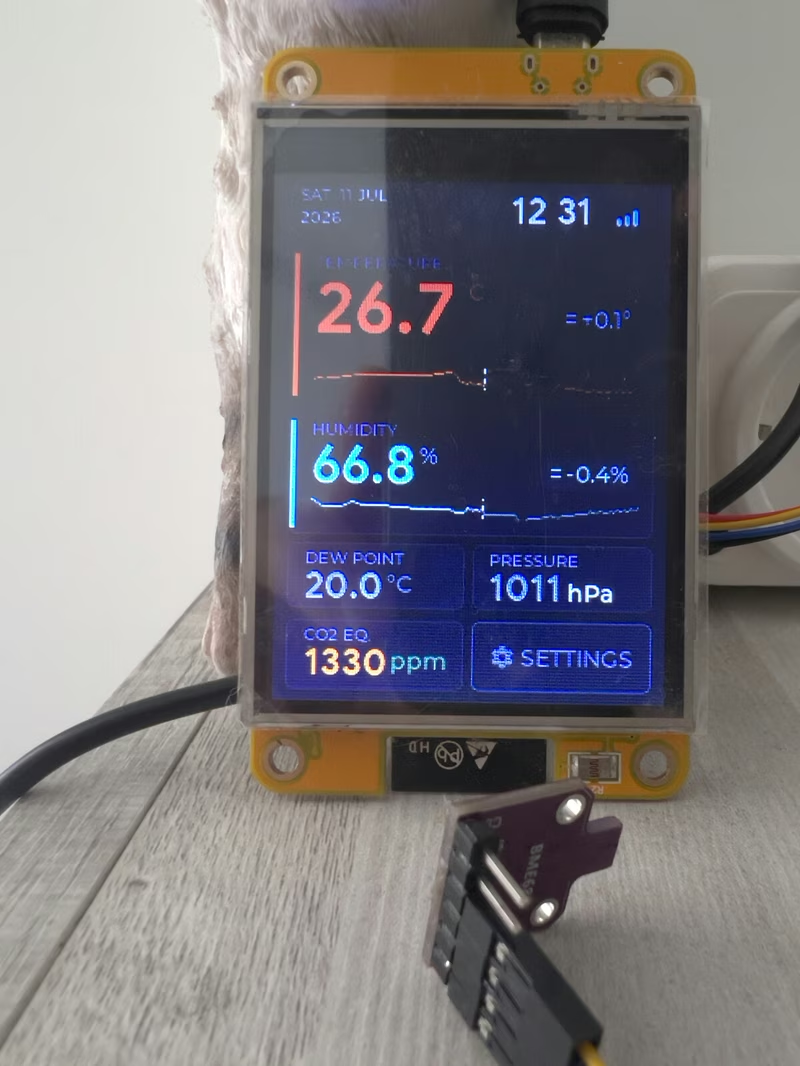
SensorStation3
SensorStation3 is an ESP32-based environmental monitoring station that utilizes FreeRTOS and the LVGL graphics library to provide a real-time touchscreen dashboard. It supports a variety of I2C sensors for tracking temperature, humidity, CO2, and atmospheric pressure, featuring seamless integration with Home Assistant and MQTT-based platforms.
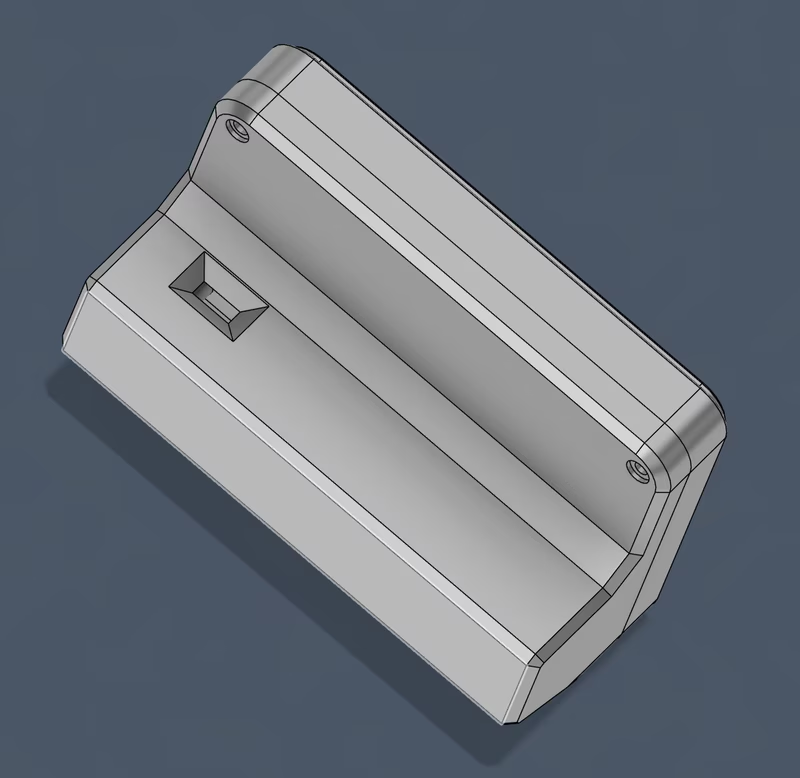
InkCast
InkCast is an ESP32-S3 firmware for a battery-powered e-paper weather station that balances high-density information with extreme power efficiency. Built using the Arduino framework on FreeRTOS, it features a web-based configuration portal and supports multiple weather providers to deliver a long-lasting, wall-mounted dashboard.
Clawdmeter Plus
An embedded desk display project using the Waveshare ESP32-S3-Touch-AMOLED-2.16 to track live Claude Code usage, local weather, and background agent health. The system leverages the LVGL graphics library for its UI and connects to a host computer via Bluetooth LE using the NimBLE stack.
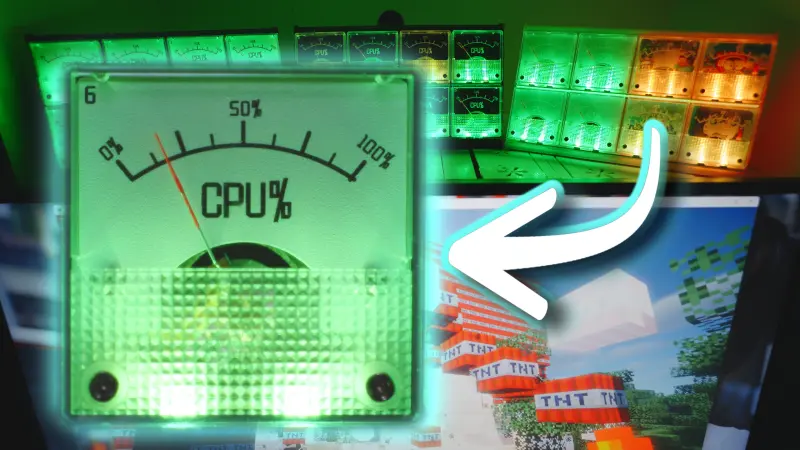
bbMonitor
An ESP32-based hardware performance monitor that visualizes computer system metrics through physical analog gauges and RGB lighting. The project leverages the Arduino framework and WebSockets to receive real-time data from a desktop companion app, providing a tactile and vintage-inspired dashboard for modern PC monitoring. It includes complete hardware design files, including PCB schematics and CAD drawings for the enclosure.
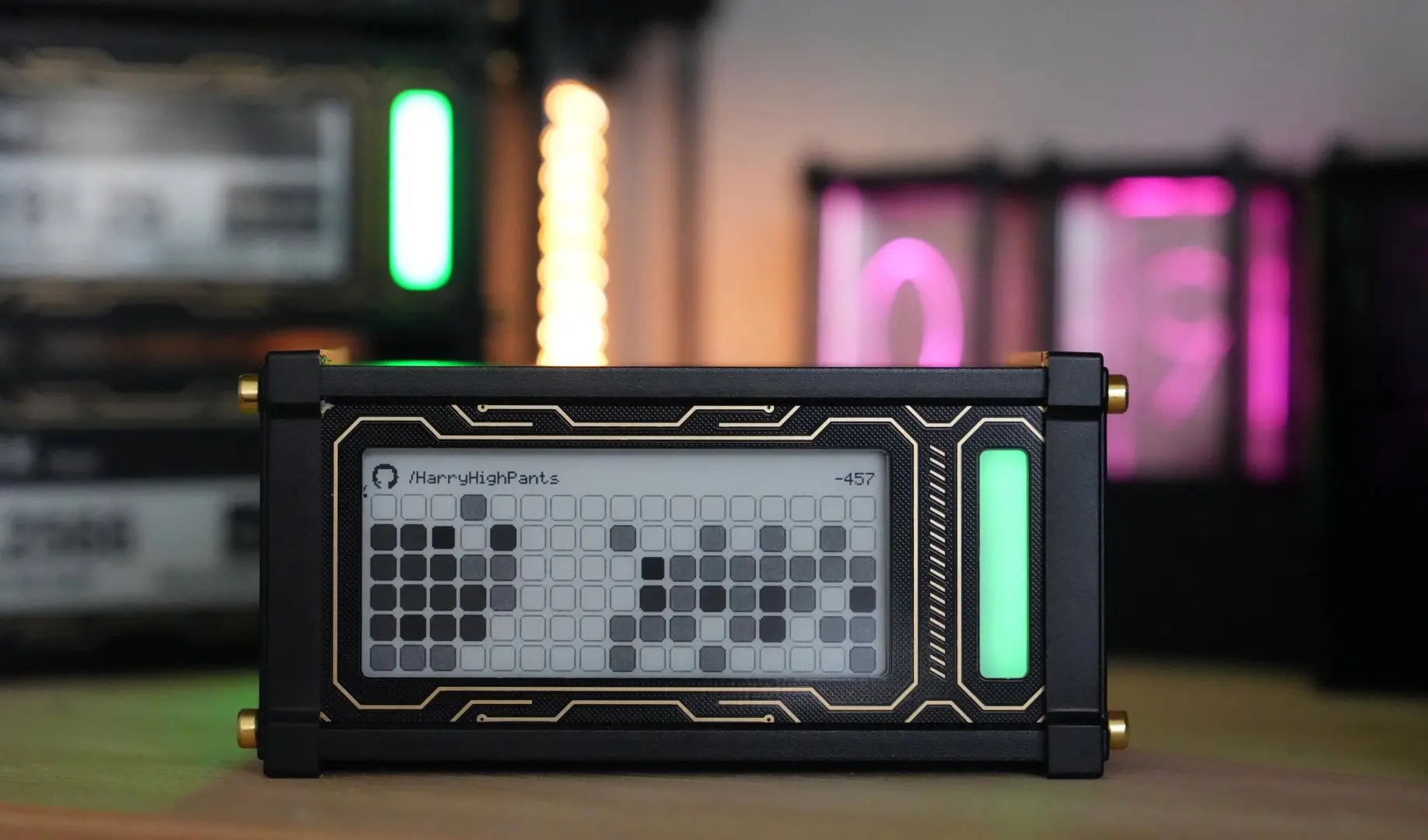
Git Contributions E-Ink Display
An ESP32-based wireless e-ink display designed to track and showcase GitHub contribution streaks. Utilizing the Lilygo T5 development board, the project features ultra-low power consumption for months of battery life and a captive portal for easy WiFi configuration.