InkCast
InkCast is an ESP32-S3 firmware for a battery-powered e-paper weather station that balances high-density information with extreme power efficiency. Built using the Arduino framework on FreeRTOS, it features a web-based configuration portal and supports multiple weather providers to deliver a long-lasting, wall-mounted dashboard.
InkCast is a specialized firmware designed to turn an ESP32-S3 and a large e-paper display into a sophisticated, low-power weather dashboard. Unlike many simple weather displays, InkCast focuses on information density and long-term autonomy, providing a comprehensive view of current conditions, hourly trends, and multi-day forecasts while maintaining a battery life that can exceed a year on a single charge.
High-Density E-Paper Dashboard
The project is built around the GDEM0397T81P, a 3.97-inch black-and-white e-paper panel with an 800x480 resolution. This high pixel density allows the UI to display a wealth of data without feeling cluttered. The screen is divided into three primary zones:
- Status Bar: Displays the city name, current date and time, Wi-Fi connectivity, and battery health.
- Current Conditions: A prominent block featuring weather icons, “feels-like” temperatures, precipitation probability, and astronomical data like sunrise and sunset times.
- Forecast Area: A detailed 48-hour chart showing temperature curves and precipitation bars, alongside cards for a 6-day forecast.
Hardware and Power Management
The recommended hardware stack utilizes the LILYGO T-Energy-S3, an ESP32-S3 board that includes integrated 18650 battery support and power management. By leveraging the ESP32’s deep sleep capabilities, InkCast achieves a typical power consumption of only 5-6 mAh per day at a default 2-hour refresh interval. This efficiency allows the device to run for approximately 1 to 1.5 years on standard 18650 cells (2000-3000 mAh).
To ensure the device remains responsive for maintenance, InkCast includes a dedicated debug mode. When connected to a computer via USB or when a specific GPIO is shorted, the device stays awake, enabling serial logging and a web-based administration panel.
Web-Based Configuration
One of the standout features of InkCast is its built-in web admin panel. This interface allows users to configure the device without needing to reflash the firmware. Through the browser, users can update:
- Wi-Fi credentials.
- Weather provider selection (Open-Meteo or OpenWeatherMap).
- Geographic coordinates and city labels.
- Refresh intervals (ranging from 1 to 1440 minutes).
If the device cannot connect to a saved Wi-Fi network, it automatically falls back to an Access Point mode (ESP-Weather-Setup), allowing for seamless first-time provisioning or credential recovery.
Technical Implementation
The firmware is developed for the Arduino ecosystem and relies on several key libraries for its functionality. It uses GxEPD2 for display driving, U8g2_for_Adafruit_GFX for high-quality UTF-8 text rendering, and ArduinoJson for parsing weather data from API providers.
Because the project includes large font assets and weather icons, the firmware requires specific partition schemes. Users must select a partition layout with at least 3MB for the application (such as “Huge APP” or specific 16MB Flash configurations) to accommodate the binary size.
UI Simulator
For developers looking to customize the interface, InkCast includes a desktop simulator in the sim/ directory. This allows for rapid iteration on typography, spacing, and layout logic without the time-consuming process of flashing hardware and waiting for e-paper refresh cycles. This makes it an excellent platform for those who wish to extend the dashboard to display other types of data, such as smart home metrics or personal calendars.
Related Projects
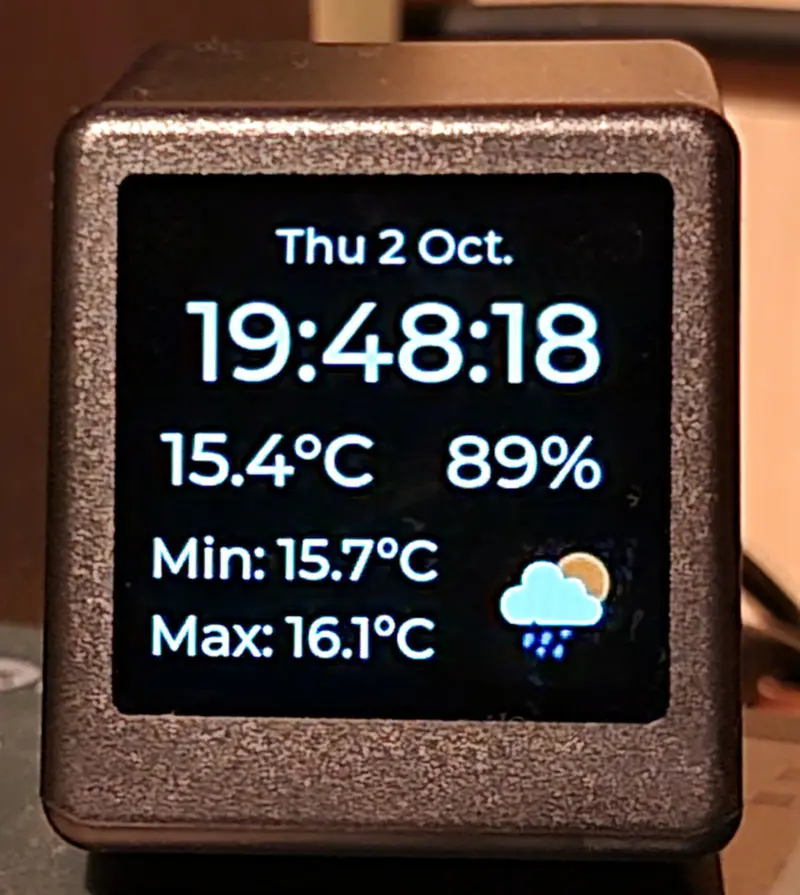
Desk Weather Clock (GeekMagic-S3)
An ESP32-S3 firmware for the GeekMagic-S3 hardware that displays time, date, and weather data. It leverages FreeRTOS and LVGL to provide a responsive 240x240 UI, features a web configuration interface, and supports remote image and text notifications via HTTP endpoints.
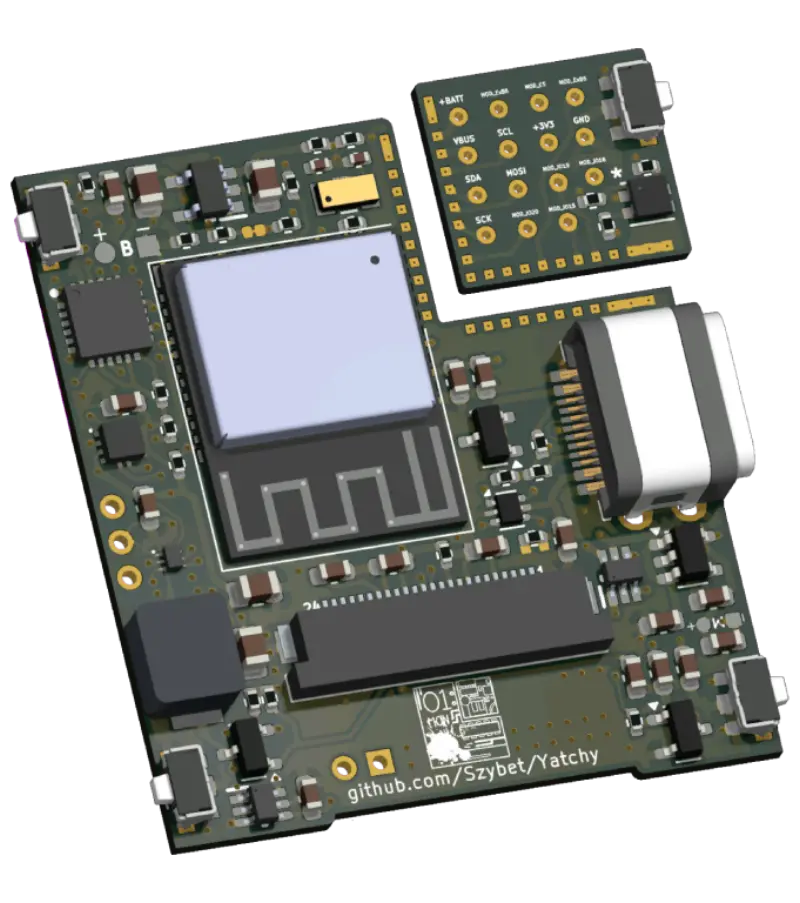
InkWatchy
A modular and highly configurable firmware for the Watchy and Yatchy e-paper smartwatches. Built using ESP-IDF and Arduino, it provides a feature-rich environment including weather charts, calendar synchronization, encrypted data storage, and FreeRTOS-based task management.
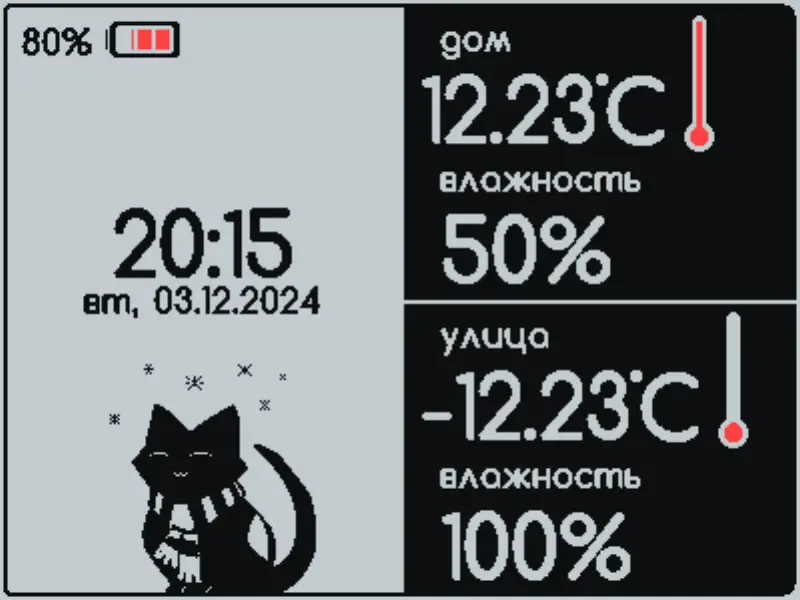
Volna 2BW42 Weather Station Firmware
An Arduino-based firmware for E-Ink weather stations targeting ESP8266 and ESP32 platforms. It supports BME280, SCD41, and DS18B20 sensors, provides MQTT connectivity for smart home integration, and features a web-based UI for configuration and custom design uploads.
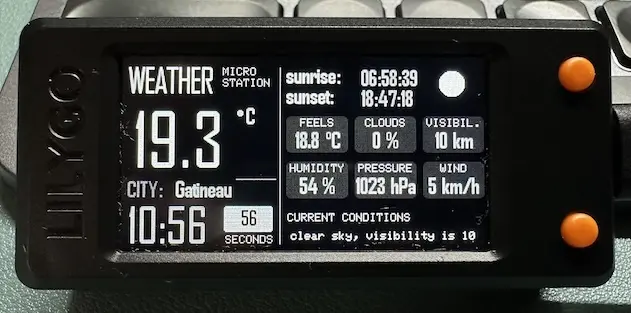
Weather Micro Station for T-Display S3
A modular, high-performance weather display system for the LilyGO T-Display S3 powered by an ESP32-S3. It provides real-time weather updates via the OpenWeatherMap API, featuring a smooth 40 FPS UI, automatic NTP time synchronization, and robust error recovery.