SensorStation3
SensorStation3 is an ESP32-based environmental monitoring station that utilizes FreeRTOS and the LVGL graphics library to provide a real-time touchscreen dashboard. It supports a variety of I2C sensors for tracking temperature, humidity, CO2, and atmospheric pressure, featuring seamless integration with Home Assistant and MQTT-based platforms.
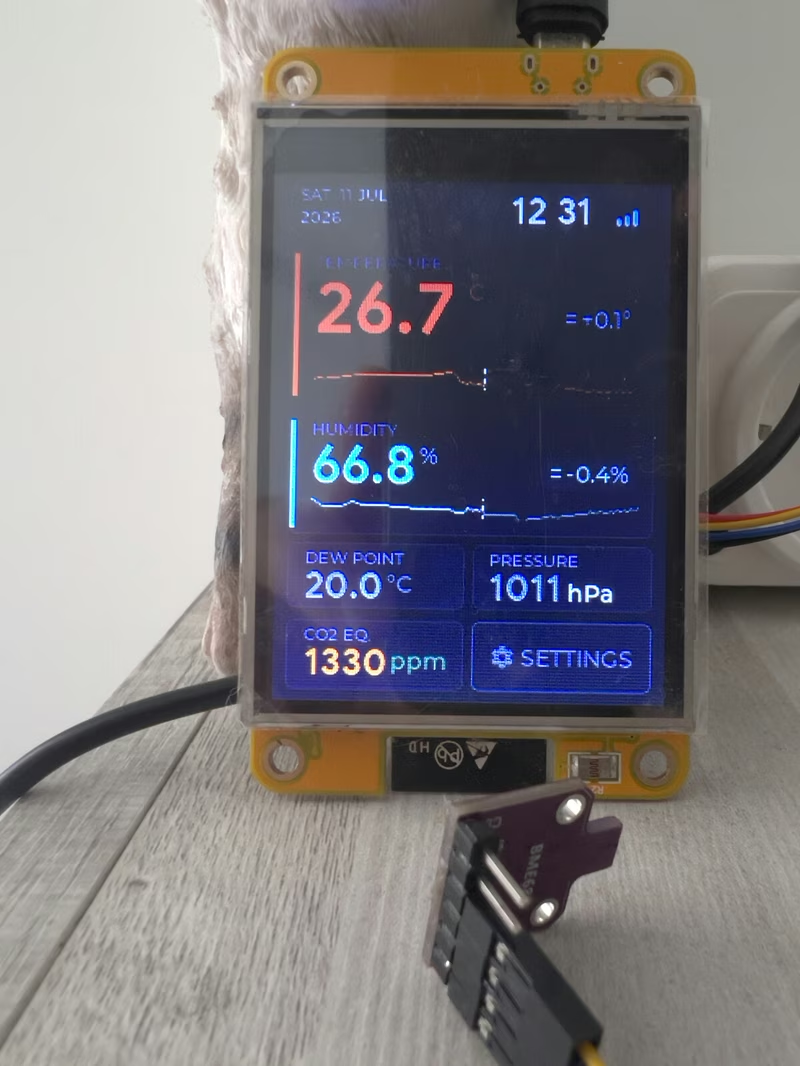
SensorStation3 is a comprehensive environmental monitoring solution designed for the ESP32 platform, specifically optimized for the “Cheap Yellow Display” (CYD) hardware. By leveraging the latest ESP-IDF framework and FreeRTOS, the project creates a robust hub for tracking indoor climate and air quality metrics. It moves beyond simple data logging by providing a localized, interactive dashboard that makes environmental data immediately accessible without needing to open a mobile app or web browser.
Advanced Visual Dashboard
The heart of the project is its touchscreen interface, powered by the LVGL (Light and Versatile Graphics Library) version 9. The dashboard is designed for high readability and information density, displaying not just current values but also 24-hour historical graphs, trend indicators, and rates of change for temperature and humidity. This allows users to visualize how their environment is evolving over time.
The firmware is engineered for hardware flexibility, featuring automatic detection of display controllers. Whether a board uses an ILI9341 or an ST7789 panel, the system identifies the hardware at boot and configures the display drivers accordingly. This plug-and-play philosophy extends to the sensors as well; the station automatically scans the I2C bus to detect and initialize supported environmental modules.
Comprehensive Sensor Support
SensorStation3 supports a wide array of popular I2C sensors, ranging from basic pressure sensors to advanced air quality monitors. Supported hardware includes:
- BME280/BMP280: Reliable standards for temperature, humidity, and atmospheric pressure.
- BME680: Supports gas resistance and volatile organic compound (VOC) monitoring. The project includes optional integration with the Bosch BSEC library for advanced Indoor Air Quality (IAQ) calculations.
- SCD40/SCD41: High-accuracy NDIR sensors for direct CO2 measurement, providing more precise readings than equivalent calculated values.
For users dealing with internal device heat, the software includes temperature offset compensation, ensuring that readings remain accurate even when the sensor is mounted close to the ESP32 processor.
Smart Home Ecosystem Integration
While the local display is a primary feature, SensorStation3 is fully equipped for the modern smart home. It utilizes the lwIP stack for networking and provides native MQTT integration. For Home Assistant users, the project implements MQTT Discovery, allowing the device and all its sensors to be automatically detected and configured as entities without any manual YAML editing.
Beyond Home Assistant, the station supports Domoticz and ThingsBoard, making it a versatile edge device for broader IoT architectures. It also maintains time accuracy via NTP synchronization, ensuring that the on-screen graphs and logs are always correctly timestamped.
Maintenance and Configuration
One of the project’s most user-friendly aspects is its approach to configuration. Rather than requiring users to hardcode Wi-Fi credentials or MQTT settings into the source code, SensorStation3 provides an on-device settings screen. Users can scan for Wi-Fi networks, enter passwords via an on-screen keyboard, and configure broker details directly on the device. These settings are stored securely in Non-Volatile Storage (NVS).
To ensure the device stays up to date with the latest features and security patches, the project includes a sophisticated Over-the-Air (OTA) update manager. The device periodically checks a remote manifest for new firmware versions and provides an on-screen notification when an update is available, allowing for one-touch installation of the latest binary.
Related Projects
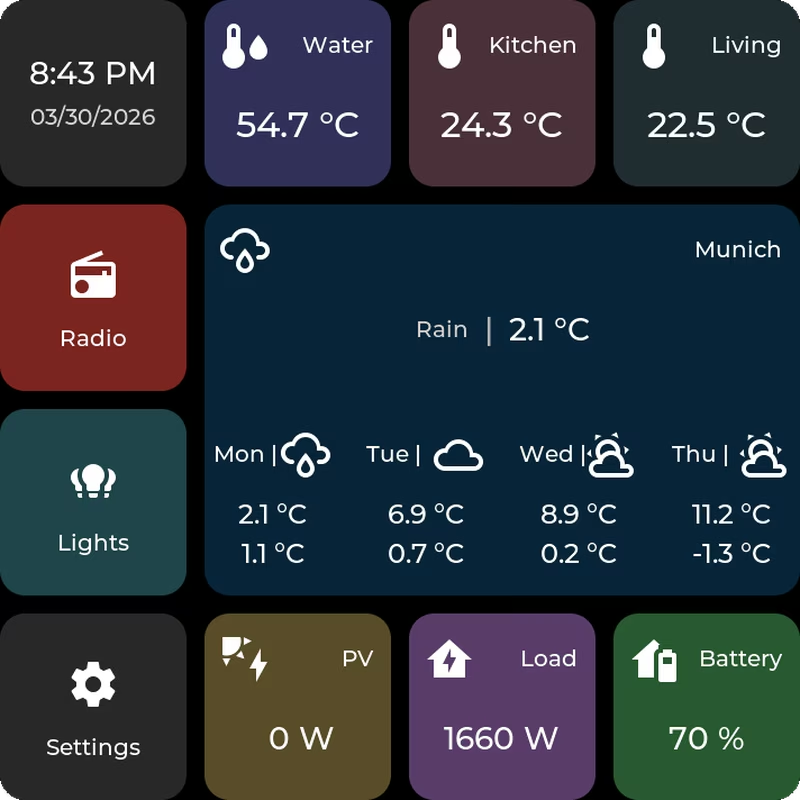
ESP32-P4 Home Assistant Display
A tile-based firmware for ESP32-P4 devices that creates a touch-first Home Assistant dashboard. It utilizes FreeRTOS and LVGL for the user interface, supporting MQTT integration and web-based configuration. The system targets ESP32-P4 hardware like the Waveshare B4 and M5Stack Tab5, featuring OTA updates and internal storage management via LittleFS.
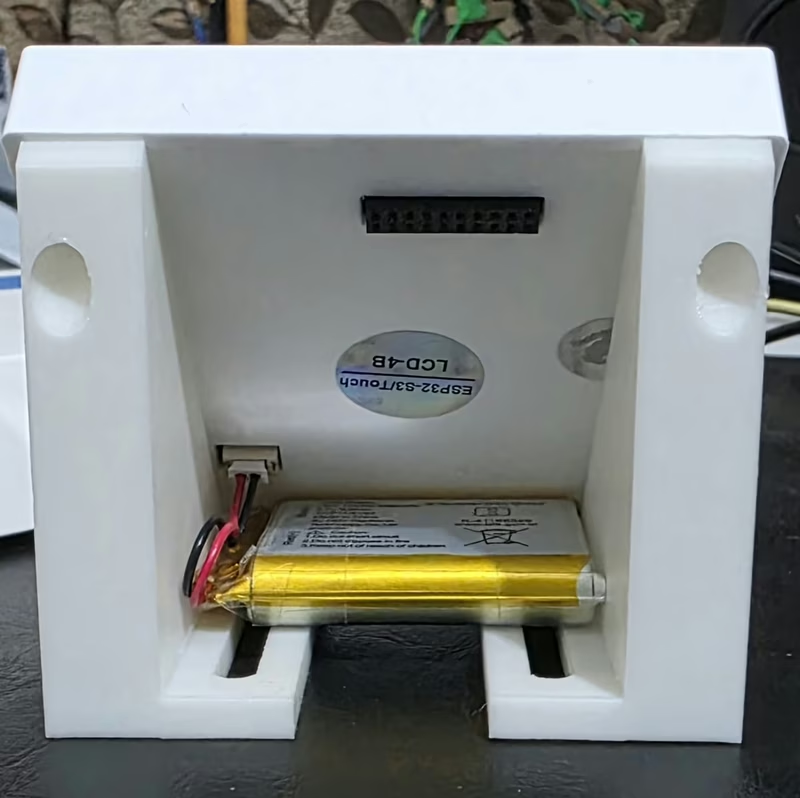
ESP32-S3 Smart Home Control Panel
A sophisticated touch-screen control interface for the Waveshare ESP32-S3-Touch-LCD-4B, featuring Home Assistant integration and real-time weather tracking. It utilizes the LVGL graphics library for a high-performance UI and implements advanced power management via the AXP2101 PMU.
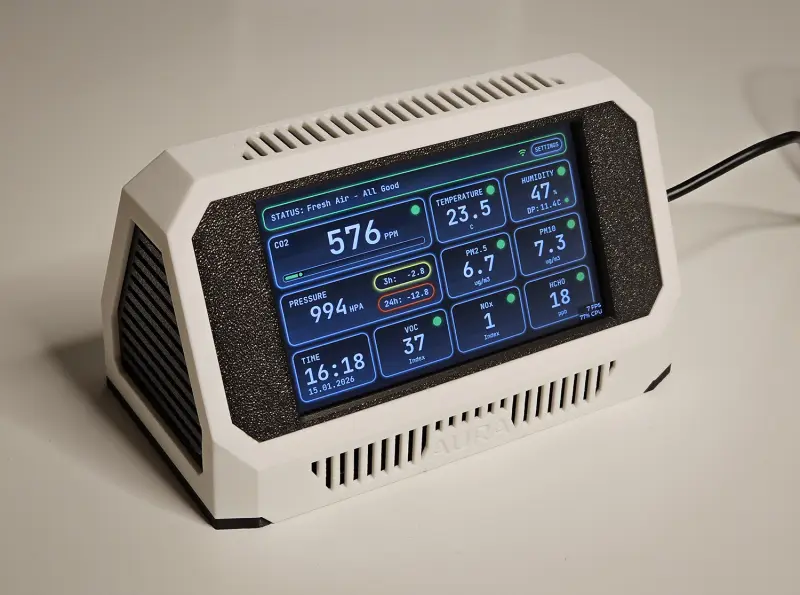
Project Aura
An open-source air-quality station based on the ESP32-S3, featuring a professional-grade sensor suite and a touch-enabled LVGL user interface. It integrates MQTT for Home Assistant discovery and provides a local web portal for configuration and telemetry monitoring.
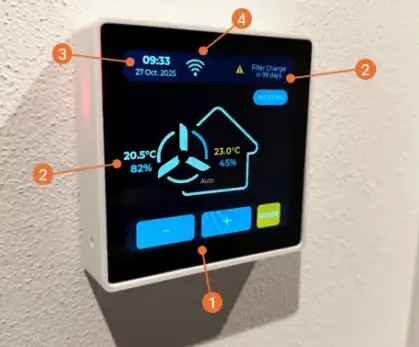
ComfoSense Touch: Zehnder ComfoAir Q350 MQTT Bridge & Controller
An ESP32-S3 based touch screen controller and MQTT bridge for Zehnder ComfoAir Q350 ventilation units. It replaces the ComfoSense hardware, providing a modern UI via LVGL and integrating with Home Assistant via CAN bus and MQTT.