AtlasCube
AtlasCube is a feature-rich internet radio and smart clock firmware built for the ESP32-S3 using the ESP-ADF and LVGL libraries. It supports streaming various audio formats, Bluetooth A2DP/HFP via external modules, and local SD card playback, all managed through a comprehensive on-device GUI and a standalone web interface. The project is designed for independence from cloud services, offering local MQTT control, OTA updates, and a customizable event system.
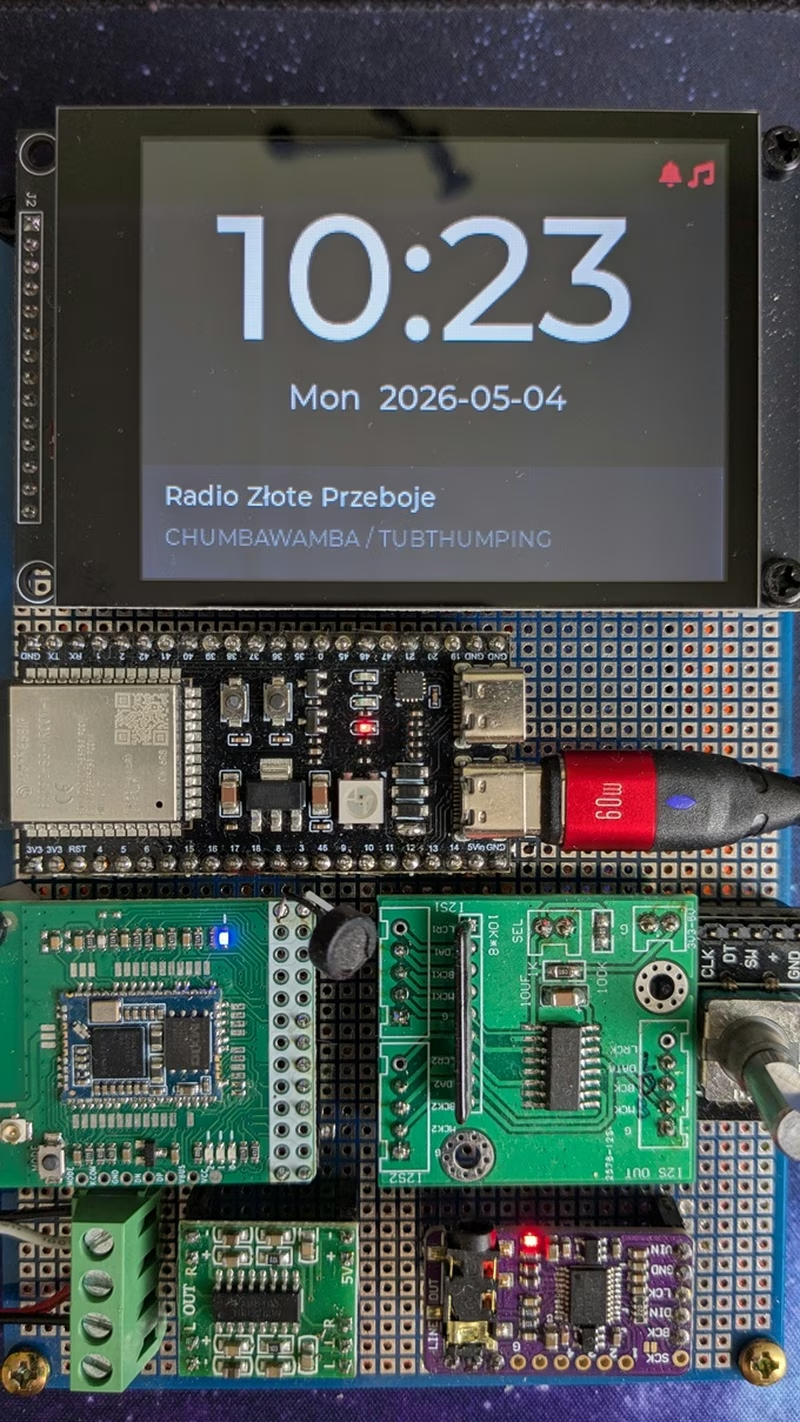
AtlasCube is a sophisticated hobby project that transforms a generic ESP32-S3 development board into a powerful internet radio and smart clock. It is designed to be entirely self-contained, running all services on-device without any cloud dependencies. The firmware manages internet radio streaming, displays a customizable clock, handles reminders, and provides a comprehensive web UI for configuration.
Core Audio Capabilities
At its heart, AtlasCube is a high-performance audio streamer. Utilizing the Espressif Audio Development Framework (ESP-ADF), it supports MP3, AAC, and FLAC streams. It uniquely handles HLS live streams by demuxing MPEG-TS segments on the fly and includes a specialized podcast mode. This mode treats episodes as finite streams, allowing the device to remember playback positions and resume mid-episode via HTTP Range requests.
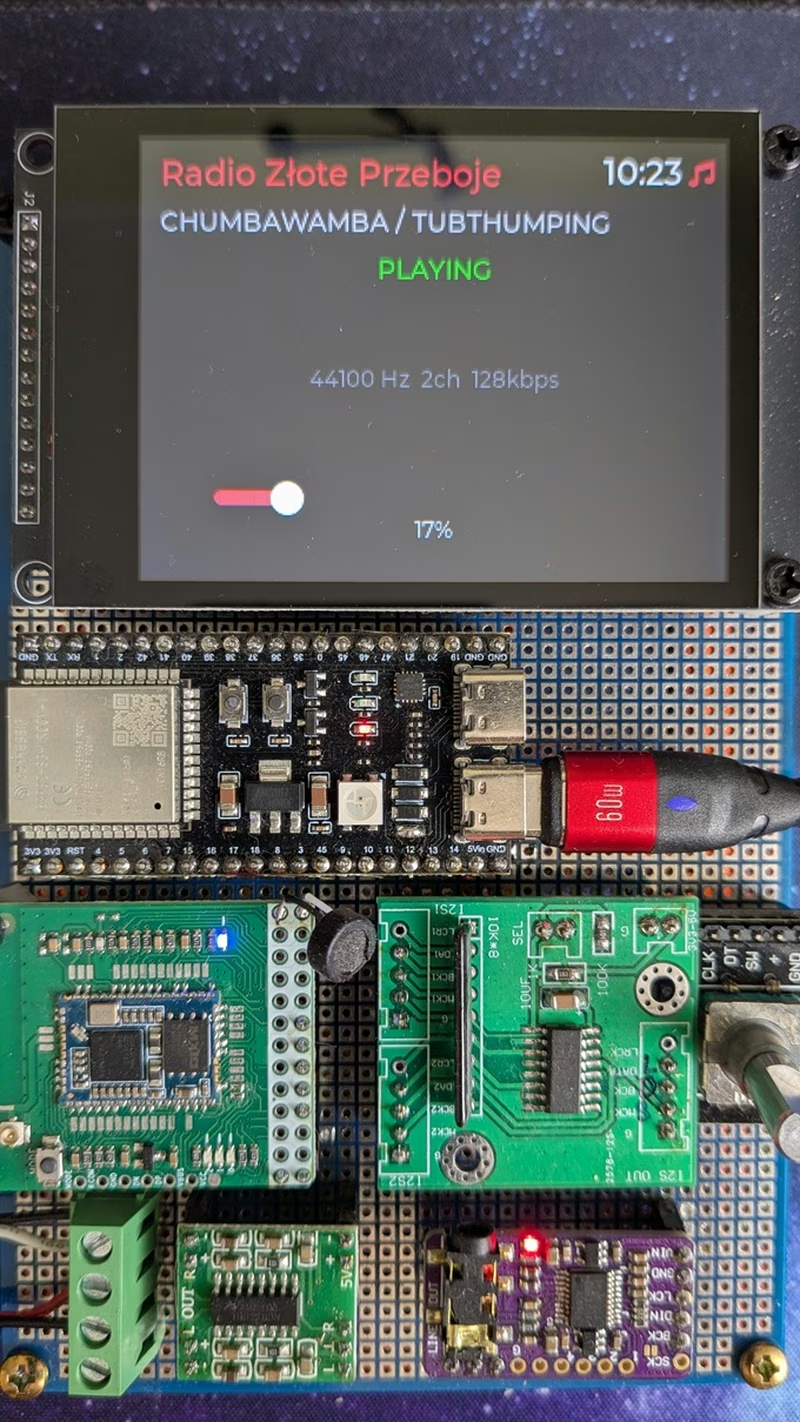
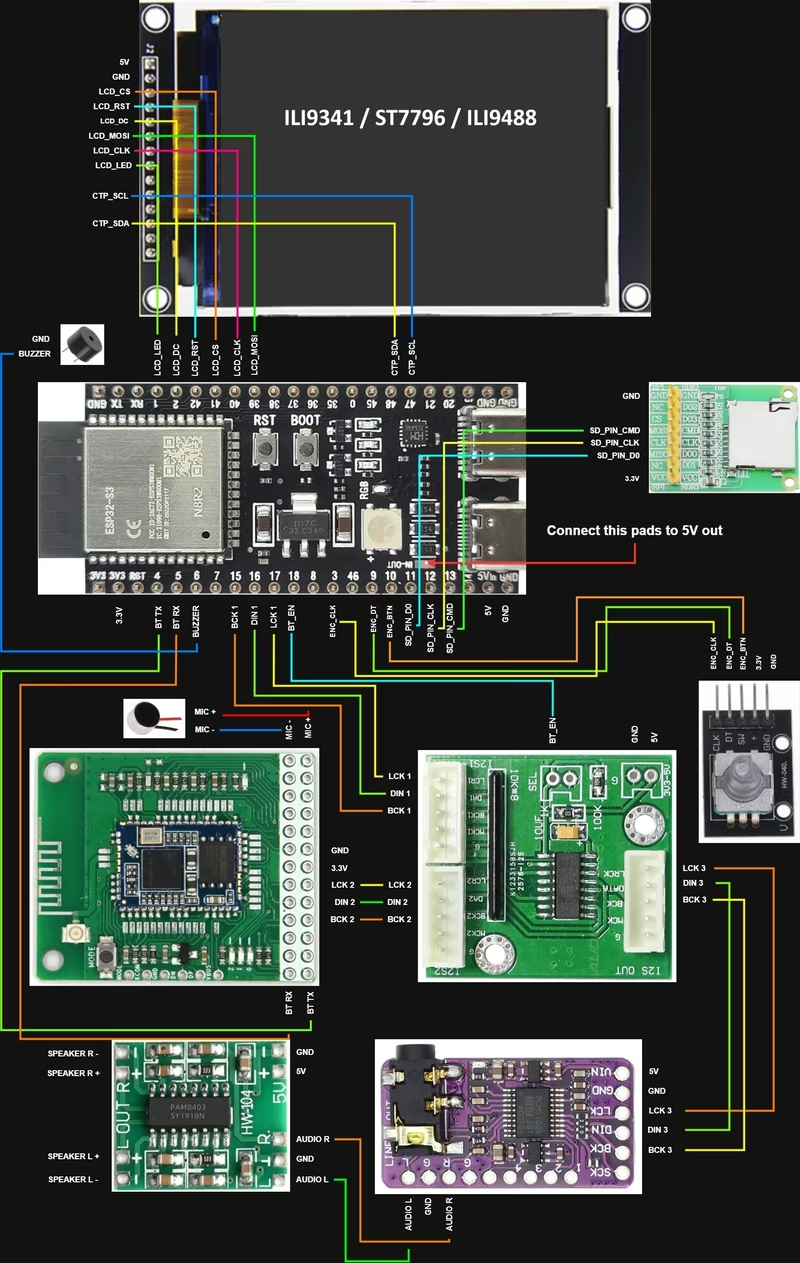
Audio quality is managed through a 10-band parametric equalizer and custom DSP elements. Beyond internet streaming, the device supports Bluetooth audio (A2DP sink and HFP hands-free) via an external QCC5125 module and local music playback from a microSD card. A hardware I2S multiplexer (74HC157D) is used to switch between the ESP32-S3 and the Bluetooth module’s audio outputs.
User Interface and Customization
The device features a graphical user interface built with the LVGL library. It supports a wide variety of displays, from standard SPI-based ILI9341 panels to high-resolution QSPI AMOLED screens. Navigation is handled through a combination of a rotary encoder and touch gestures (swipes and taps).
The “Home Hub” serves as the primary interface, featuring an adaptive clock face that changes based on the active audio source. Users can customize the look and feel of their device through a visual web editor, which allows for positioning widgets, setting background wallpapers from SD cards or URLs, and adjusting theme opacity.
Smart Features and Screensavers
AtlasCube includes several ambient display modes that activate after an idle timeout. The “Dashboard” screensaver can poll any JSON HTTP/HTTPS endpoint to display real-time data such as weather, crypto prices, or exchange rates. The “Photo Frame” mode cycles through images stored on a microSD card with various transition effects like wipes and dissolves.
The system also includes a robust event and reminder engine. Users can set recurring notifications for birthdays or anniversaries, which trigger on-screen alerts and buzzer melodies. It even supports voice notifications, where the device plays spoken clips synthesized via a companion Android app.
Connectivity and Management
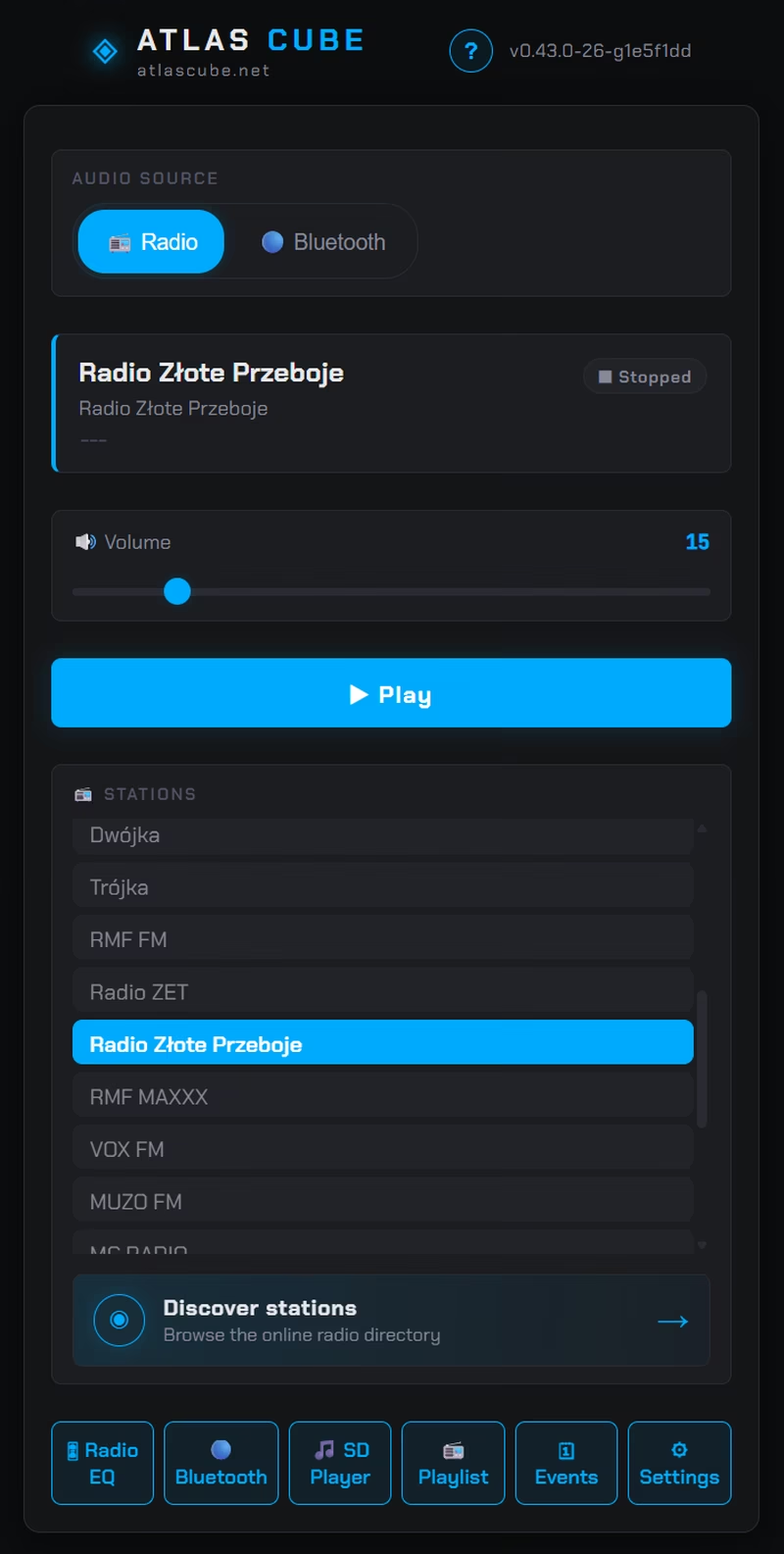
AtlasCube is managed through a built-in web server and WebSocket interface, providing real-time state synchronization. The web UI includes tools for station management, a file manager for both internal SPIFFS and the SD card, and an MQTT dashboard.
The MQTT client allows the device to be integrated into home automation systems like Home Assistant, enabling remote control and the display of user-defined widgets. Maintenance is simplified through an OTA (Over-The-Air) update system and an automatic update check that notifies users of new firmware or web UI releases.
Hardware and Build System
The project targets the ESP32-S3 MCU with 16MB of flash and OctoSPI PSRAM. While it is developed on a custom “Atlas Hub” board, it can be adapted to various generic dev boards. A key feature of the software design is the ability to remap GPIO pins at runtime via a setup page, allowing a single binary build to support different hardware wiring layouts. For developers, the project provides a streamlined build process using ESP-IDF v5.5.4 and a custom Python-based flash script that automates environment setup and firmware deployment.
Related Projects
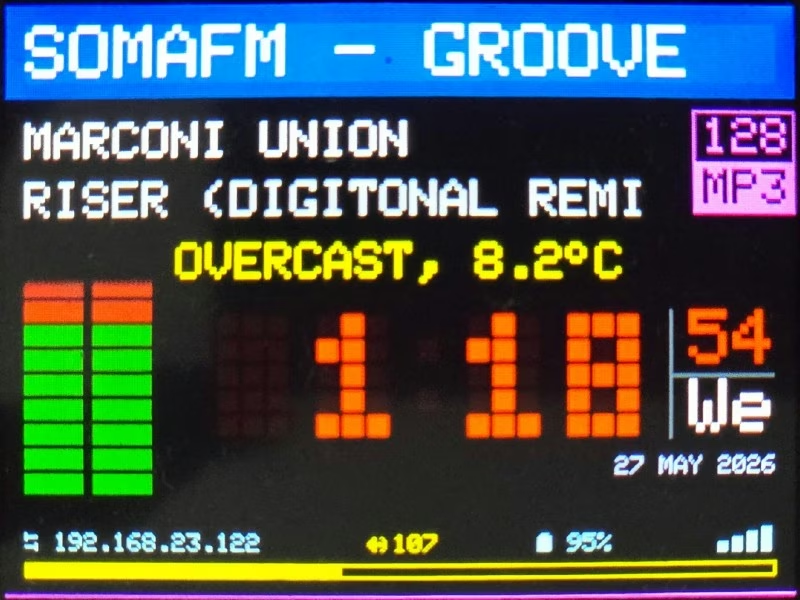
ehRadio
ehRadio is a feature-rich internet radio firmware for the ESP32 platform, specializing in the ESP32-S3 for high-performance audio streaming. It features a mobile-first WebUI, supports multiple audio decoders like I2S and VS1053, and integrates seamlessly with Home Assistant via MQTT.
Melody Machine
Melody Machine is a feature-rich MP3 player and internet radio firmware designed for the LilyGO T-LoRa Pager (ESP32-S3). It leverages FreeRTOS for dual-core audio processing and the LVGL library to provide a responsive graphical interface with support for local microSD playback and WiFi-based streaming.
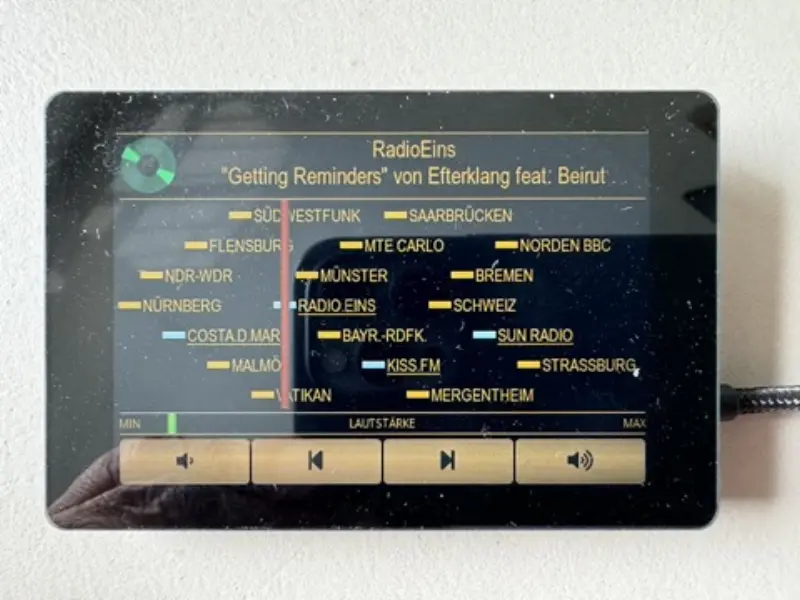
TINYRadio9 for WT32-SC01-PLUS
An internet radio project for the WT32-SC01-PLUS (ESP32-S3) module featuring a sophisticated LVGL-based touchscreen interface. It utilizes ESP32-audioI2S for streaming and LittleFS for configuration storage.
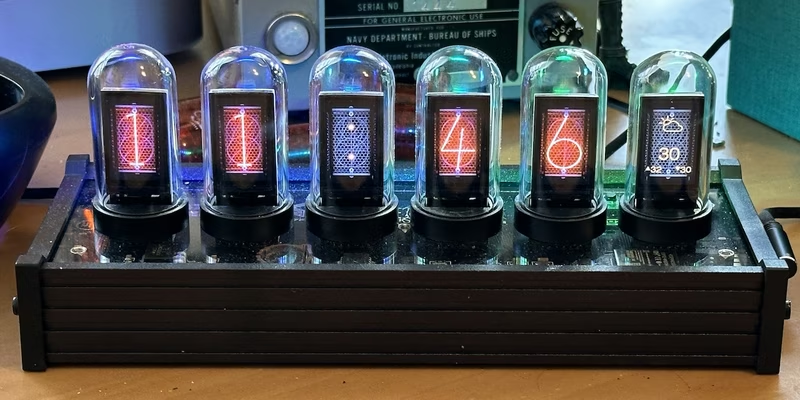
EleksTube IPS Custom Firmware
This project provides a feature-rich custom firmware for ESP32-based EleksTube IPS digital clocks, enabling internet time synchronization and weather updates. It utilizes the TFT_eSPI library for high-quality display management and LittleFS for asset storage, while offering a web-based configuration portal and MQTT integration for smart home ecosystems.
ESP32 Web Radio Evo3
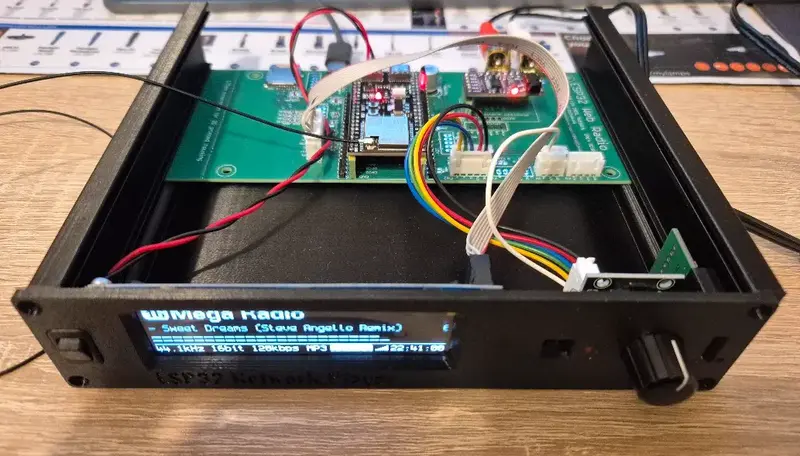
An advanced internet radio streamer built on the ESP32-S3 platform, featuring support for MP3, AAC, VORBIS, and FLAC streams. It integrates a web server for remote control, an OLED display for visualization, and supports both rotary encoder and infrared remote inputs.