ehRadio
ehRadio is a feature-rich internet radio firmware for the ESP32 platform, specializing in the ESP32-S3 for high-performance audio streaming. It features a mobile-first WebUI, supports multiple audio decoders like I2S and VS1053, and integrates seamlessly with Home Assistant via MQTT.
Introduction
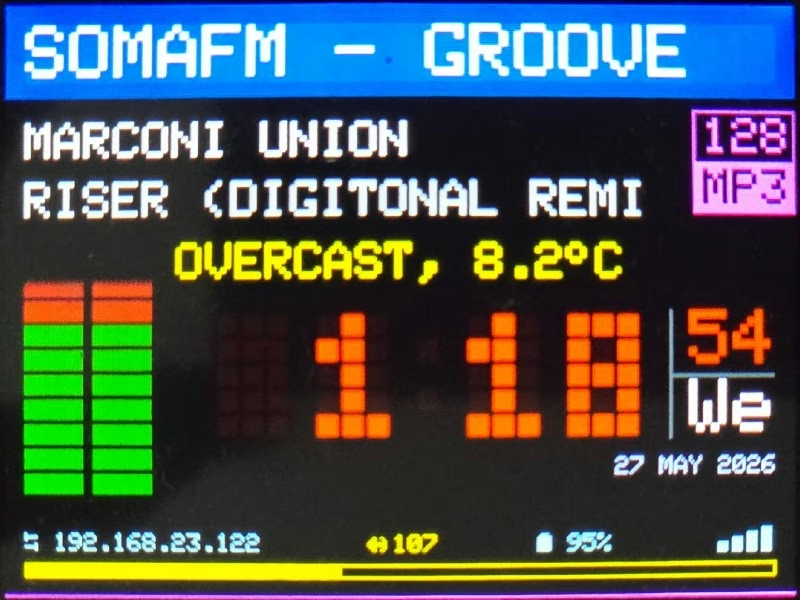
ehRadio is an advanced internet radio firmware designed to run on the ESP32 ecosystem. While it supports standard ESP32 and ESP32-C3 boards, it is optimized for the ESP32-S3 to take advantage of improved peripherals and processing power. The project allows builders to create a fully functional radio using an ESP32, an audio decoder (such as I2S PCM or VS1053), a display, and various input methods. For certain integrated boards like the ES3C28P, the firmware can run with almost no additional peripherals.
Developed primarily using VS Code and PlatformIO, ehRadio is a fork of the well-known ёRadio (yoRadio) project. It aims to bridge the gap between complex DIY builds and user-friendly consumer devices by providing a web-based flasher and OTA updates, making the firmware accessible even to those who prefer not to dive deep into IDEs.
Features and Capabilities
ehRadio focuses on increasing usability for end-users while maintaining deep customizability for hardware builders. It inherits a robust control architecture supporting up to two rotary encoders, six buttons, touchscreens, and IR remotes.
User Experience
The user interface has been significantly overhauled from its predecessor. It features a mobile-first WebUI available in 50 languages, supporting playlist editing, importing, and merging. Integration with the Radio-browser API allows for easy station searching, and a curated list feature enables users to preview and download playlists. For smart home enthusiasts, the firmware offers improved Home Assistant integration via MQTT, alongside Telnet and HTTP control options.
Builder Flexibility
For hardware builders, the project moves the focus toward the ESP32-S3, recommending 8MB of flash to support all features. It offers extensive support for various audio decoders:
- I2S PCM decoders and VS1053/VS1003 (updated for high bitrate streams).
- ES8311 codecs common on modern S3 display boards.
- Custom SPI bus pin assignments, allowing displays and audio decoders to share or separate buses (Bus A and Bus B) more flexibly than standard implementations.
Interface and Control
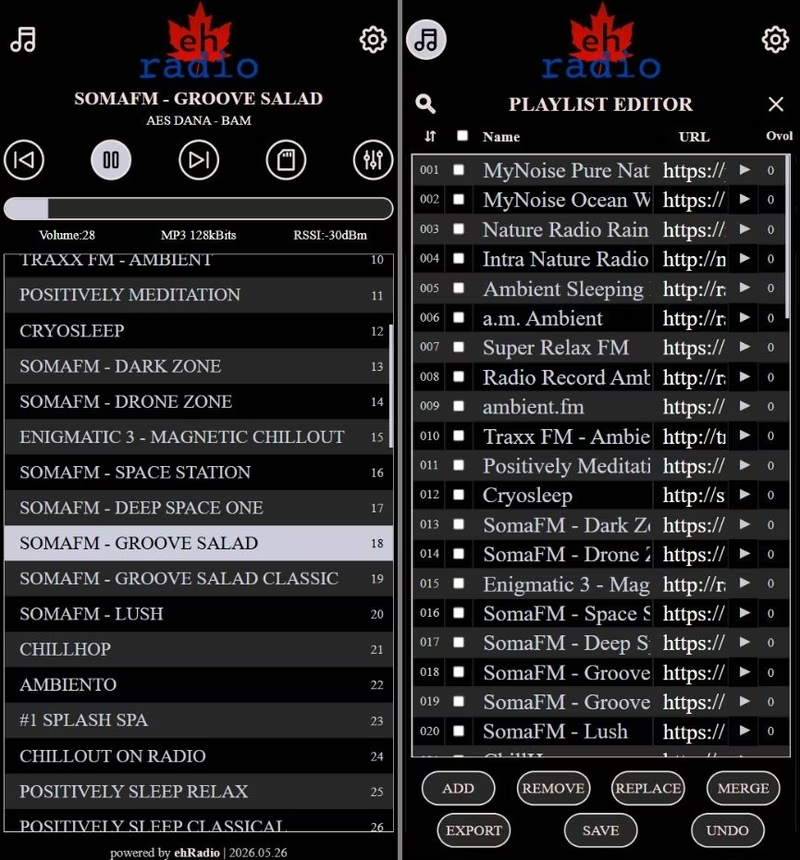
The WebUI is a centerpiece of the project, optimized for mobile browsers to provide a seamless remote control experience. Beyond the web interface, the system supports physical interaction through various hardware peripherals. Almost all system and user default settings are configurable via a myoptions.h file, which can be generated using a dedicated web-based tool provided by the project.
Technical Architecture and Libraries
The codebase relies on specialized audio handling, currently utilizing the ESP32-audioI2S and ESP32-vs1053_ext libraries. These are tightly integrated to ensure stable playback of internet streams. The project also incorporates a custom command handler, unified error logging, and an optimized RTOS background task for the playback queue to ensure smooth performance even during heavy network activity.
Hardware Implementation
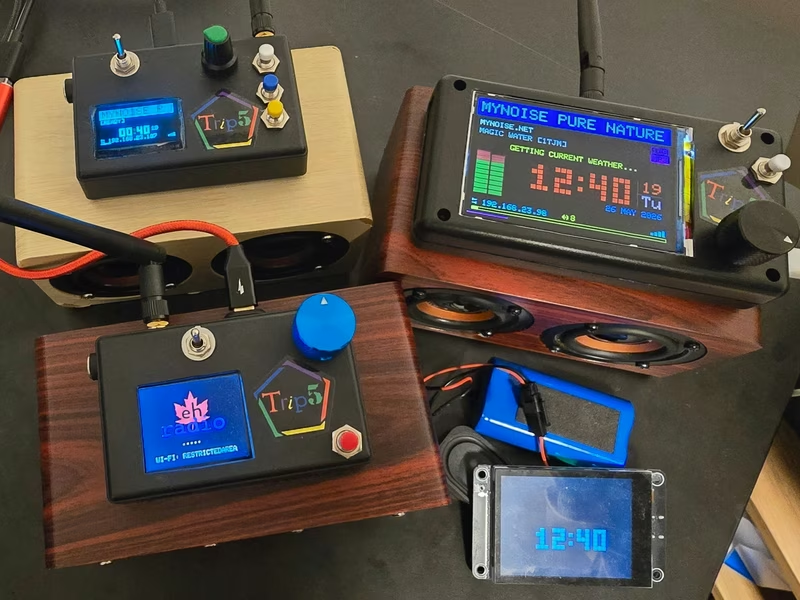
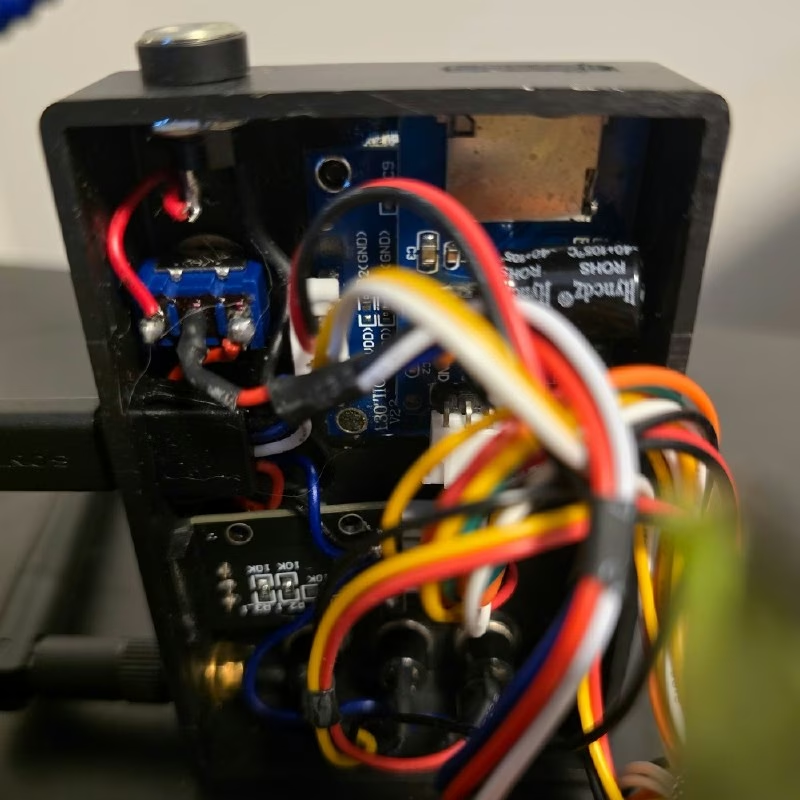
Real-world builds often utilize repurposed hardware, such as gutting cheap Bluetooth speakers and fitting them with ESP32-S3 internals. Reliability is emphasized through the use of XH2.54 connectors rather than breadboards or DuPont wires, ensuring stable connections within portable enclosures.
A History of ESP Radios
The project is part of a long lineage of ESP-based audio projects. It traces its roots back to Edzelf’s original Esp-radio from 2016, through Ka-Radio, and eventually to ёRadio. ehRadio represents a modern evolution of these efforts, focusing on the latest ESP32-S3 hardware and modern web standards while maintaining compatibility with the vast ecosystem of DIY radio hardware developed over the last decade.
Related Projects
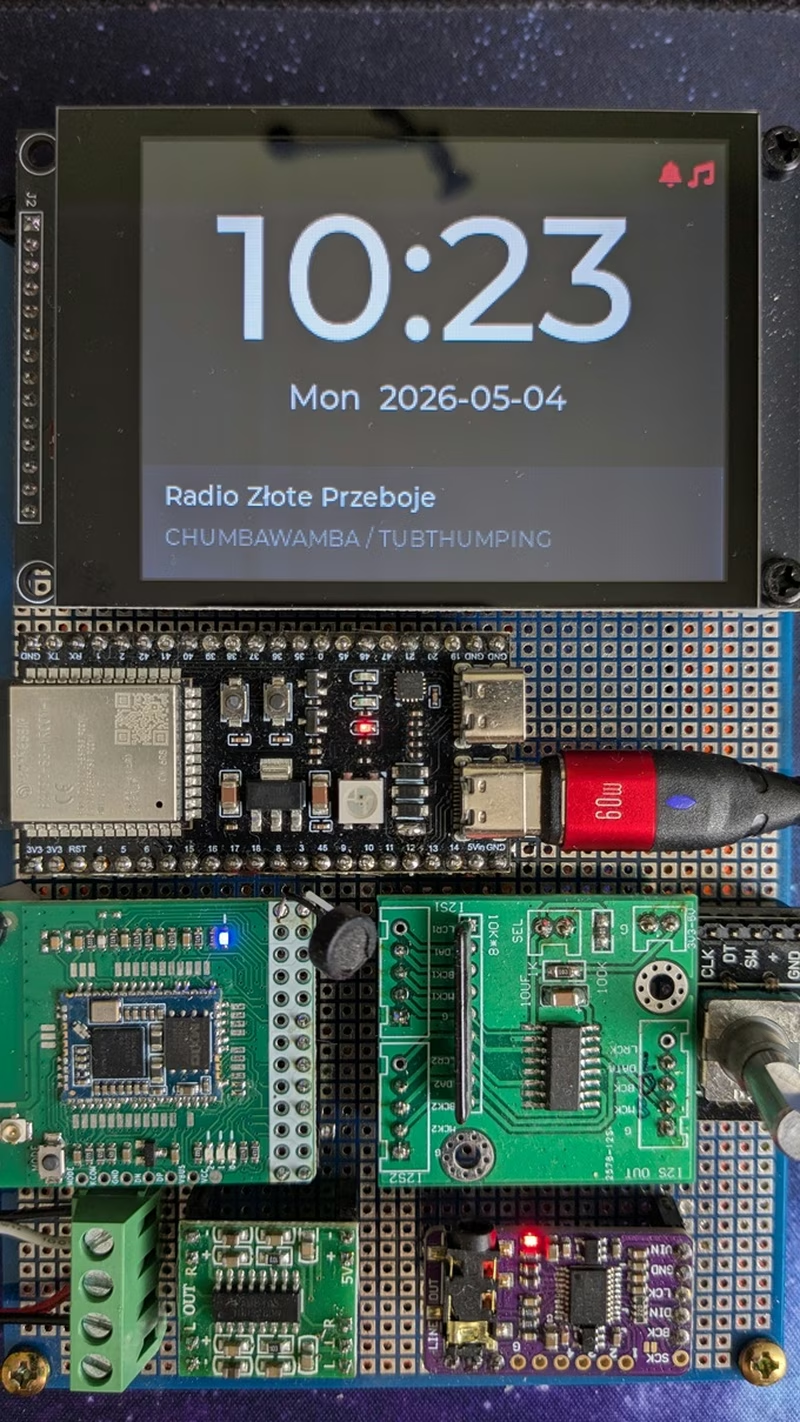
AtlasCube
AtlasCube is a feature-rich internet radio and smart clock firmware built for the ESP32-S3 using the ESP-ADF and LVGL libraries. It supports streaming various audio formats, Bluetooth A2DP/HFP via external modules, and local SD card playback, all managed through a comprehensive on-device GUI and a standalone web interface. The project is designed for independence from cloud services, offering local MQTT control, OTA updates, and a customizable event system.
Melody Machine
Melody Machine is a feature-rich MP3 player and internet radio firmware designed for the LilyGO T-LoRa Pager (ESP32-S3). It leverages FreeRTOS for dual-core audio processing and the LVGL library to provide a responsive graphical interface with support for local microSD playback and WiFi-based streaming.
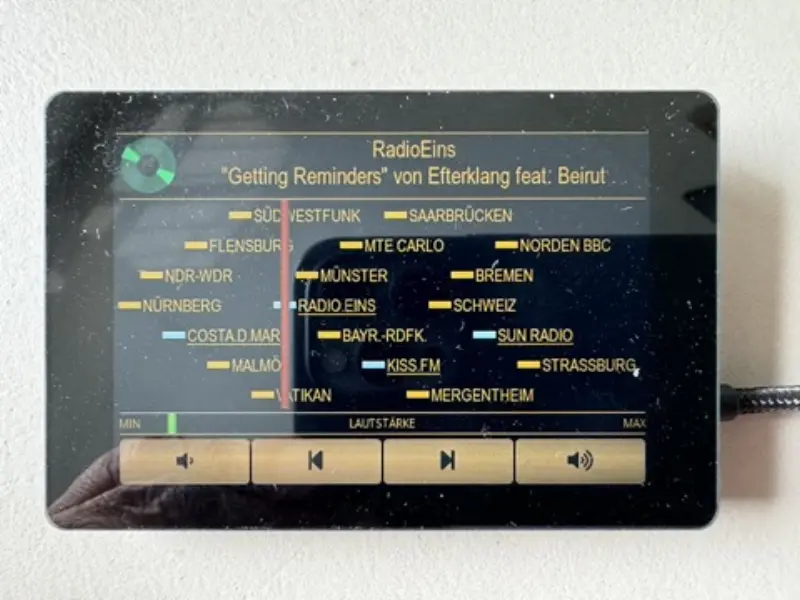
TINYRadio9 for WT32-SC01-PLUS
An internet radio project for the WT32-SC01-PLUS (ESP32-S3) module featuring a sophisticated LVGL-based touchscreen interface. It utilizes ESP32-audioI2S for streaming and LittleFS for configuration storage.
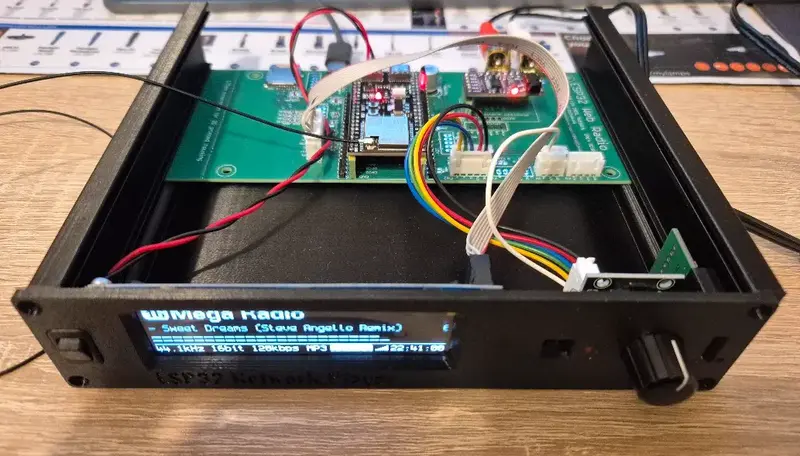
ESP32 Web Radio Evo3
An advanced internet radio streamer built on the ESP32-S3 platform, featuring support for MP3, AAC, VORBIS, and FLAC streams. It integrates a web server for remote control, an OLED display for visualization, and supports both rotary encoder and infrared remote inputs.