TYPE-2 Autonomous Polyphonic Synthesizer
The TYPE-2 is an ESP32-S3-based polyphonic synthesizer featuring a custom hybrid dual-rate DSP engine and analog-modeled filters. It utilizes FreeRTOS for task management, I2S for high-fidelity audio, and capacitive touch for a responsive user interface.
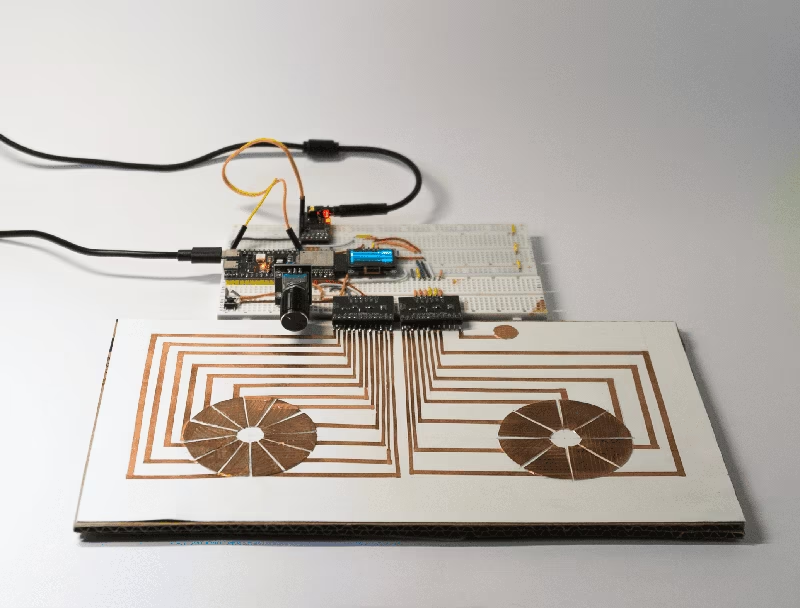
The TYPE-2 is a sophisticated DIY synthesizer that brings studio-quality polyphonic synthesis to the ESP32-S3 platform. Developed by Alexandre Esnard, this project stands out for its highly optimized DSP core, achieving complex audio processing that typically requires much more expensive hardware. By leveraging the dual-core capabilities of the ESP32-S3, the TYPE-2 separates its high-frequency audio tasks from its visual interface, ensuring a glitch-free performance even during complex modulation.
High-Performance DSP Architecture
At the heart of the TYPE-2 is a hybrid DSP engine designed for efficiency and character. It employs a dual-rate processing architecture, which is essential for maintaining audio fidelity while managing the computational load of a 7-voice polyphonic system. The signal chain is impressively deep, featuring a factorized 24dB/Oct Moog Ladder Filter, a tube overdrive simulation based on fast polynomial saturation, and a studio-grade digital delay. This combination allows for a “heavy” sound profile that mimics analog warmth with digital precision.
To achieve this level of performance on a microcontroller, the project utilizes specific hardware features of the ESP32-S3, including the 240MHz CPU frequency and OPI PSRAM. The firmware is engineered to run the DSP engine and display tasks in parallel, ensuring that the audio stream remains uninterrupted even when the UI is rendering complex visualizations.
Interactive User Interface
The user experience is centered around a unique interface that moves away from standard list-based menus. The TYPE-2 features a cylindrical rotary menu and a responsive topological grid visualization on a 128x64 OLED display. This provides real-time visual feedback of the sound’s “shape” and parameters, making the synthesis process more intuitive.
For input, the project uses MPR121 capacitive touch sensors connected to copper tape. This allows makers to create a custom, flexible keyboard layout that supports both individual notes and chord inputs. The integration of a KY-040 rotary encoder and a tactile navigation button provides precise control over the hierarchical menu system.
Hardware and Build Process
Designed with accessibility in mind, the TYPE-2 is highly affordable, with a total component cost of approximately €35. It utilizes readily available modules, making it an excellent project for the maker community. The hardware BOM includes:
- ESP32-S3: 16MB Flash and PSRAM are strictly required to handle the audio buffers.
- PCM5102A: An I2S DAC module for high-quality audio output.
- SSD1306: A standard 128x64 OLED display for the UI.
- MPR121: Capacitive touch sensors for the keybed.
The build process is designed to be near-zero difficulty, requiring minimal wiring and no custom PCBs in its initial version, though a custom PCB design is on the project’s roadmap.
Technical Implementation
The firmware is built using the Arduino framework and is compatible with both the Arduino IDE and PlatformIO. It relies on the native ESP32 I2S drivers for audio processing and utilizes the Adafruit GFX and SSD1306 libraries for display management. To ensure the DSP engine runs correctly, specific compiler settings are required, such as enabling USB CDC on boot and configuring the partition scheme to accommodate the FATFS filesystem.
With a roadmap that includes external MIDI communication, Bluetooth integration, and an arpeggiator, the TYPE-2 is a platform that continues to evolve, pushing the boundaries of what is possible with low-cost embedded hardware in the realm of music synthesis.
Related Projects
ESP32 SD Sampler
A polyphonic music synthesizer for the ESP32-S3 and ESP32-P4 that streams PCM WAV samples directly from an SD card. It utilizes a custom FAT32 lookup system to bypass RAM limitations, enabling the playback of massive multi-velocity sample sets with built-in ADSR envelopes and reverb effects.
ESP32 SoundFont (SF2) Sampler Synthesizer
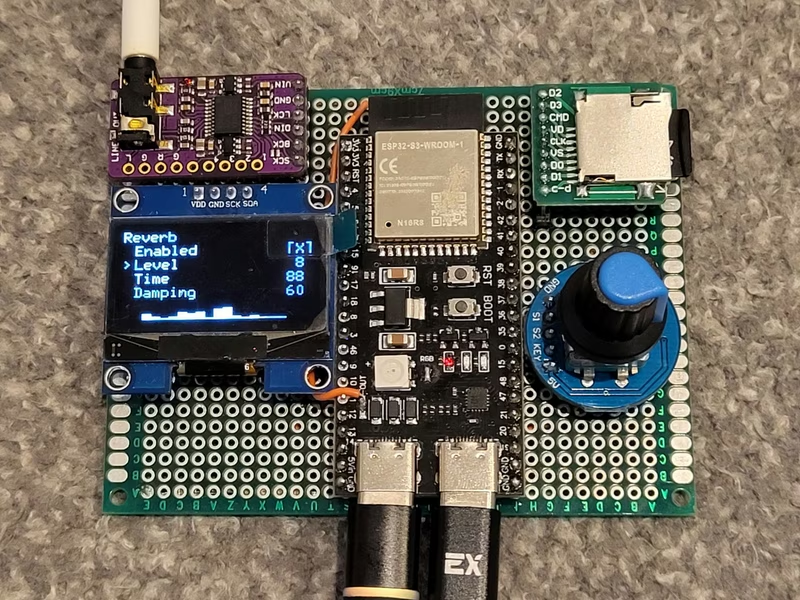
A high-performance wavetable synthesizer firmware for ESP32-S3 and ESP32-P4 microcontrollers that plays SoundFont 2 (SF2) samples. It utilizes PSRAM for large sample banks, supports USB MIDI for plug-and-play connectivity, and features real-time audio effects like reverb and chorus.
ESP32-S3 SD Sampler
A polyphonic music synthesizer for the ESP32-S3 that plays PCM WAV samples directly from a microSD card. It features 15-20 stereo voices, ADSR envelopes, built-in reverb, and MIDI control, utilizing custom SDMMC routines for high-speed data access without preloading samples into RAM.
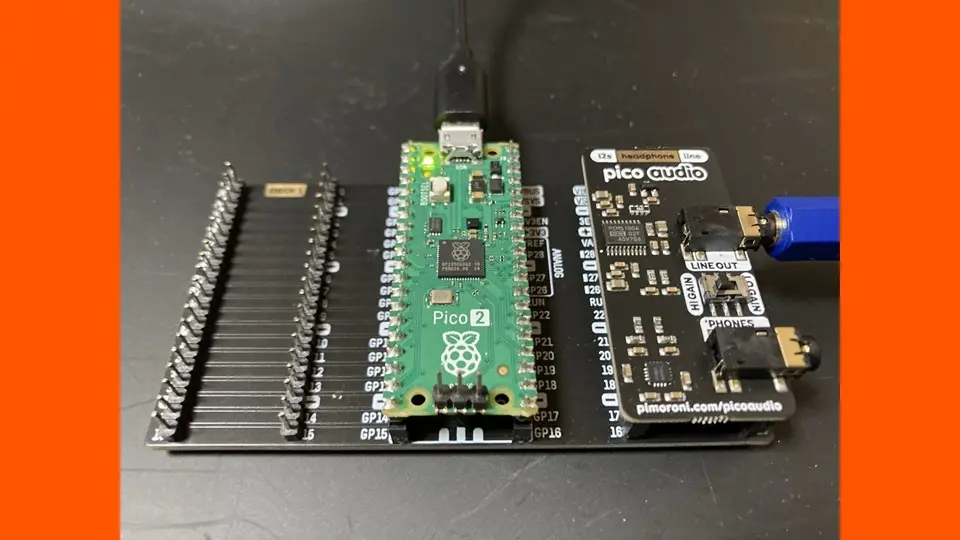
Digital Synth PRA32-U2
A 4-voice polyphonic synthesizer designed for the Raspberry Pi Pico 2 and RP2350 microcontroller. It features built-in chorus and delay effects, MIDI control via USB or UART, and support for high-quality I2S DACs or PWM audio output.
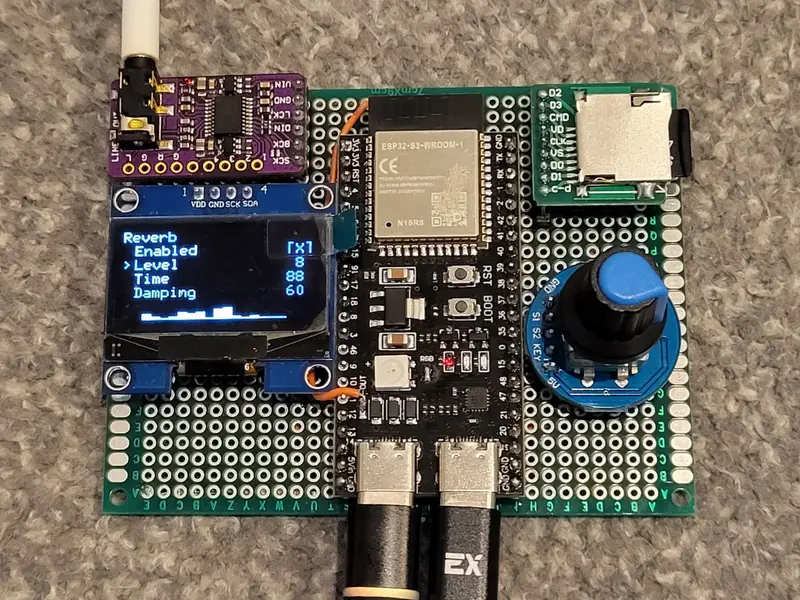
ESP32-S3 SoundFont (SF2) Sampler Synthesizer
A high-performance wavetable synthesizer firmware for the ESP32-S3 that enables high-quality SoundFont 2 (SF2) playback. It leverages PSRAM for sample loading and supports USB MIDI, external I2S DACs, and runtime switching between LittleFS and SD card storage.