ESP32 SD Sampler
A polyphonic music synthesizer for the ESP32-S3 and ESP32-P4 that streams PCM WAV samples directly from an SD card. It utilizes a custom FAT32 lookup system to bypass RAM limitations, enabling the playback of massive multi-velocity sample sets with built-in ADSR envelopes and reverb effects.
The ESP32 SD Sampler is a sophisticated polyphonic music synthesizer designed to overcome one of the most significant hurdles in embedded audio: memory constraints. While many micro-controller-based samplers attempt to preload audio data into RAM or PSRAM, this project takes a different approach by streaming PCM WAV samples directly from a microSD card. This architecture allows the sampler to handle massive, multi-gigabyte sample sets that would be impossible to fit into traditional memory chips.
Direct Streaming Architecture
At the heart of the ESP32 SD Sampler is a custom SDMMC implementation designed for high-speed, low-latency data retrieval. By using a 4-bit wide bus and analyzing the File Allocation Table (FAT) at startup, the system creates its own sample lookup table. This allows the engine to access data immediately without the overhead of standard file system calls during playback.
To ensure smooth performance, the project requires that the SD card be freshly formatted in FAT32 with minimal fragmentation. This optimization enables the sampler to achieve a polyphony of 15 to 20 stereo voices, depending on the specific MCU and the technical specifications of the microSD card used. The engine reads approximately seven sectors per request, balancing buffer sizes with the fast internal RAM available on the ESP32-S3 and P4.
Sound Shaping and Synthesis
The sampler is not just a file player; it is a full-featured synthesis engine. It supports 16 and 24-bit WAV files at a 44100Hz sample rate. Each voice is processed through a digital ADSR (Attack, Decay, Sustain, Release) envelope generator, providing precise control over the dynamic contour of the sound.
Beyond basic playback, the project includes a built-in Reverb FX engine and digital signal processing for signal mixing, attenuation, and amplitude limiting. It also supports velocity layering—up to 16 layers per note—allowing for highly expressive instruments, such as grand pianos or complex drum kits, where the timbre changes based on how hard a key is struck.
Configuration and MIDI Control
One of the most user-friendly aspects of the project is the SAMPLER.INI configuration system. Instead of hardcoding sample mappings, users can define how samples are spread across the keyboard using a simple plain-text file. This file manages global parameters, velocity limits, and per-note configurations like tuning (speed), ADSR constants, and instrument groupings (useful for exclusive groups like open and closed hi-hats).
The sampler responds to standard MIDI messages, making it compatible with external controllers and sequencers. Supported MIDI controls include:
- Note On/Off: Triggering samples with velocity sensitivity.
- Sustain (CC64): Managing note hold behavior.
- Pitchbend: Real-time frequency modulation.
- ADSR Controls: CC mappings for Attack (73), Release (72), Decay (75), and Sustain Level (76).
- Reverb Parameters: Dedicated CCs for Reverb time, level, and send.
Hardware and Build Requirements
Designed primarily for the ESP32-S3 and the newer ESP32-P4, the project leverages the specific memory segmentation and performance characteristics of these chips. While the core logic is built on the Arduino framework, it interfaces deeply with ESP-IDF components for I2S audio output and SDMMC hardware abstraction.
Setting up the project requires the Arduino IDE and a few specific libraries: FixedString for efficient memory-safe string handling, the Arduino MIDI library, and optionally FastLED if the user wishes to incorporate RGB status indicators. Because the sampler relies on high-speed streaming, the quality of the microSD card and the avoidance of certain buggy ESP32 Arduino core versions (specifically 3.1.2 and 3.1.3) are critical for a stable build.
Related Projects
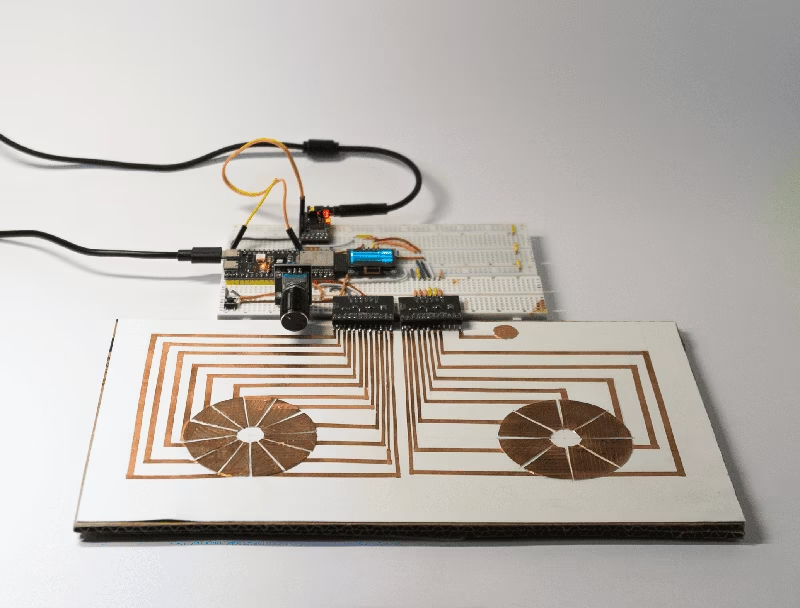
TYPE-2 Autonomous Polyphonic Synthesizer
The TYPE-2 is an ESP32-S3-based polyphonic synthesizer featuring a custom hybrid dual-rate DSP engine and analog-modeled filters. It utilizes FreeRTOS for task management, I2S for high-fidelity audio, and capacitive touch for a responsive user interface.
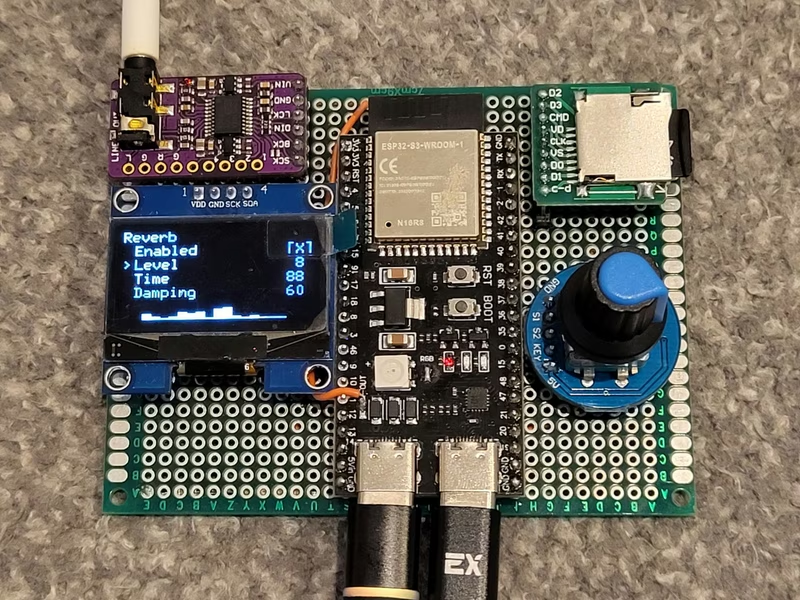
ESP32 SoundFont (SF2) Sampler Synthesizer
A high-performance wavetable synthesizer firmware for ESP32-S3 and ESP32-P4 microcontrollers that plays SoundFont 2 (SF2) samples. It utilizes PSRAM for large sample banks, supports USB MIDI for plug-and-play connectivity, and features real-time audio effects like reverb and chorus.
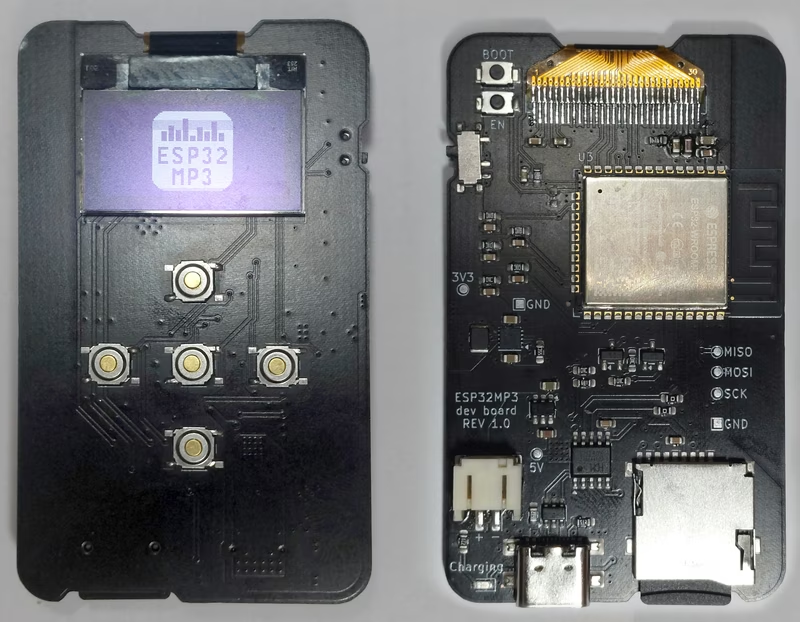
ESP32 MP3
A custom-built portable MP3 player based on the ESP32 that features Bluetooth A2DP audio streaming and a dedicated OLED user interface. It utilizes a modular C++ architecture and a custom-designed PCB to manage media playback from a MicroSD card.
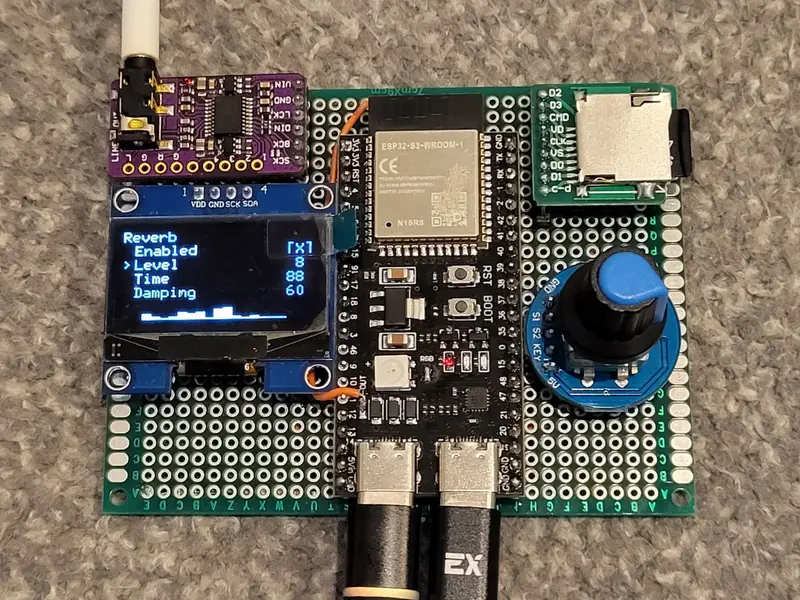
ESP32-S3 SD Sampler
A polyphonic music synthesizer for the ESP32-S3 that plays PCM WAV samples directly from a microSD card. It features 15-20 stereo voices, ADSR envelopes, built-in reverb, and MIDI control, utilizing custom SDMMC routines for high-speed data access without preloading samples into RAM.
ESP32-S3 SoundFont (SF2) Sampler Synthesizer
A high-performance wavetable synthesizer firmware for the ESP32-S3 that enables high-quality SoundFont 2 (SF2) playback. It leverages PSRAM for sample loading and supports USB MIDI, external I2S DACs, and runtime switching between LittleFS and SD card storage.