STM32N6 AI Object Detection and H.264 USB Video Streaming
This project demonstrates high-performance computer vision on the STM32N6570-DK discovery board, utilizing an NPU-accelerated quantized AI model for real-time object detection. It leverages a multi-threaded FreeRTOS architecture to manage a complex pipeline including DCMIPP image processing, hardware H.264 encoding, and USB Video Class (UVC) streaming.
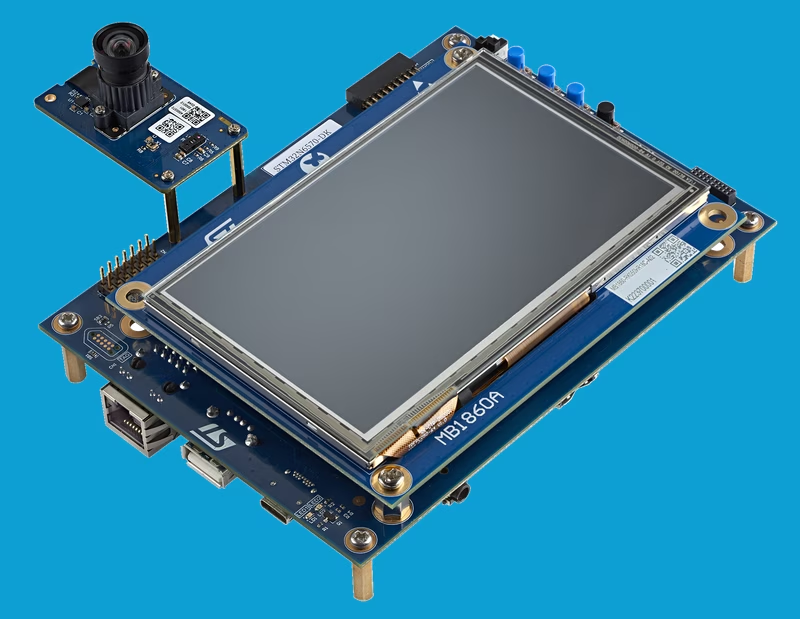
Real-Time Computer Vision on the Edge
The STM32N6 series represents a significant leap in embedded processing power, and this project serves as a comprehensive demonstration of its capabilities. By integrating hardware-accelerated neural network inference with a robust video processing pipeline, the application performs real-time object detection and streams the results over USB. This project is specifically designed for the STM32N6570-DK Discovery board, showcasing how developers can bridge the gap between complex AI models and practical, high-bandwidth USB video peripherals.
Technical Architecture and Pipeline
The application is built on a multi-threaded architecture powered by FreeRTOS. The data flow is a sophisticated example of modern embedded media handling:
- Image Capture: Utilizing the Dual DCMIPP (Digital Camera Memory Interface and Pixel Processor) pipes, the system captures frames from high-resolution sensors like the IMX335 or VD66GY.
- Image Signal Processing (ISP): The DCMIPP handles essential tasks such as cropping, decimation, and downscaling to prepare the raw sensor data for both the AI model and the video encoder.
- AI Inference: A quantized object detection model, generated via STEdgeAI, runs on the N6’s integrated NPU. This acceleration allows for low-latency detection of people and objects without taxing the main CPU cores.
- H.264 Encoding: Instead of streaming raw video, which would exceed bandwidth limits at high resolutions, the system uses a hardware H.264 encoder to compress the stream.
- USB Streaming: The compressed video and detection metadata (bounding boxes) are packaged into a USB Video Class (UVC) stream using the Azure RTOS USBX stack, making the device appear as a standard webcam to a host computer.
Hardware and Sensor Support
The project is optimized for the STM32N6570-DK Discovery Board. A notable characteristic of the STM32N6 series is the absence of internal flash memory; consequently, the application demonstrates how to boot from external flash or run in development mode directly from SRAM.
The application supports several high-end camera modules with varying resolutions and frame rates:
- IMX335: 1280x720 @ 30fps
- VD66GY: 1120x720 @ 30fps
- VD55G1: 640x480 @ 30fps
- VD1943: 1280x720 @ 30fps
Development Environment
To build and deploy this project, the repository supports multiple industry-standard toolchains:
- STM32CubeIDE: For an integrated Eclipse-based development experience.
- IAR Embedded Workbench (EWARM): Version 9.40.1 with the N6 specific patch.
- Makefile: For developers preferring command-line builds and GDB-based debugging.
Because the AI model weights and biases are significant in size, they are handled as a separate binary (network_data.hex) that is programmed into the external flash alongside the application firmware.
Getting Started and Host Integration
Once the firmware is flashed, the board operates as a UVC-compliant device. On a Windows host, you can view the stream using ffplay from the ffmpeg suite:
ffplay.exe -f dshow -i video="STM32 uvc"On Linux, standard webcam applications like guvcview or VLC can be used, provided they support H.264 decoding. The output displays the live camera feed with bounding boxes drawn around detected people, including confidence levels calculated by the NPU.
Advanced Boot Configurations
Handling the memory architecture of the STM32N6 is a key part of this project. The repository provides instructions for two primary modes:
- Development Mode: Loads firmware into RAM during a debug session, ideal for rapid iteration.
- Boot from Flash: Programs the First Stage Boot Loader (FSBL), the signed application binary, and the AI model data into external flash for persistent operation.
For production-like deployments, the project includes the use of the STM32_SigningTool_CLI to sign the application binary, ensuring it is recognized by the bootloader during the power-on sequence.
Related Projects
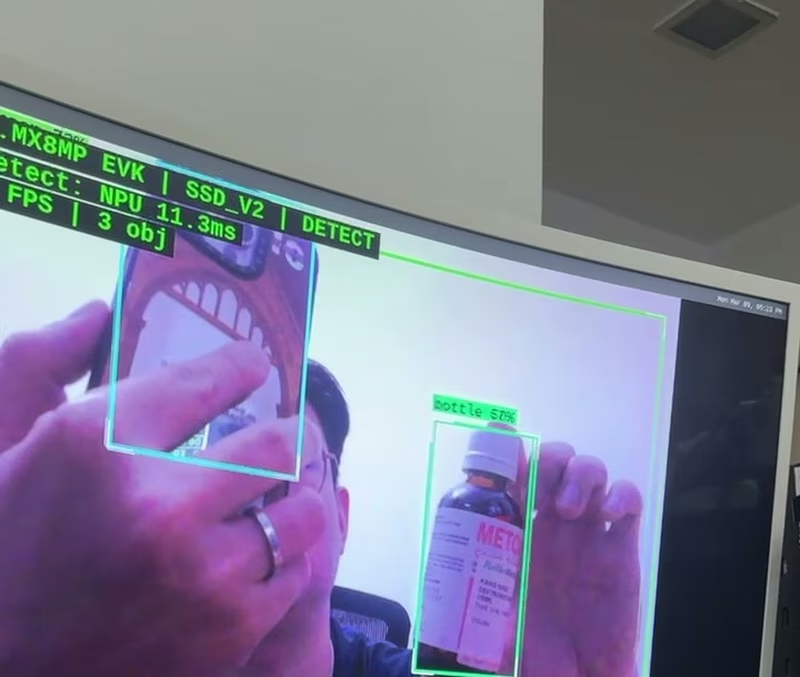
Edge AI on Embedded Linux — i.MX 8M Plus
A full-stack embedded Linux project for the NXP i.MX 8M Plus EVK featuring real-time NPU-accelerated object detection and NIR spectral monitoring. It demonstrates a complete development workflow from Yocto BSP bring-up and custom kernel module development to high-level Python applications using TensorFlow Lite and GStreamer.
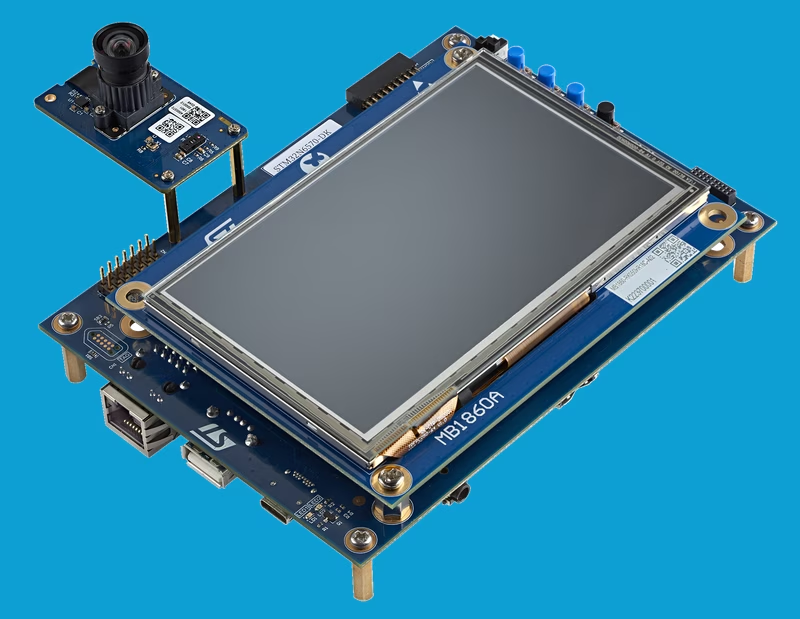
STM32N6 Camera Capture Application
This computer vision application demonstrates high-performance video streaming using USB UVC on STM32N6 series microcontrollers. It utilizes FreeRTOS for multi-threaded management and the Azure RTOS USBX stack to stream YUV422 video at various resolutions up to 800x480 at 30 FPS.
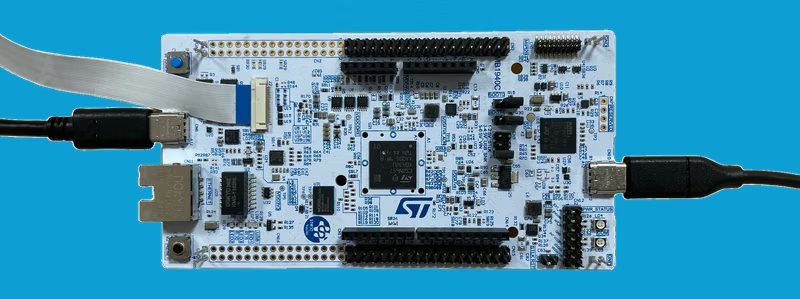
Image Classification Getting Started for STM32N6
This project provides a real-time bare-metal environment for STM32N6 microcontrollers to execute image classification models accelerated by the on-chip NPU. It features a complete camera-to-display pipeline using STEdgeAI, DCMIPP, and ISP hardware blocks for high-performance edge AI.
USB Video Class (UVC) for Raspberry Pi Pico
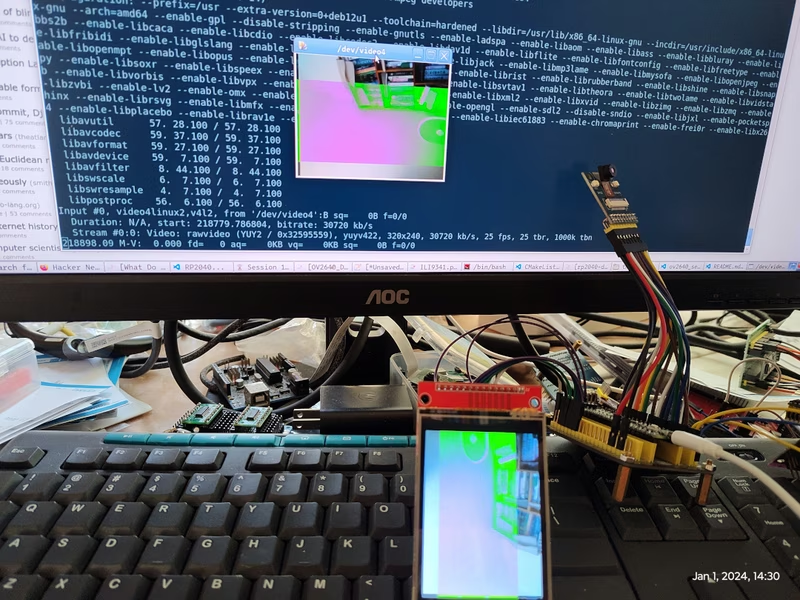
This project implements a USB Video Class (UVC) firmware for the Raspberry Pi RP2040, enabling video streaming from an OV2640 camera to a host computer. It utilizes the TinyUSB stack for USB connectivity and provides optional FreeRTOS support for task management, while also driving an ILI9341 LCD for local preview using PIO-based drivers.
STM32N6 Getting Started for Object Detection
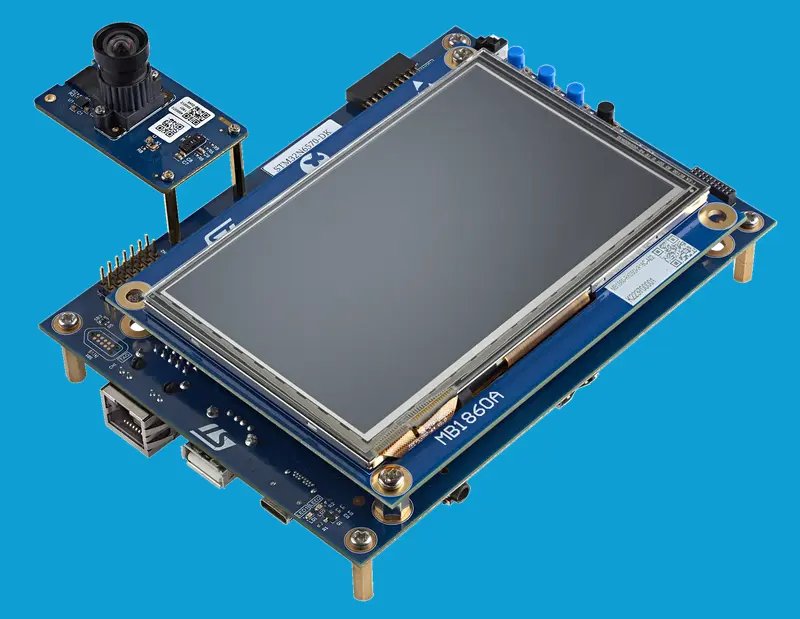
A real-time object detection application for STM32N6 microcontrollers, showcasing NPU-accelerated AI inference using STEdgeAI. It features a sophisticated vision pipeline with dual DCMIPP pipelines, ISP integration, and support for external flash booting on STM32N6570-DK and NUCLEO-N657X0-Q boards.