ESP32 MFA Authenticator
A standalone hardware TOTP generator for the ESP32 platform, featuring a touch-screen interface powered by LVGL. It provides a secure way to manage MFA codes without a smartphone, supporting WiFi time synchronization and SD card configuration.
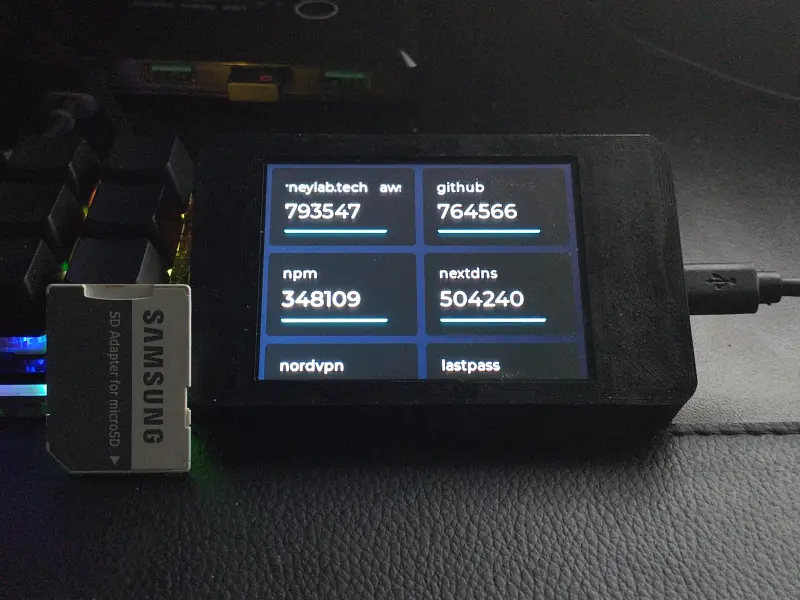
The ESP32 MFA Authenticator is a dedicated hardware solution for generating Time-based One-Time Passwords (TOTP), providing a secure alternative to smartphone-based authentication apps. Built specifically for the ESP32-2432S028 development board—popularly known as the “Cheap Yellow Display” (CYD)—this project transforms an affordable microcontroller into a functional security gadget.
Hardware and User Interface
The project leverages the integrated 2.8-inch touchscreen of the ESP32-CYD to provide a modern, responsive user interface. Utilizing the LVGL (Light and Versatile Graphics Library), the authenticator features a gesture-based UI where users can swipe between different service groups. The interface includes a double-tap to lock feature and a single-tap wake-up mechanism, mimicking the behavior of modern mobile devices. To ensure accuracy, the firmware includes a built-in touch calibration routine that saves calibration data to the ESP32’s internal SPIFFS storage.
Security Features
Security is handled through several layers of protection:
- PIN Authentication: The device can be locked with a PIN. Validation is performed using HMAC-SHA256 hashing with a user-defined key, ensuring that the actual PIN is never stored in plain text.
- Brute Force Protection: The system can be configured to lock down after a specific number of failed unlock attempts, requiring a hard reset to recover.
- Local Storage: Secrets are stored on a physical SD card in a
services.ymlfile. This allows users to keep their sensitive data physically separate from the device when not in use.
Configuration and Management
The authenticator is highly configurable via YAML files stored on an SD card. The config.yml file manages WiFi credentials, authentication settings, display sleep timeouts, and touch calibration flags. The services.yml file supports up to 100 different MFA services, which can be organized into 10 distinct groups for easier navigation.
For easier maintenance, the project includes a built-in web-based management application. When the board is connected to a local network, users can access a password-protected settings page to update their configuration files directly on the SD card without needing to remove it and connect it to a computer.
Technical Implementation
Developed using the Arduino framework and PlatformIO, the project integrates several robust libraries to handle its complex requirements:
- TFT_eSPI: Provides high-performance display drivers for the ILI9341 controller.
- YAMLDuino: Enables the parsing of human-readable configuration files from the SD card.
- ESPAsyncWebServer: Powers the local management interface.
- mbedTLS: Handles the cryptographic functions required for secure hashing.
- NTP Integration: Uses WiFi to synchronize the internal clock with global time servers, ensuring TOTP codes remain valid.
Getting Started
Users can get started by flashing their ESP32-CYD board using a web-based installer or by compiling the source code via PlatformIO. Once flashed, the device requires an SD card containing the initial configuration files. The project is designed to be user-friendly while maintaining the flexibility expected by the maker community, supporting custom 3D-printed cases to complete the hardware build.