SVITRIX Firmware
SVITRIX is an open-source, AI-developed firmware for the Ulanzi Smart Pixel Clock TC001 and custom ESP32-based LED matrices. It features a robust MQTT and HTTP API for integration with home automation systems like HomeAssistant, supporting dynamic custom apps, visual effects, and real-time environmental sensor data.
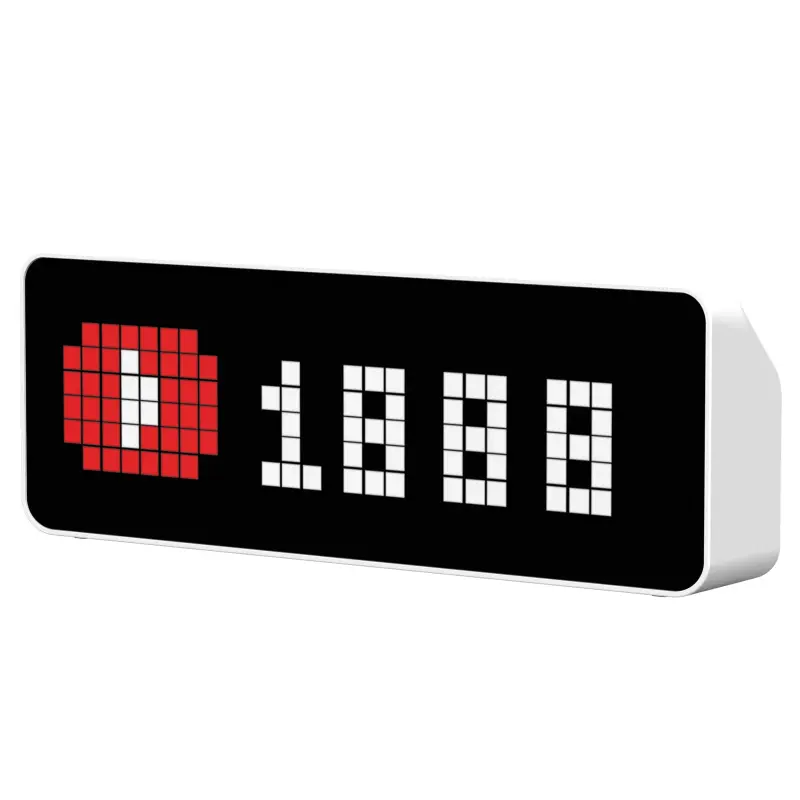
SVITRIX is a smart home companion designed to transform the Ulanzi Smart Pixel Clock TC001 and DIY LED matrices into powerful information displays. Built as a community-driven fork of the AWTRIX 3 project, SVITRIX focuses on active development and seamless integration with automation ecosystems like HomeAssistant, IOBroker, and Node-RED.
At its core, SVITRIX provides a bridge between your smart home logic and a high-visibility 32x8 RGB LED display. While it includes pre-installed applications for time, date, and environmental monitoring, its true power lies in its “Custom Apps” philosophy. Unlike traditional firmware where apps are installed locally, SVITRIX treats custom apps as dynamic pages. All logic is handled by an external smart home system, which pushes content to the device via MQTT or HTTP. This allows for infinite flexibility without the need to recompile or reflash the firmware.
Hardware Architecture and Support
The firmware is optimized for the ESP32-WROOM-32D microcontroller, specifically targeting the hardware configuration of the Ulanzi TC001. This includes:
- Display: A 32x8 (256 LEDs) WS2812B-Mini matrix arranged in a serpentine wiring pattern.
- Sensors: Integrated support for I2C sensors including the SHT3x (default in Ulanzi), BME280, BMP280, and HTU21DF for temperature, humidity, and pressure sensing.
- Peripherals: Support for passive piezo buzzers using PWM, LDR light sensors for automatic brightness adjustment, and battery voltage monitoring via ADC.
- User Input: Three physical buttons (Left, Middle, Right) for on-screen menu navigation and a dedicated reset button.
For DIY enthusiasts, the project supports any standard ESP32-WROOM board, allowing users to build their own matrix clocks with custom enclosures and components.
Advanced Features and API
SVITRIX offers a comprehensive dual-protocol API. Users can interact with the device using simple JSON payloads. The API supports drawing primitives—such as lines, circles, and bitmaps—as well as high-level UI components like bar charts, line graphs, and progress bars.
Beyond simple text, the firmware includes 19 built-in visual effects (including Matrix, Plasma, and Snake) that can serve as app backgrounds. It also features weather overlays (snow, rain, storm) and the ability to play monophonic RTTTL melodies. For professional lighting setups, SVITRIX can even function as an Artnet (DMX) receiver, allowing the LED matrix to be controlled by stage lighting software.
API Examples
Sending a notification with an icon and rainbow text is as simple as a single HTTP POST request:
curl -X POST http://<ip>/api/notify \
  -d '{"text": "Hello!", "icon": "1234", "duration": 10, "rainbow": true}'
Creating a persistent custom app to track data from your smart home:
curl -X POST "http://<ip>/api/custom?name=myapp" \
  -d '{"text": "23°C", "icon": "2056", "lifetime": 900}'
AI-First Development Workflow
A unique aspect of the SVITRIX project is its “AI-First” development approach. The maintainers utilize Claude (Anthropic) and Claude Code as primary tools for architecture decisions, code generation, and CI/CD management. This modern workflow enables rapid feature iteration and robust refactoring, ensuring the codebase remains clean and maintainable despite the complexity of managing real-time LED rendering alongside network stacks.
Getting Started
The project is designed for ease of use, featuring an online web-based flasher that allows users to install the firmware directly from their browser via USB. Once flashed, the device hosts a web interface for WiFi configuration, MQTT setup, and file management. The web UI also includes a live view of the matrix, an icon downloader compatible with the LaMetric gallery, and OTA update capabilities for wireless maintenance.
Related Projects

AWTRIX NG
AWTRIX NG is a comprehensive firmware rewrite for ESP32 and ESP32-S3 microcontrollers designed to transform LED matrix displays into networked smart screens. It features a dual-operational model supporting external control via HTTP/MQTT and native on-device scripting using the Berry language. The project integrates with Home Assistant and supports a wide range of visual elements, including scrolling text, icons, and real-time sensor data.
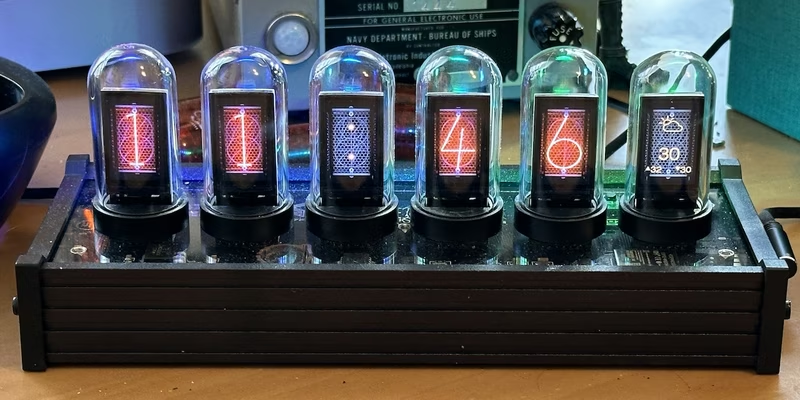
EleksTube IPS Custom Firmware
This project provides a feature-rich custom firmware for ESP32-based EleksTube IPS digital clocks, enabling internet time synchronization and weather updates. It utilizes the TFT_eSPI library for high-quality display management and LittleFS for asset storage, while offering a web-based configuration portal and MQTT integration for smart home ecosystems.
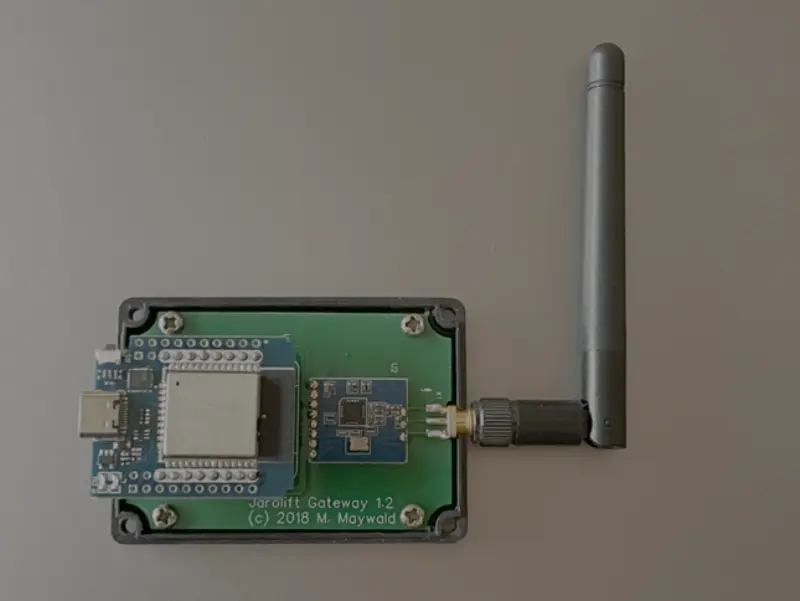
ESP32 Jarolift Controller
A comprehensive firmware for ESP32 microcontrollers to control Jarolift TDEF 433MHz radio shutters via a CC1101 transceiver. It provides a mobile-friendly WebUI, MQTT integration for smart home systems like Home Assistant, and advanced timer functions including sunrise and sunset triggers.
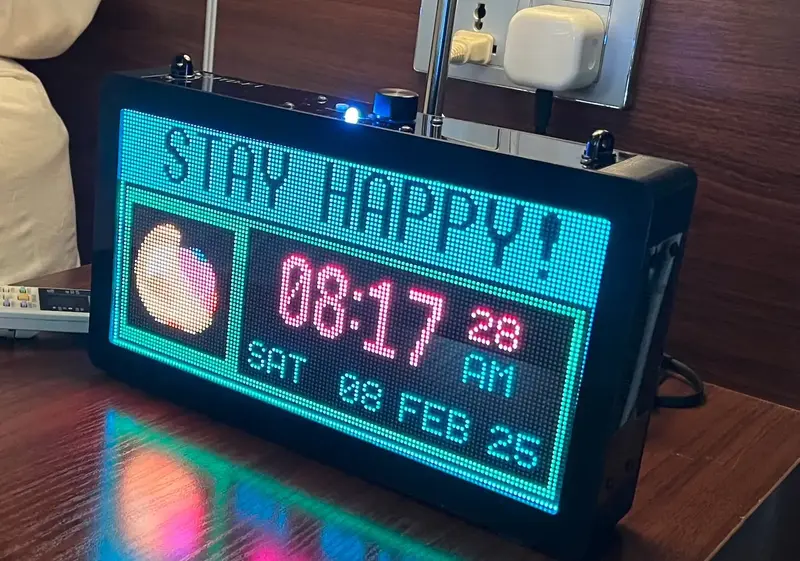
PIXLPAL-M1 Firmware
A modular AIoT firmware for the Pixlpal desktop companion based on the ESP32-S3 SoC. It utilizes the ESP-IDF framework and FreeRTOS to power an interactive 128x64 RGB LED matrix display with features like Wi-Fi connectivity, BLE control, and audio processing.
openHASP
A comprehensive firmware for ESP32 and STM32F4 microcontrollers that provides a customizable touchscreen UI controlled via MQTT. It utilizes the LVGL graphics library to drive various commodity displays, enabling home automation control through a flexible JSONL-based configuration.