Paper Pi
Paper Pi is a modular, asynchronous dashboard designed for Waveshare E-Ink displays, built with Python 3.14+. It targets Raspberry Pi and other Linux-based boards, providing a variety of widgets such as GitHub stats, weather, and HackerNews with support for 4-level grayscale rendering.
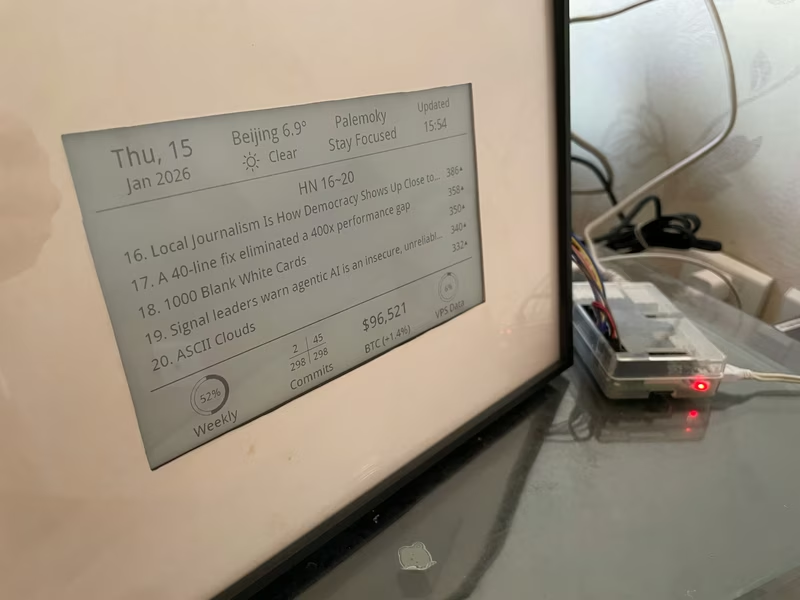
Paper Pi is a modern, modular, and highly customizable dashboard for Waveshare E-Ink displays. Powered by Raspberry Pi and rendered in pixels, it is built using Python 3.14+ with async/await patterns and a clean, testable architecture. The project is designed to be easy to deploy and maintain, utilizing Docker to handle complex dependencies and hardware driver setups automatically.
Quick Start and Deployment
The easiest way to get started with the system is through Docker. This approach ensures that all necessary drivers and dependencies are pre-configured for supported platforms, primarily the Raspberry Pi 3, 4, and 5 (64-bit). By using a containerized environment, users can quickly pull the latest image and run the dashboard with minimal manual intervention.
Dashboard Widgets and Display Modes
The core functionality revolves around a versatile dashboard that can display various information widgets. These include customizable to-do lists with strikethrough support, auto-rotating HackerNews stories, and real-time weather updates via OpenWeatherMap. It also features integrations for GitHub contributions, Bitcoin prices, and VPS data usage monitoring.
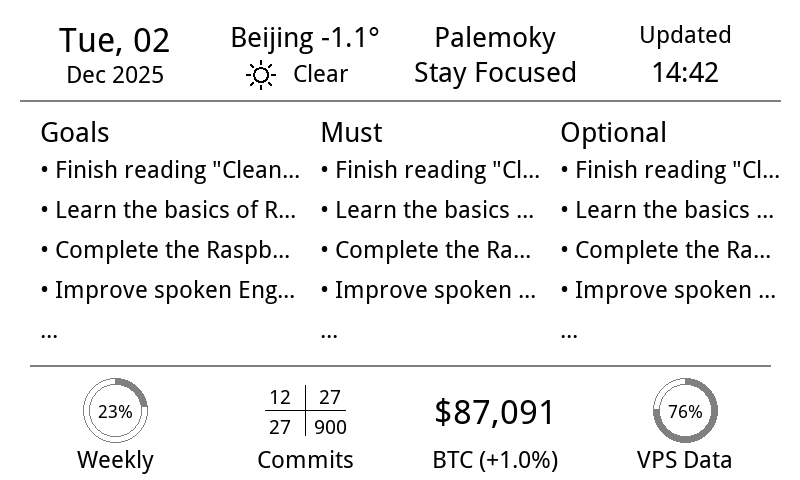
Beyond the primary dashboard, the system supports several specialized display modes. Users can switch to a “Quote” mode for daily inspiration, a “Poetry” mode featuring classical Chinese verses, or a “Wallpaper” mode for displaying custom images.
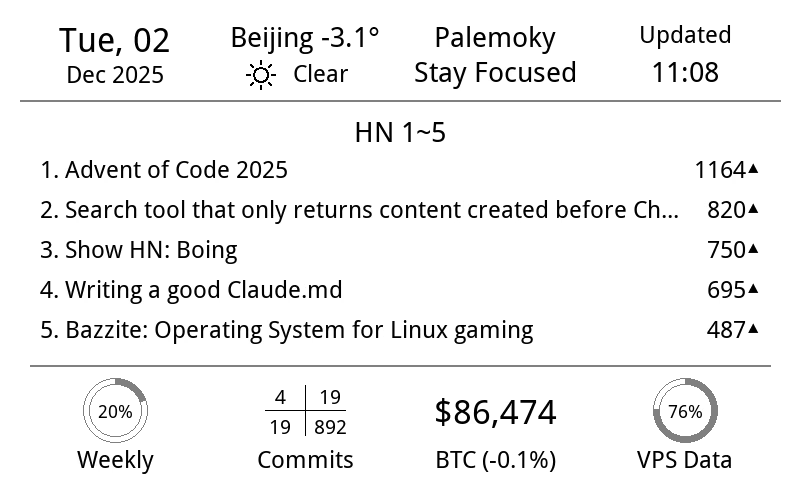
Smart Features and Automation
The system includes several intelligent features designed for a seamless user experience. It automatically triggers holiday greetings for birthdays, anniversaries, and major festivals such as the Lunar New Year, Mid-Autumn Festival, and Christmas. On December 31st, it generates an automatic Year-End Summary of GitHub contributions.
To optimize for home use, it includes configurable “Quiet Hours” where the display can sleep, and time-based switching to toggle between different views (like moving from a TODO list to HackerNews in the evening). The rendering engine supports 4-level grayscale (white, light gray, dark gray, and black) to improve visual quality on E-Ink hardware. Additionally, it can integrate with Xiaomi speakers for audio notifications and alerts.
Modular System Architecture
The software follows a modular, event-driven architecture with a clear separation of concerns. The system is organized into several layers:
- Control Layer: Features a main orchestrator, task manager, and a configuration system that supports hot reloading via
watchdog. - Data Layer: Handles data acquisition from external APIs and local sources, utilizing a TTL-based caching system with LRU eviction to manage state.
- Render Layer: An image builder uses various layout strategies to construct the visual output, employing primitive renderers for text, icons, and shapes.
- Hardware Layer: A driver factory manages communication with the E-Paper driver. It also includes a mock system that generates PNG files for testing without physical hardware.
Hardware and Quality Standards
While optimized for the Waveshare 7.5-inch E-Paper HAT (V2), the project is configurable to support most Waveshare models by adjusting the EPD_MODEL environment variable. It is designed to run on Raspberry Pi Zero, 3, 4, or 5, or any Linux board with SPI/GPIO support. The codebase maintains high quality through strict type checking with mypy, linting with Ruff, and a robust suite of over 90 unit tests covering critical components.
Related Projects
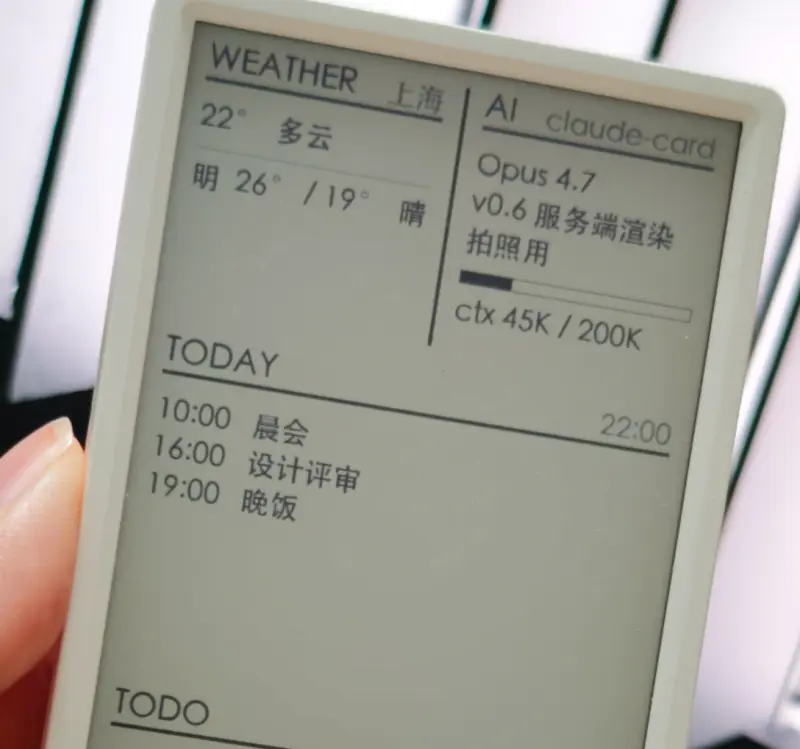
AI Desk Card
A secondary e-ink desk display designed for AI Agents like Claude Code and Codex, utilizing the M5Paper V1.1 hardware. The project features a Python-based daemon for server-side rendering and an ESP32 firmware that supports Wi-Fi, BLE, and USB communication.
ESP32-P4 Home Assistant Display
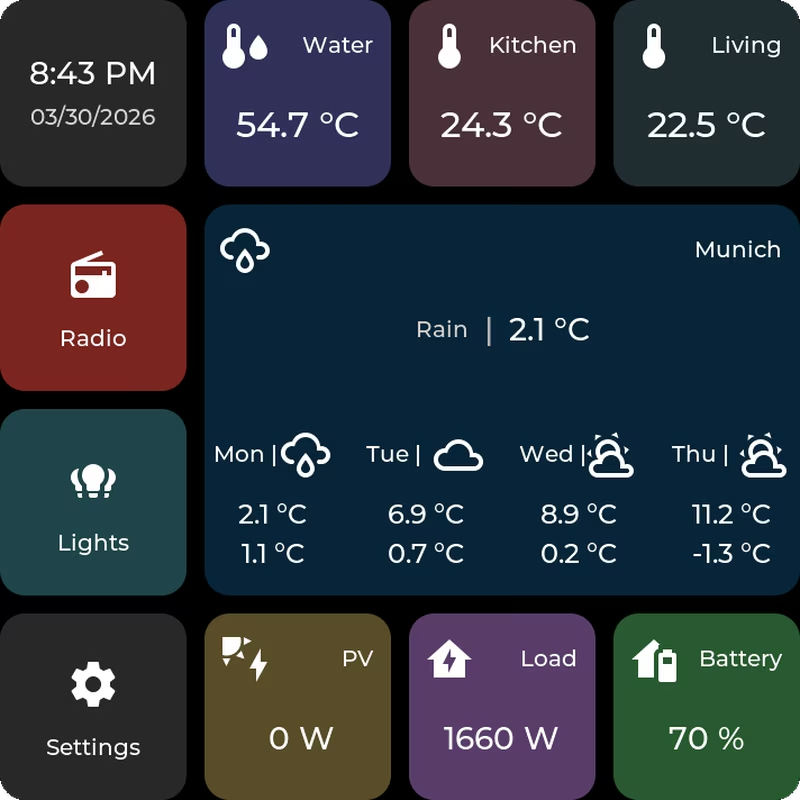
A tile-based firmware for ESP32-P4 devices that creates a touch-first Home Assistant dashboard. It utilizes FreeRTOS and LVGL for the user interface, supporting MQTT integration and web-based configuration. The system targets ESP32-P4 hardware like the Waveshare B4 and M5Stack Tab5, featuring OTA updates and internal storage management via LittleFS.
ESP E-Paper Component
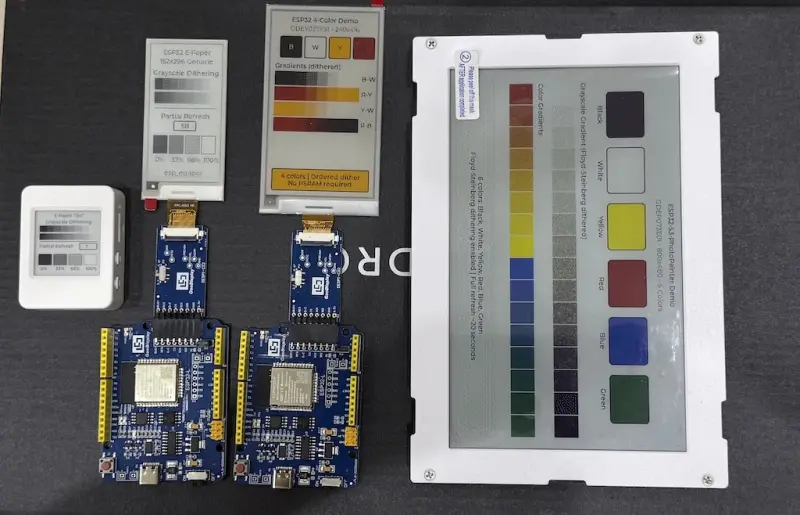
A flexible e-paper display driver for the ESP-IDF framework featuring LVGL 9 integration. It supports a wide range of panels including black/white, 4-color BWRY, and 6-color displays with advanced features like Floyd-Steinberg dithering and partial refresh. Designed for low-power IoT devices, electronic shelf labels, and photo frames on ESP32 series microcontrollers.
Git Contributions E-Ink Display
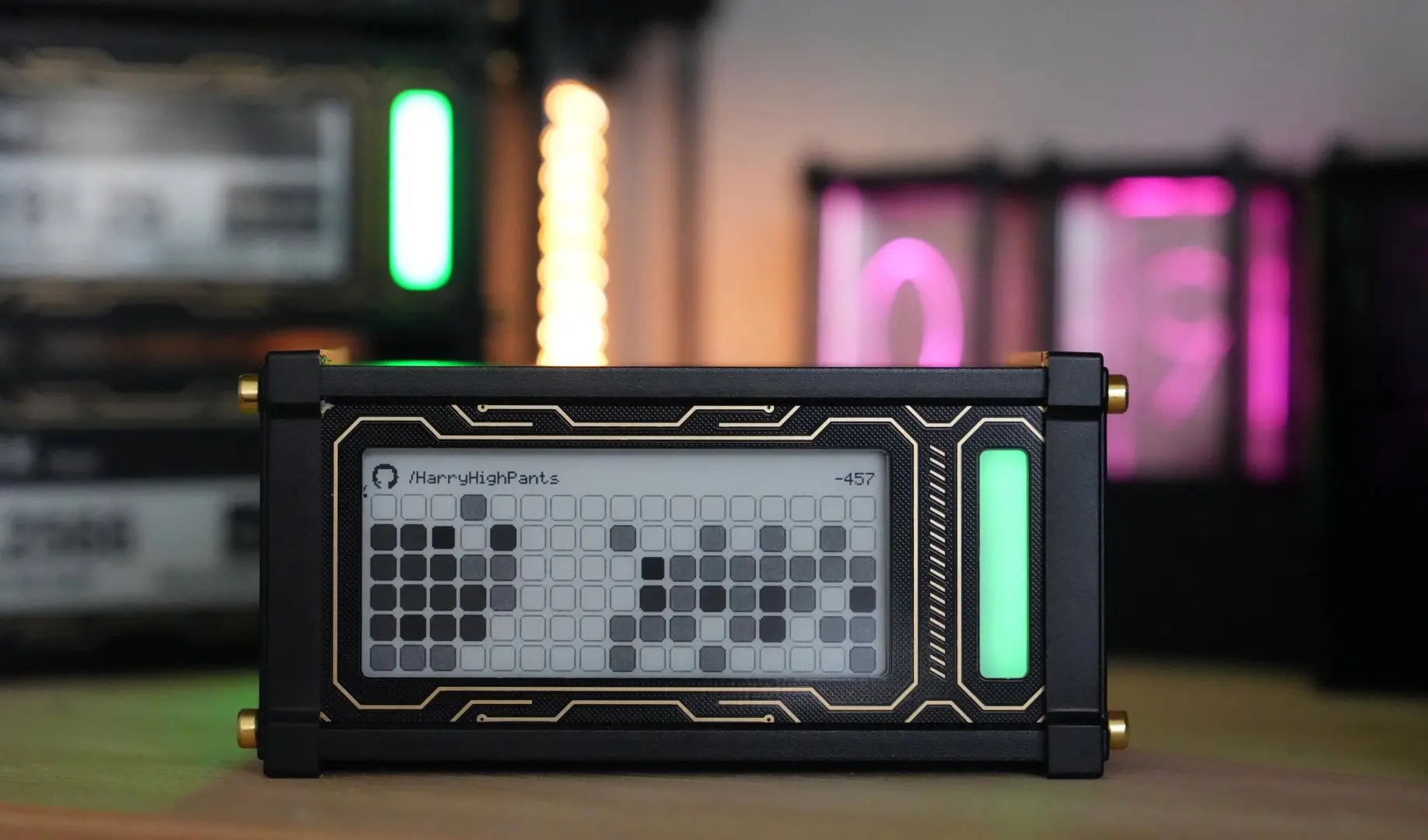
An ESP32-based wireless e-ink display designed to track and showcase GitHub contribution streaks. Utilizing the Lilygo T5 development board, the project features ultra-low power consumption for months of battery life and a captive portal for easy WiFi configuration.
MicroPython Waveshare e-Paper Drivers
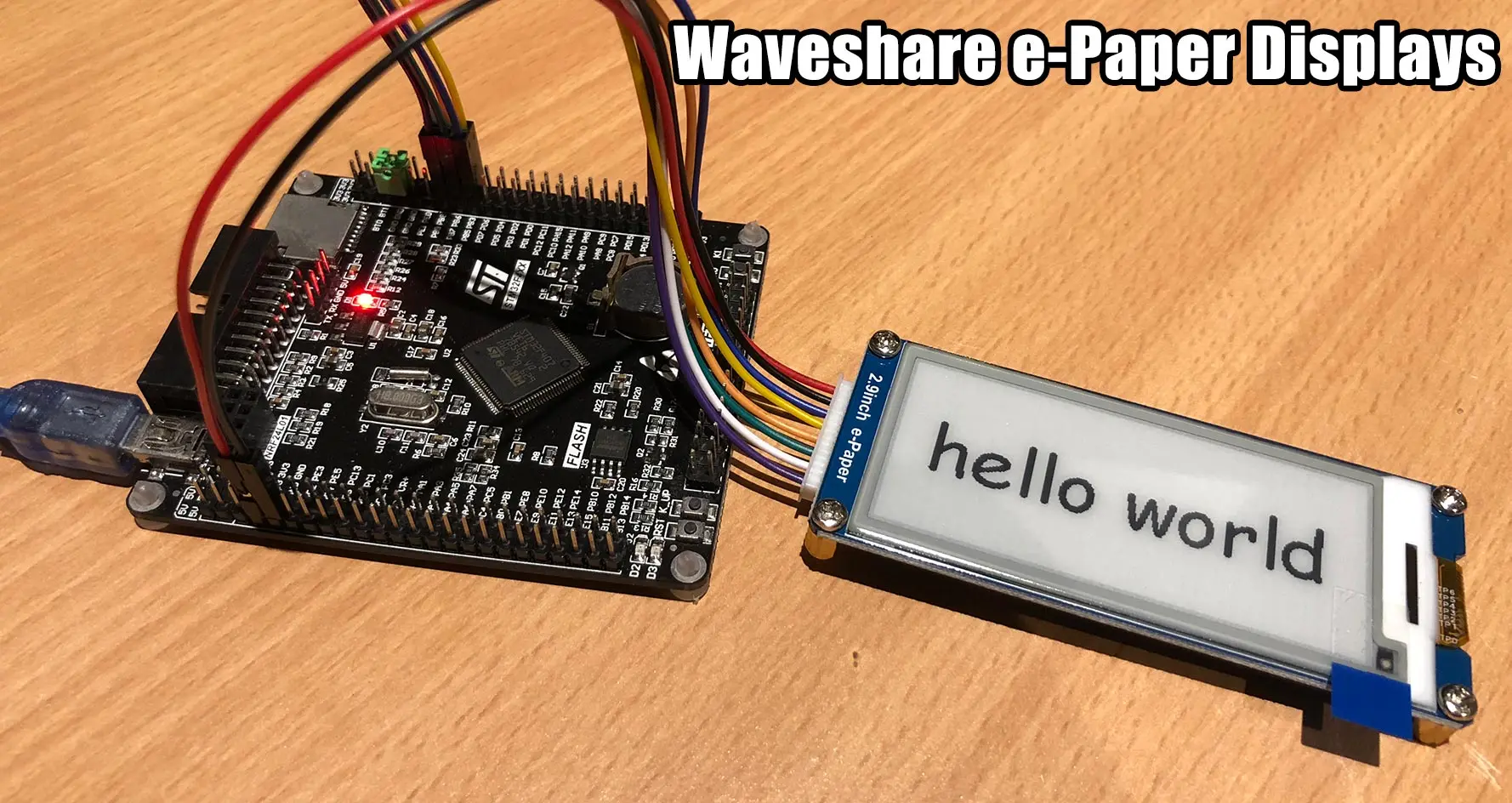
A collection of MicroPython drivers for various Waveshare e-Paper displays, supporting a wide range of screen sizes and color configurations. The library provides an interface for controlling these displays using SPI or UART on MicroPython-compatible hardware, including support for partial and full refreshes.