OV-Watch
A feature-rich open-source smartwatch based on the STM32F411CEU6 microcontroller. It utilizes FreeRTOS for task management and LVGL v8.2 for its graphical user interface, supporting health tracking, environmental sensing, and Bluetooth connectivity.
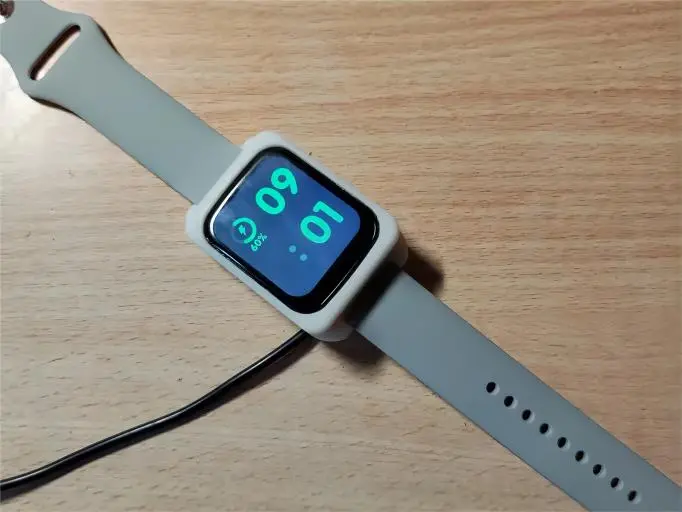
Overview
OV-Watch is a comprehensive open-source smartwatch project that demonstrates the integration of high-performance microcontrollers with modern embedded software frameworks. Built around the STM32F411CEU6 (ARM Cortex-M4), the project provides a complete hardware and software solution for a wearable device. It features a sophisticated UI, power management strategies, and various sensors for health and environmental monitoring.
Technical Architecture
The project is built on a robust software stack designed for efficiency and responsiveness. At its core, FreeRTOS manages system tasks, ensuring that background processes like sensor polling and Bluetooth communication do not interfere with the user interface. The graphical interface is powered by LVGL v8.2, providing a smooth, smartphone-like experience on a small embedded display.
Hardware Components
- MCU: STM32F411CEU6
- Display: 1.69-inch touch screen
- Sensors: MPU6050 for motion and step counting, EM7028 for heart rate monitoring, and sensors for altitude, temperature, and humidity.
- Connectivity: KT6368A Bluetooth module for SPP communication and wireless firmware updates.
- Storage: External EEPROM for persistent settings and data storage.
Key Software Features
Power Management
One of the most critical aspects of the OV-Watch is its three-tier power strategy:
- Normal Mode: Full functionality with the MCU and display active.
- Sleep Mode: The MCU enters STOP mode to conserve energy while the MPU6050 continues to track steps. The system uses RTC timed interrupts to periodically check for wrist-lift gestures to wake the screen.
- Shutdown Mode: The TPS63020 regulator is disabled, cutting power to the 3.3V rail. Only the RTC remains powered by the battery (Vbat) to maintain time.
UI Navigation and Logic
The watch implements a custom stack-based navigation system to handle page transitions. This allows users to navigate deep into menus and return to previous screens reliably. The project also includes a classic calculator implementation using a two-stack (operator and operand) shunting-yard algorithm to handle mathematical expressions.
// Example of the stack-based page switching logic
if(keystr == 1)
{
    user_Stack_Pop(&ScrRenewStack);
    if(user_Stack_isEmpty(&ScrRenewStack))
    {
        ui_MenuPage_screen_init();
        lv_scr_load_anim(ui_MenuPage, LV_SCR_LOAD_ANIM_MOVE_RIGHT, 0, 0, true);
        user_Stack_Push(&ScrRenewStack, (long long int)&ui_HomePage);
        user_Stack_Push(&ScrRenewStack, (long long int)&ui_MenuPage);
    }
    else if(ScrRenewStack.Data[ScrRenewStack.Top_Point-1] == (long long int)&ui_HomePage)
    {
        ui_HomePage_screen_init();
        lv_scr_load_anim(ui_HomePage, LV_SCR_LOAD_ANIM_MOVE_RIGHT, 0, 0, true);
    }
}
Firmware and Updates
The project utilizes a split architecture consisting of a Bootloader and the main Application (APP). This separation enables In-Application Programming (IAP) via Bluetooth (OTA), allowing users to upgrade the watch firmware wirelessly without needing a physical debug probe.
Development and Simulation
To streamline UI development, the project supports LVGL simulation within VSCode on Windows. This allows developers to design and test interface elements, animations, and logic in a desktop environment before deploying to the physical STM32 hardware. A hardware abstraction layer (HWDataAccess.c) facilitates this by providing a consistent interface for both the simulator and the actual hardware.