FlipDeFlock
FlipDeFlock is a specialized counter-surveillance and site survey tool for the Flipper Zero that utilizes an external ESP32 module for advanced wireless monitoring. It provides passive detection of Flock Safety ALPR cameras, Bluetooth tracker monitoring, and comprehensive Wi-Fi and NFC security auditing. The project features a custom 'Net Guardian' interface for real-time threat assessment and supports signal-based device homing without the need for directional antennas.
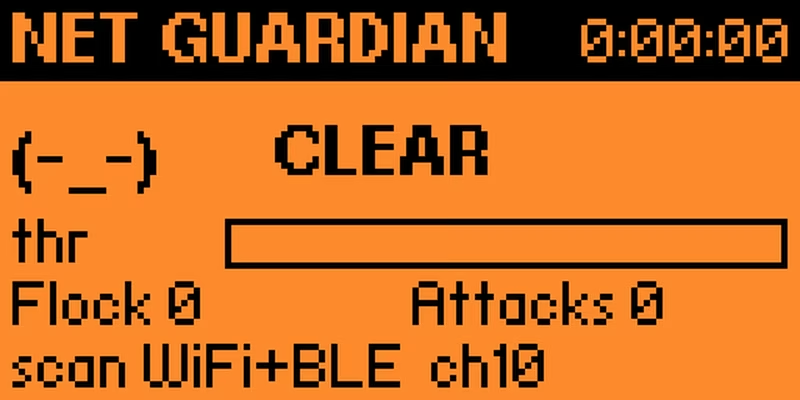
FlipDeFlock transforms the Flipper Zero into a powerful tool for counter-surveillance and wireless site surveys by pairing it with any standard ESP32 board. While the Flipper’s internal radio is limited to BLE, this project leverages the ESP32’s capability for Wi-Fi monitor mode to detect and track surveillance infrastructure that would otherwise be invisible. It is designed for researchers and security professionals to conduct authorized assessments and increase awareness of surrounding surveillance hardware.
Multi-Layered Surveillance Detection
The primary focus of the application is the detection of Flock Safety and ALPR (Automated License Plate Recognition) cameras. These devices are identified by sniffing the Wi-Fi probe requests they emit while attempting to connect to their home networks. The system categorizes detections by confidence levels, ranging from simple OUI prefix matches to confirmed signatures based on SSID patterns and specific 802.11 information element (IE) fingerprints.
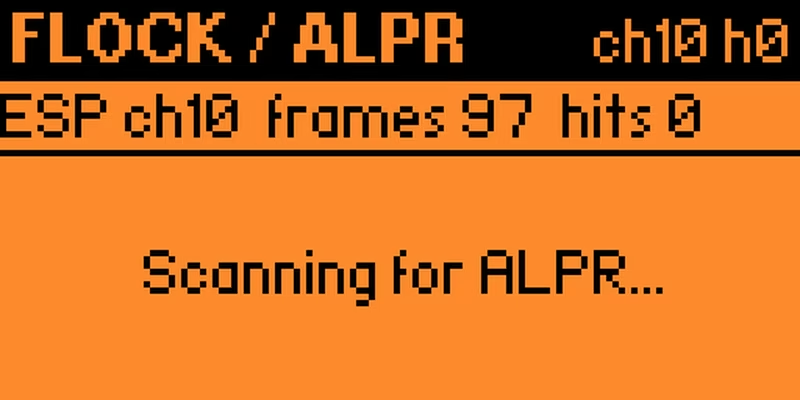
Beyond static cameras, the tool includes a robust BLE and Tracker Scan feature. This module continuously monitors for AirTags, Tile trackers, and other Bluetooth beacons. To assist in anti-stalking efforts, the application can flag trackers that consistently follow the user across multiple GPS waypoints, providing a detailed track history including distance and time.
The Net Guardian Interface
A standout feature of the project is the Net Guardian, an always-on monitoring mode inspired by the Pwnagotchi project. Designed to be left running on a desk or carried during a survey, it automatically rotates the ESP32 through different detection modes, including dual-band Flock detection, BLE tracking, and Wi-Fi security auditing.
Net Guardian uses a fused scoring system to determine if the user is being watched, displaying a pwnagotchi-style face that shifts from ‘CLEAR’ to ‘WATCHFUL’ or ‘ELEVATED’ based on correlated signals. It provides live counters for detected cameras, active wireless attacks (such as deauth floods), and nearby Flipper Zero devices.
Wireless and NFC Auditing
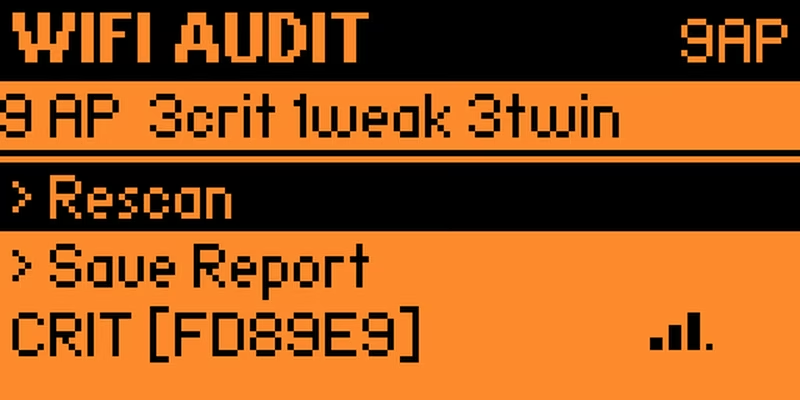
For broader security assessments, the application includes a dedicated WiFi Audit tool. This module scans nearby networks and grades their security posture, highlighting critical vulnerabilities such as Open, WEP, or weak WPA configurations. It also detects ‘evil-twin’ access points where multiple BSSIDs share the same name with mismatched security settings.
The auditing capabilities extend to physical access control via the NFC and RFID Audit module. This feature can identify card protocols and perform a ‘Deep’ check on MIFARE Classic cards by testing for default factory keys, helping users determine if their access cards are susceptible to trivial cloning.
Technical Hardware Integration
The project is built as a distributed system: the ESP32 handles the intensive radio monitoring and packet sniffing, while the Flipper Zero provides the user interface, GPS logging, and data storage. Communication between the two is handled via a custom serial line protocol.
Users can manage the ESP32 firmware directly from the Flipper, with built-in tools to backup existing firmware and flash the FlipDeFlock companion binary or other tools like ESP32 Marauder. For geographic tracking, the system supports external GPS modules connected via LPUART, enabling the live on-device map which plots detected cameras relative to the user’s bearing and distance.
Signal Homing and Reporting
When a suspicious device is identified, the Locator tool allows users to hunt it down using live signal strength (RSSI). This ‘hot/cold’ meter approach works without a directional antenna, allowing the operator to close in on a transmitter by observing signal trends while moving.
Documentation and data sharing are central to the project’s ecosystem. FlipDeFlock can export survey data in multiple formats, including Markdown, CSV, and WiGLE CSV. It also facilitates contributions to the DeFlock community by generating QR codes for detected cameras, allowing users to easily submit findings to the global database via their mobile phones without the Flipper itself ever needing a network connection.
Related Projects

Plume — M5Cardputer ADV Edition
A passive RF scanner for the M5Cardputer ADV that detects Flock Safety ALPR cameras and Raven surveillance devices. It utilizes WiFi promiscuous mode and BLE scanning on the ESP32-S3, running entirely locally without cloud connectivity. Detections are logged to an SD card with GPS coordinates and signal strength visualizations.
PathShield
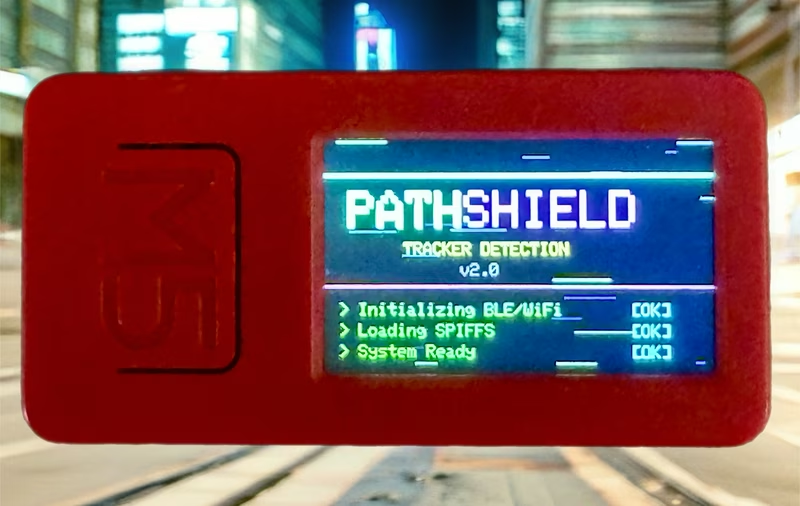
PathShield is a privacy-focused RF monitoring tool for the M5StickC-Plus, designed to detect and alert users to persistent WiFi and BLE devices. It employs a multi-threaded ESP32 architecture and a sophisticated persistence scoring algorithm to distinguish potential trackers from ambient wireless noise. The system features an offline manufacturer database and customizable detection thresholds for enhanced situational awareness.
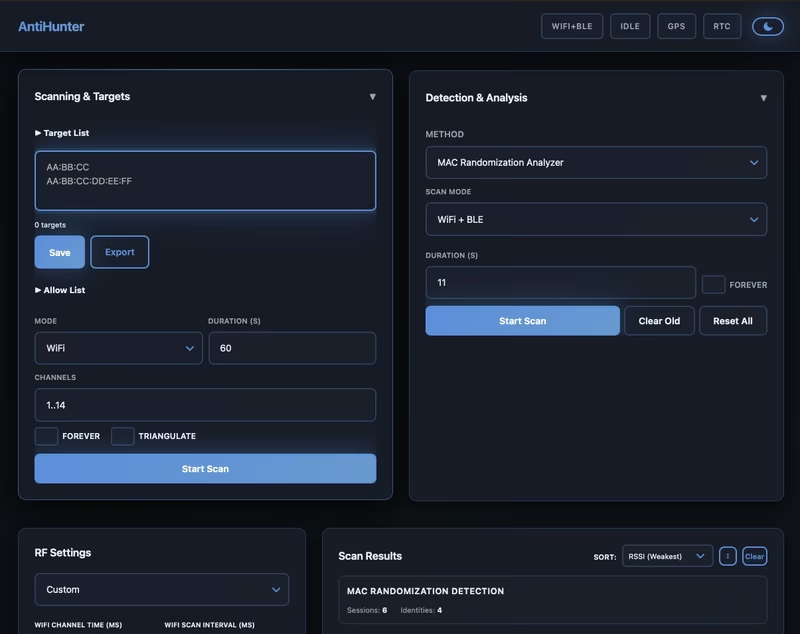
AntiHunter
AntiHunter is an open-source distributed perimeter defense system designed for wireless network security and operational awareness. Built on the ESP32-S3 platform using the Arduino framework and FreeRTOS, it creates a scalable mesh network of sensors for real-time WiFi/BLE threat detection, device mapping, and signal triangulation. The system integrates GPS, SD logging, and tamper-responsive data destruction to provide a robust digital tripwire for security professionals.
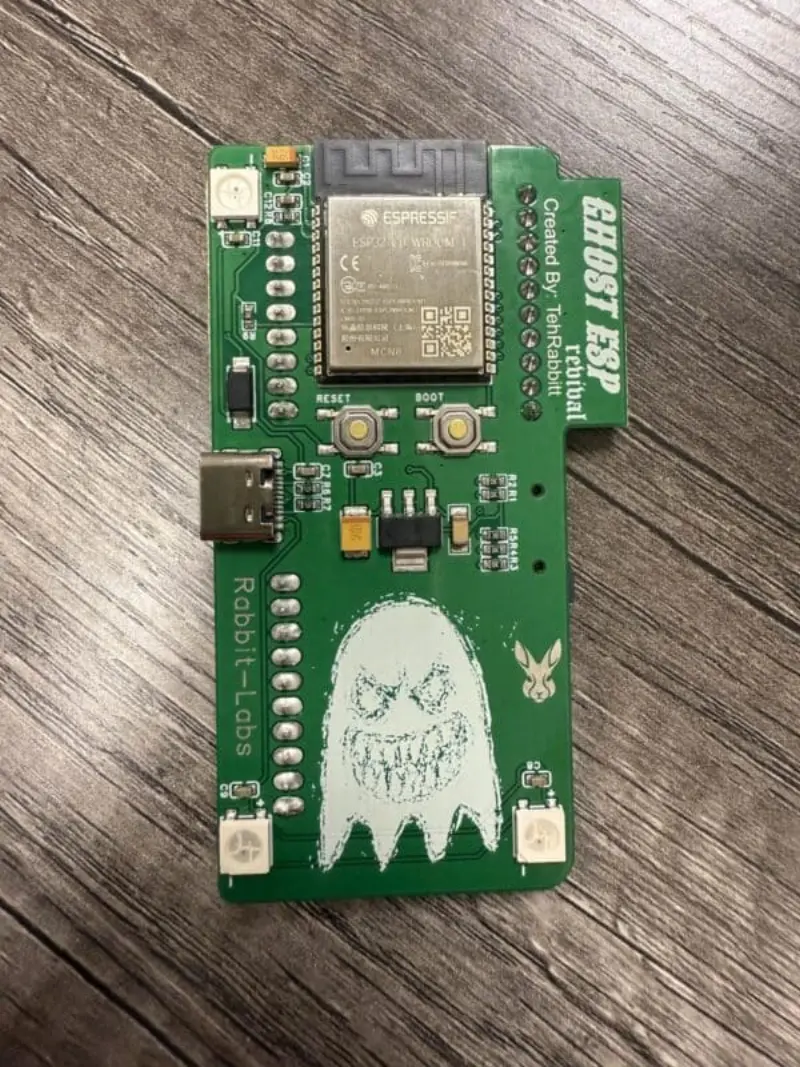
Ghost ESP
A specialized security auditing and wireless monitoring firmware for ESP32 devices. Built on the ESP-IDF framework and FreeRTOS, it provides tools for BLE wardriving, WiFi deauthentication testing, and device detection for hardware like AirTags and Flipper Zero.