Cardputer Game Station
A multi-system game emulator firmware for the M5Stack Cardputer based on the ESP32-S3. It supports ten classic consoles including NES, Game Boy, and Mega Drive, featuring optimized memory management to run within 256 KB of RAM and integrated support for the Cardputer's keyboard and SD card storage.
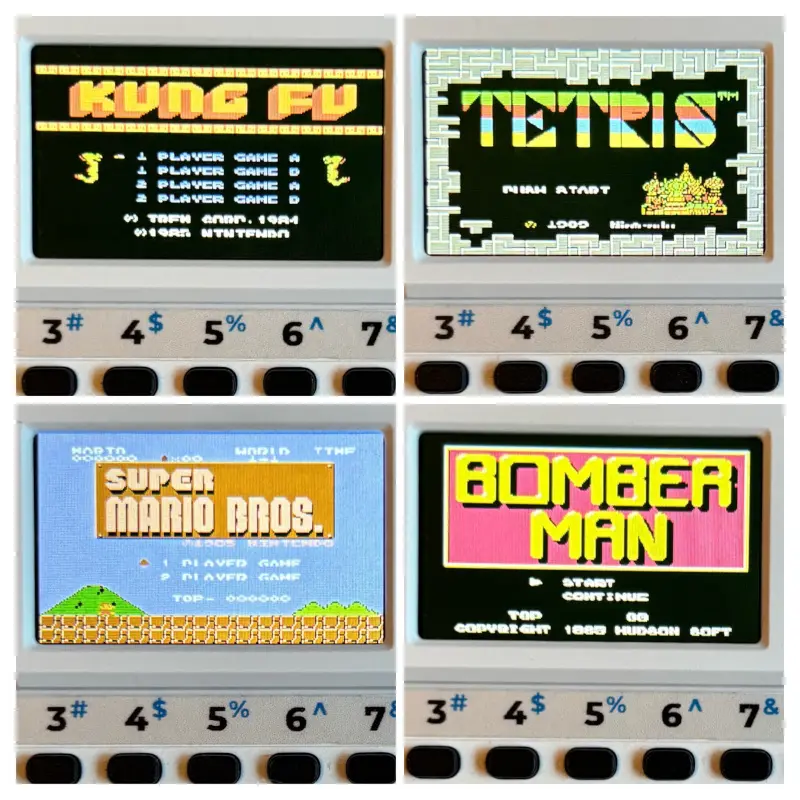
Turning the Cardputer into a Handheld Retro Console
The Cardputer Game Station is a comprehensive emulation suite designed specifically for the M5Stack Cardputer. By leveraging the ESP32-S3’s capabilities, this project transforms the compact, keyboard-equipped device into a versatile handheld gaming station. The project integrates multiple open-source emulation cores, all of which have been significantly modified to operate within the strict memory constraints of the hardware, specifically targeting a footprint of less than 256 KB of RAM.
Broad Console Support and Optimization
The Game Station supports a wide array of 8-bit and 16-bit systems. Users can play titles from the Nintendo Entertainment System (NES), Game Boy and Game Boy Color, Sega Master System and Game Gear, PC Engine, Atari Lynx, Mega Drive (Genesis), Neo Geo Pocket, WonderSwan, and an experimental implementation of the Super NES.
Each core has been tuned for the Cardputer’s specific hardware. While systems like the NES and Game Boy run at full compatibility and speed, more demanding systems like the SNES or Mega Drive are noted as experimental or may experience minor slowdowns due to the inherent RAM limitations of the ESP32-S3. Despite these hurdles, the firmware manages to provide sound, video, and save functionality across nearly all supported platforms.
Tailored User Experience
One of the standout features of this project is its deep integration with the Cardputer’s unique form factor. The built-in 56-key keyboard is fully mapped for gaming, with dedicated keys for directional movement, actions, and system functions like volume and brightness control. For those seeking a more traditional feel, the firmware automatically detects and supports the M5Stack JoyV2 when plugged in before launch.
To address the small screen size, the developer implemented a “Zoom Mode.” This allows players to dynamically adjust the display scale between 100% and 150%, or toggle between fullscreen and 4:3 aspect ratios. This flexibility ensures that text-heavy games or detail-oriented platformers remain playable on the compact LCD.
Storage and System Integration
The firmware operates by loading uncompressed ROM files directly from an SD card. It includes a smart file browser that allows users to jump to specific games by typing the first few letters of a title—a necessary feature for libraries that might contain hundreds of entries.
Technical management of the device is handled through a custom partition scheme. For users of the popular “Launcher” utility, the project provides a “Game Station” partition layout that enables the loading of ROMs larger than 1 MB (up to 4.5 MB). The firmware is even capable of automatically requesting a partition table flash and rebooting if it detects a ROM that requires more space than the current layout provides.
Technical Implementation
Built using the Arduino framework and PlatformIO, the project relies on the M5Unified library for hardware abstraction. The build configuration reveals aggressive optimization settings, such as -O3 for source flags and the removal of jump tables and exceptions to save space. The memory layout is carefully defined in a custom CSV partition file, allocating space for NVS, PHY initialization, and a large SPIFFS partition alongside the factory app image.
Saves are handled automatically in the background, writing to the SD card at regular intervals. To prevent data corruption, the project implements a safe exit routine triggered by holding the G0 button, ensuring all file buffers are flushed before returning to the main menu.