Velxio: Arduino & Embedded Board Emulator
Velxio is an open-source, multi-board emulator that allows users to write, compile, and simulate Arduino C++ or Python code directly in the browser. It supports five CPU architectures including AVR8, ARM Cortex-M0+, RISC-V, Xtensa, and ARM Cortex-A53, utilizing specialized engines like avr8js, rp2040js, and QEMU. The platform features an integrated code editor, a library manager, and over 48 interactive electronic components for complex circuit simulation.
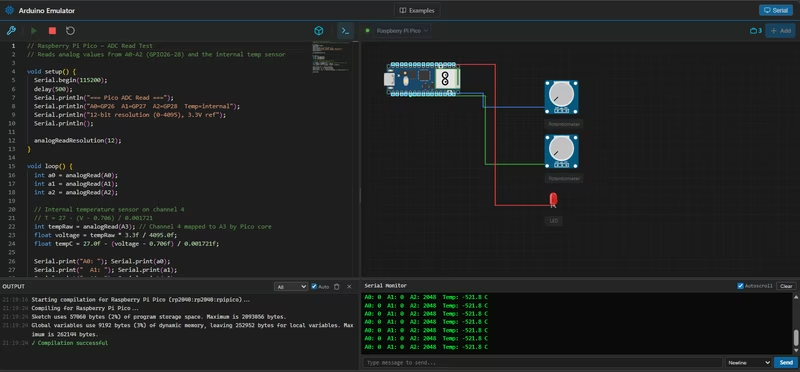
Velxio is a fully local, open-source multi-board emulator designed to bring embedded systems development to the browser. It enables developers to write Arduino C++ or Python code, compile it using an integrated backend, and simulate the resulting firmware on real CPU emulations. With support for 19 different boards and 5 distinct CPU architectures, Velxio provides a comprehensive environment for testing electronic circuits and embedded software without physical hardware.
Multi-Architecture Simulation Engines
The core of Velxio lies in its diverse set of simulation engines, each tailored to specific hardware architectures. For classic Arduino boards like the Uno, Nano, and Mega, the platform utilizes avr8js to provide real ATmega328p and ATmega2560 emulation at native clock speeds. This includes full GPIO support, hardware timers for PWM, and peripheral support for USART, ADC, SPI, and I2C.
For more modern platforms, Velxio integrates rp2040js to emulate the ARM Cortex-M0+ found in the Raspberry Pi Pico and Pico W. This engine handles all 30 GPIO pins, dual UARTs, and 12-bit ADC channels. A unique feature of the RP2040 simulation is its WFI (Wait For Interrupt) optimization, where the emulator skips ahead in simulation time during delays rather than busy-waiting, ensuring smooth performance in the browser.
High-performance boards like the ESP32 and ESP32-S3 are simulated using a specialized fork of QEMU. This allows for real Xtensa LX6/LX7 dual-core emulation, supporting complex features like WiFi via SLIRP NAT emulation and hardware RMT decoders for NeoPixel (WS2812) rendering. Meanwhile, RISC-V boards such as the ESP32-C3 and CH32V003 run on a custom RiscVCore.ts engine written in TypeScript, offering instant startup and offline capabilities.
Integrated Development Environment
Velxio provides a robust workspace centered around the Monaco Editor, offering syntax highlighting, autocomplete, and multi-file project support. Users can manage multiple .ino, .h, .cpp, or .py files within a single workspace. The compilation process is handled by an arduino-cli backend, which provides a detailed console for debugging compiler warnings and errors.
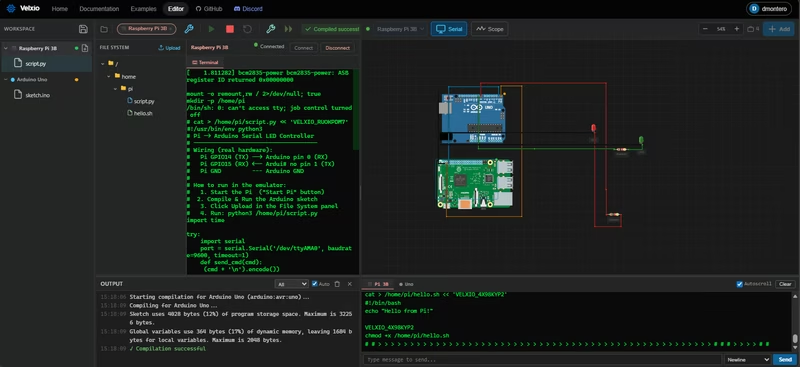
One of the platform’s most powerful capabilities is multi-board simulation. Developers can place different architectures, such as a Raspberry Pi 3 and an Arduino Uno, on the same canvas and connect them via serial communication. The Raspberry Pi 3 simulation runs a full BCM2837 emulation via QEMU, booting a real Raspberry Pi OS image and executing Python scripts that interact with virtual GPIO pins.
Interactive Components and Wiring
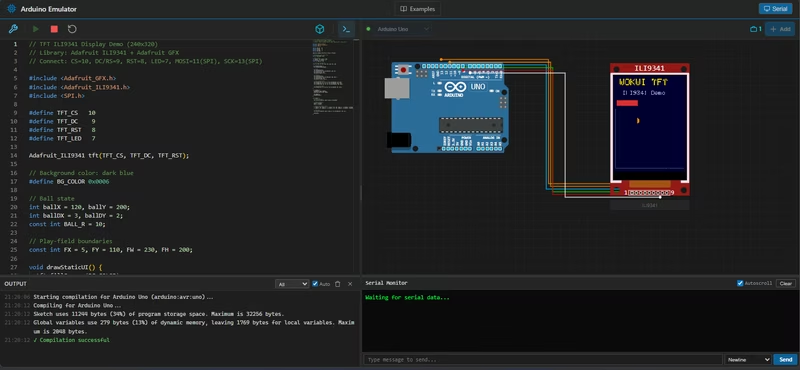
The simulation canvas supports over 48 electronic components derived from the wokwi-elements library. These include interactive parts like potentiometers, ultrasonic sensors, and complex displays. For example, users can simulate an ILI9341 TFT display driven by an Arduino Uno via SPI, rendering real-time graphics using standard libraries like Adafruit_GFX.
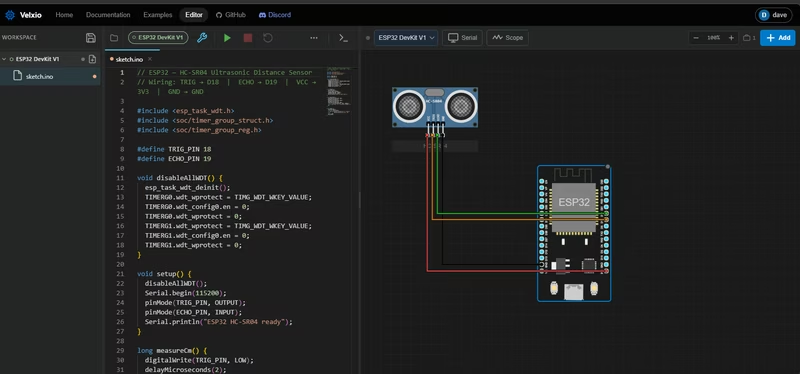
Connectivity is managed through an orthogonal wire system that supports eight signal-type colors, such as Red for VCC, Black for GND, and Gold for I2C. This visual representation helps in understanding circuit flow and debugging pin assignments. The platform also includes a Library Manager that loads the full Arduino library index, allowing users to install and manage dependencies directly within the UI.
Technical Architecture and Self-Hosting
Velxio is built with a modern web stack, featuring a React 19 and TypeScript frontend paired with a FastAPI and Python backend. Data persistence is handled via an SQLite database and local disk storage for project files. For those who prefer to host their own instance, Velxio is available as a single-container Docker image, which bundles the web server, compiler backend, and various QEMU engines.
The project follows a dual-licensing model, remaining free and open-source under the AGPLv3 for personal and educational use, while offering commercial licenses for proprietary applications. This ensures the project remains accessible to the community while providing a path for sustainable development.
Related Projects

PixelRoot32 Game Engine
PixelRoot32 is a lightweight, modular 2D game engine written in C++17 for ESP32 microcontrollers and PC simulation. It features a scene-based architecture, NES-style audio synthesis, and a high-performance rendering pipeline optimized for embedded hardware using DMA transfers.
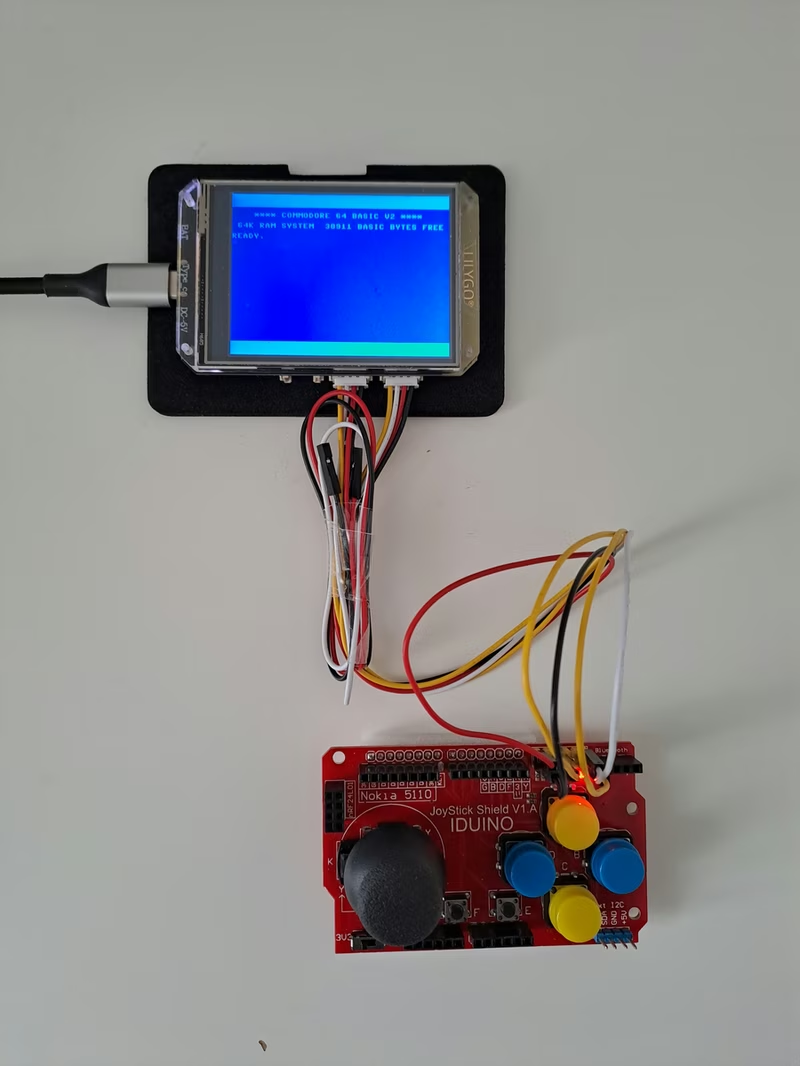
T-HMI-C64 Emulator
A multi-platform Commodore 64 emulator designed for ESP32-S3 and ESP32 microcontrollers, supporting various display technologies from integrated LCDs to LED matrix panels. It utilizes FreeRTOS for multi-core task distribution and offers versatile input options including custom Android BLE and web-based keyboards.
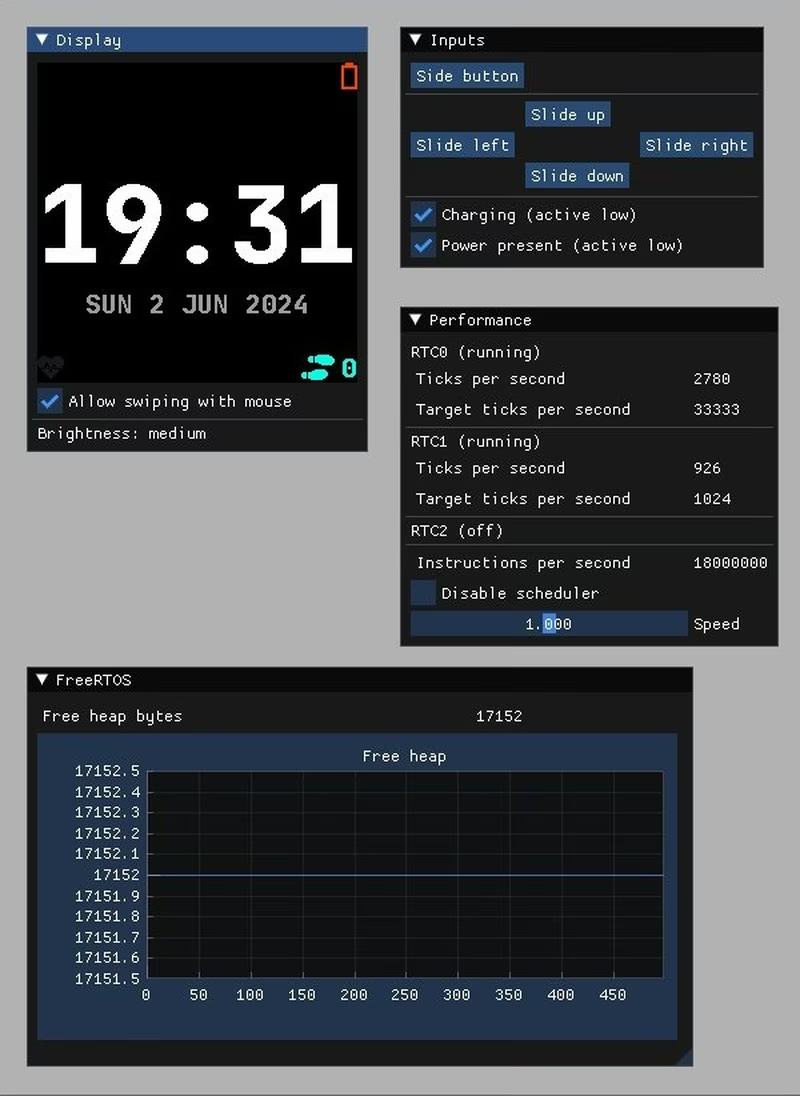
InfiniEmu
InfiniEmu is a high-fidelity emulator for the PineTime smartwatch, simulating the nRF52832 SoC and its complete peripheral suite including I2C sensors and SPI displays. It enables developers to run production firmware like InfiniTime in both native desktop environments and web browsers using WebAssembly, featuring integrated support for FreeRTOS debugging and LittleFS storage.
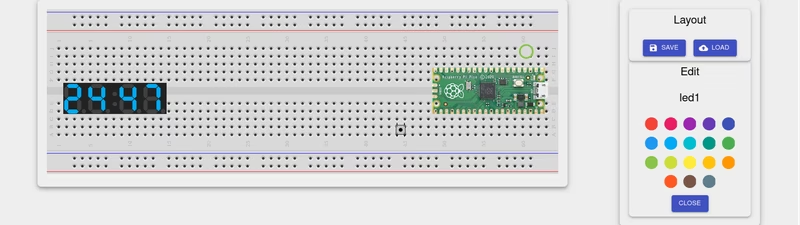
Renode RP2040 Simulation
A comprehensive simulation framework for the Raspberry Pi RP2040 microcontroller based on Renode. It features a specialized C++ PIO simulator, support for core peripherals like DMA and I2C, and a Python-based visualization tool for virtual hardware debugging.