PixelRoot32 Game Engine
PixelRoot32 is a lightweight, modular 2D game engine written in C++17 for ESP32 microcontrollers and PC simulation. It features a scene-based architecture, NES-style audio synthesis, and a high-performance rendering pipeline optimized for embedded hardware using DMA transfers.

PixelRoot32 is a comprehensive 2D game engine designed to bring modern development workflows to the world of embedded systems. Developed primarily for the ESP32, it offers a cross-platform environment that allows developers to build and test games on PC (Windows, Linux, or macOS) using SDL2 before deploying the same code to microcontroller hardware. This dual-target approach significantly speeds up the development cycle by removing the need for constant hardware flashing.
Engine Philosophy and Architecture
The engine is built with a clear philosophy: determinism over convenience and performance as a core constraint. It avoids runtime memory allocations to prevent heap fragmentation, a critical consideration for long-running embedded applications. Instead, it favors object pooling and smart memory management. The architecture is heavily inspired by the Godot Engine, utilizing a Scene-Entity-Actor system that makes it intuitive for developers familiar with modern game engines to transition into the embedded space.
To maintain performance on microcontrollers without a Floating Point Unit (FPU), such as the ESP32-C3, PixelRoot32 implements a dual numeric backend. It uses a custom fixed-point math system (Scalar) to ensure consistent behavior and high speed across different hardware variants. Developers are encouraged to use these fixed-point types and centralized logging abstractions to keep the codebase portable and efficient.
High-Performance Graphics and Rendering
PixelRoot32 is optimized for speed, utilizing DMA (Direct Memory Access) transfers and IRAM-cached rendering to squeeze the most out of the ESP32’s hardware. The engine supports a variety of display drivers, including the ST7789 and ILI9341 via TFT_eSPI, and monochrome OLEDs through the u8g2 library.
Key graphical features include:
- Independent Resolution Scaling: Render at a low logical resolution (like 128x128) and scale it to fit larger physical displays.
- Advanced Sprite System: Support for 1bpp, 2bpp, and 4bpp sprites with features like flipping, rotation, and multi-palette selection.
- Tilemap Support: Includes viewport culling and an optimized tile animation system that achieves O(1) frame resolution.
- Indexed Color Palettes: Pre-configured support for retro palettes such as NES, GameBoy, and PICO-8.
Physics and Audio Subsystems
Beyond graphics, the engine includes a robust AABB physics system. This “Flat Solver” handles kinematic and rigid actors, sensors, and one-way platforms, providing stable stacking and iterative collision resolution. A dedicated PhysicsScheduler ensures a stable 60Hz simulation even when the ESP32 is under heavy interrupt load from WiFi or Bluetooth tasks.
The audio subsystem provides a retro experience with a built-in 4-channel synthesizer. It emulates NES-style sound generation with Pulse, Triangle, and Noise channels, allowing for procedural SFX and music without the overhead of heavy audio files.
Getting Started
PixelRoot32 is designed to be used with PlatformIO and VS Code. To integrate the engine into a project, users must configure their environment for C++17 and disable exceptions. The repository provides a wealth of examples ranging from simple “Hello World” projects to complete games like Space Invaders, Brick Breaker, and Flappy Bird. Each example serves as a standalone project, demonstrating features like spatial partitioning, touch screen support (for CYD devices), and modular compilation using PIXELROOT32_ENABLE_* flags to minimize firmware size.
Related Projects
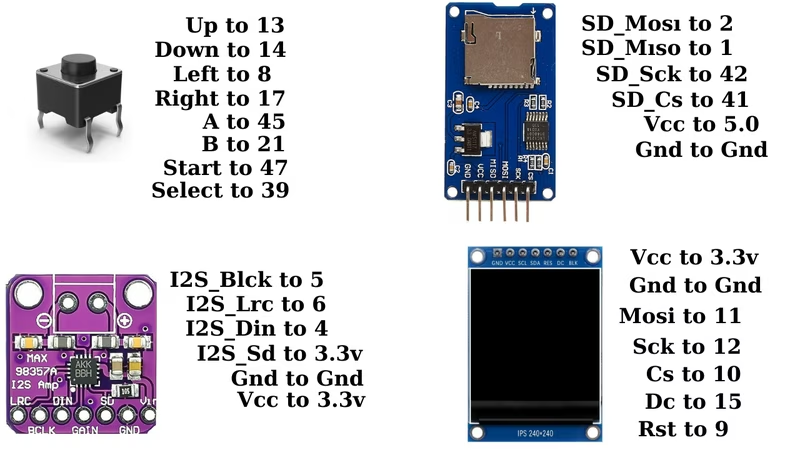
ESP32-S3 NES Emulator
A high-performance NES emulator for the ESP32-S3, featuring full-speed emulation, I2S audio via the MAX98357A, and SD card ROM support. It utilizes the Nofrendo core and custom ST7789 display drivers to provide a smooth, portable 8-bit gaming experience.
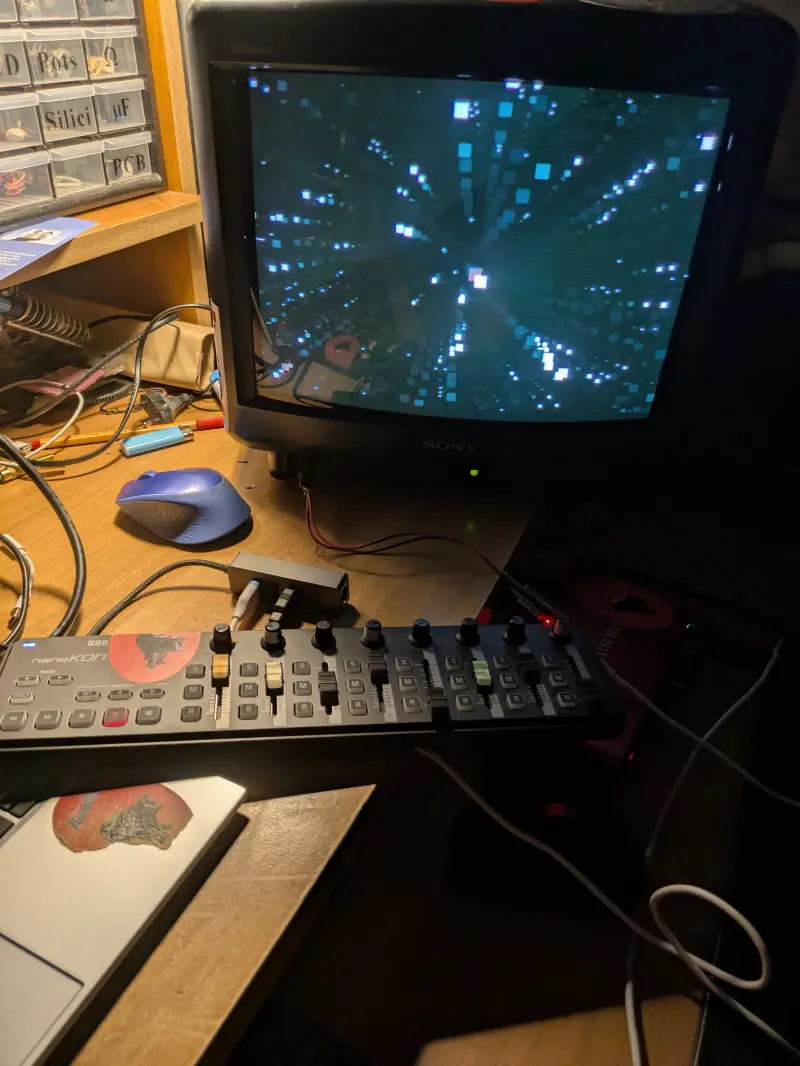
Retro Video Synthesizer: ESP32 & Pure Data
A real-time composite video generation system for the ESP32 that renders 3D wireframes, starfields, and geometric tunnels directly to CRT televisions. It utilizes a custom C++ engine controllable via a web interface or Pure Data with MIDI support for live visual performances.
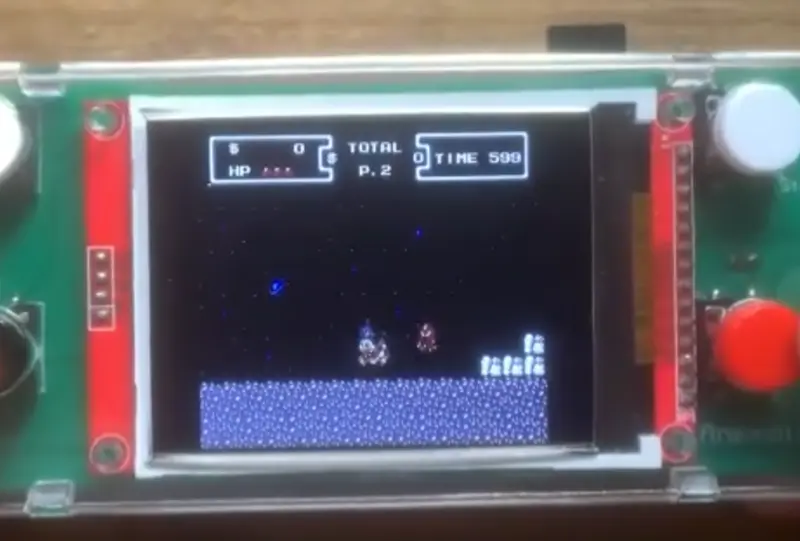
Anemoia-ESP32 NES Emulator
An optimized Nintendo Entertainment System (NES) emulator rewritten for the ESP32 platform. It supports full audio emulation and achieves native speeds on dual-core ESP32 hardware using the Arduino framework and TFT_eSPI library.
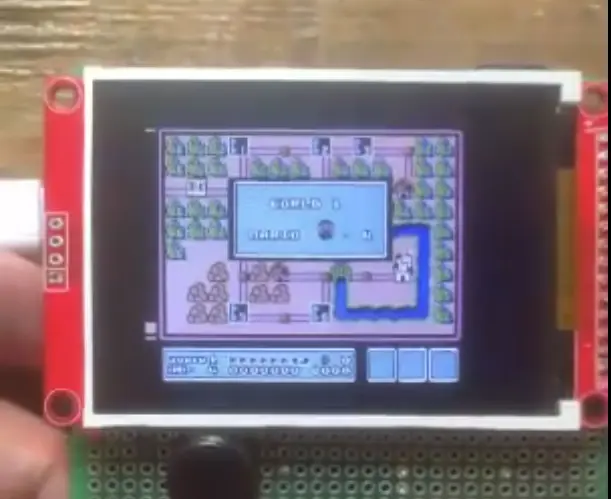
Anemoia-ESP32
A high-performance Nintendo Entertainment System (NES) emulator ported to the ESP32, capable of running games at native speeds with full audio. It leverages FreeRTOS for concurrent CPU and APU emulation and supports various memory mappers covering approximately 79% of the NES library.