USB-C Multimeter Hack
This project details the reverse engineering and firmware development for repurposing a YOJOCK/Kowsi USB-C multimeter as a PY32F002A development board. It features a custom firmware implementation that provides power sensing, a stopwatch, and games, leveraging a bit-banged SPI interface for its 160x180 color display.
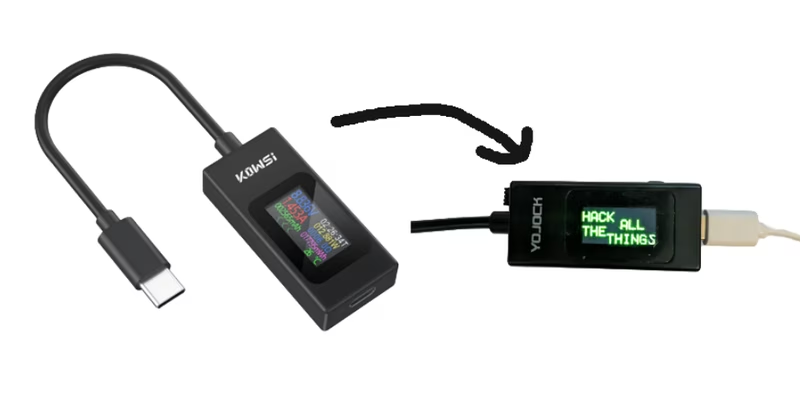
Hacking a USB-C Multimeter
This project explores the transformation of a common, low-cost YOJOCK/Kowsi USB-C multimeter into a versatile development board based on the PY32 microcontroller. By reverse engineering the device, it becomes possible to repurpose its built-in USB-C power sensing circuitry, display, and ADC inputs for custom applications, turning a simple tool into a compact platform for embedded experimentation.
The current firmware implementation expands the device’s utility far beyond its original scope, adding a variety of functions including a counter with persistent storage, a stopwatch, and even a Flappy Bird game, alongside its primary role as a USB-C power display.
Hardware Overview
At its core, the board is powered by a PY32F002A microcontroller in a TSOP-20 package. This 32-bit ARM Cortex-M device is equipped with 20 KB of Flash and 3 KB of SRAM. The board also features a 160x180 SPI TFT display capable of RGB565 color, which is central to the user interface.
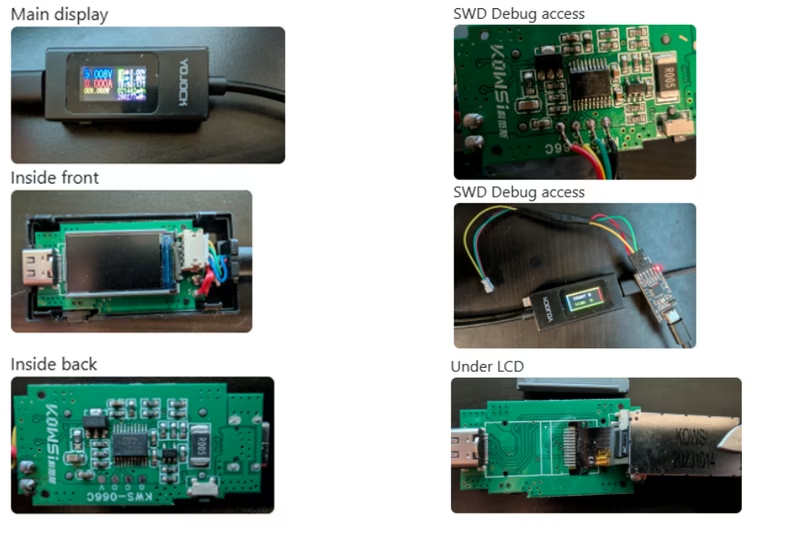
The hardware design includes enough I/O to support various interfaces such as ADC, SPI, I2C, and SWD. The compact nature of the device, combined with its existing sensing circuitry, makes it an ideal target for hacking and learning about ARM Cortex-M0 systems.
Firmware and Development Setup
The firmware is built upon a modified version of the py32f0-template, specifically adapted for this hardware. The development environment relies on the ARM GNU Toolchain and pyOCD for flashing and debugging the target over the Serial Wire Debug (SWD) interface.
The build system is managed via a Makefile that allows for modular configuration of the MCU type and toolchain paths. For this specific implementation, the ST7735S display startup sequence was referenced from existing open-source implementations to ensure compatibility with the onboard TFT.
Display and Performance
One of the technical highlights of the project is the optimization of the display interface. To achieve better performance on the 160x180 SPI TFT, bit-banging was utilized to create a faster SPI interface. This approach, aided by research into the reference manual for GPIO port addresses and offsets, allows for smoother rendering of the multimeter UI and games like Flappy Bird.
Reverse Engineering the PCB
A significant portion of this project involved documenting the physical hardware. The PCB has been partially reverse-engineered, with most components identified and matched against the JLCPCB/JLC Parts library.
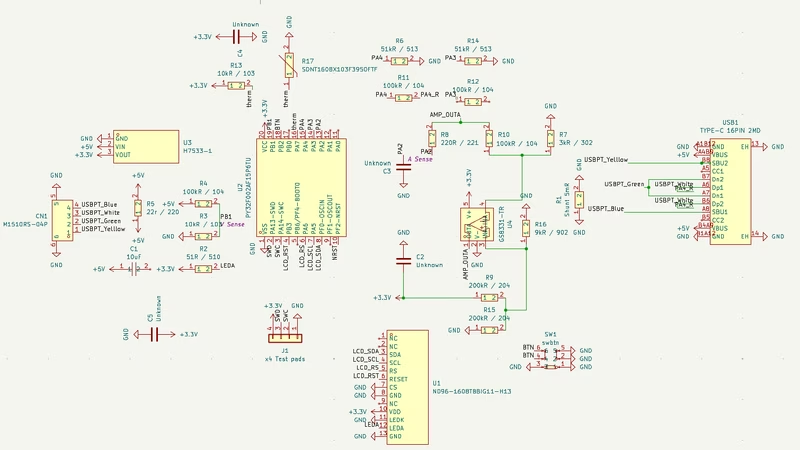
While the process is ongoing, the project includes KiCad schematics to assist others in the community who may wish to contribute their expertise to complete the hardware mapping. This effort serves as a bridge for those interested in both the electrical engineering and software aspects of embedded hacking.
Related Projects
ESP-HACK FW
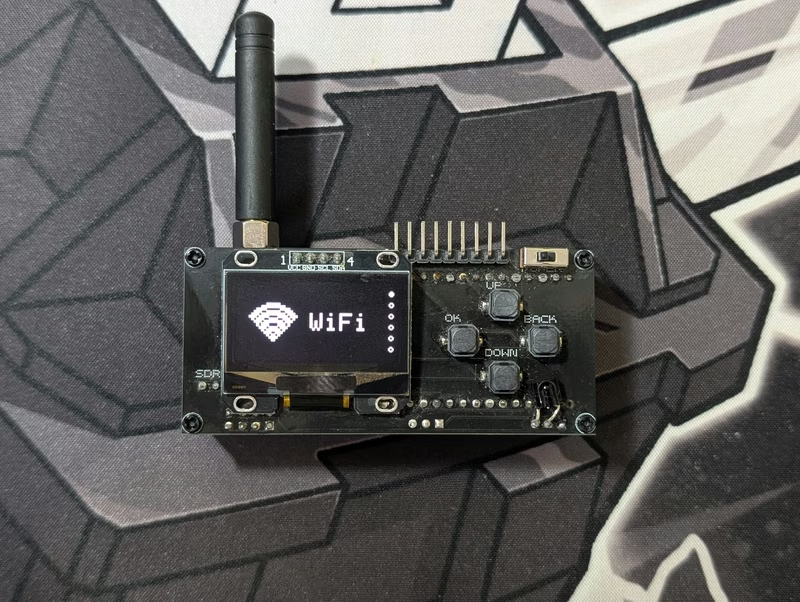
ESP-HACK is a versatile wireless research and pentesting firmware for the ESP32 platform, targeting Sub-GHz, Bluetooth, and Infrared protocols. It utilizes the Arduino framework and NimBLE stack to provide tools for signal analysis, protocol exploration, and GPIO integrations. The project is designed for use with custom hardware including CC1101 transceivers and OLED displays.
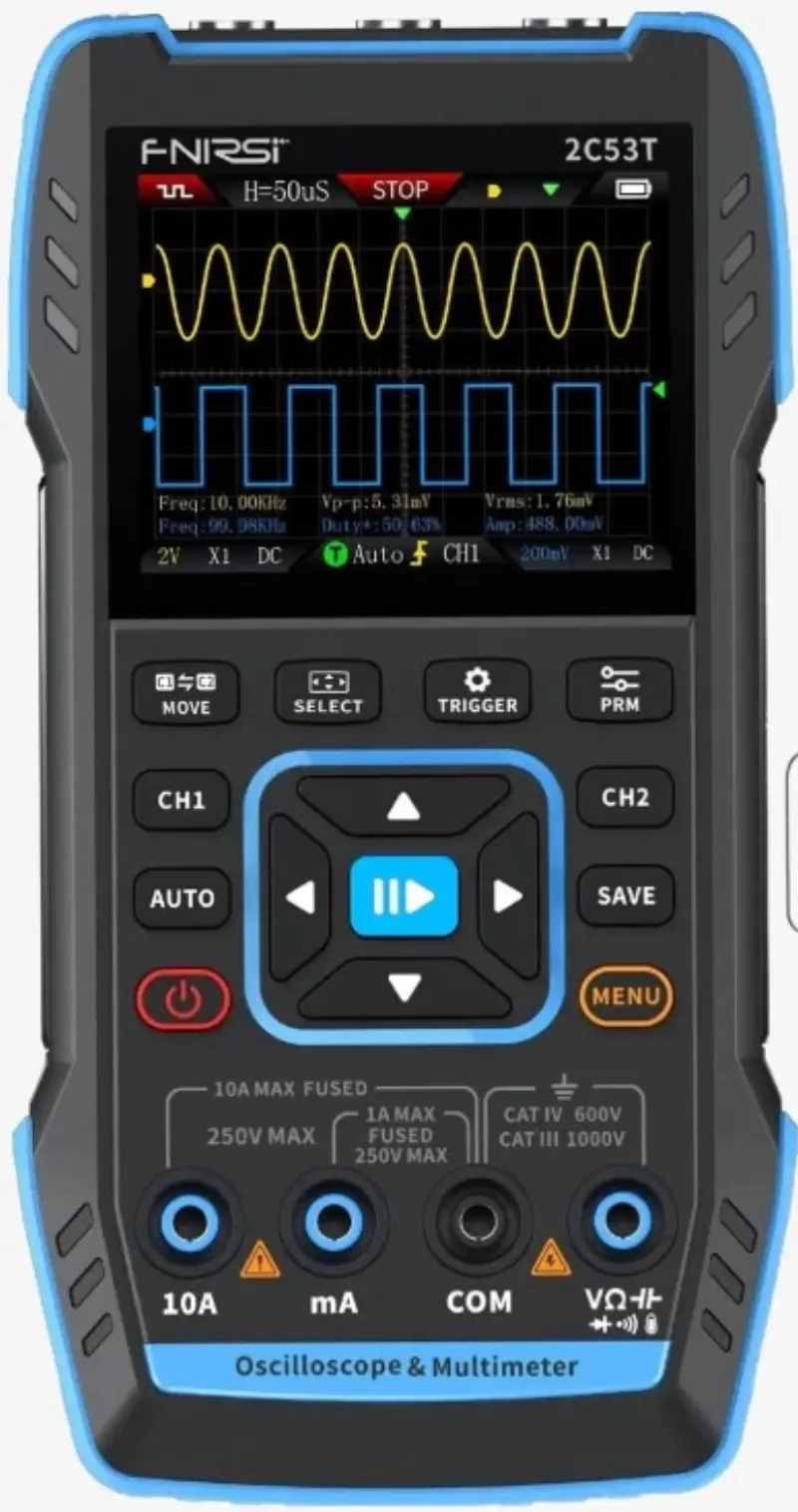
OpenScope 2C53T
An open-source firmware replacement for the FNIRSI 2C53T 3-in-1 handheld instrument. Built on FreeRTOS and targeting the Artery AT32F403A MCU, it provides a complete rewrite of the oscilloscope, multimeter, and signal generator functions.
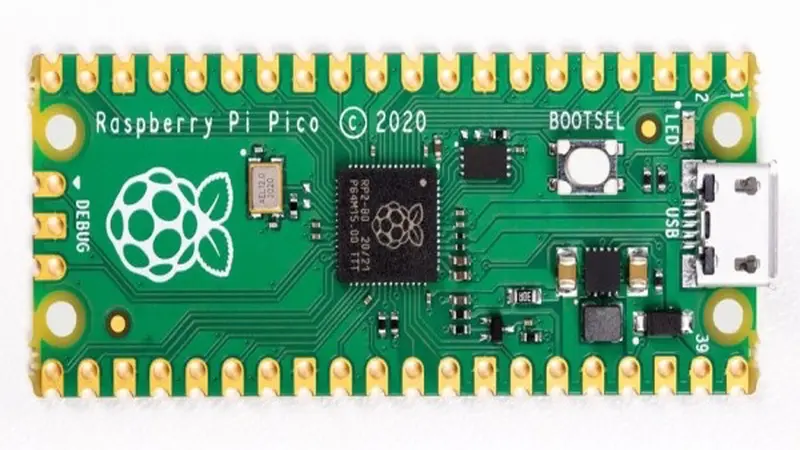
EV2400 Reimplementation for Raspberry Pi Pico
A Rust-based reimplementation of the Texas Instruments EV2400 hardware interface using the Raspberry Pi Pico (RP2040). It enables communication with TI battery gauge ICs via I2C and GPIO using the Embassy async framework, allowing the Pico to act as a bridge for TI's Battery Management Studio.
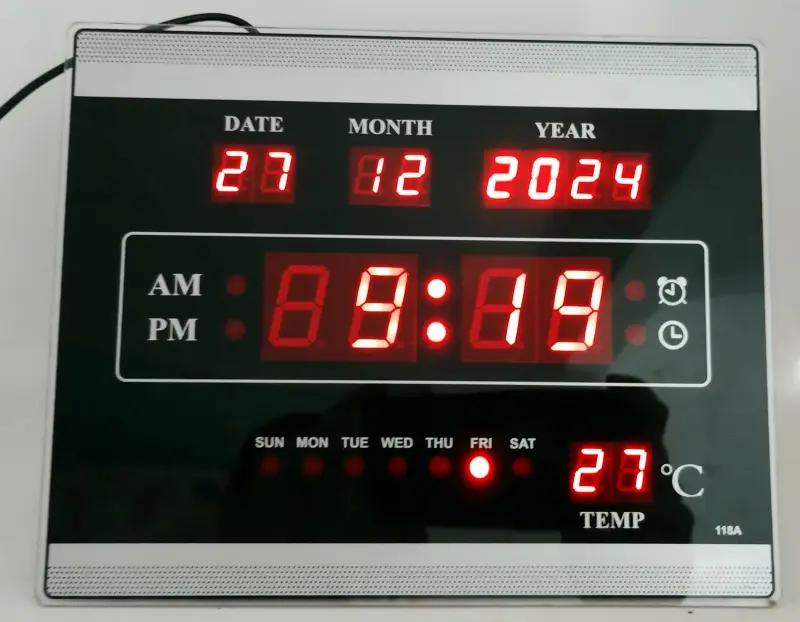
Retrofit Electronic Clock with Raspberry Pi Pico W
A hardware retrofit project that replaces a defunct TG1508 controller in a digital clock with a Raspberry Pi Pico W. It features Wi-Fi time synchronization via NTP, dual-core firmware for display management and networking, and a complete reverse-engineered schematic created in KiCad.
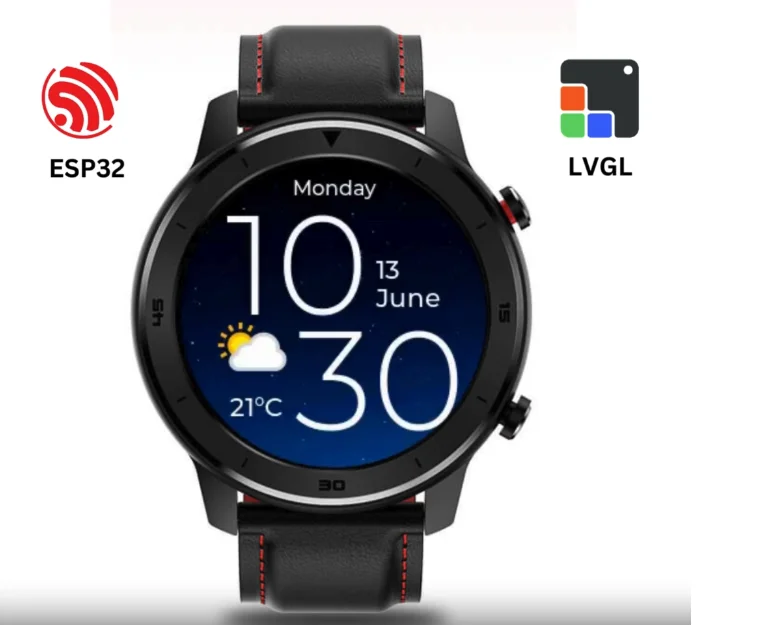
DT78 ESP32 Firmware
A custom firmware and hardware redesign for the DT78 smartwatch, replacing the original internals with an ESP32. It features a sophisticated LVGL-based UI, custom watchfaces, and integration with the Chronos companion app for notifications and weather data.