TEMPO: IoT Edge Device
An IoT edge device based on the ESP32 microcontroller, featuring Ethernet connectivity via the W5500 chip and environmental sensing with the DHT22. It serves as a gateway for collecting and processing sensor data at the edge before passing it to a network.
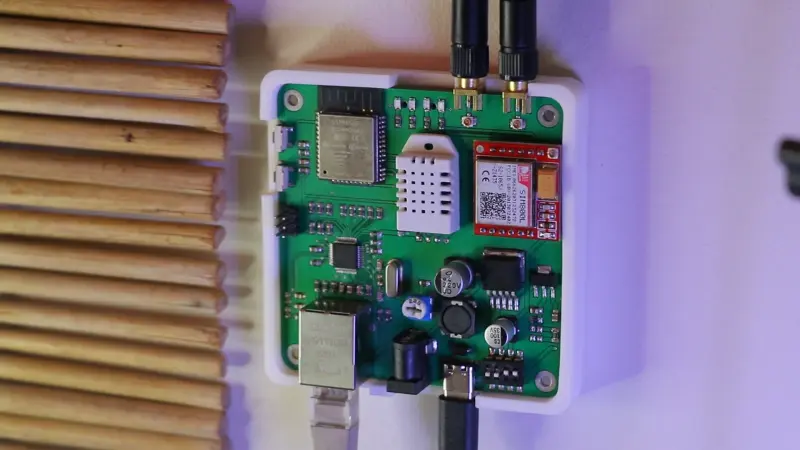
Overview
TEMPO is an IoT Edge device designed to bridge the gap between physical sensors and the internet. Built around the versatile ESP32 Wroom microcontroller, it provides a robust platform for data collection and edge processing. In the landscape of the Internet of Things, edge devices like TEMPO play a critical role by collecting data from sensors and performing initial processing before passing the information to a gateway or cloud service.
Hardware and Connectivity
The project integrates several key hardware components to ensure reliable performance in various environments. While the ESP32 provides native Wi-Fi and Bluetooth capabilities, TEMPO expands its networking options by incorporating a W5500 Ethernet chip. This addition allows for stable, wired internet connectivity, which is often preferred in industrial or high-interference settings where wireless signals may be unreliable.
Core Hardware Components:
- Microcontroller: ESP32 Wroom for high-performance processing and wireless connectivity.
- Ethernet: W5500 chip for dedicated wired networking.
- Sensors: DHT22 for accurate temperature and humidity monitoring.
- Power Management: Utilization of LM1117 and LM2576 regulators to ensure efficient and stable power supply across the board.
Technical Implementation
TEMPO is designed to act as a localized processing unit. By utilizing the ESP32, the system leverages the FreeRTOS-based environment (via ESP-IDF or the Arduino core) to handle concurrent tasks such as sensor polling, network stack management, and data transmission. The integration of the W5500 typically involves the lwIP stack, providing a standard TCP/IP interface for the device’s applications.
The device is structured to be “internet-enabled” out of the box, allowing it to function as a standalone node that communicates with mobile hotspots or routers. This makes it an ideal candidate for environmental monitoring stations where data integrity and uptime are paramount.
Future Development
The TEMPO project has a clear roadmap for expanding its capabilities as a comprehensive edge solution. Planned updates include:
- Cellular Connectivity: Integration of the SIM800L module to provide a fallback or primary connection via cellular networks.
- Data Logging: Implementation of local storage functionality to track system errors and sensor data over time for offline analysis.
- Private Webserver: Development of an internal web interface for localized device management and data visualization.
- Hardware Refinements: Enhancements to support external antennas for improved wireless range and bug fixes for existing firmware modules.
Getting Started
Developers interested in TEMPO can explore the provided schematics and 3D files (STL) included in the repository to build their own hardware. The project documentation provides a deeper dive into the setup process and the specific logic used to manage the DHT22 sensor and W5500 Ethernet controller. For those looking to implement edge computing in their IoT ecosystem, TEMPO offers a solid foundation combining reliable power management with flexible networking options.