TamaFi: WiFi-Powered Virtual Pet
An autonomous virtual pet application for the ESP32-S3 that 'feeds' on nearby WiFi networks. It features a full-color UI on an ST7789 display, persistent state management via Preferences, and a custom behavior engine that evolves the pet based on environmental factors.
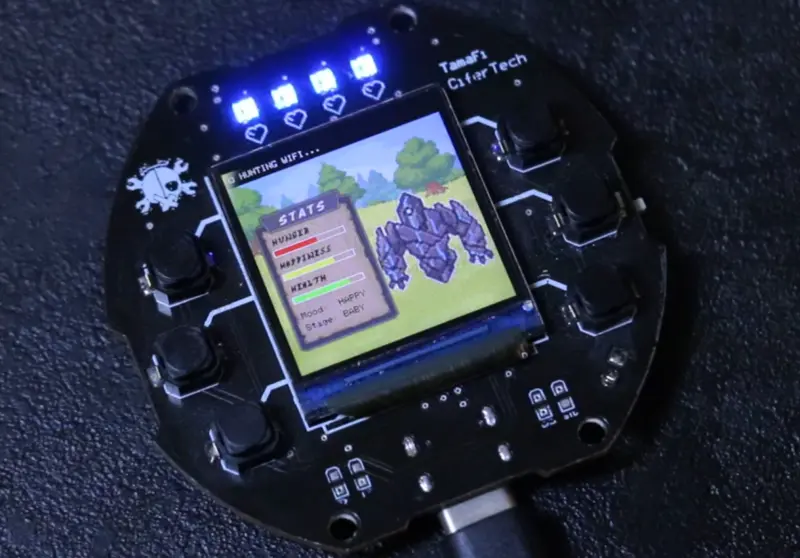
Overview
TamaFi is a modern, WiFi-aware virtual pet project that reimagines the classic handheld digital pet experience for the 21st century. Powered by the ESP32-S3, TamaFi doesn’t just sit in a loop; it interacts with its digital environment by “feeding” on nearby WiFi signals. The project combines custom PCB design, a sophisticated behavior engine, and a vibrant color UI to create a device that feels like a finished consumer product.
The WiFi-Fed Mechanic
The core innovation of TamaFi is its relationship with the wireless environment. The pet’s stats—hunger, happiness, and health—are directly influenced by the WiFi networks it detects. It runs a decision engine that evaluates the number of nearby networks, their signal strength (RSSI), and whether they are open or hidden.
The pet performs several autonomous actions based on these factors:
- Hunt: Scans for WiFi networks to “feed,” adjusting hunger and health stats.
- Explore: Reacts to network diversity and hidden SSIDs.
- Rest: Enters a sleep cycle for recovery, accompanied by unique animations.
- Idle: Displays mood-based animations on the home screen when not actively engaged.
Technical Architecture
TamaFi is built on the ESP32-S3 using the Arduino framework. It leverages the dual-core capabilities of the S3 to maintain a responsive UI while handling background tasks like WiFi scanning and sound generation.
Graphics and UI
The project utilizes the TFT_eSPI library to drive a 240x240 ST7789 full-color display. To ensure a flicker-free experience, all rendering is handled through a framebuffer using TFT_eSprite. The UI includes a comprehensive menu system for checking pet status, environment diagnostics, and system settings like brightness and sound toggles.
Behavior and Evolution
The pet’s logic is driven by a state machine that tracks age in real-time (minutes, hours, and days). As the pet ages, it evolves through four distinct stages: Baby, Teen, Adult, and Elder. This evolution is not just time-based; it is influenced by the quality of care (average stats) and the quality of the WiFi environment the pet has inhabited.
Hardware Integration
The V2 hardware stack is highly integrated, featuring:
- ESP32-S3: Provides native USB for flashing and high performance for animations.
- WS2812-2020 NeoPixels: Four addressable LEDs provide ambient feedback on the pet’s mood and activity (e.g., specific patterns for hunger or resting).
- Non-blocking Sound: A retro sound engine uses the ESP32’s LEDc PWM peripheral to play chiptune-style sequences without interrupting the main logic loop.
- Power Management: Includes a TP4056 charger for Li-Po batteries and MOSFET-controlled backlight dimming for power efficiency.
Persistence and State
To ensure the pet’s progress isn’t lost, TamaFi uses the Preferences library to store stats, age, and settings in the ESP32’s non-volatile storage (NVS). This allows the pet to “survive” reboots and battery swaps, maintaining its personality and growth stage over long periods of time.