T-Glass ESP32-S3 Smart Glass Applications
A collection of custom applications for the T-Glass v2, an ESP32-S3-powered smart glasses platform. It features support for BLE notifications, image capture, and sensor integration using the ESP-IDF framework.
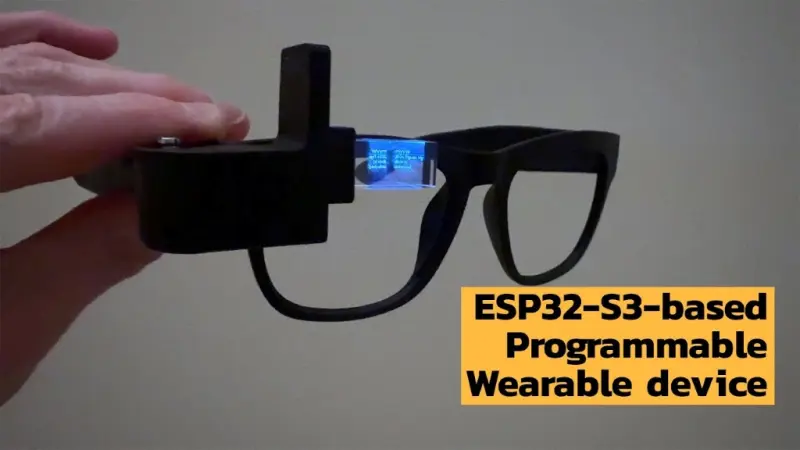
The T-Glass v2 project offers a specialized ecosystem for developers looking to build and deploy applications on an affordable, ESP32-S3-based smart glasses platform. Priced at a fraction of high-end wearables, it provides a feature-rich environment for exploring IoT, wearable interfaces, and sensor integration.
High-Performance Wearable Hardware
At the heart of the T-Glass v2 is the ESP32-S3-FN4R2 SoC, which provides robust processing power along with 4MB of Flash and 2MB of PSRAM. The device is equipped with a 1.1-inch JD9613 LTPS AMOLED display, ensuring that information is crisp and readable even in a compact form factor.
Beyond the display, the hardware suite includes:
- Bosch BHI260AP: A smart sensor hub that handles motion tracking and IMU data efficiently.
- PCF85063A RTC: Ensures accurate timekeeping for standalone wearable functions.
- Audio and Input: An integrated microphone and a touch-sensitive button allow for multi-modal user interaction.
Specialized Applications
The repository is organized into specific application modules, each targeting different capabilities of the wearable platform:
- iOS Notification System (ANCS): By implementing the Apple Notification Center Service (ANCS) over Bluetooth Low Energy (BLE), the glasses can act as a secondary display for iPhone notifications, keeping users informed without needing to check their mobile devices.
- Image Capture: This application demonstrates the device’s ability to interface with external systems via BLE to trigger or manage image capture tasks.
- Motion and Time Tracking: Leveraging the onboard Bosch sensors and Real-Time Clock, the platform is capable of sophisticated activity monitoring and time-based alerts.
Development Environment
The project is built on the ESP-IDF (Espressif IoT Development Framework). This choice provides developers with deep access to the ESP32-S3’s hardware features, including its dual-core architecture and advanced power management. Because ESP-IDF is built on FreeRTOS, the applications benefit from a mature real-time operating system environment, enabling efficient task scheduling for sensor polling, display updates, and wireless communication.
For those interested in the intersection of wearable hardware and open-source software, the T-Glass Applications repository provides both a starting point and a set of functional tools to transform a programmable device into a custom smart wearable.