Smart Medibox
An ESP32-based IoT medical assistant that manages medication schedules through alarms, monitors storage conditions with temperature and humidity sensors, and features an automated light-shielding curtain. It integrates with a Node-Red dashboard via MQTT and includes a web-based WiFi configuration portal.
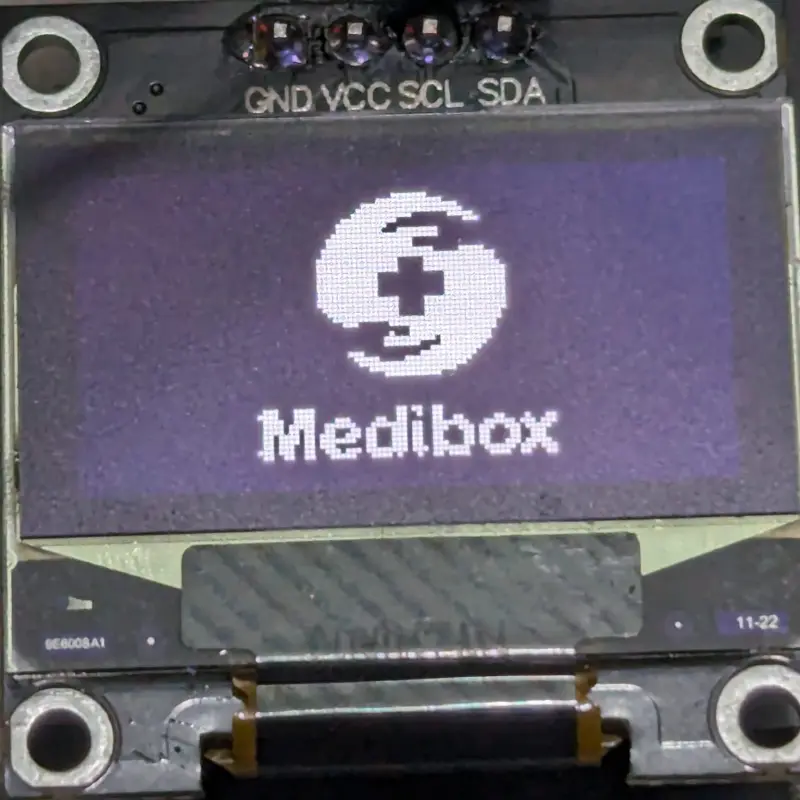
The Smart Medibox is an integrated IoT device designed to streamline medication management for users who require regular prescriptions. Developed for the ESP32 platform, this project combines hardware sensing, real-time feedback, and remote monitoring to ensure that medicine is taken on time and stored in optimal conditions.
At its core, the Smart Medibox serves three primary functions: time-based reminders, environmental monitoring, and automated light control. The system uses an SSD1306 OLED display to provide a user interface, allowing patients to interact with menus and view status updates directly on the device.
Hardware and Environmental Monitoring
The project utilizes a standard ESP32 Devkit V1 as the central controller. To monitor the storage environment, it employs a DHT11 temperature and humidity sensor. If the temperature or humidity exceeds safe thresholds for the stored medication, the device triggers a visual warning on the OLED display and can notify the user via the connected dashboard. For user interaction, the Medibox includes a set of push buttons for navigating menus and confirming alarms, while a buzzer and LED provide the physical reminder signals when it is time for a dose.
Intelligent Light Control
One of the more unique features of the Smart Medibox is its motorized curtain system, driven by an SG90 micro servo. Many medications are light-sensitive, and the Medibox addresses this by monitoring ambient light levels using two LDRs. The system calculates the necessary motor angle using a specific formula that accounts for the maximum light intensity detected and a configurable offset, ensuring the curtain provides adequate shading. Users can choose between simple linear mapping or a more accurate non-linear mapping for the LDR sensors, depending on their precision requirements.
Connectivity and Configuration
The Smart Medibox is designed for ease of use, even when network conditions change. It features a dedicated WiFi Configuration Mode. If the device cannot connect to a saved network within ten seconds, it automatically initiates its own Wireless Access Point. Users can connect to this hotspot via a smartphone, navigate to a local IP address (typically 192.168.4.1), and enter new credentials through a web portal. This ensures the device remains connected without requiring the user to re-flash the firmware.
For remote monitoring, the project integrates with Node-Red. Using the PubSubClient library, the Medibox communicates via MQTT to send sensor data and receive configuration parameters. The provided Node-Red flow includes a dashboard for visualizing temperature, humidity, and light levels in real-time, allowing caregivers to monitor the device from anywhere.
Software Architecture
The codebase is organized into a modular structure using PlatformIO and the Arduino framework. Global constants, function declarations, and variable initializations are separated into dedicated header files, while the main logic resides in main.cpp. The main loop handles three concurrent responsibilities: updating the system clock and checking for active alarms, polling for user input to navigate the menu system, and monitoring sensor data for environmental warnings. This polling-based architecture ensures the device remains responsive to both sensor changes and user interactions.