IoT HDMI Mux
An ESP32-C3 based HDMI multiplexer that enables wireless switching between two HDMI sources. It utilizes the TS3DV642 high-speed switch IC to support HDMI 2.0 specifications, including 4K resolution at 60Hz.
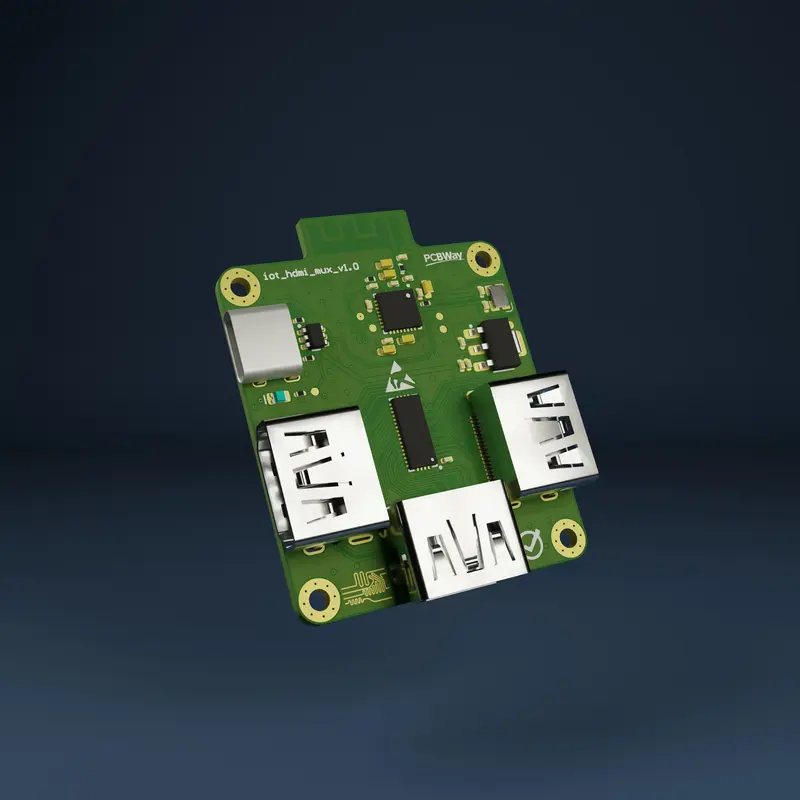
Overview
The IoT HDMI Mux is a hardware and firmware project designed to solve a common home entertainment frustration: the need to manually switch HDMI cables or manage multiple remote controllers. By combining a modern microcontroller with a high-performance video switch, this project creates a connected device capable of toggling between two HDMI inputs and one output via a wireless interface.
At its core, the project leverages the ESP32-C3, a RISC-V based SoC with integrated Wi-Fi and Bluetooth LE. This allows the multiplexer to be integrated into home automation systems or controlled via a web interface, eliminating the need for physical proximity to the media center.
Hardware Architecture
The project is built around two primary components:
- ESP32-C3 Microcontroller: Acts as the brain of the device, handling wireless connectivity and GPIO control to trigger the switching logic.
- TS3DV642 IC: A high-speed 1-to-2 or 2-to-1 bi-directional multiplexer/demultiplexer. This specific IC is a FET-based switch designed for high-speed differential signaling.
Because the TS3DV642 is a passive FET switch, it offers low power consumption and minimal signal distortion, provided the PCB layout is optimized for high-frequency signals. The project includes dedicated pinout documentation for both the ESP32-C3 and the TS3DV642 to assist in hardware assembly and troubleshooting.
Video Performance and Features
Despite its compact and DIY-friendly nature, the IoT HDMI Mux is designed to handle modern high-resolution video standards. The TS3DV642 IC is rated for and has been tested to support:
- HDMI 2.0 Compatibility: Ensuring support for the bandwidth requirements of modern consoles and media players.
- 4K at 60 Hz: Providing smooth, high-definition playback without the flickering or degradation often found in lower-quality switches.
While the switch is rated for these specifications, the project notes that the actual performance ceiling may be higher depending on the specific PCB implementation and signal integrity.
Project Structure
The repository is organized into several key areas to support both the hardware and software aspects of the build:
- Firmware: Contains the code to be flashed onto the ESP32-C3, likely utilizing the ESP-IDF or Arduino framework to manage the switching logic and network stack.
- Project: Houses the hardware design files, including schematics and PCB layouts required to manufacture the device.
- Documentation: Includes high-quality renders of the electronics and detailed pinout spreadsheets for the main components.
This project is an excellent example of modern IoT application, bridging the gap between high-speed analog video signals and digital wireless control. It is particularly useful for users looking to integrate their media setups into platforms like Home Assistant or simply looking for a more convenient way to manage their HDMI inputs.