EverBlu Cyble Enhanced RF Meter Reader
This firmware extracts water and gas usage data from Itron EverBlu Cyble meters using ESP32 or ESP8266 microcontrollers and a CC1101 radio transceiver. It implements the proprietary RADIAN protocol on the 433 MHz band, offering seamless integration with Home Assistant through both MQTT AutoDiscovery and a native ESPHome external component.
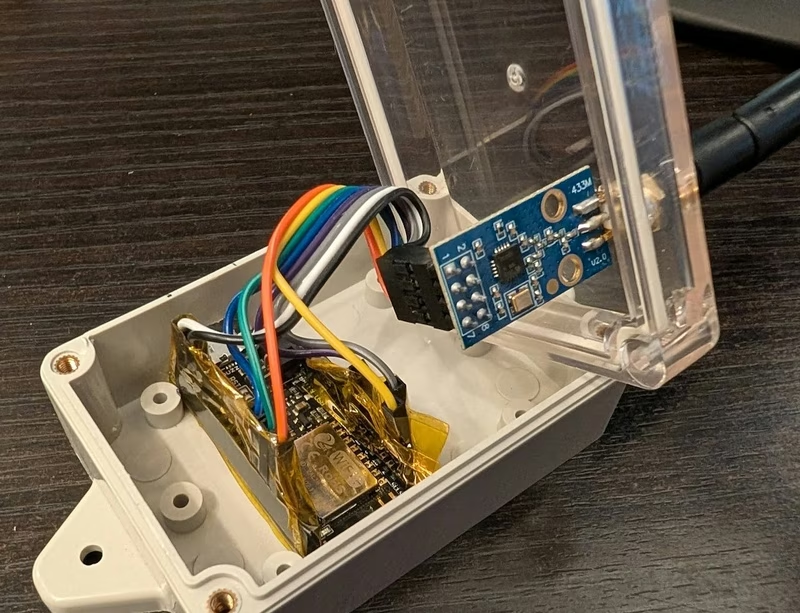
This project provides a robust solution for monitoring utility consumption by interfacing with Itron EverBlu Cyble Enhanced RF meters. By utilizing an ESP32 or ESP8266 paired with a CC1101 transceiver, users can wirelessly fetch usage data via the RADIAN protocol. The system is designed to be production-ready, supporting both water and gas meters with dedicated measurement units and device classes for Home Assistant.
Core Capabilities and Integration
The firmware supports two primary integration methods. For users deeply embedded in the ESPHome ecosystem, a native external component is available, allowing for simple YAML-based configuration without the need for an external MQTT broker. Alternatively, a standalone MQTT version provides extensive customization and uses Home Assistant’s AutoDiscovery feature to populate sensors automatically.
Beyond current usage, the system extracts 12 months of historical data directly from the meter’s internal memory. This allows users to bootstrap their energy dashboards with a year of past consumption patterns immediately upon setup. The data is provided in a structured JSON format, detailing monthly readings and consumption deltas.
Important: Utility Read Counter Compatibility
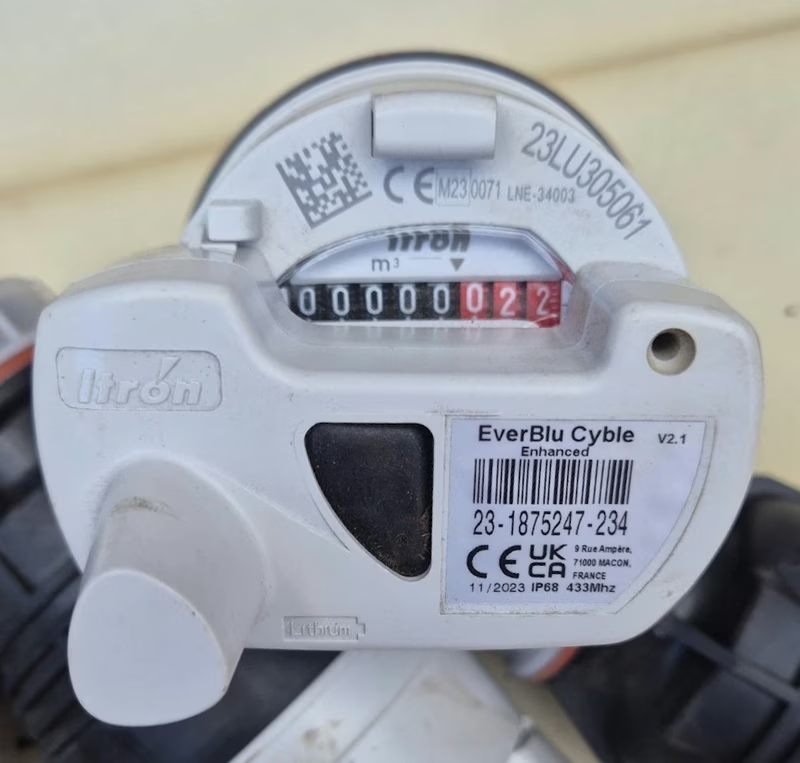
A critical technical detail of the EverBlu system is the built-in read counter. Every time the meter is queried, an internal counter increments. Utility companies use this counter to validate their own scheduled wireless readings. If a user queries the meter too frequently, the counter may be higher than the utility’s equipment expects, potentially flagging the meter for tampering. To mitigate this, the firmware allows for daily scheduled readings and provides the counter value via MQTT, enabling users to “loop” the counter back to an expected value if necessary.
Technical Architecture and Frame Validation
The project implements a sophisticated software-defined approach to decoding the RADIAN protocol. Because the protocol uses a proprietary serial encoding (not standard Manchester), the firmware performs custom serial decoding with 4x oversampling for noise immunity. To ensure data integrity, it employs multiple layers of validation:
- CRC-16/KERMIT Checksum: Verifies the integrity of every transmitted frame.
- Preamble Matching: Uses 0xAAAAAAAA sync word detection.
- Signal Quality Filtering: Monitors RSSI and LQI (Link Quality Indicator) to discard weak or corrupted signals.
- Temporal Validation: Ensures readings occur within the meter’s configured wake window.
Hardware Implementation
The system runs on common ESP8266 (like the Wemos D1 Mini or Adafruit HUZZAH) and ESP32 boards. Communication with the CC1101 433 MHz RF module is handled via hardware SPI. Due to the nature of the RADIAN protocol and potential RF interference, it is recommended to keep the transceiver within 2 to 5 meters of the meter for optimal reliability.
Wiring Reference for ESP8266/ESP32
| CC1101 Pin | Function | ESP8266 GPIO | ESP32 GPIO |
|---|---|---|---|
| VCC | Power (3.3V) | 3V3 | 3V3 |
| SCK | SPI Clock | GPIO 14 | GPIO 18 |
| MISO | SPI Data In | GPIO 12 | GPIO 19 |
| MOSI | SPI Data Out | GPIO 13 | GPIO 23 |
| CSN | Chip Select | GPIO 15 | GPIO 5 |
| GDO0 | Data Ready | GPIO 5 | GPIO 4 |
Configuration and Frequency Discovery
Setting up the device requires specific metadata from the meter’s physical label, specifically the manufacturing year and the middle part of the serial number.
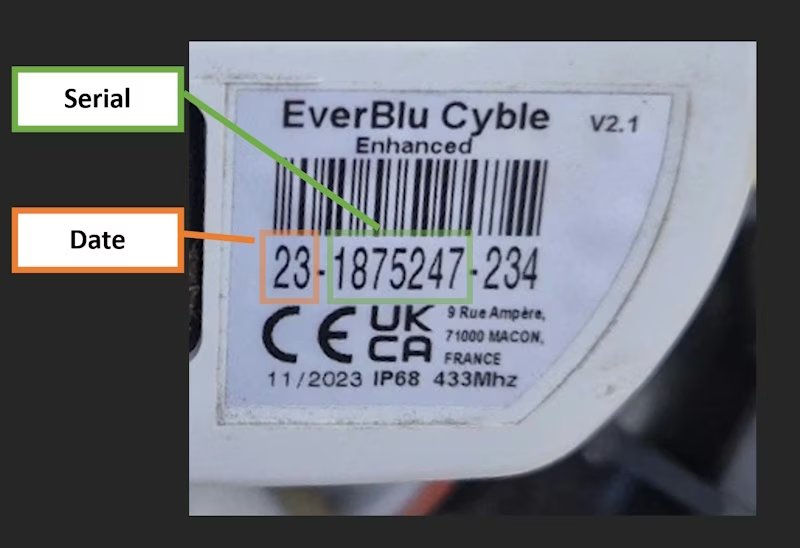
On the first boot, the firmware automatically initiates a wide frequency scan (±100 kHz) to calibrate the CC1101 to the specific frequency of the meter, which typically centers around 433.82 MHz. This automatic calibration accounts for crystal tolerances and environmental drift. Once the optimal frequency is found, the device stores the offset in EEPROM and begins its scheduled querying cycle, typically once every 24 hours to conserve the meter’s battery life.
Related Projects
ESP32 Jarolift Controller
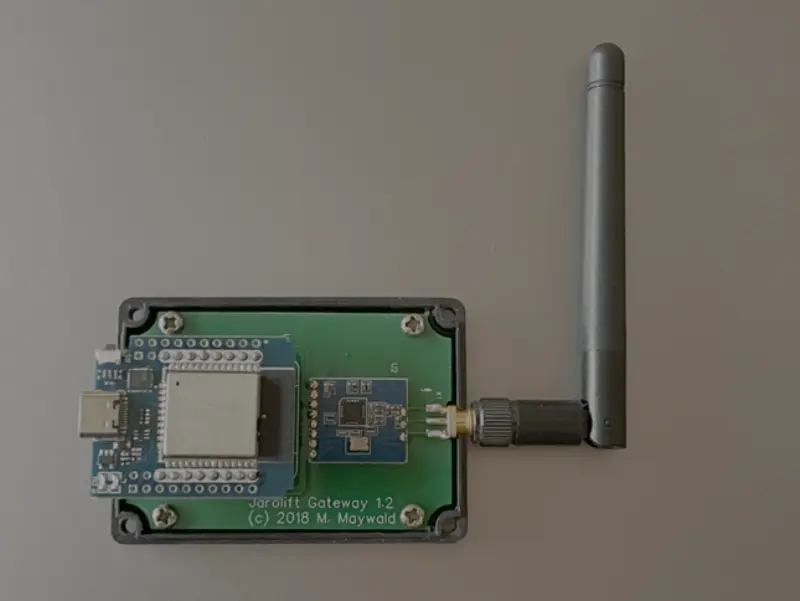
A comprehensive firmware for ESP32 microcontrollers to control Jarolift TDEF 433MHz radio shutters via a CC1101 transceiver. It provides a mobile-friendly WebUI, MQTT integration for smart home systems like Home Assistant, and advanced timer functions including sunrise and sunset triggers.
OBD2 to MQTT for Home Assistant
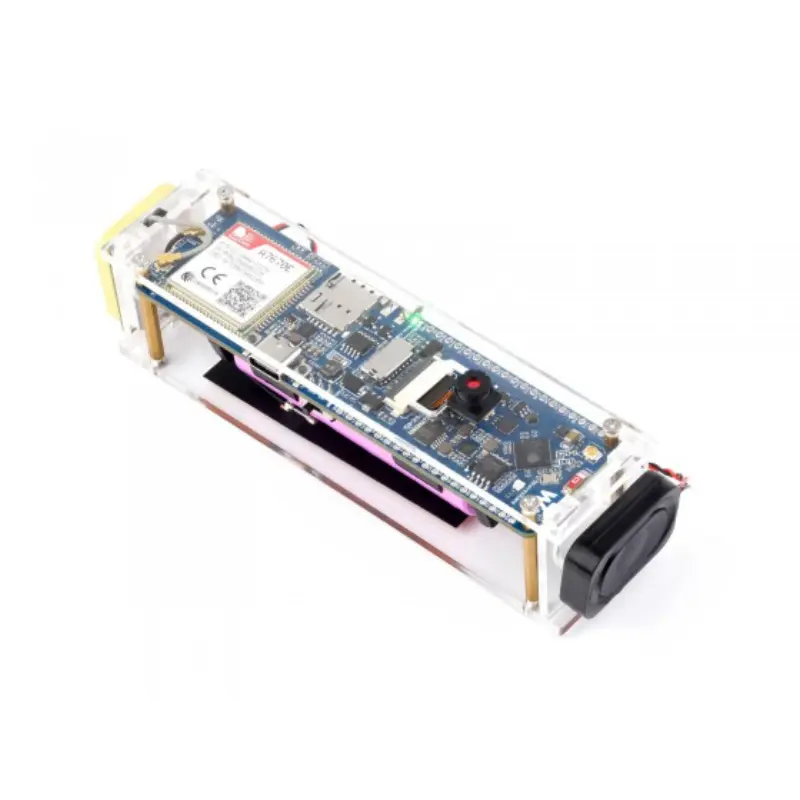
An ESP32-based firmware that extracts vehicle data via an ELM327 OBD2 adapter and transmits it to an MQTT broker over cellular networks. Designed for Home Assistant integration, it supports a wide range of LilyGO T-Call and Waveshare modules with integrated GSM/LTE and GPS capabilities.
Zigbee Gas Counter
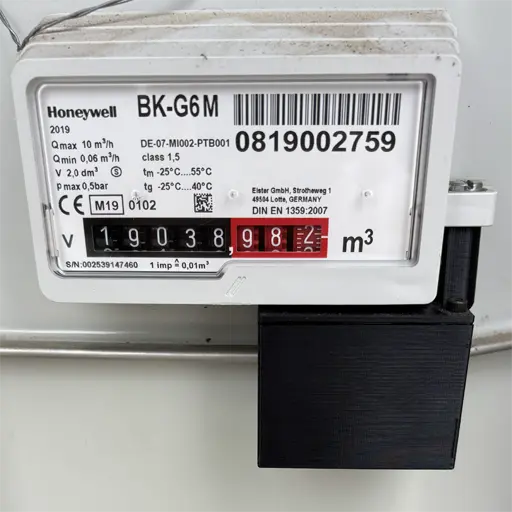
A DIY Zigbee-enabled gas meter built on the ESP32-C6 using the ESP-IDF framework. It tracks real-time gas consumption and flow rates, integrating with Zigbee2MQTT and Home Assistant for energy management. The device features battery optimization, non-volatile storage for data persistence, and OTA firmware updates.
ESP32 Controller for Charlton & Jenrick Fireplace
An ESP32-based firmware for controlling Charlton & Jenrick fireplaces using a CC1101 433 MHz transceiver. It supports multiple RF modulation profiles (2-FSK and ASK/OOK) and integrates with Home Assistant via MQTT while offering a standalone web interface.
ESP-GRABER
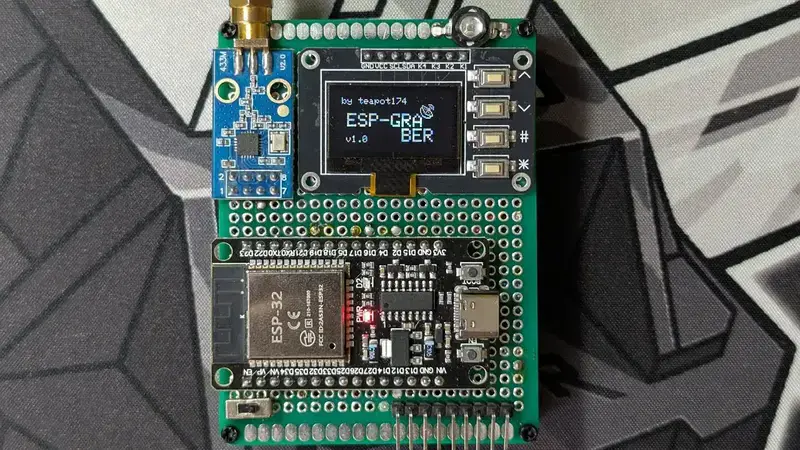
A versatile Sub-GHz radio frequency tool for the ESP32 platform using the CC1101 transceiver. It enables reading, replaying, and storing signals across 315, 433, 868, and 915 MHz frequencies, supporting protocols like Princeton, KeeLoq, and StarLine.