ESP32 PCM1808 Sound Recorder
A high-quality sound recording application for the ESP32 that utilizes the PCM1808 ADC to capture audio via the I2S interface. The project records 32-bit monoral sound at 44.1kHz and saves the output directly to an SD card in WAV format.
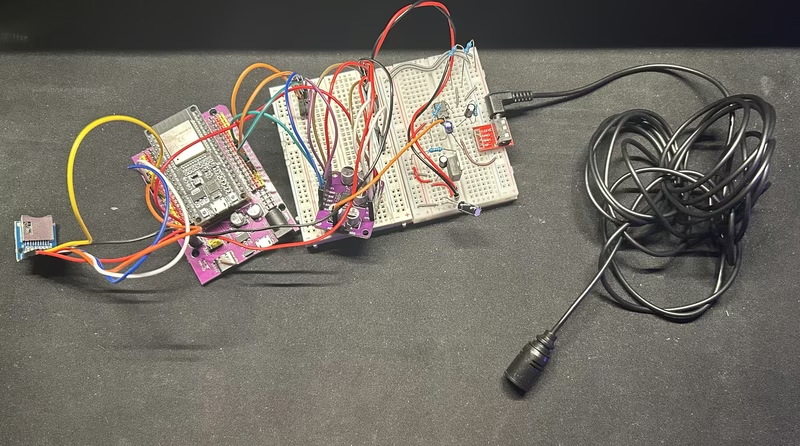
Capturing high-quality audio on embedded systems often requires moving beyond internal ADCs to dedicated external hardware. This project, a fork of the original work by MhageGH, provides a streamlined solution for recording high-fidelity sound using an ESP32 and the PCM1808 analog-to-digital converter (ADC).
High-Fidelity Audio Capture
The core of the project is the integration between the ESP32 and the PCM1808. By using the I2S (Inter-IC Sound) protocol, the system can transfer digital audio data with high precision. Unlike standard 8-bit or 12-bit internal converters, this setup is configured to generate 32-bit monoral WAV files at a sampling rate of 44.1kHz. This makes it suitable for applications ranging from environmental noise monitoring to basic voice recording where clarity is paramount.
Hardware Integration
The system is designed to run on the popular ESP32-DevKitC, making it accessible for rapid prototyping. The hardware stack includes:
- ESP32-DevKitC: The primary microcontroller handling the I2S stream and file system operations.
- PCM1808 ADC: An external high-performance converter that translates analog microphone signals into digital I2S data.
- Micro SD Slot: Connected via SPI (or equivalent wiring) to store the captured audio files.
- Passive Components: The design suggests the use of 10kΩ resistors for signal stability.
Functionality and Usage
The firmware is built using the Arduino framework within the PlatformIO ecosystem. It is designed for “plug-and-play” operation: once the hardware is wired correctly and an SD card is inserted, the device begins recording sound immediately upon power-up.
The recorded data is processed and wrapped in a standard WAV header, ensuring that the resulting files are immediately playable on any modern computer or mobile device without the need for proprietary conversion tools.
Technical Implementation
By leveraging the arduino-esp32 core, the project utilizes the underlying FreeRTOS capabilities of the ESP32 to manage the timing-sensitive I2S data stream while simultaneously handling the overhead of writing to an SD card. The use of PlatformIO ensures that the build environment is reproducible, with the platformio.ini file specifying the esp32doit-devkit-v1 board and a monitor speed of 115200 baud for debugging.
This project serves as an excellent starting point for developers looking to implement digital audio recording on the ESP32 platform, providing a clear example of I2S peripheral configuration and WAV file management.