ESP32 MP3
A custom-built portable MP3 player based on the ESP32 that features Bluetooth A2DP audio streaming and a dedicated OLED user interface. It utilizes a modular C++ architecture and a custom-designed PCB to manage media playback from a MicroSD card.
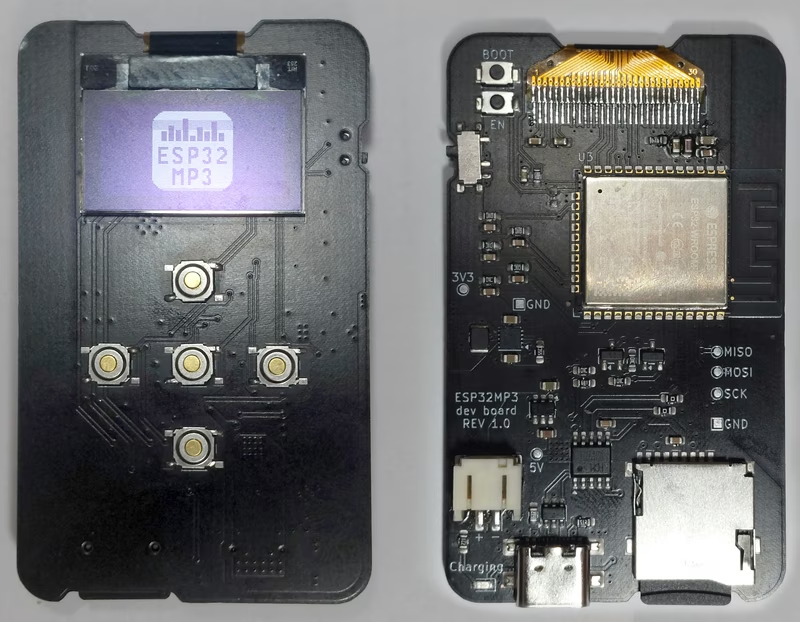
The ESP32 MP3 project is a self-built, portable media player that combines custom hardware design with an intuitive software interface. Originally conceived as a simple software experiment for Bluetooth audio streaming, the project evolved into a comprehensive product featuring a custom-designed development board and a bespoke graphical user interface.
Key Features
The device is built around a custom development board (Rev 1.1) designed in KiCad to house all components compactly. It features a 0.96” SSD1306 OLED display for the user interface and is controlled via five physical buttons (Up, Down, Left, Right, and Enter). For storage, it utilizes a MicroSD card slot and includes integrated power management with support for Li-Ion batteries and USB-C charging.
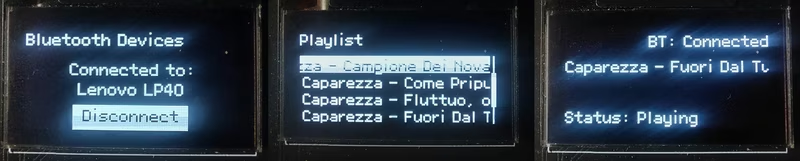
On the software side, the system acts as a Bluetooth A2DP source, allowing it to connect to wireless headphones and speakers. The firmware supports a multi-screen UI including:
- Bluetooth Device Selection: For scanning and managing connections.
- Track Selection: For browsing the music library stored on the SD card.
- Now Playing: Displaying track metadata, titles, and progress bars.
- Volume Control: Direct adjustment from the interface.
Hardware Architecture
The hardware is centered on the ESP32-WROOM-32E module. The development board was optimized for manual assembly and portability, integrating the processor with the display, storage, and input modules.
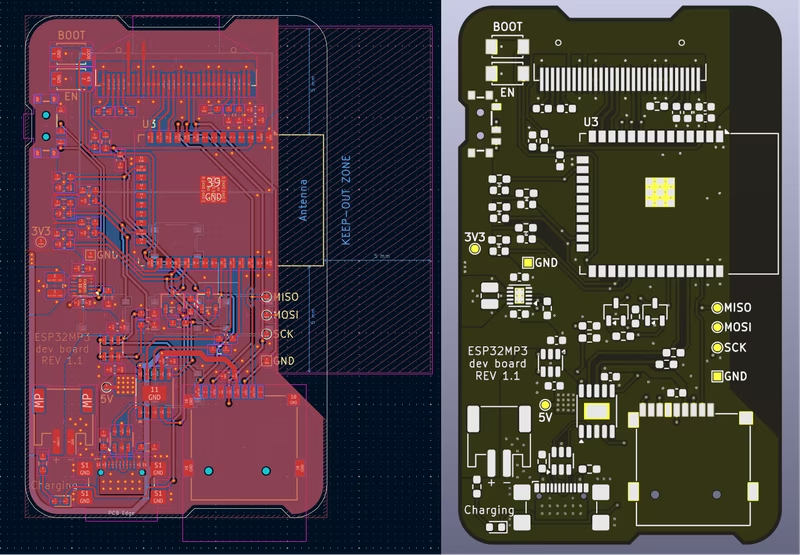
Key hardware components include:
- Processor: ESP32-WROOM-32E
- Display: SSD1306 I2C/SPI OLED (128x64)
- Storage: Standard MicroSD card reader
- Design Tool: KiCad
Software Design and Framework
The firmware is developed using the Arduino framework within the PlatformIO ecosystem. It relies on several specialized libraries to handle the complex audio pipeline and user interface. The U8g2 library manages the monochrome display, while the audio decoding is handled by a combination of arduino-audio-tools, ESP32-A2DP, and the Helix-based arduino-libhelix decoder.
The software architecture is built around a state machine that manages navigation between different application screens. The logic is encapsulated into specialized “Managers” (Display, Input, Bluetooth, and Player). This modular approach ensures high cohesion and low coupling, allowing the system to communicate via an internal event system and shared states.
Getting Started
To use the device, the hardware requires a MicroSD card formatted as FAT32. Music files must be encoded as MP3s with a specific sample rate of 44100 Hz to ensure compatibility with the decoding pipeline. The firmware is compiled and uploaded using PlatformIO, with the core logic located in the Software directory of the repository.
User Interface Gallery
The interface is designed for smooth navigation, supporting short presses, long presses, and auto-repeat for button inputs to facilitate fast browsing through large music libraries.
Related Projects
ESP32-S3 MJPEG Video Player
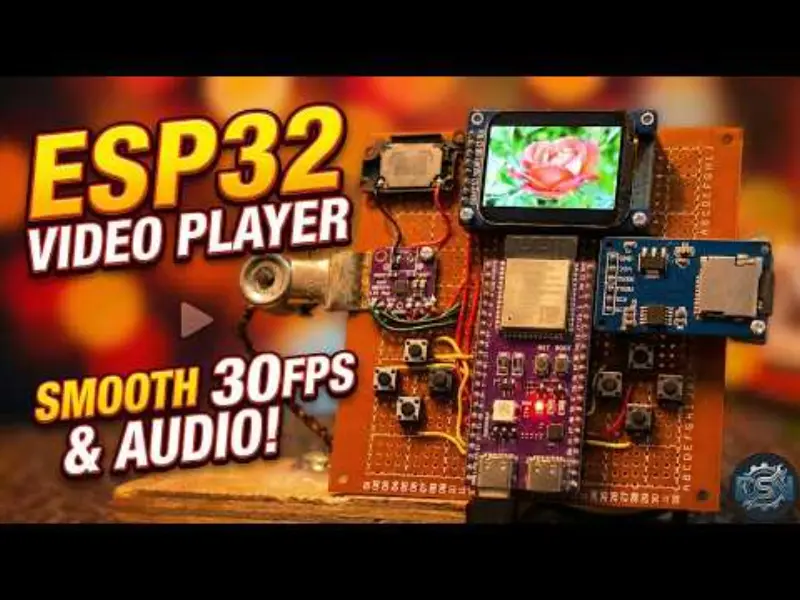
A high-performance media player for the ESP32-S3 capable of playing MJPEG video with synchronized I2S audio. It features a menu-driven interface, utilizes an SD card for storage, and leverages PSRAM to ensure smooth playback on ST7789 displays.
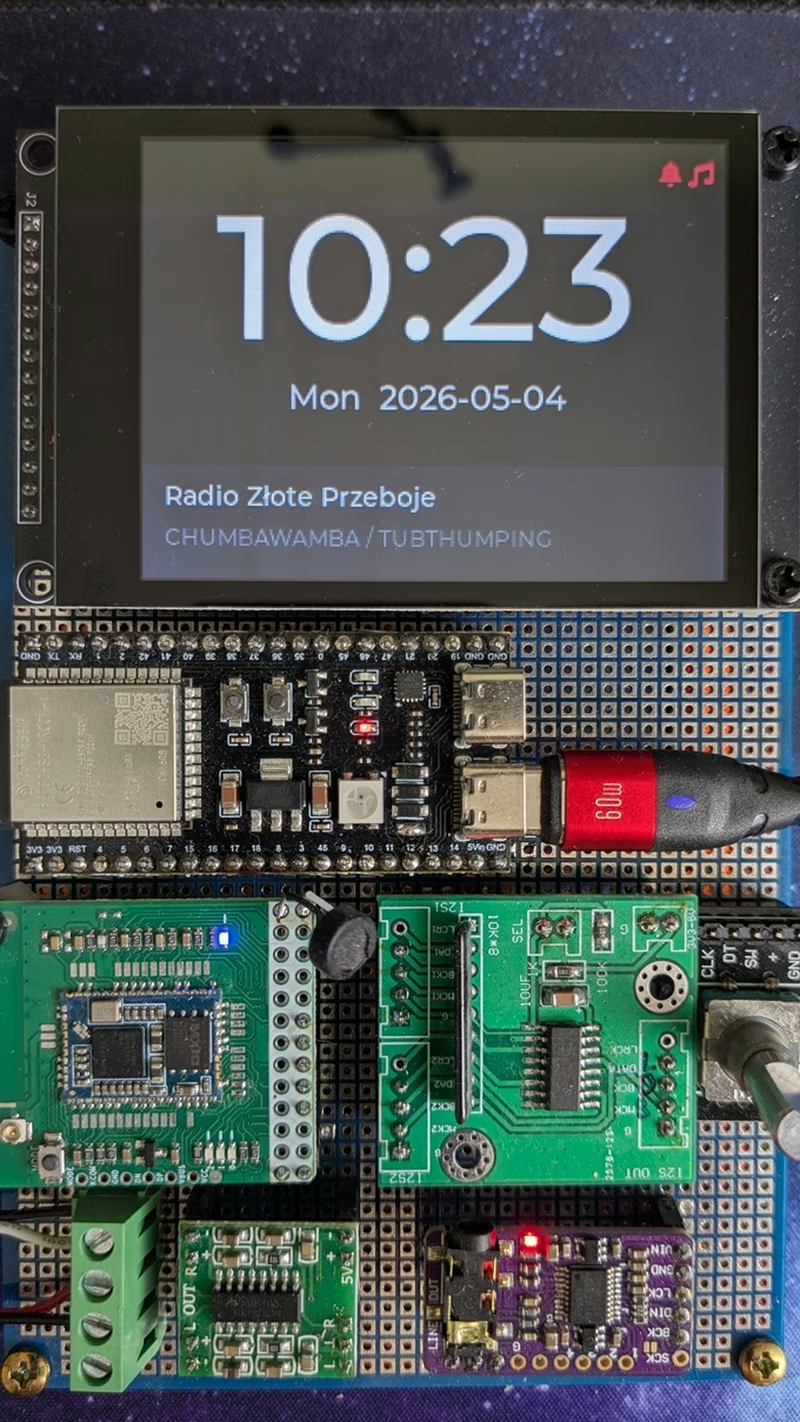
AtlasCube
AtlasCube is a feature-rich internet radio and smart clock firmware built for the ESP32-S3 using the ESP-ADF and LVGL libraries. It supports streaming various audio formats, Bluetooth A2DP/HFP via external modules, and local SD card playback, all managed through a comprehensive on-device GUI and a standalone web interface. The project is designed for independence from cloud services, offering local MQTT control, OTA updates, and a customizable event system.
Melody Machine
Melody Machine is a feature-rich MP3 player and internet radio firmware designed for the LilyGO T-LoRa Pager (ESP32-S3). It leverages FreeRTOS for dual-core audio processing and the LVGL library to provide a responsive graphical interface with support for local microSD playback and WiFi-based streaming.
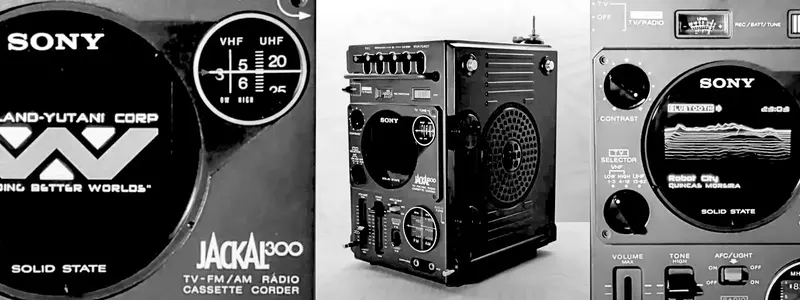
Jackal: Modernized Sony FX-300 Audio System
A sophisticated multi-mode audio system built by upcycling a 1978 Sony FX-300 chassis. It utilizes a distributed architecture with a Teensy 4.0 for main control, an ESP32 for Bluetooth A2DP, and an Arduino Nano for peripheral management, supporting FM radio, SD playback, and NFC-triggered automation.