CrumBLE
CrumBLE is an advanced e-reader firmware for the Xteink X4 and X3, built on the ESP32-C3 platform using the Arduino framework and NimBLE. It provides enhanced Bluetooth Low Energy (BLE) remote support, a customizable collections system, and optimized e-ink rendering through specialized image pre-caching.
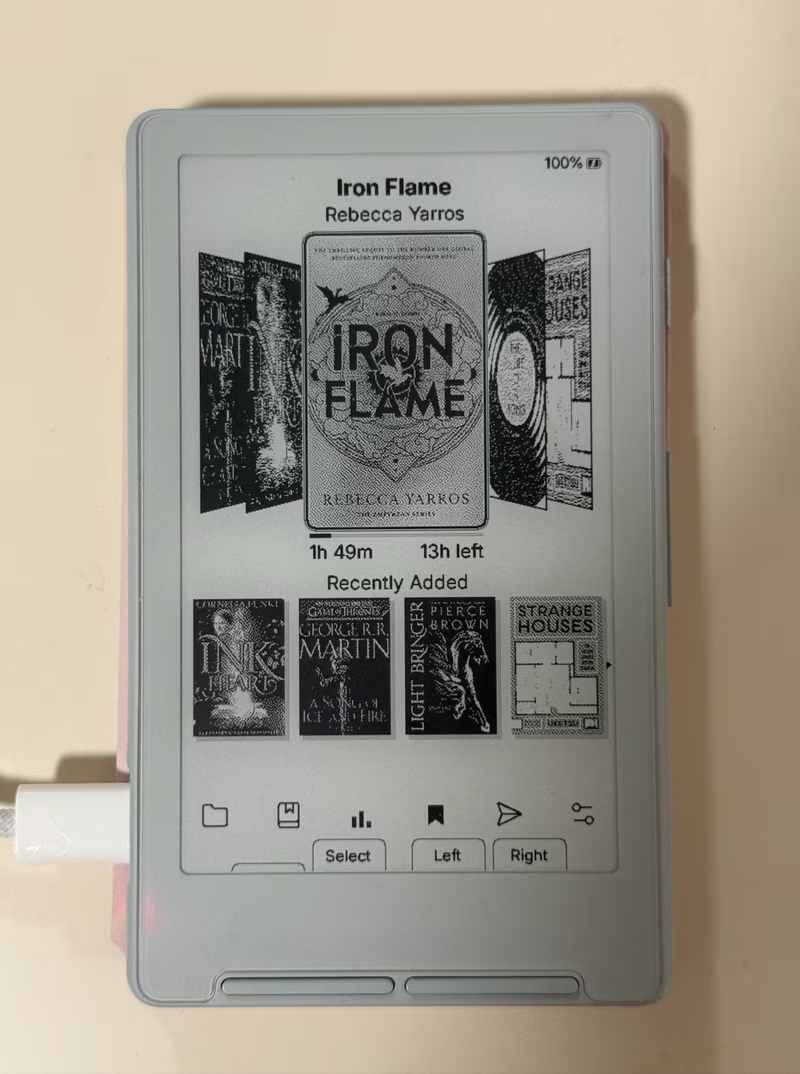
CrumBLE is a specialized firmware fork designed for the Xteink X4 e-reader, with support for the X3 currently in development. It serves as a personal evolution of the CrossInk project, integrating features from the CrossInk Carousel while adding deep optimizations for Bluetooth connectivity, library management, and user interface responsiveness. Built for the ESP32-C3 microcontroller, it balances the device’s strict RAM limitations with a feature-rich reading experience.
Enhanced Library Management
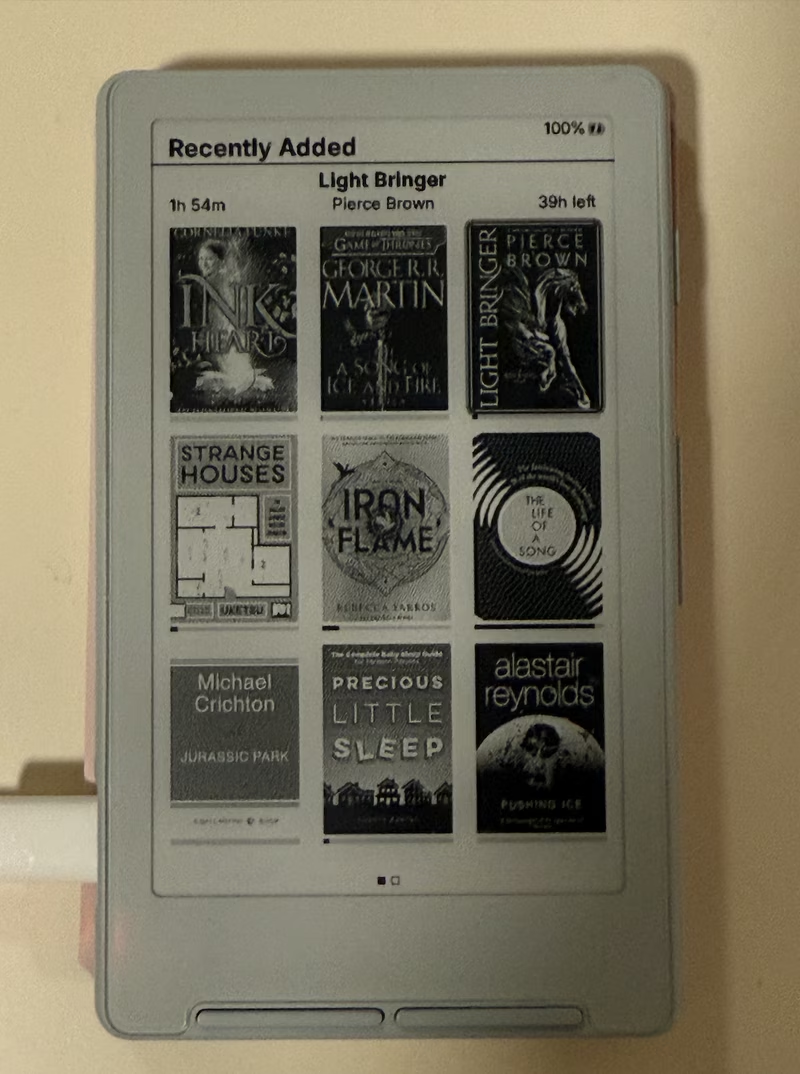
The firmware introduces a robust Collections system that moves beyond simple file explorer navigation. Users can group books into default categories like Recently Added, Unopened, and Finished, or create their own custom collections. These collections support persistent sorting by title, author, or date. A key visual feature is the Bookshelf grid, which transforms the library into a 3x3 grid of cover thumbnails. These thumbnails are pre-cached at exact screen dimensions to prevent the flickering or “Loading” popups often associated with e-ink navigation. The system also includes a series collapse feature that folds related books into a single spine glyph on the shelf to reduce clutter.
Bluetooth Remote Integration
One of the most significant technical additions is full BLE support for wireless page-turners. Because the ESP32-C3 has limited heap space, CrumBLE employs a targeted Bluetooth strategy. Pairing is performed within the book interface, and the BLE stack automatically disables upon exiting a book to free up memory for the document parser. To facilitate quick reconnections, a “BT Quick Connect” action is available in the settings drawer for one-tap bonding to the last used remote.
To overcome the memory overhead of decoding images while the Bluetooth stack is active, CrumBLE includes an EPUB optimizer. This tool pre-renders images into a per-device pixel cache (.pxc) and flattens chapter layouts. This allows the reader to bypass the JPEG/PNG decoder entirely during page turns, ensuring that Bluetooth HID commands are processed smoothly even in image-heavy chapters.

Smart Display and Quick Settings
CrumBLE enhances the device’s interaction model with on-demand sleep-screen cycling. This feature allows users to tap the power button while the device is asleep to cycle through different sleep images without performing a full system wake. It also supports transparent PNG sleep screens, which can overlay information or artwork on top of the last rendered book page.
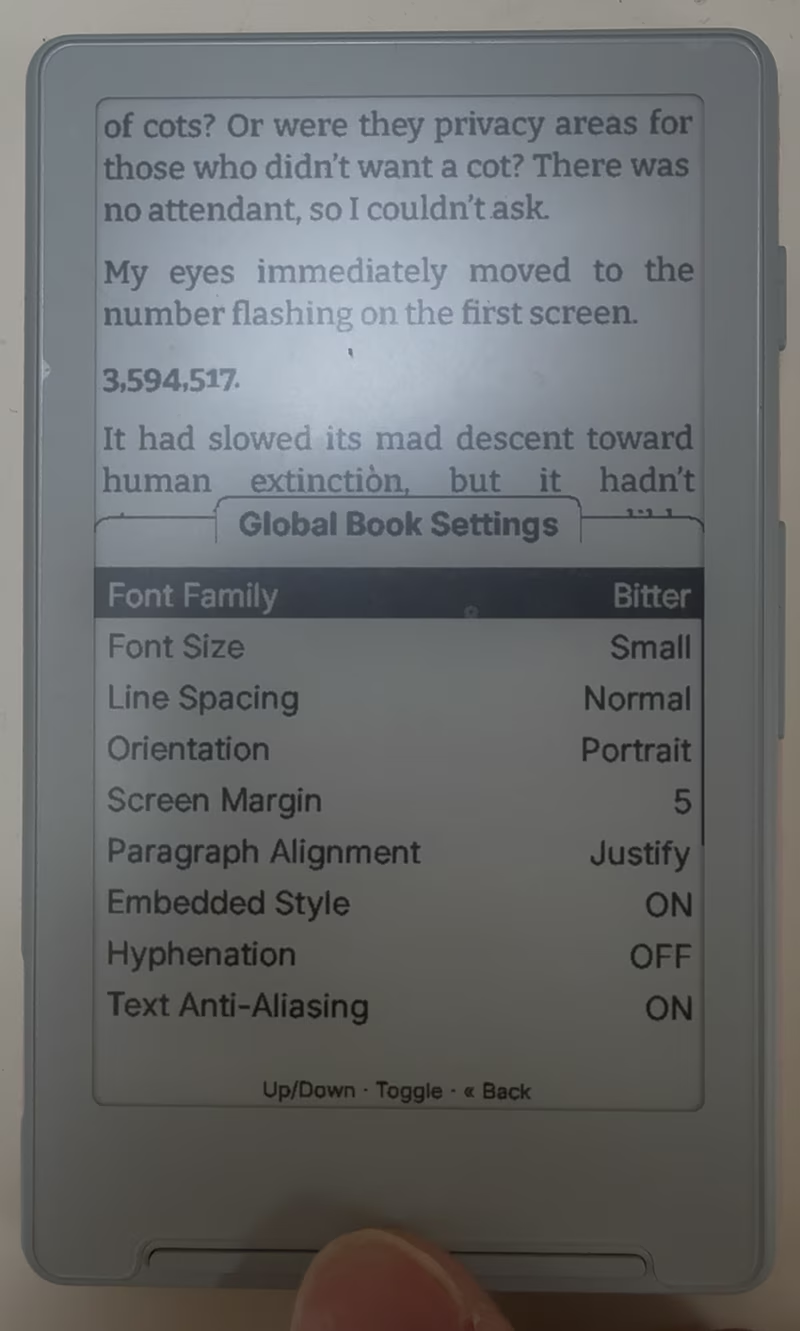
Inside the reader, the Global Book Settings drawer provides a quick-access panel for typography and layout adjustments. By long-pressing the menu button, users can toggle fonts, sizes, hyphenation, and line spacing. The drawer uses e-ink fast-refresh to keep interactions snappy and only triggers a full document re-flow if a setting was actually modified.
Technical Optimizations and Stability
Under the hood, CrumBLE focuses on stability and performance for large libraries. It features a streaming library index to prevent crashes on high book counts and a redesigned Reading Stats system for more accurate time tracking. Memory management has been improved through the use of a PackBits-compressed buffer for grayscale rendering, which reduces fragmentation and prevents the Bluetooth link from dropping during complex page turns. The firmware also includes “Recents auto-heal” logic to maintain library integrity even if the storage files are modified by other firmware versions.
Ecosystem and Lineage
CrumBLE sits at the end of a developmental lineage starting with the CrossPoint Reader and moving through uxjulia’s CrossInk and chintanvajariya’s Carousel fork. It inherits a wide range of UI translations supporting 23 languages and includes language-correct hyphenation dictionaries for high-quality justified text. The project is developed using PlatformIO, supporting both hardware flashing and an SDL2-based desktop simulator for rapid UI iteration.
Related Projects
Midad
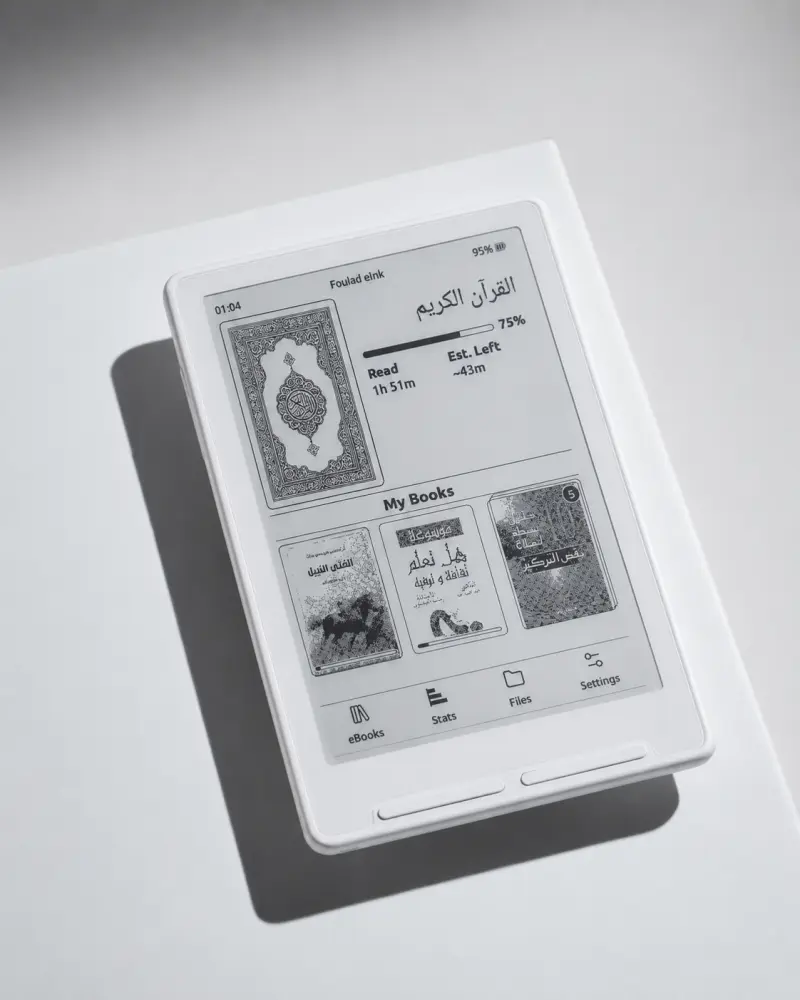
Midad is an open-source firmware for Xteink e-ink devices, specifically engineered for Arabic script and right-to-left languages. Running on the ESP32-C3 platform with FreeRTOS, it provides a comprehensive e-reading experience with advanced text shaping, OTA updates, and a unique suite of integrated applications like a gym logger and Tasbih counter.
Duet
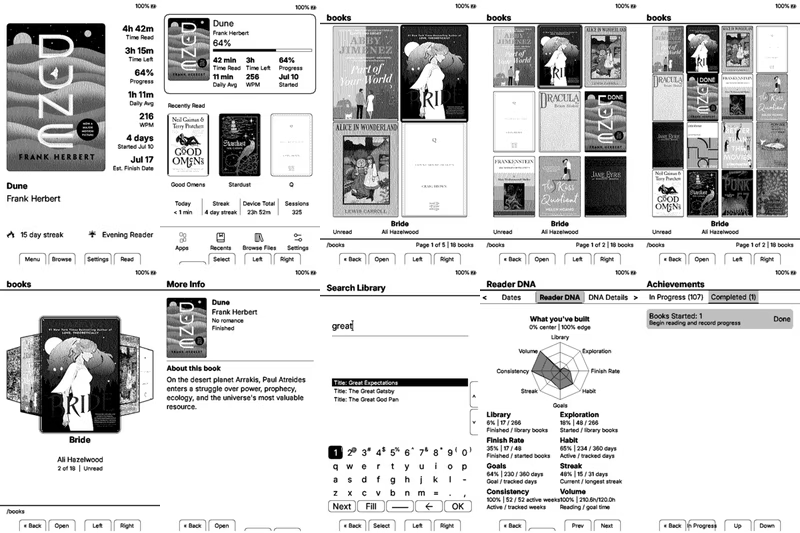
Duet is an open-source firmware for the Xteink X3 and X4 e-readers, built on the ESP32-C3 microcontroller using the Arduino framework and PlatformIO. It features a unique serverless device-to-device sync via ESP-NOW, a comprehensive reading statistics suite with 33 data pages, and a highly customizable interface supporting StarDict dictionaries and specialized E-Ink font systems.

NimBLE OTA
NimBLE OTA is a specialized library for ESP32 devices that enables firmware updates over Bluetooth Low Energy (BLE). It leverages the memory-efficient NimBLE stack to provide a robust OTA service, featuring secure authentication, progress tracking, and compatibility with both Python-based and web-based upload tools.
Papyrix Reader
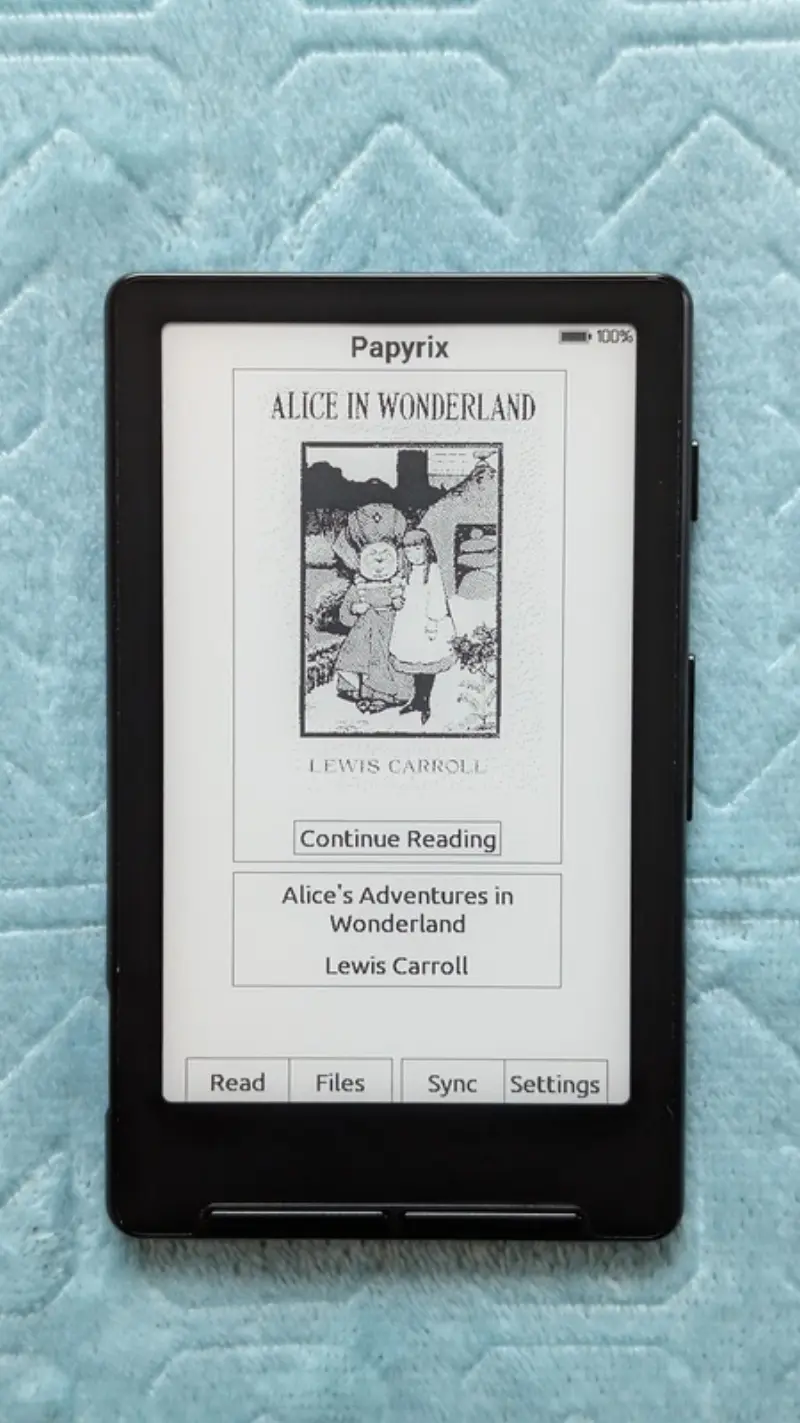
A lightweight, open-source firmware for the Xteink X4 e-paper reader powered by the ESP32-C3. It supports EPUB, Markdown, and plain text formats with advanced typography features like the Knuth-Plass line-breaking algorithm and CJK/Thai text rendering.
HighBoy Firmware
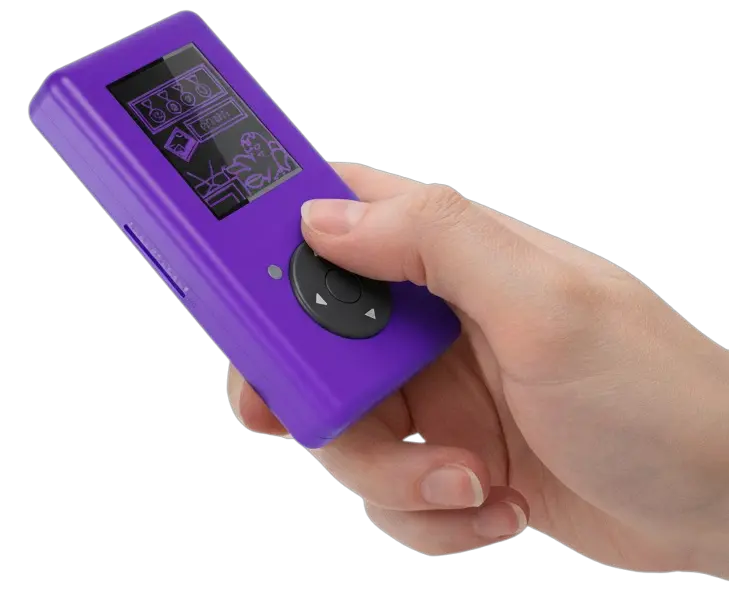
A modular firmware platform for the ESP32-S3 SoC built using the ESP-IDF framework. It features a structured architecture divided into hardware drivers, services, core logic, and applications, utilizing the NimBLE Bluetooth stack for wireless connectivity.