OpenLap
A single-pilot FPV laptimer based on the ESP32 microcontroller and the RX5808 video receiver. It features a web-based interface for race management, real-time RSSI calibration, and integrated battery monitoring using the Arduino framework.
Page 11 of 15 — 508 projects total
A single-pilot FPV laptimer based on the ESP32 microcontroller and the RX5808 video receiver. It features a web-based interface for race management, real-time RSSI calibration, and integrated battery monitoring using the Arduino framework.
A specialized framework for training and deploying BirdNET audio classification models on the STM32N6570-DK development board. It provides a complete pipeline from dataset preparation and TensorFlow training to optimized NPU deployment using STMicroelectronics' X-CUBE-AI tools.
A firmware implementation for ESP32 that enables remote ARM microcontroller debugging and flashing via the CMSIS-DAP protocol over TCP/IP. It supports both JTAG and SWD interfaces, allowing OpenOCD to connect to target hardware over WiFi. The project includes a UART-to-TCP bridge for remote serial console access.
A lightweight, open-source firmware for the Xteink X4 e-paper reader powered by the ESP32-C3. It supports EPUB, Markdown, and plain text formats with advanced typography features like the Knuth-Plass line-breaking algorithm and CJK/Thai text rendering.
A MicroPython-based project for the ESP32-C3 that modernizes vintage train station clocks using standard A4988 or DRV8825 stepper motor drivers. It features automatic time synchronization via WiFi, persistent hand position tracking, and an interactive serial console for configuration and manual control.
LeCyborg is an AI-powered third-arm prosthesis that uses EMG sensors and imitation learning to assist users. Built on the LeRobot framework, it features an ESP32-based wearable sensor system and a SO100 robotic arm controlled by an Action Chunking with Transformers (ACT) policy.
A production-ready Tailscale protocol implementation for ESP32 microcontrollers using the ESP-IDF framework. It enables secure VPN connectivity via WireGuard encryption, supporting NAT traversal through DERP and STUN.
An open-source, programmable electrical stimulation platform designed for research and wearable applications. It features a bipolar H-Bridge output, integrated GSR sensing for closed-loop control, and hardware-level safety mechanisms. The project provides both PCB designs and a software SDK to support rapid prototyping of TENS and EMS devices.
A portable SSH terminal client for the ESP32-S3 T-Deck Plus handheld device. It provides a full SSH2 terminal with PTY support, hardware keyboard integration, and a graphical interface built on FreeRTOS and LVGL. The project targets secure remote server management on compact, battery-powered hardware.
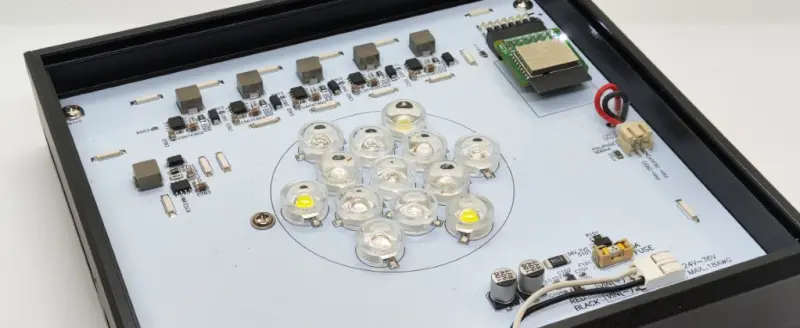
A Zigbee-based firmware for the ESP32-C6 microcontroller designed to replace the driver in Philips Hue White Ambiance ceiling lights. Built using the ESP-IDF framework, it provides a custom implementation for smart lighting control and integration.
A high-performance MJPEG video player optimized for the ESP32-2432S028 'Cheap Yellow Display' (CYD) module. It utilizes the Arduino_GFX library and JPEGDEC for efficient frame-by-frame playback from an SD card, supporting hardware-accelerated rendering on the ILI9341 display controller.
A flexible e-paper display driver for the ESP-IDF framework featuring LVGL 9 integration. It supports a wide range of panels including black/white, 4-color BWRY, and 6-color displays with advanced features like Floyd-Steinberg dithering and partial refresh. Designed for low-power IoT devices, electronic shelf labels, and photo frames on ESP32 series microcontrollers.
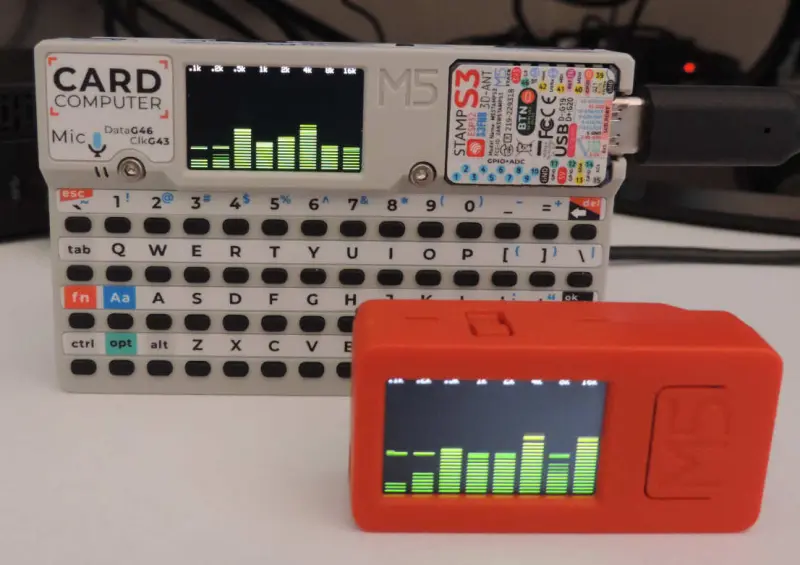
A real-time audio frequency visualizer built on the ESP32 microcontroller using the Arduino framework and Kiss FFT library. It processes audio signals through ADC or I2S inputs to display 64 frequency bands on an SSD1322 OLED screen.
A game selection menu and emulator frontend for running single-screen Game & Watch ROMs on the M5Stack Tab5. It features support for touch controls, USB gamepads, and automatic screen orientation via the built-in IMU.
A Rust-based firmware project for the Solum EL029H4WRC electronic shelf label featuring the nRF52811 SoC. It enables custom code execution on the tag, including e-paper display control for text and images using the embedded-graphics ecosystem. The project demonstrates how to use a Raspberry Pi Pico as a debug probe for flashing and debugging via SWD.
An nRF52840-based Zigbee sensor designed to monitor flow and return temperatures in heating systems using dual NTC thermistor probes. Built with the nRF Connect SDK and Zephyr RTOS, it is optimized for ultra-low power consumption, achieving over a year of battery life on a coin cell.
An ESP32-S3 based portable intelligent electronic load featuring high-precision control and a rich graphical interface. It utilizes FreeRTOS for multi-tasking and integrates PID and Model Predictive Control (MPC) algorithms with Kalman filtering for accurate current regulation. The system supports Constant Current (CC), Constant Power (CP), and Constant Resistance (CR) modes with real-time monitoring via LVGL.
A sophisticated multi-mode audio system built by upcycling a 1978 Sony FX-300 chassis. It utilizes a distributed architecture with a Teensy 4.0 for main control, an ESP32 for Bluetooth A2DP, and an Arduino Nano for peripheral management, supporting FM radio, SD playback, and NFC-triggered automation.
A portable real-time aircraft tracker for the M5StickC Plus 2 that utilizes the adsb.lol API to display flight telemetry and route information. It features a multi-page OLED interface, emergency squawk highlighting, and a web-based setup portal for easy configuration.
A high-performance library for RP2040 and RP2350 microcontrollers that implements 100 MBit/s Fast Ethernet transmission using the PIO peripheral. It achieves throughput of approximately 11 MByte/s by offloading MLT-3 encoding, 4B5B line coding, and scrambling to hardware-assisted lookups and DMA.
A 4-voice polyphonic synthesizer designed for the Raspberry Pi Pico 2 and RP2350 microcontroller. It features built-in chorus and delay effects, MIDI control via USB or UART, and support for high-quality I2S DACs or PWM audio output.
A Model Context Protocol (MCP) server implementation for the ESP32-CAM that enables remote camera control and system monitoring through a standardized JSON-RPC 2.0 API. It supports image capture optimized for AI assistants, LED/flash management, and comprehensive hardware diagnostics.
A comprehensive treadmill computer replacement based on the ESP32-S3 and ESPHome firmware. It implements the Fitness Machine Service (FTMS) protocol to enable direct Bluetooth connectivity with fitness apps like Zwift and Kinomap while controlling treadmill hardware via UART.
A firmware project for an STM32L071-based USB dongle that enables LoRa communication via AT commands. It utilizes the Semtech SX1262 transceiver and FreeRTOS to provide a plug-and-play wireless link for testing, range measurement, and sensor networks.
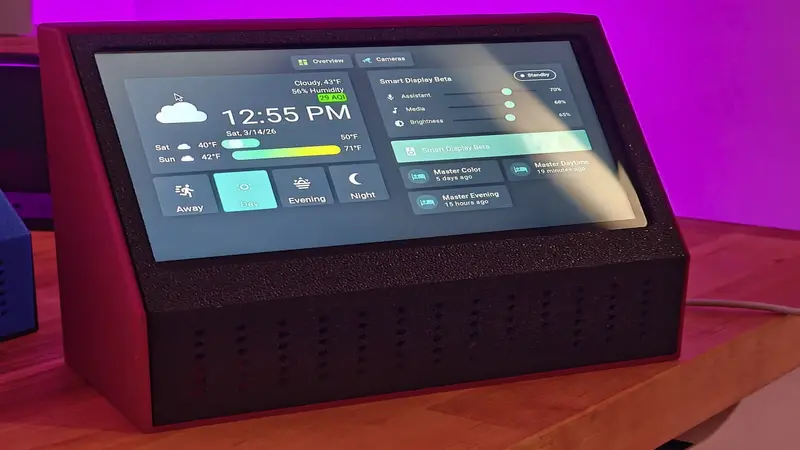
A modular, high-performance weather display system for the LilyGO T-Display S3 powered by an ESP32-S3. It provides real-time weather updates via the OpenWeatherMap API, featuring a smooth 40 FPS UI, automatic NTP time synchronization, and robust error recovery.
A tiny, wireless co-processor and debugger for ARM microcontrollers based on the ESP32-C3. It enables remote telemetry, live re-programming, and wireless debugging via SWD using the Rust Embassy framework.
A technical implementation and hardware guide for the ESP32-C3 Supermini board equipped with a 0.42-inch OLED. It provides a specific software workaround for the U8g2 library to support the non-standard 72x40 resolution using coordinate offsets. The project includes pin mappings and an Arduino-based example for I2C display communication.
Open-source hardware design for a color e-Paper photo frame utilizing the Spectra 6 EInk display technology. The repository provides PCB source files, 3D-printable mechanical components, and laser-cutting templates for a complete embedded display assembly.
An ESPHome component designed to interface with Hitachi air conditioners using the serial H-Link protocol. It serves as a local, open-source alternative to proprietary cloud adapters, providing full integration with Home Assistant. The project supports a wide range of features including climate control, outdoor temperature sensing, and maintenance alerts on ESP32 and LibreTiny hardware.
A standalone ESP32-based voice assistant that enables natural conversations with multiple custom AI personalities. It integrates ElevenLabs for speech-to-text, GroqCloud or OpenAI for LLM processing, and OpenAI for text-to-speech, supporting real-time web searches and email archiving of chat history.
A collection of ESPHome configuration files and external components specifically designed for M5Stack hardware. It provides ready-to-use YAML templates for devices like the CoreS3, Atom EchoS3R, and PowerHub, utilizing the ESP-IDF framework for Home Assistant integration.
A hardware modification project that replaces the WWVB radio receiver in an atomic clock with an ESP8266 module. It synchronizes time via the Network Time Protocol (NTP) and generates a digital signal mimicking the WWVB format to update the clock's original controller.
A dedicated hardware controller for Eight Sleep mattresses using the M5Stack ATOMS3 Dev Kit and ESPHome. It provides a physical interface to monitor bed temperature, sleep stages, and state, while allowing users to cycle through temperature presets via a built-in button and Home Assistant integration.
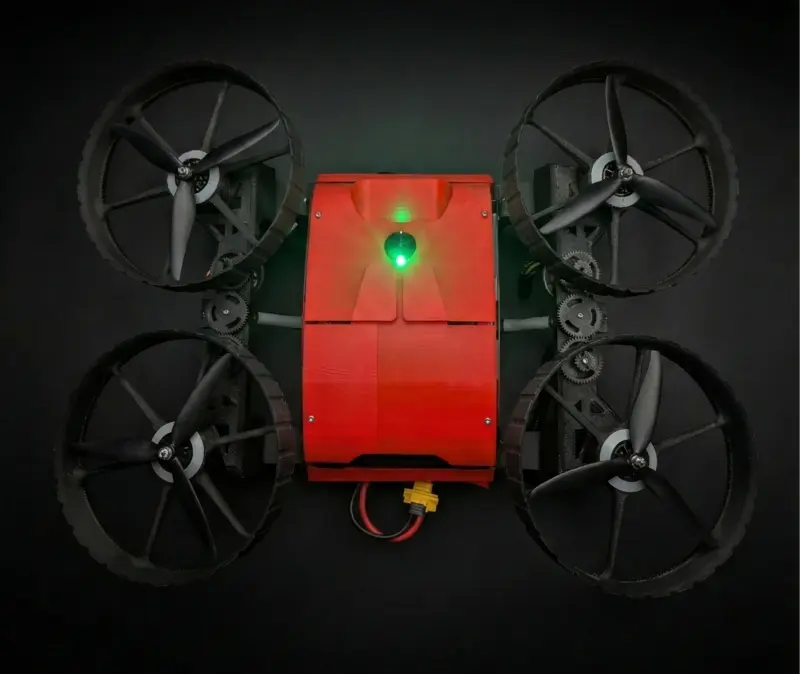
A dual-processor flight control system based on the STM32H753VI microcontroller, designed for UAVs, drones, and hobby rockets. It features a dedicated co-processor for sensor fusion and supports advanced protocols including DShot, SBUS, and CRSF.
An ESP32-C3 based HDMI multiplexer that enables wireless switching between two HDMI sources. It utilizes the TS3DV642 high-speed switch IC to support HDMI 2.0 specifications, including 4K resolution at 60Hz.
A custom firmware project for a home-built radio receiver based on the ESP32-S2 and SI4732 module. It features a high-resolution Sharp LS027B7DH01 LCD and utilizes the Arduino framework with libraries like U8g2 and PU2CLR SI4735 for multi-band radio reception.