USB2NRF - USB Controlled 2.4GHz Transceiver
USB2NRF is a hardware and software bridge between a USB interface and the nRF24L01+ 2.4GHz wireless transceiver, powered by the CH32X033 RISC-V microcontroller. It supports wireless serial data transfer via USB CDC and provides a flexible platform for IoT sensor networks, remote actuators, and wireless HID peripherals.
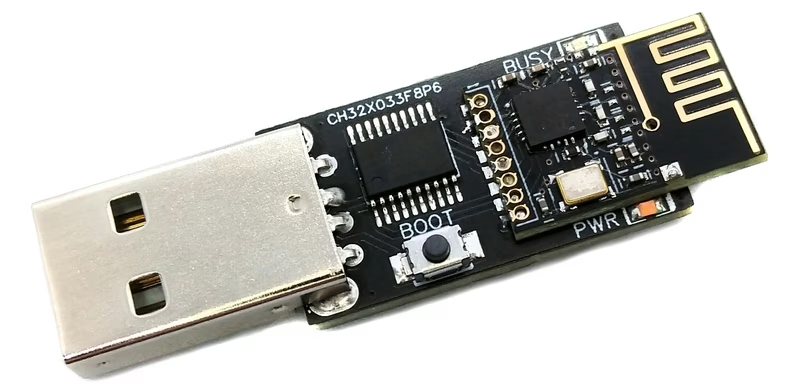
USB2NRF (also referred to as NRF2USB) is a versatile development tool specifically engineered for wireless applications utilizing the low-cost nRF24L01+ 2.4GHz transceiver. By integrating a CH32X033 microcontroller, the device provides a seamless USB interface for communicating with the radio module. This makes it an ideal choice for a variety of tasks, such as transferring serial data wirelessly between computers, acting as a receiver for wireless keyboards and mice, or collecting data from remote IoT sensors.
Hardware Architecture
The core of the project is the CH32X033, a 32-bit RISC-V microcontroller featuring the QingKe RISC-V4C core. This MCU is particularly well-suited for USB applications as it includes a built-in USB PHY and supports USB 2.0 full-speed device functions. Operating at up to 48MHz, it packs 62KB of flash and 20KB of SRAM, alongside specialized peripherals like a programmable protocol I/O controller (PIOC) and multiple analog components.
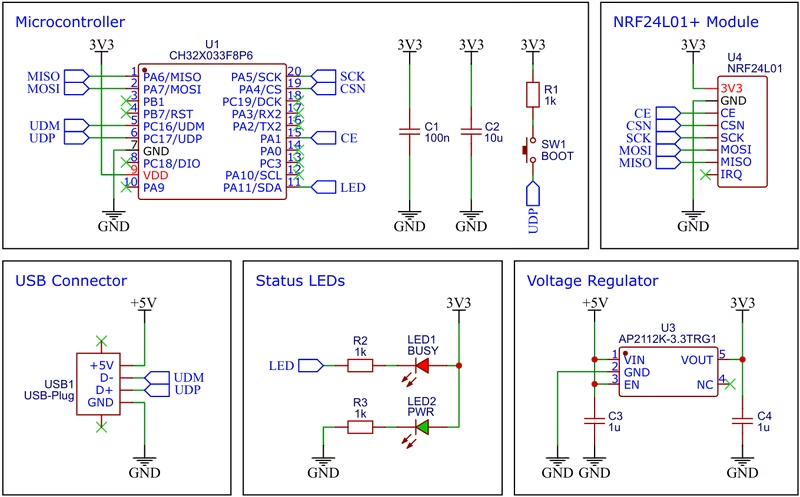
For wireless communication, the device utilizes the nRF24L01+ transceiver. This ultra-low power module operates in the 2.4GHz ISM band and supports data rates up to 2Mbps. It connects to the CH32X033 via an SPI interface, allowing for high-speed configuration and data exchange. The hardware design is optimized for ease of assembly, using standard components and a layout that accommodates the common SMD versions of the nRF24L01+ module.
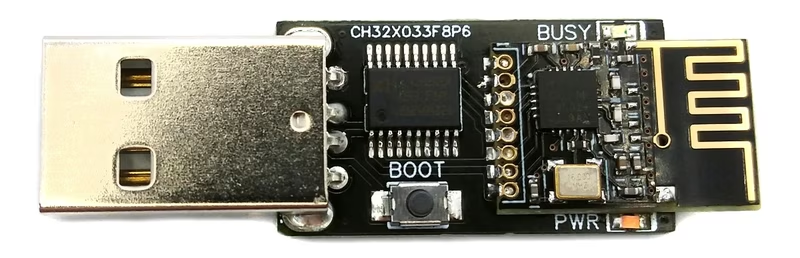
Firmware and Functionality
The project offers different firmware versions depending on the intended use case. The primary firmware, NRF to CDC, implements a Communications Device Class (CDC) interface. This allows the computer to treat the device as a standard serial port, facilitating easy data transmission without custom drivers on most modern operating systems.
Command Interface
Users can configure the nRF24L01+ module directly through the serial monitor. By sending strings that begin with an exclamation mark (!), users can issue specific commands:
!cXX: Set the radio channel (e.g.,!c2Asets channel 0x2A).!tXXXXXXXXXX: Set the 5-byte Transmit (TX) address.!rXXXXXXXXXX: Set the 5-byte Receive (RX) address.!sXX: Set the data rate (250kbps, 1Mbps, or 2Mbps).
Sending a standalone ! will print the current settings of the NRF module to the monitor, providing a quick way to verify the configuration.
Development and Flashing
Compiling the firmware is supported through both a traditional Makefile-based workflow and PlatformIO. The Makefile approach utilizes the RISC-V GCC toolchain and the chprog utility for flashing. For those preferring an integrated environment, the project is compatible with the platform-ch32v platform in PlatformIO.
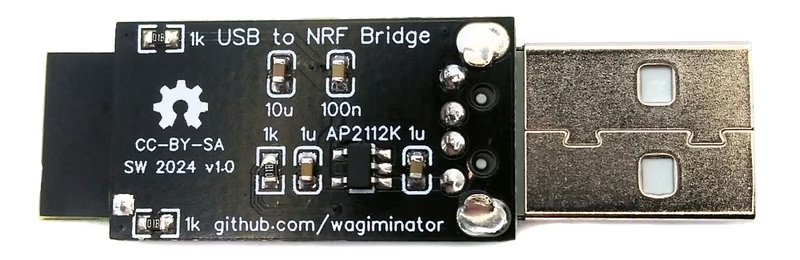
To upload new firmware, the CH32X033 must be placed into bootloader mode. This is achieved by holding the physical BOOT button while connecting the device to a USB port. Once in this mode, the chip is recognized as a USB device, allowing the chprog tool or the official WCHISPTool to write the compiled binary to the microcontroller’s flash memory.