Universal Maker Sensor Kit
A comprehensive educational resource and code repository for the SunFounder Universal Maker Sensor Kit, supporting Arduino and ESP32 development. It features over 50 technical lessons covering a wide array of sensors, actuators, and integrated projects like smart trashcans and automated dispensers. The project also emphasizes IoT connectivity, providing implementations for MQTT, Blynk, ThingSpeak, and Adafruit IO.
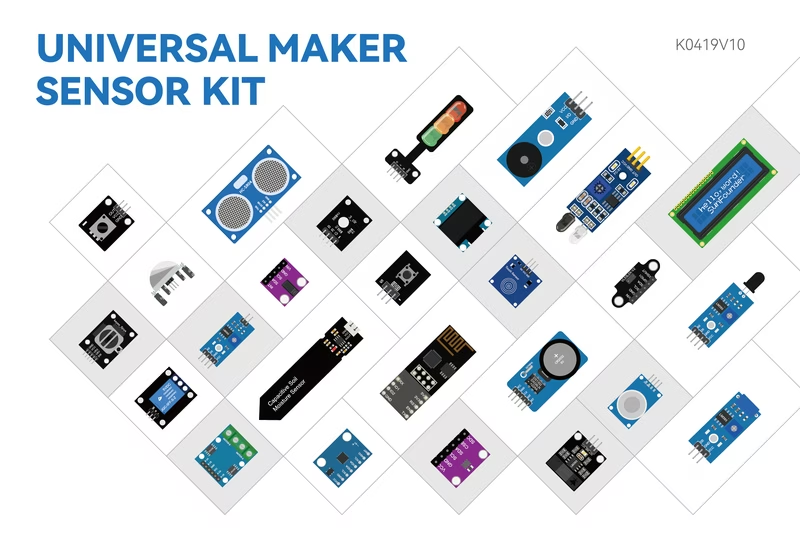
The SunFounder Universal Maker Sensor Kit is a versatile educational ecosystem designed to bridge the gap between basic electronics and complex IoT applications. Aimed at students, hobbyists, and makers, this repository provides the firmware and logic required to interface with a vast array of components included in the kit. From simple digital inputs like buttons and touch sensors to sophisticated I2C and SPI-based modules like the MPU6050 accelerometer and the MAX30102 heart rate sensor, the project serves as a comprehensive library of implementations for modern microcontrollers.
Multi-Platform Flexibility
One of the defining characteristics of this kit is its hardware-agnostic approach. While the repository focuses on Arduino Uno and ESP32 code, the kit is designed to work across several popular ecosystems:
- Arduino Uno/R4: Traditional 5V and 3.3V logic implementations using the standard Arduino framework.
- ESP32: Leveraging built-in Wi-Fi and Bluetooth capabilities for advanced networking projects.
- Raspberry Pi Pico W: Supported via MicroPython for high-level scripting in embedded environments.
- Raspberry Pi 5: Integration for single-board computers using Python.
From Sensors to Actuators
The repository is structured into modular lessons. Early lessons focus on individual component mastery, guiding users through reading capacitive soil moisture levels, detecting flames with IR sensors, or measuring atmospheric pressure using the BMP280 module.
On the output side, the kit includes various actuators that provide physical feedback. Code examples demonstrate how to control SG90 servo motors, drive centrifugal pumps via L9110 motor drivers, and render complex graphics on SSD1306 OLED displays. These components are often combined in the repository’s advanced sections, which feature integrated projects like a touchless soap dispenser or a smart trashcan that opens automatically using ultrasonic distance sensing.
Advanced IoT Integration
Moving beyond local control, the Universal Maker Sensor Kit dives deep into the Internet of Things. The ESP32 and ESP8266 (connected via AT commands to Arduino) lessons showcase how to push data to the cloud. The project provides templates for several major platforms:
- Blynk: Creating mobile dashboards for remote monitoring and intrusion alerts.
- ThingSpeak: Logging environmental data for long-term analysis.
- IFTTT: Triggering webhooks and notifications based on sensor events like vibration or flame detection.
- Adafruit IO: Using MQTT over SSL/TLS for secure, bidirectional communication between the device and the web.
Getting Started
Most lessons follow a standard pattern, making it easy to transition between different sensors. For example, a basic button-controlled LED implementation on the Arduino Uno illustrates the simplicity of the hardware-software interface:
const int buttonPin = 12;
const int ledPin = LED_BUILTIN;
int buttonState = 0;

void setup() {
  pinMode(buttonPin, INPUT);
  pinMode(ledPin, OUTPUT);
}

void loop() {
  buttonState = digitalRead(buttonPin);
  if (buttonState == LOW) {
    digitalWrite(ledPin, HIGH);
  } else {
    digitalWrite(ledPin, LOW);
  }
}
As users progress, the code introduces essential libraries such as the Adafruit GFX library for displays or the DallasTemperature library for 1-Wire sensors, providing a realistic look at professional embedded development practices.