Ultranet-to-I2S
A firmware project for the Raspberry Pi Pico that decodes the Behringer Ultranet audio protocol into multiple I2S streams. It utilizes the RP2040's PIO modules for high-speed signal decoding and its dual-core architecture to synchronize audio between different clock domains.
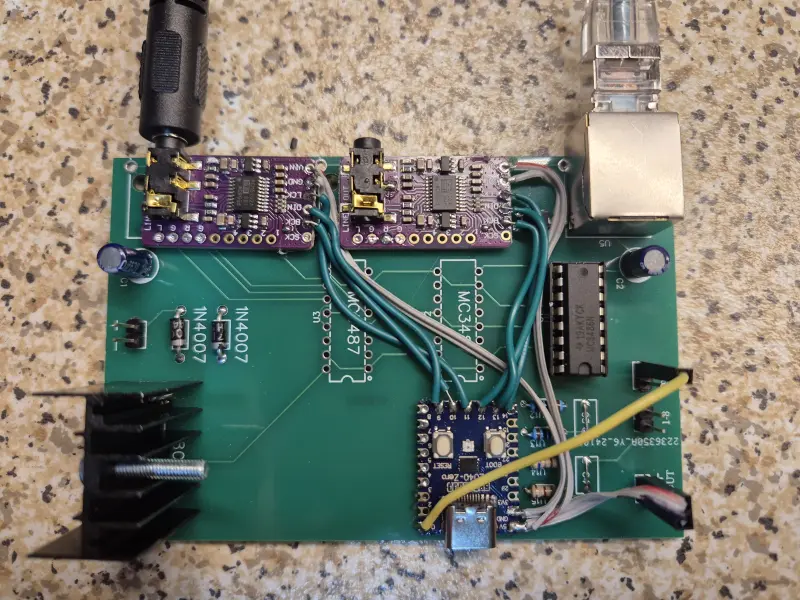
Decoding professional digital audio protocols often requires specialized hardware, but the Ultranet-to-I2S project demonstrates how the Raspberry Pi Pico’s unique architecture can bridge this gap. By leveraging the RP2040’s Programmable I/O (PIO) and dual-core capabilities, this project provides a cost-effective way to extract eight channels of analog audio from a Behringer Ultranet stream.
The Power of PIO and Dual Processors
The project relies on two “secret weapons” of the RP2040. First, the PIO modules are used to handle the heavy lifting of the digital bitstream. Ultranet is a high-speed protocol similar to AES/EBU, running at approximately 12.288MHz to support 48KHz sampling across 8 channels. The PIO state machines are configured to decode this incoming biphase bitstream into raw audio data and, conversely, to encode that data into I2S streams compatible with common DAC modules like the PCM5102A.
Second, the dual-core nature of the Pico solves a classic digital audio problem: synchronization. In a typical setup, the incoming Ultranet stream is clocked by the source device (such as a Behringer X32 mixer), while the outgoing I2S streams are clocked by the Pico itself. Even if both are set to 48KHz, their internal oscillators will never be perfectly identical, leading to cumulative timing errors, clicks, and pops. This project resolves this by dedicating one processor core to reading the Ultranet data into an array and the second core to reading from that array for I2S output. This decoupled approach allows each thread to run independently, effectively acting as a synchronization buffer.
Technical Implementation and Overclocking
To achieve the precision required for 12.288MHz digital audio, the project overclocks the RP2040 to 172MHz. By dividing this system clock by seven within the PIO modules, the system achieves a sampling frequency that aligns closely with the Ultranet bit period. This high-frequency oversampling ensures accurate tracking of signal edges, which is critical for maintaining data integrity in a high-speed audio stream.
The firmware is built using the Raspberry Pi Pico C/C++ SDK (v2.0.0) and is designed to be developed within Visual Studio Code. It integrates logic from several community projects, specifically adapting PIO programs for SPDIF reception and I2S output to fit the Ultranet specification.
Hardware Integration
Because Ultranet signals are transmitted as differential pairs over CAT5/6 cabling, the project requires a small amount of external hardware to interface with the Pico. A line receiver IC, such as the MC3486, is used to convert the differential signals into single-ended TTL pulses that the Pico’s GPIO pins can process. Once decoded, the audio is sent to multiple I2S decoder boards, allowing for high-quality analog output from a standard RJ45 Ultranet source.
This project serves as an excellent example of using the RP2040 for real-time signal processing tasks that would typically require an FPGA or a much more expensive DSP, making professional audio distribution more accessible for DIY enthusiasts and system integrators.
Related Projects
PicoSound Audio Library for RP2040
PicoSound is a dual-core audio engine for the Raspberry Pi Pico (RP2040) that offloads audio processing to Core1 to ensure glitch-free playback. It supports an 8-channel mixer, synthesized waveforms, and WAV file streaming via LittleFS or PROGMEM, targeting both Arduino IDE and PlatformIO environments.
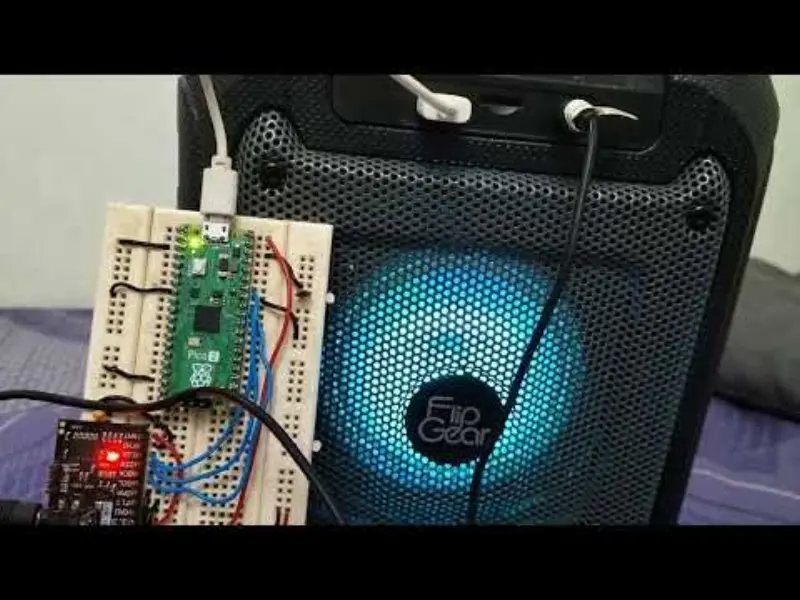
Pico2Dexed
A technical port of the Dexed FM synthesis engine to the Raspberry Pi Pico 2 (RP2350). The project utilizes the ARM Cortex-M33 cores to achieve 10-note polyphony at 44.1kHz, supporting I2S audio output and standalone MIDI tone playback.
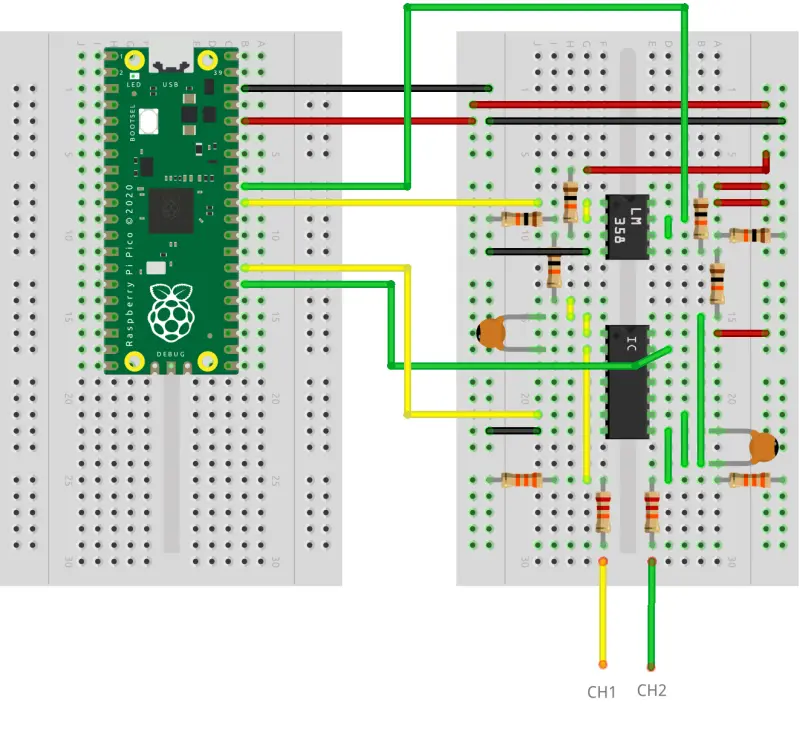
Oscilloscope RP2040
A high-performance oscilloscope firmware for the Raspberry Pi Pico (RP2040) that implements the OpenHantek6022 protocol. It supports dual-channel capture at up to 2 MS/s and integrates with a modified version of the OpenHantek6022 desktop software for visualization.
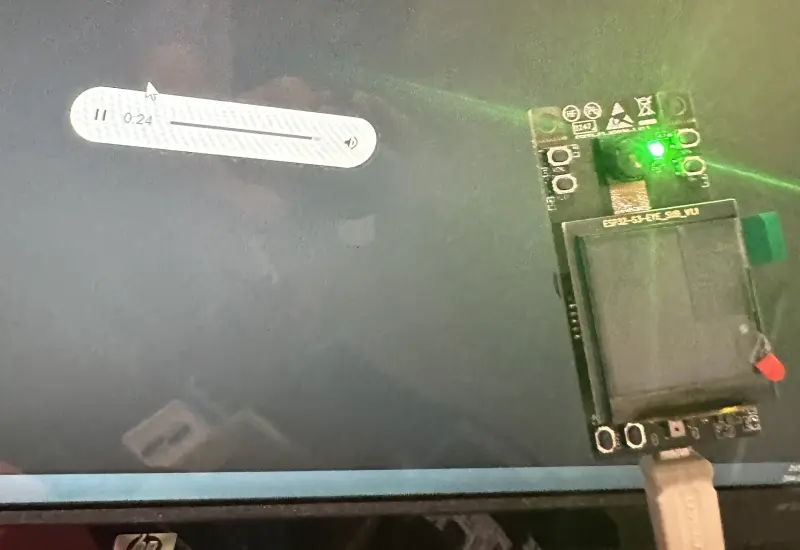
ESP32 I2S Microphone Stream
A firmware project for the ESP32-S3-EYE development board that streams audio from an attached I2S microphone directly to a web browser. It utilizes the Arduino framework on the ESP32-S3 platform to create a simple web server for real-time audio monitoring.
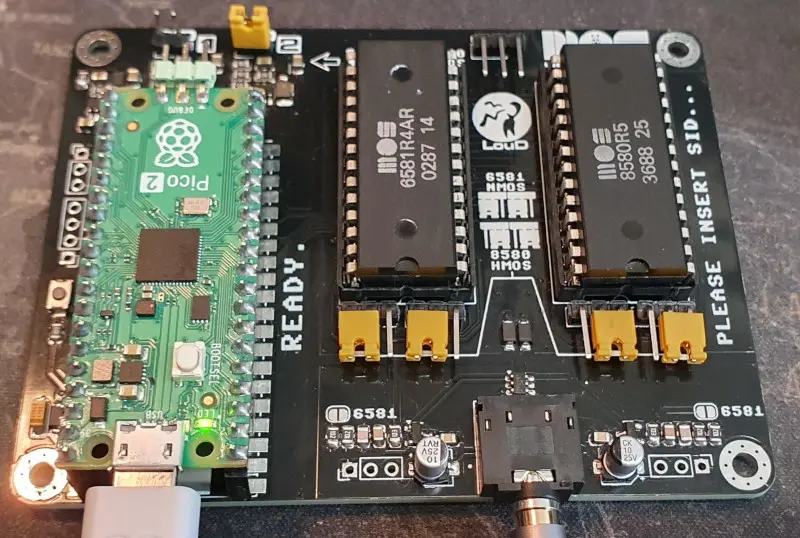
USBSID-Pico
A firmware and hardware project for interfacing MOS SID sound chips with modern computers via USB, WebUSB, and MIDI. Built for Raspberry Pi Pico (RP2040) and Pico 2 (RP2350) platforms, it supports up to four SID chips or emulators for high-fidelity Commodore 64 audio playback and synthesis.