Toyota RAV4 Climate Control Panel LIN Bus Interface
This project provides an STM32 HAL-based implementation for communicating with a Toyota RAV4 climate control panel via the LIN bus. Targeting the STM32G474RE microcontroller, it demonstrates reverse engineering techniques for automotive HMI modules and utilizes DMA for efficient serial data handling.
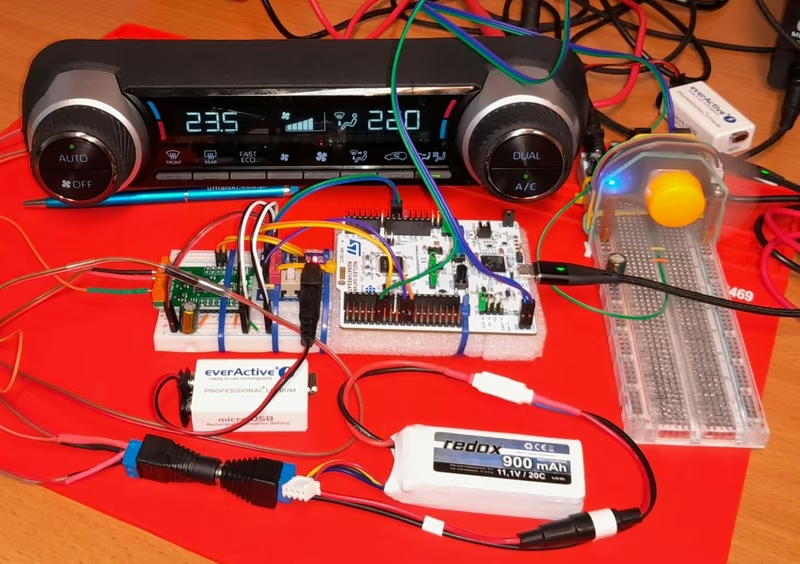
Exploring automotive electronics often reveals sophisticated hardware that serves as an excellent platform for embedded systems training. This project focuses on interfacing an STM32G474RE microcontroller with a Toyota RAV4 V (XA50) climate control panel. By treating the car’s HVAC control unit as a high-quality human-machine interface (HMI), developers can learn the intricacies of the LIN (Local Interconnect Network) bus protocol while interacting with professional-grade encoders, push buttons, and displays.
The Motivation for Automotive Hacking
While standard educational kits often rely on simple breadboard components, production vehicle modules offer a more engaging experience. A modern climate control panel features integrated LED indicators, dimmable backlighting, and tactile rotary encoders. Using an STM32 to bring these components “to life” outside of the vehicle provides hands-on experience with production-grade hardware. It also highlights the importance of protocol standards; for a custom master device to communicate with a slave node like this panel, strict adherence to the LIN standard is required.
Technical Architecture
The system is built around the NUCLEO-G474RE development board. To bridge the gap between the microcontroller’s logic levels and the automotive bus, a LIN transceiver is necessary. The LIN protocol operates on a master-slave architecture where the STM32 acts as the master node, initiating headers and requesting data from the panel.
The project utilizes the STM32 Hardware Abstraction Layer (HAL) to manage the internal UART peripheral in LIN mode. A significant portion of the logic revolves around DMA (Direct Memory Access) for handling serial communication without taxing the CPU. This is particularly important for the “Receive to Idle” functionality, which allows the system to process variable-length responses from the bus efficiently.
Reverse Engineering the LIN Bus
Interfacing with undocumented car modules typically requires one of two approaches: sniffing a working vehicle or triggering responses through brute force. Since LIN utilizes 6-bit identifiers, it is relatively straightforward to cycle through IDs and observe the module’s reaction. Once a response is triggered, a bus sniffer or logic analyzer can be used to map how specific button presses or knob turns change the data payload.
For this project, the Toyota RAV4 panel is a particularly good target because it does not require complex initialization sequences before it begins reporting its state. This makes it an ideal candidate for developers new to automotive reverse engineering.
Implementation Details and Challenges
The firmware is configured via STM32CubeMX (using the provided .ioc file). It relies on USART3 for the LIN interface. One interesting technical note shared in the project is a challenge regarding the HAL_UARTEx_RxEventCallback. In some configurations, the callback may not trigger if the buffer size does not exactly match the response length, a nuance that arises when using UART in LIN mode compared to standard asynchronous mode.
To facilitate development, the project suggests using tools like the LUC (USB to LIN Converter) or logic analyzers with protocol decoders. These tools are essential for verifying the Sync Break, Sync Field, and Protected ID (PID) fields that constitute the LIN frame header.
Getting Started
To build the project, users can generate the necessary CMSIS and HAL driver files by opening the .ioc file in STM32CubeIDE or STM32CubeMX and hitting the code generation shortcut (Alt-K). The repository includes a parser for handling the data frames, ensuring that raw bus traffic can be translated into meaningful HMI interactions, such as detecting button presses or updating the display state.
Related Projects
Taskmanager J2534 Bridge
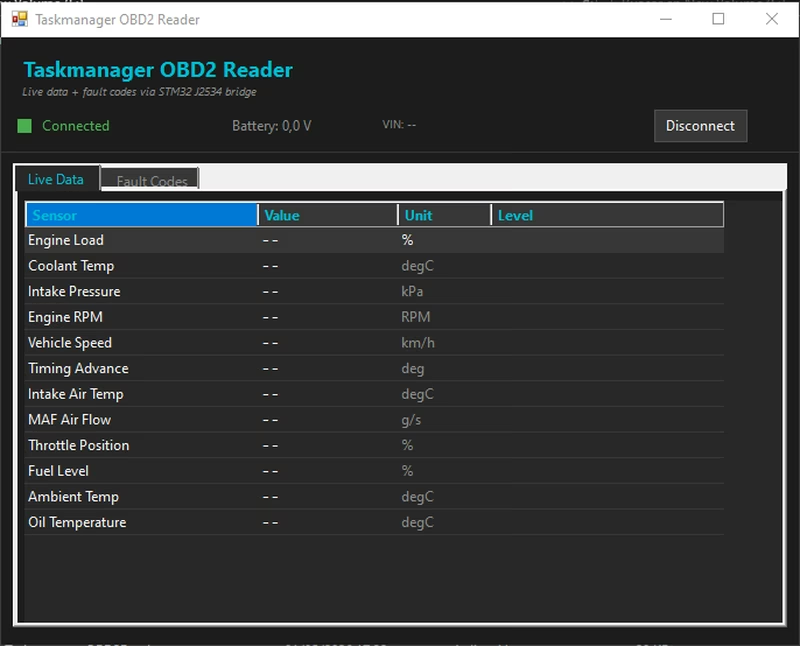
An open-source implementation of the SAE J2534-1 v04.04 PassThru standard, designed to connect STM32F407-based CAN adapters to professional vehicle diagnostic software. The project includes a C# Win32 DLL for protocol handling and a FreeRTOS-based ESP32 simulator for bench validation.
Temperature-Controlled Ventilation System for Indoor Environments
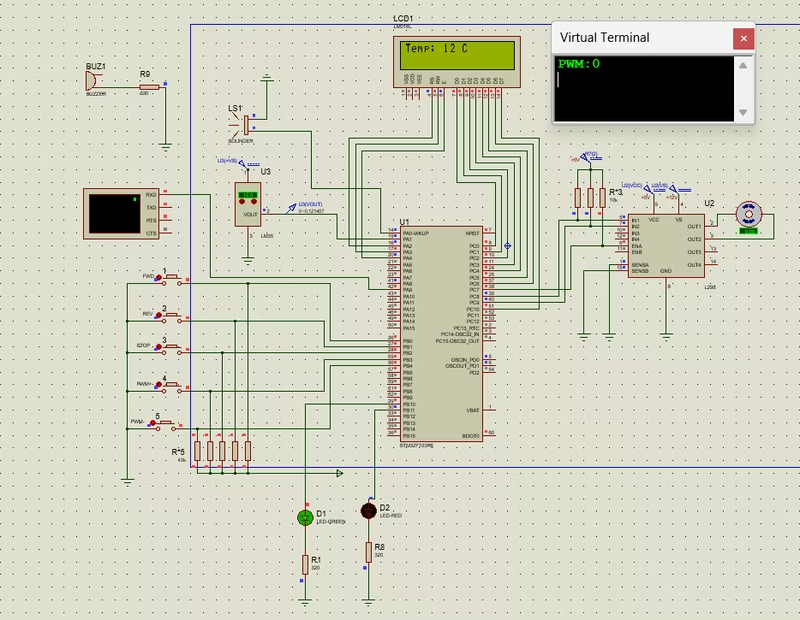
An STM32F103R6-based embedded system that provides automated and manual ventilation control based on real-time temperature monitoring. It utilizes an LM35 sensor, PWM for fan speed regulation, and an L298N H-bridge for direction control, with status updates displayed on an LCD1602. The project demonstrates peripheral integration using the STM32 HAL for ADC, timers, and external interrupts.
BMW E90 CAN Cluster Arduino Project
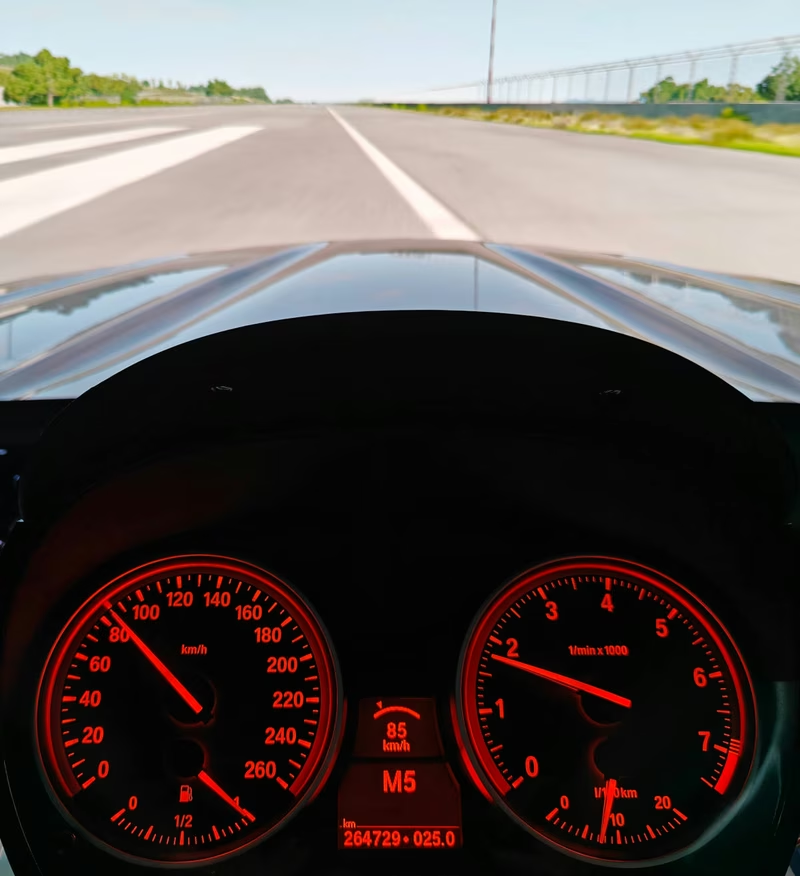
This project enables the use of a physical BMW E90 instrument cluster as a display for PC driving simulators using an Arduino-compatible microcontroller. It bridges game telemetry to the cluster via CAN bus, supporting a wide range of features including gauges, gear indicators, and warning lights.