Smart Lighting System using ESP32
An automated lighting control system built for the ESP32 platform that optimizes energy consumption by managing lights based on human presence and ambient light levels. The system integrates PIR and LDR sensors with a potentiometer for manual sensitivity tuning, providing a practical solution for smart home and classroom automation.
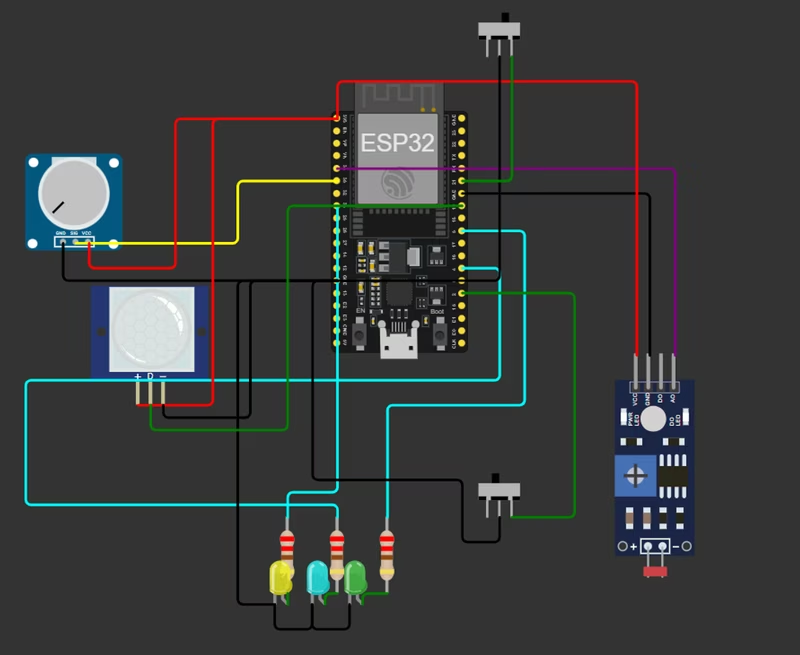
The Smart Lighting System project addresses the common challenge of energy waste in unoccupied or naturally well-lit spaces. By leveraging the ESP32 development board, this project creates an intelligent environment where lighting is treated as a dynamic resource rather than a static utility. It is designed to be energy-efficient, making it particularly suitable for settings like automated classrooms, smart homes, and office buildings where lights are frequently left on unnecessarily.
Intelligent Sensor Integration
At the core of the system is a logic-driven approach to illumination. Rather than relying on simple timers, the system uses a combination of sensors to make informed decisions:
- PIR Motion Sensor: Detects human presence within a room to ensure lights are only active when needed.
- LDR (Light Dependent Resistor): Measures the intensity of ambient light, preventing the system from turning on artificial lights when natural sunlight is sufficient.
- Potentiometer: Provides a manual interface for users to adjust sensitivity and threshold values in real-time, allowing the system to be calibrated for different room sizes or lighting conditions without code changes.
When the PIR sensor detects motion and the LDR indicates that ambient light is below a specific threshold, the system triggers the LEDs (representing the room’s lighting). If the room is bright enough or no motion is detected, the lights remain off, significantly reducing power consumption.
Technical Implementation
The project is built using the standard Arduino core framework for ESP32. A notable aspect of the implementation is its simplicity; it relies on native GPIO handling and analog-to-digital conversion (ADC) rather than external third-party libraries. This makes the codebase lightweight and easy to audit for beginners and experienced developers alike.
The system logic is contained within a single sketch.ino file, which manages the state machine for the lighting. It includes support for a manual override mode—essential for environments like classrooms where a teacher might need to force the lights off for a presentation—and a power-off state for overall system management.
Simulation and Prototyping
For developers who may not have the physical hardware on hand, the project is fully documented and compatible with the Wokwi simulator. This allows for rapid prototyping and testing of the sensor logic in a virtual environment. The repository includes a diagram.json file that defines the circuit layout, ensuring that the transition from simulation to physical breadboarding is seamless.
By combining motion detection with light sensitivity, this smart lighting system serves as a foundational IoT project that demonstrates how embedded systems can contribute to more sustainable and automated living spaces.
Related Projects
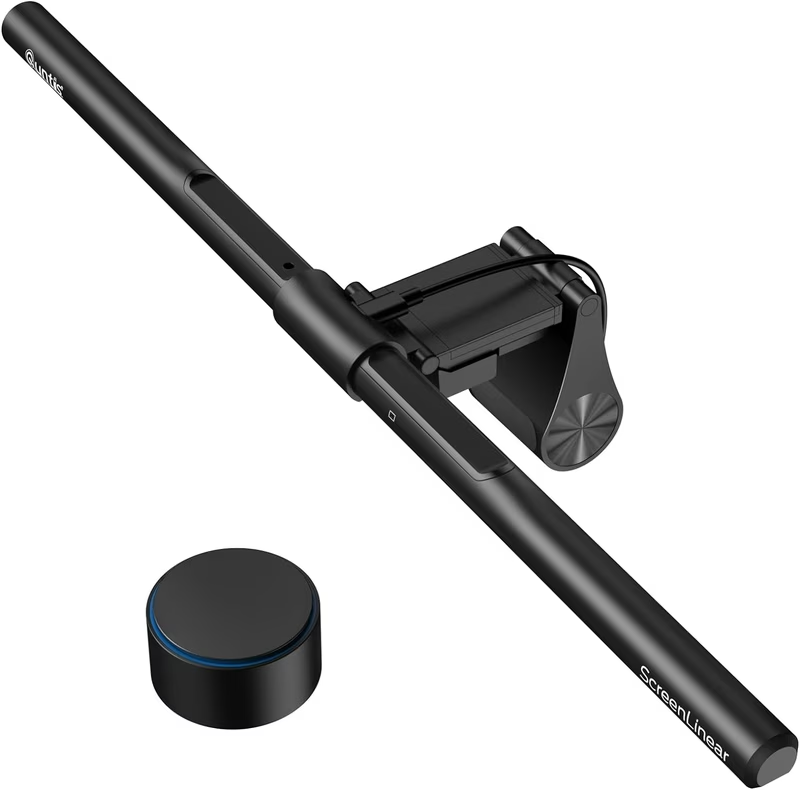
Quntis LED Controller
A DIY remote controller for the Quntis Monitor Light Bar PRO+ that enables smart home integration using an ESP32 and NRF24L01 module. It features a dedicated sniffer to capture proprietary remote addresses and supports both standalone MQTT and native ESPHome configurations.
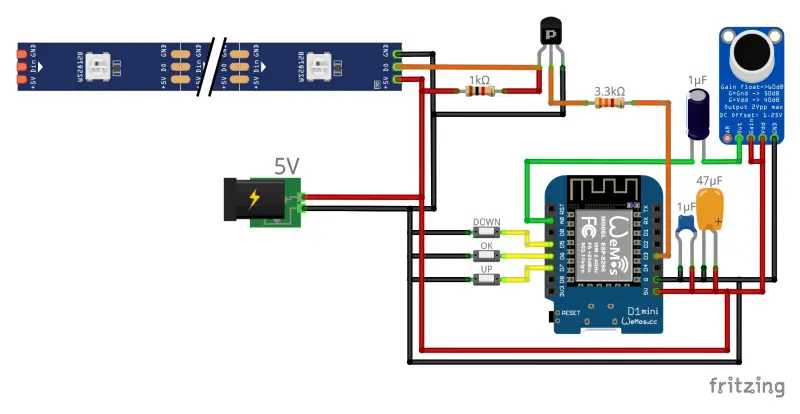
Smart LED
An ESP8266-based music-reactive lighting system for addressable LED strips. It features MQTT integration for smart home connectivity, multiple animation modes, and support for both 5V and 12V hardware configurations.
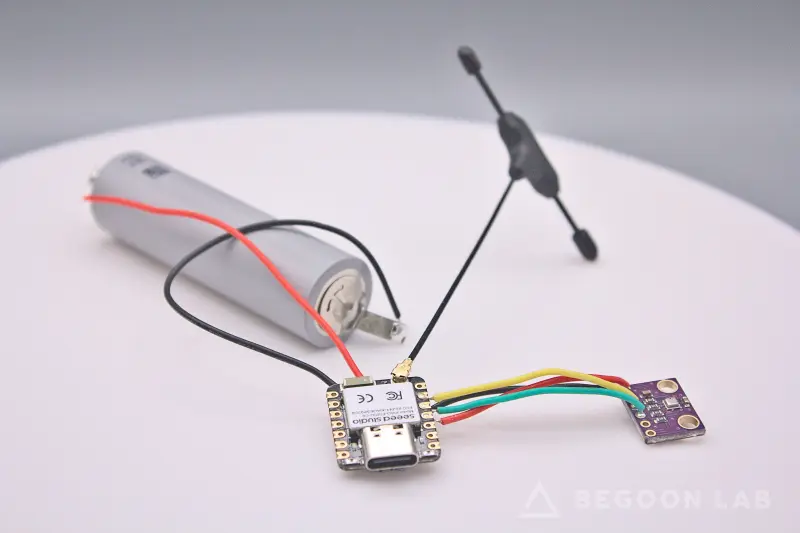
Smart IoT Sensor with XIAO ESP32C6
A power-efficient environmental sensor project built on the XIAO ESP32C6 using the ESP-IDF framework. It supports Wi-Fi and ZigBee connectivity, MQTT messaging, and integrates Bosch BME280/BME680 and Sensirion SGP41 sensors for comprehensive air quality monitoring.