Polymath-Studio One-Handed Keyboard (PS-OHK)
The Polymath-Studio One-Handed Keyboard (PS-OHK) is an open-source hardware and firmware project designed for efficient one-handed typing. It features a custom layout based on linguistic patterns and hand ergonomics, targeting CH55x microcontrollers with firmware built using the SDCC compiler.
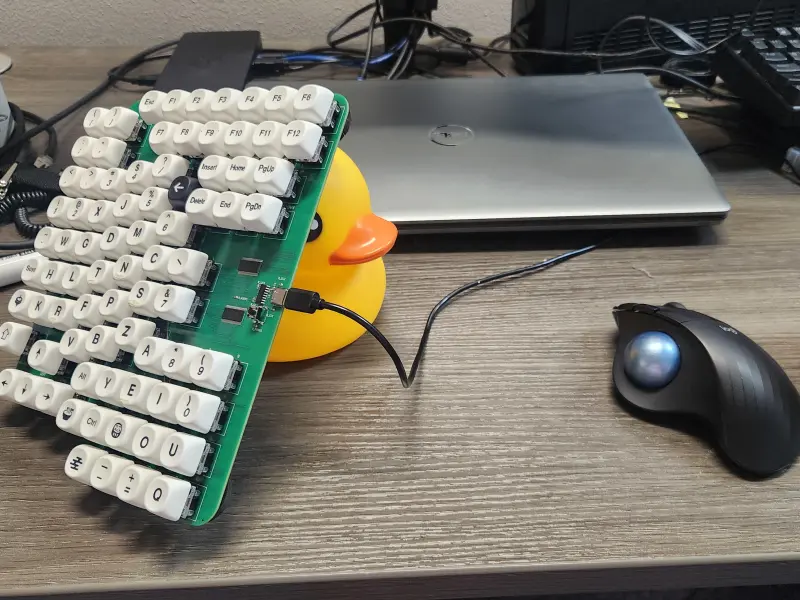
Overview
The Polymath-Studio One-Handed Keyboard, or PS-OHK (pronounced “psawk”), is a specialized input device designed to provide a high-performance typing experience using only one hand. Unlike many one-handed solutions that rely on complex layers or non-standard key counts, the PS-OHK utilizes a standard key count and a layout optimized for the natural shape and movement of the human hand.
Design Philosophy
The project is built around four core pillars to ensure that the transition from a standard QWERTY keyboard is as seamless as possible while maximizing efficiency:
- Common Letter Frequency: The layout prioritizes the most frequently used letters in the English language, placing them in the most accessible positions.
- Phonetic Relationships: Keys are organized based on the relationships between sounds, aiding in muscle memory retention.
- Ergonomics: The physical design and key mapping are tailored specifically to the shape and reach of a left hand.
- Practicality: It maintains a standard key count to ensure it can function as a primary input device without requiring specialized modifiers for basic characters.
Technical Implementation
The PS-OHK firmware is designed for the CH55x series of microcontrollers, which are popular 8051-based chips known for their built-in USB capabilities. The development environment is managed through a Nix shell, ensuring reproducible builds across different systems.
Build System and Toolchain
The project utilizes a robust open-source toolchain:
- SDCC (Small Device C Compiler): Used to compile the C-based firmware for the 8051 architecture.
- ch55xtool: A Python-based utility used for flashing the compiled binary to the microcontroller.
- GNU Make: Orchestrates the build and upload process.
- Arduino-CLI: Included in the dependencies for auxiliary tasks or potential framework compatibility.
Hardware and Enclosure
Beyond the firmware, the repository includes comprehensive design files for the physical hardware. This includes:
- PCB Designs: Breakout boards for components like the PCA9505DGGY.
- Enclosure: 3D-printable or manufacturable housing designs located in the
enclosuredirectory. - Hand-Specific Layouts: Dedicated configurations for left-handed use, with deprecated right-hand versions available for reference.
Getting Started
To build the firmware, users typically navigate to the firmware directory and run make. The flashing process involves a specific hardware sequence: holding the program button while plugging the device into a USB port, then executing the upload command within a three-second window. This bootloader entry method is characteristic of the CH55x family’s factory bootloader.