Pixel Frame
Pixel Frame is an ESP8266-based firmware designed to display live data from services like OpenWeatherMap and Last.fm on LED matrices or TFT displays. Built with the Arduino framework, it leverages the TFT_eSPI library for graphics and includes a Linux-based environment for cross-platform testing.
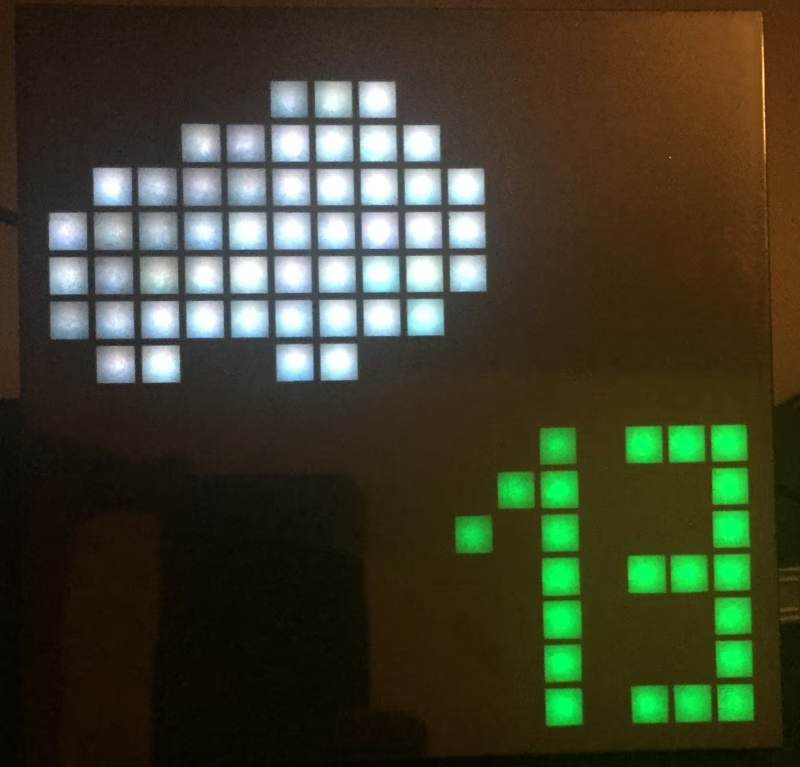
Pixel Frame is a specialized firmware project designed for the ESP8266, aimed at creating connected, data-driven displays. By combining the affordability and Wi-Fi capabilities of the ESP8266 with versatile display support, the project allows users to build custom “smart frames” that visualize real-time information from across the web.
The project is primarily built on the Arduino framework, utilizing PlatformIO for its build system. This choice provides access to a wide ecosystem of libraries and ensures that the codebase remains manageable across different hardware configurations. The firmware is designed to be flexible, offering specific build targets for both LED matrices and TFT LCD screens.
Key Features and Data Integration
At its core, Pixel Frame is about bringing web data into the physical world. It features native integration with several popular APIs to turn a simple display into an information hub:
- OpenWeatherMap: Fetches current weather data and forecasts, allowing the frame to act as a desktop weather station.
- Last.fm: Connects to the user’s scrobbling history to display “now playing” information, turning the display into a live music dashboard.
- NTP Synchronization: By using the NTPClient and Timezone libraries, the device maintains perfect time synchronization over the network, serving as a highly accurate digital clock.
Technical Architecture
The project leverages the TFT_eSPI library for high-performance graphics on TFT displays, while ArduinoJson handles the heavy lifting of parsing complex JSON responses from web services. This ensures that the limited resources of the ESP8266 are used efficiently when processing data from the cloud.
One of the most unique aspects of this repository is its cross-platform approach. Alongside the ESP8266 firmware, the project includes a Linux-based build environment. This sub-project integrates with libcurl to perform network requests on a standard PC, allowing developers to test application logic and layout designs without constantly flashing hardware. Furthermore, the inclusion of a Linux kernel module (pix_kernel) suggests advanced capabilities for interacting with the system or simulating hardware behavior at a low level.
Getting Started with PlatformIO
Managing the project is streamlined through a provided Makefile in the pix_esp8266 directory. Developers can easily switch between targets using simple commands:
make matrix: Compiles and uploads the firmware configured for LED matrices.make tft: Compiles and uploads the firmware for TFT LCD screens.make app: Builds the Linux-native version of the application for local testing.
The platformio.ini file acts as the central configuration hub, defining the dependencies and build flags for each environment. This structured approach makes Pixel Frame not just a functional tool, but also a great example of modern embedded development practices for users looking to build their own IoT visualizers.
Related Projects
GeekMagic SmallTV ESP8266 Firmware
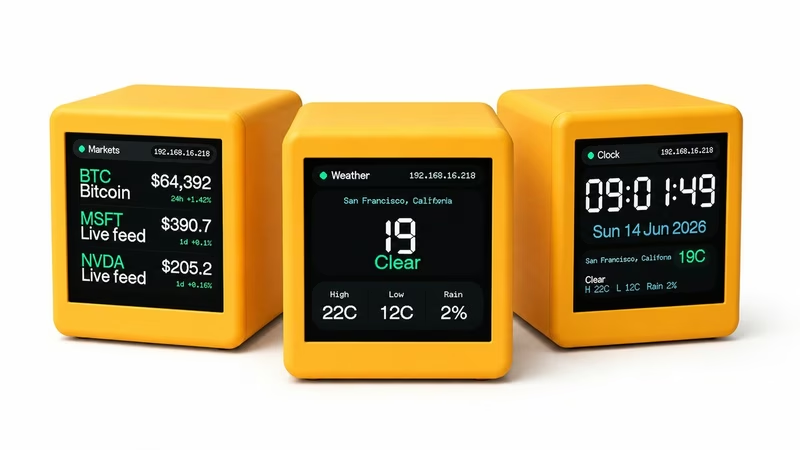
A custom ESP8266-based firmware for the GeekMagic SmallTV smart weather clock, featuring a 240x240 ST7789 display. It utilizes the TFT_eSPI library for rendering and LittleFS for persistent storage of configurations and authentication data. The system provides a comprehensive web dashboard for managing WiFi, OTA updates, and various data feeds including weather, markets, and Home Assistant integrations.
Volna 2BW42 Weather Station Firmware
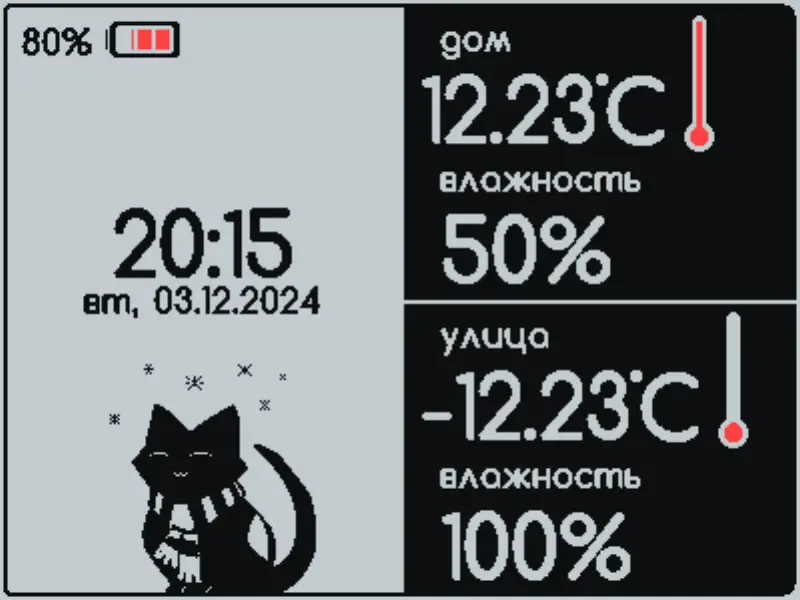
An Arduino-based firmware for E-Ink weather stations targeting ESP8266 and ESP32 platforms. It supports BME280, SCD41, and DS18B20 sensors, provides MQTT connectivity for smart home integration, and features a web-based UI for configuration and custom design uploads.

ReadMePaper: ESP32 7-Color e-Paper Display Project
An ESP32-based firmware for displaying 24-bit BMP images on a Waveshare 7-color e-Paper module. It features a REST API to receive image URLs over WiFi, stores them in SPIFFS, and renders them on the display using the Arduino framework.