InkLink
A real-time collaborative drawing system that synchronizes a web-based canvas to a 7.5-inch tri-color e-paper display. The project uses an ESP32 microcontroller running CircuitPython to fetch and render drawings from a central server via WebSockets and BMP processing.
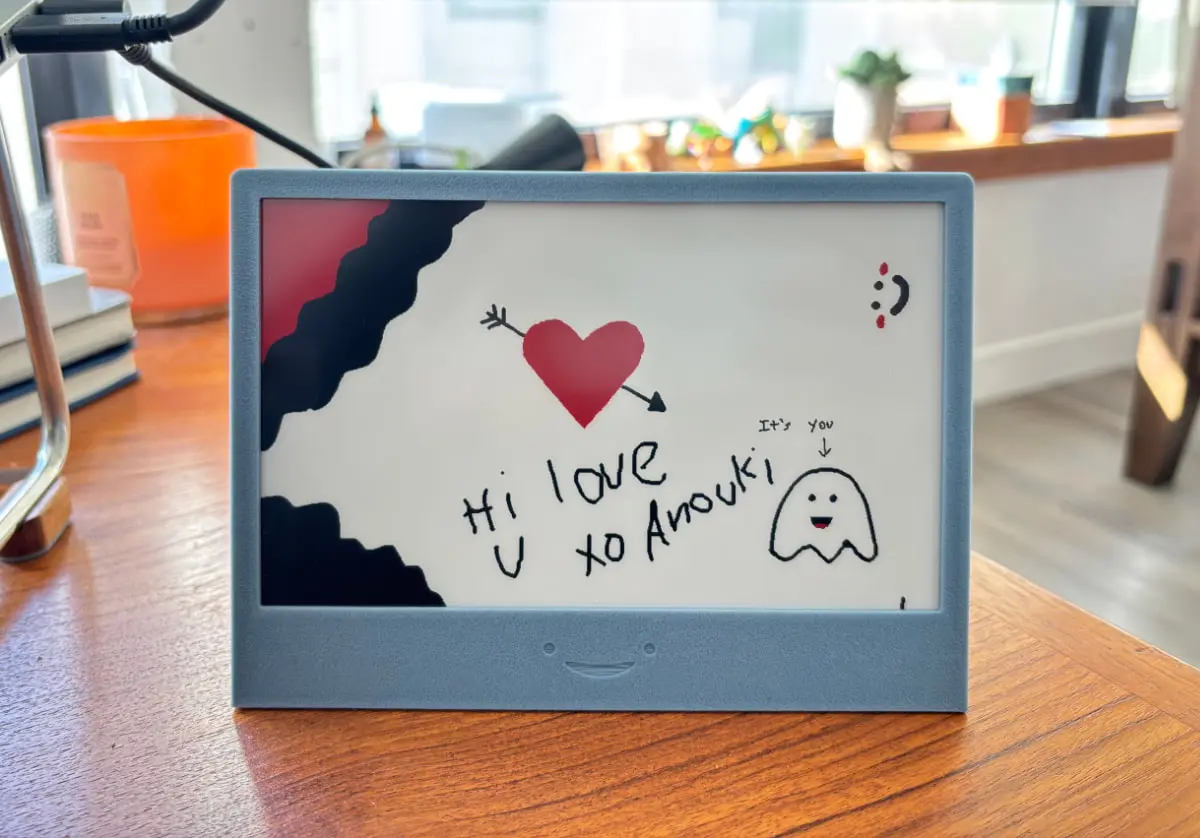
InkLink is an innovative project that bridges the gap between digital collaborative spaces and physical ambient displays. It creates a shared drawing canvas accessible via any web browser, which then synchronizes its state to a 7.5-inch tri-color e-paper display. This setup allows multiple users to contribute to a persistent piece of digital art that lives on a physical desk or wall.
Hardware Architecture
The system is built around the Waveshare 7.5” tri-color e-paper display (B V3), which supports black, white, and red pigments. Driving this display is a Waveshare ESP32 E-Paper Driver Board. This choice of hardware provides built-in Wi-Fi connectivity and sufficient processing power to handle network requests and image rendering. The project also includes 3D-printable files for a custom enclosure, making it a complete, polished hardware product.
Software Stack
The project employs a modern, full-stack approach to manage the interaction between the web and the physical hardware:
- Firmware: The ESP32 runs CircuitPython, a derivative of MicroPython designed for microcontrollers. The firmware uses custom drivers (
waveshare7in5bv3.py) and a BMP reader to fetch the latest drawing state from the server every three minutes. - Web Interface: A real-time drawing application built with React, Vite, and Tailwind CSS. It supports multi-user collaboration through WebSockets, ensuring that strokes made by one user appear instantly for everyone else on the web interface.
- Backend: A Bun-based server handles the WebSocket connections and serves the drawing as a BMP file for the e-paper display. The server can be easily deployed using Docker and Nginx.
Technical Implementation
The synchronization process is optimized for the unique constraints of e-paper technology. Since e-paper displays have slow refresh rates and high power efficiency when static, InkLink updates the physical screen every three minutes rather than in real-time. The server generates a BMP image that the ESP32 downloads and parses. The use of tri-color support allows for more expressive drawings, utilizing the red channel alongside standard black and white.
Getting Started
Setting up InkLink involves flashing the ESP32 with CircuitPython and installing the necessary libraries, such as adafruit_connection_manager and adafruit_requests. The server-side can be launched via Docker Compose, providing a turnkey solution for hosting the collaborative environment. Once configured, the ESP32 connects to the server’s domain to pull the latest canvas data and update the display.
# Example of how the ESP32 triggers the drawing update
import draw
The project is licensed under the MIT License and provides a unique example of how to integrate web technologies with low-power embedded displays for creative applications.