HydraBus
HydraBus is an open-source multi-tool hardware platform designed for hardware hacking, debugging, and protocol analysis. It supports various firmware configurations including HydraFW, a MicroPython port, and the Black Magic Probe for JTAG/SWD debugging. The platform targets STM32 microcontrollers and provides a versatile interface for interacting with various hardware protocols.
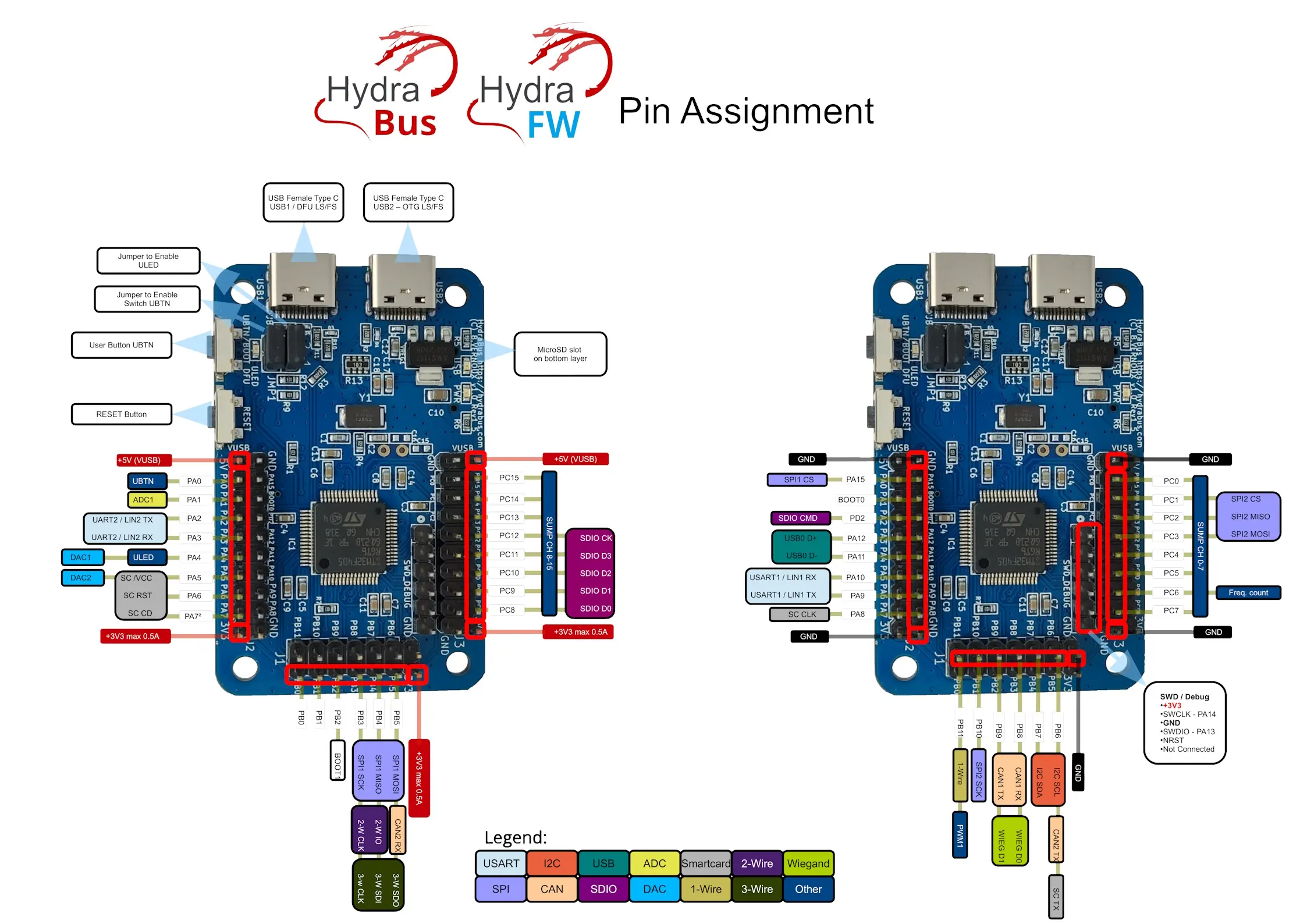
HydraBus is a versatile open-source multi-tool hardware platform designed for developers, security researchers, and hobbyists. At its core, HydraBus is intended to be a flexible “Swiss Army knife” for hardware hacking, providing a powerful and extensible interface for interacting with electronic components and sniffing various communication protocols.
A Versatile Hardware Platform
The HydraBus hardware (v1.0) is built around a powerful STM32 microcontroller, offering a significant performance boost over older multi-tool devices. It features a clear pin assignment layout that allows users to quickly connect to target devices. The project is entirely open-source, with hardware design files and firmware available for the community to study, modify, and improve.
Official Firmware: HydraFW
The primary way to interact with the HydraBus is through HydraFW, the official firmware. HydraFW provides a comprehensive command-line interface (CLI) that allows users to interact with hardware protocols like I2C, SPI, UART, and more in real-time. This makes it an invaluable tool for reverse engineering unknown hardware or debugging new circuit designs. The firmware is designed to be highly extensible, allowing for the addition of new protocols and features as the community grows.
Interactive Scripting with MicroPython
For developers who prefer a high-level scripting environment, HydraBus supports an official MicroPython port. This integration allows users to write Python scripts directly on the hardware to control GPIO pins, interface with sensors, and automate complex hardware interactions. MicroPython on HydraBus provides a rapid prototyping environment where developers can test ideas without the overhead of a full C-based development cycle. Building MicroPython for HydraBus is straightforward, requiring the standard ARM GCC toolchain and targeting the specific board configuration.
Debugging with Black Magic Probe
One of the most powerful features of the HydraBus is its ability to be transformed into a professional-grade JTAG/SWD debugger. By flashing the Black Magic Probe firmware port, the HydraBus acts as a transparent bridge between a host computer and a target microcontroller. Unlike traditional debuggers that require intermediate software like OpenOCD, the Black Magic Probe runs the GDB server directly on the HydraBus hardware. This simplifies the toolchain and provides a more reliable debugging experience for a wide range of ARM Cortex-M and Cortex-A devices.
Getting Started and Community
The HydraBus ecosystem is supported by extensive documentation and a dedicated community. The project wiki provides detailed guides on building, flashing, and using the various firmware options on both Windows and Linux. Whether you are using it as a protocol analyzer, a MicroPython development board, or a JTAG debugger, HydraBus offers a robust platform for any embedded systems project.