Fully Automated Egg Incubator
An ATmega328P-based embedded system designed to automate the egg incubation process by regulating temperature, humidity, and rotation. It utilizes DHT11 and DS18B20 sensors for environmental monitoring and controls a stepper motor and relay-driven heating element to maintain optimal hatching conditions.
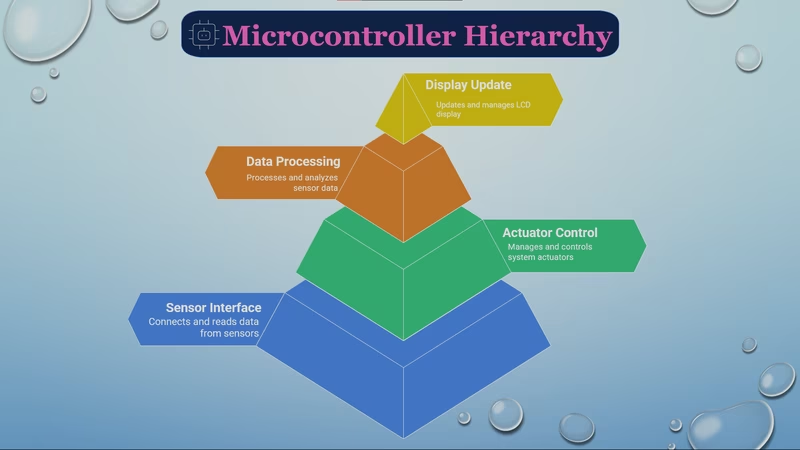
The Fully Automated Egg Incubator is a specialized microcontroller-based system designed to regulate the delicate environmental conditions required for successful bird egg hatching. Built around the ATmega328P microcontroller, the system automates the regulation of temperature, humidity, and periodic egg rotation—three critical factors that ensure proper embryonic development.
The Science of Incubation
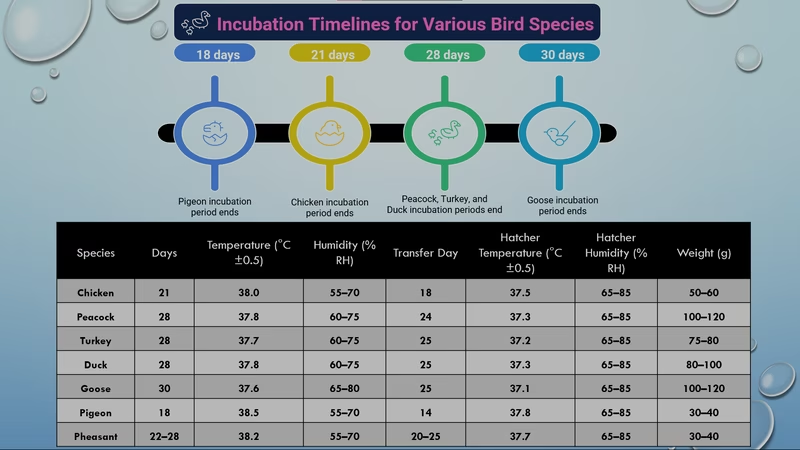
Successful incubation requires mimicking the natural behavior of a mother bird. For chicken eggs, this involves maintaining a steady temperature of 37.5°C (± 0.5°C) and humidity levels between 50–55% for the first 18 days, increasing to 65–70% during the final three days. Periodic turning (3–5 times daily) is also essential to prevent the embryo from sticking to the shell and to ensure even growth. This project replicates these requirements through precise electronic sensing and mechanical actuation.
Key Features and Capabilities
The system is equipped with a robust set of features to handle the full 21-day incubation cycle:
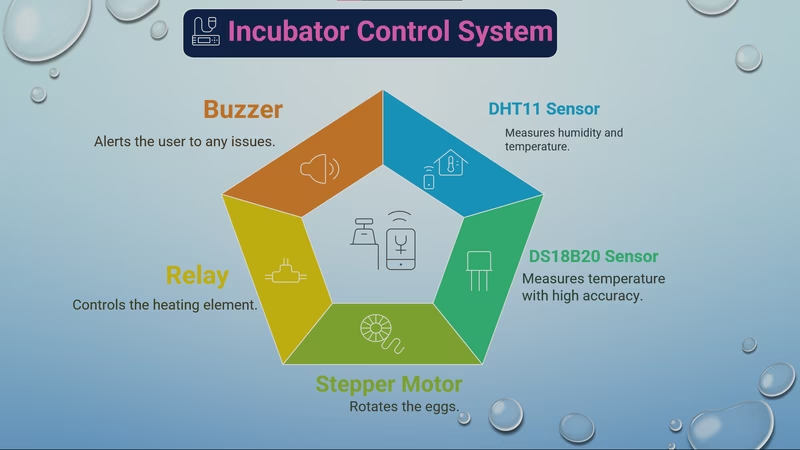
- Automatic Egg Rotation: A stepper motor periodically rotates the eggs, simulating natural movement.
- Dual-Sensor Monitoring: It utilizes a DS18B20 for high-precision temperature readings and a DHT11 for humidity data.
- Environmental Control: A relay module manages the heating element to maintain temperatures between 36–40°C.
- Safety Alerts: An integrated buzzer sounds an alarm if temperature or humidity drifts outside safe thresholds (35–41°C and 45–70% respectively).
- Hatch Mode: A specialized operating mode that automatically disables egg rotation and adjusts humidity thresholds during the final hatching phase.
- Real-time Feedback: A 16x2 LCD provides constant updates on current environmental conditions.
Technical Architecture
The system architecture is centered on the ATmega328P, which serves as the brain of the incubator, interfacing with various sensors, actuators, and user input devices.
In terms of hardware setup, the components are wired to specific digital and analog pins to ensure reliable communication. The DHT11 is assigned to Pin 13, the DS18B20 to Pin 2, and the stepper motor is controlled via Pins 3 through 5. The relay and buzzer are driven by analog pins A1 and A0, respectively, providing a compact and efficient pinout configuration.
Firmware and Control Logic
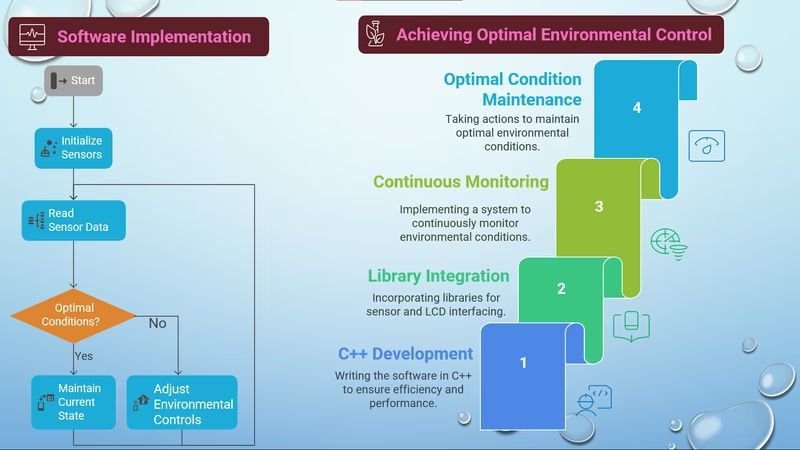
The firmware was developed using C++ within the Arduino IDE. The control logic follows a continuous loop that polls sensor data, updates the display, and makes real-time adjustments to the environment. The system manages three distinct modes: Normal Mode for standard monitoring, Hatch Mode for the final development stage, and Calibration Mode for setup adjustments.
The software handles the complexity of managing delays for LCD refreshes and motor intervals using calibrated settings, which can be fine-tuned via jumper pins to accommodate different egg types.
Testing and Validation
To validate the system’s functionality, it was deployed in a real-world environment to incubate a pigeon egg. Throughout the test, the system successfully maintained the required environmental parameters and executed the necessary rotation schedule. The trial concluded with the successful hatching of a chick, proving that this low-cost hardware setup is a viable solution for automated avian incubation.
Related Projects
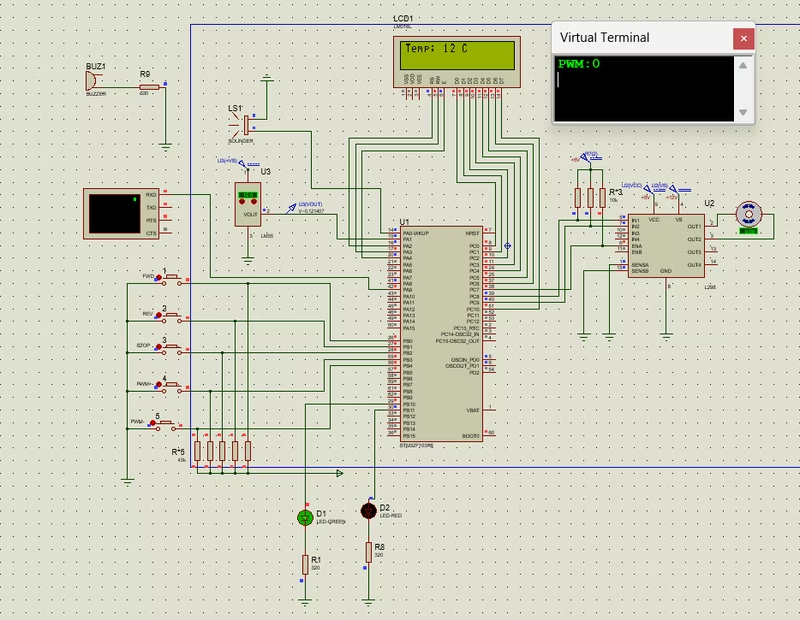
Temperature-Controlled Ventilation System for Indoor Environments
An STM32F103R6-based embedded system that provides automated and manual ventilation control based on real-time temperature monitoring. It utilizes an LM35 sensor, PWM for fan speed regulation, and an L298N H-bridge for direction control, with status updates displayed on an LCD1602. The project demonstrates peripheral integration using the STM32 HAL for ADC, timers, and external interrupts.
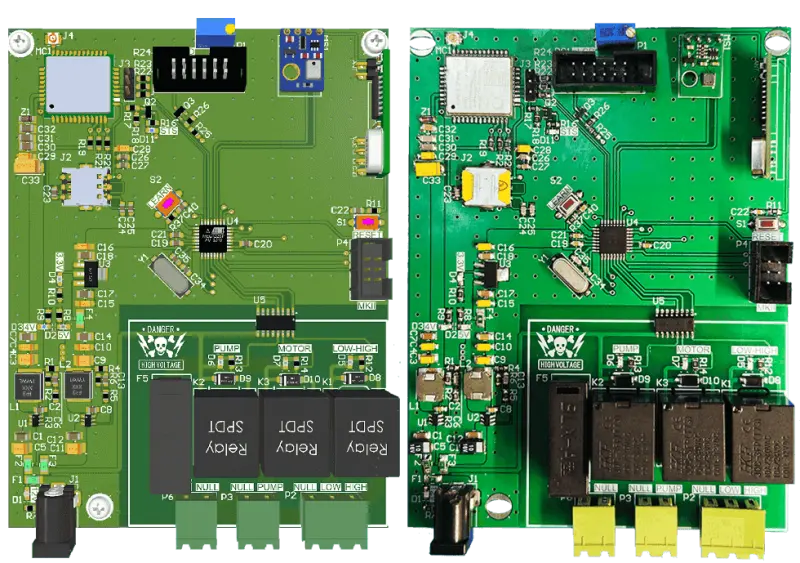
RCS_AVR: Relay Control System with SMS
A remote relay control system based on the ATmega328 microcontroller and Quectel M66 GSM module. It features SMS-based command processing, 433MHz remote control integration, and environmental sensing via the AHT20 sensor. The project includes a custom power supply design and a non-blocking state-machine-driven firmware architecture.
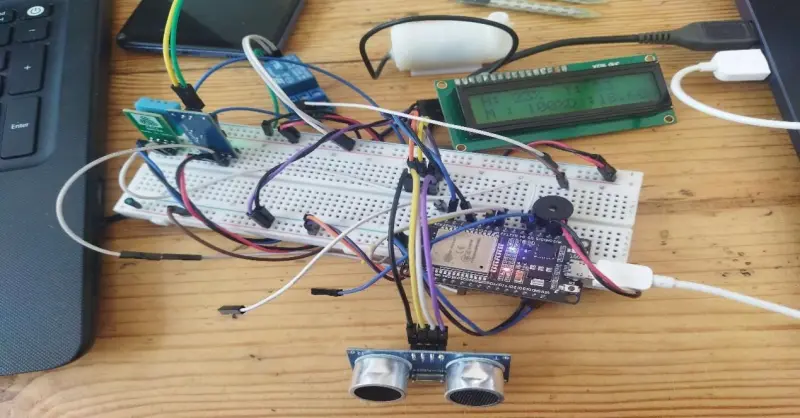
Smart Plant Monitoring System
An ESP32-based IoT system for monitoring plant health using soil moisture, temperature, humidity, and ultrasonic sensors. It features automated watering, local LCD feedback, and remote monitoring via the Blynk mobile app.