Flexwatch
A minimalist, low-power smartwatch built with a 2.9-inch e-ink display and a Seeed Studio XIAO nRF52840 Sense. It utilizes a custom flex PCB and integrated sensors to provide a comfortable, long-lasting wearable experience focused on essential timekeeping.
Most modern smartwatches are essentially tiny smartphones strapped to your wrist, constantly buzzing with notifications and requiring daily charging. Flexwatch takes a different approach. Designed as a “low stress” wearable, this project prioritizes readability, battery longevity, and a minimalist user experience through the use of electronic paper display (EPD) technology and efficient hardware.
The Hardware Foundation
At the heart of the Flexwatch is the Seeed Studio XIAO nRF52840 Sense. This compact microcontroller provides the necessary processing power and integrated sensors while maintaining a small footprint suitable for a wearable. The display is a 2.9-inch e-ink panel, chosen for its excellent sunlight readability and the fact that it consumes zero power when displaying a static image.
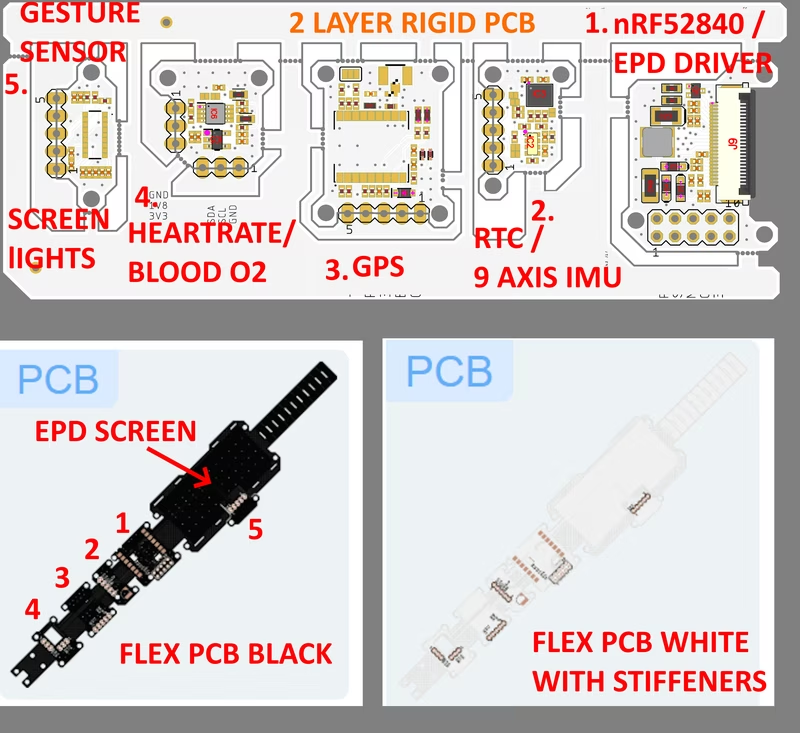
One of the most unique aspects of the project is its physical construction. The current version utilizes a custom flex PCB, allowing the internal components to conform more comfortably to the wrist. The frame itself is creatively improvised, utilizing a ruler-based rigid structure to provide support where needed, showcasing a blend of professional PCB design and clever mechanical problem-solving.
Key Features and Functionality
The firmware, developed within the Arduino ecosystem, focuses on core timekeeping and extreme power efficiency.
- Accurate Timekeeping: The project uses an external RV3028C7 RTC (Real-Time Clock) to ensure precise time even when the main MCU is in deep sleep. This is critical for maintaining accuracy over long periods without needing to sync with a phone.
- Gesture Awareness: By leveraging the integrated LSM6DS3 accelerometer, the watch can detect wrist gestures. This allows the display to update or the system to wake from low-power modes only when the user is actually looking at the watch.
- Energy Management: The combination of an e-ink display and the nRF52840’s native low-power modes allows the watch to function for extended periods on a single charge, moving away from the “charge every night” cycle of standard smartwatches.
- Battery Monitoring: Integrated logic tracks the battery level, providing data to the user and allowing the system to manage its power state based on remaining capacity.
Software Architecture
The codebase is structured as an Arduino sketch, relying on several specialized libraries to interface with the custom hardware. It utilizes the GxEPD2_BW library for managing the Waveshare e-paper display, ensuring efficient partial updates to the screen. Communication with the RTC and the IMU is handled via the I2C protocol using the Wire library, alongside specific drivers for the RV3028C7 and LSM6DS3 components.
Future Development
While the current version provides a stable watch interface, the hardware is designed with significant expansion in mind. The PCB layout already includes support for Bluetooth and a microphone, which are slated for future software implementation.
Beyond software updates, the roadmap for the Flexwatch includes:
- GPS Integration: A new layout is planned to incorporate positioning data.
- Health Monitoring: Future iterations aim to include heart rate and UV sensors.
- Rigid-Flex PCB: Transitioning from a purely flex PCB to a rigid-flex design for better durability.
- Improved Sleep States: Further optimization of the firmware to squeeze even more life out of the battery.
Flexwatch is an open-source project under the MIT License, offering a refreshing take on what a wearable can be when the goal is utility and comfort rather than constant connectivity.