Cyberboard V2
A compact development board featuring the STM32WB55CG microcontroller in a Raspberry Pi Pico form factor, designed for wireless sensing applications. It integrates Bluetooth Low Energy, an ICM-42688 6-axis IMU, and a BMP580 barometer with a sophisticated power management system for battery operation. The project utilizes the STM32 HAL and WPAN middleware to implement a dual-core wireless sensor hub.
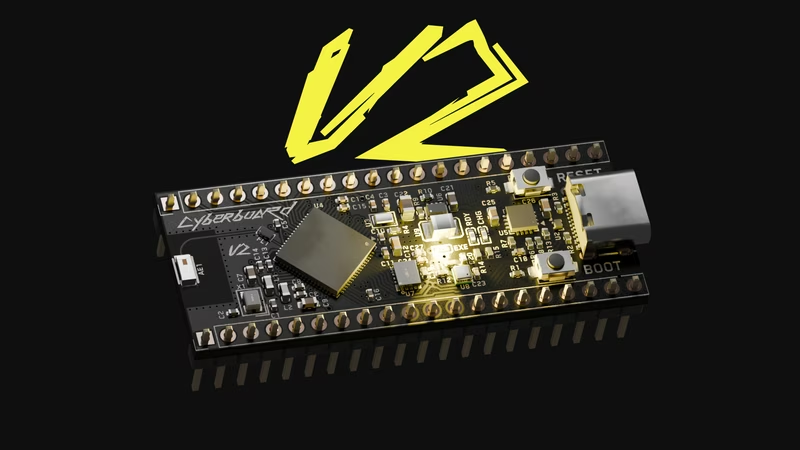
Cyberboard V2 is a specialized development board that brings the capabilities of the STM32WB55 series to the popular Raspberry Pi Pico form factor. Unlike its predecessor, V2 is a complete redesign focused on providing reliable functionality for environmental and motion sensing projects that require wireless connectivity.
Key Features
The heart of the board is the STM32WB55CG microcontroller, which provides native Bluetooth support. The hardware is tailored for mobile and environmental monitoring, featuring an ICM-42688 6-axis IMU for motion tracking and a BMP580 pressure sensor for high-precision barometric data.
Power management is a core focus of the design. It includes a BQ24072RGTR IC for LiPo battery charging via a dedicated solder pad and a TPS631000 buck-boost converter to maintain efficient power delivery across varying battery voltages. The board also features USB-C connectivity for both power and data, along with multiple status LEDs for immediate visual feedback during development.
Technical Architecture and Firmware
The software architecture is designed to operate the STM32WB55 as a wireless sensor hub. The firmware leverages the STM32_WPAN middleware stack to manage the dual-core nature of the MCU, where one core handles the application logic and the other manages the Bluetooth Low Energy (BLE) radio stack.
Data processing includes a custom Kalman filter implementation to refine signals from the motion sensors. Communication with the onboard sensors is handled via SPI and I2C interfaces, while external connectivity is provided through BLE and USB CDC (Communication Device Class) for serial debugging and data transfer.
PCB Design and Hardware Layout
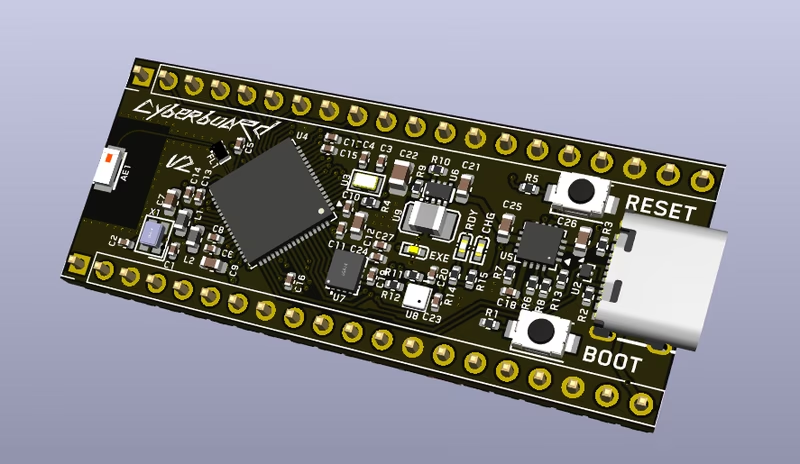
The board utilizes a 4-layer PCB stackup (Signal/Ground/Power/Signal) to ensure signal integrity and optimal RF performance. Significant attention was paid to the Bluetooth section, which features a ceramic antenna with precise impedance matching.
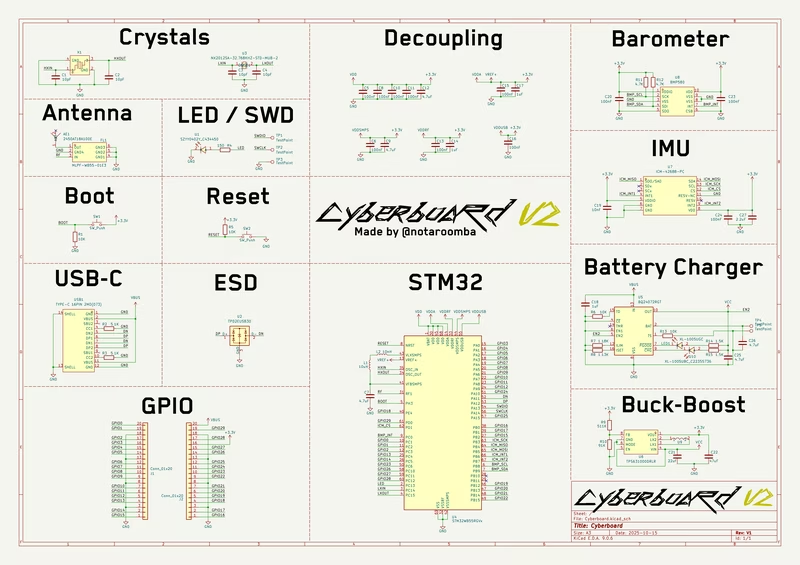
The layout includes SWD test points on the bottom of the board for streamlined programming and debugging. The 4-layer design allows for a dedicated ground plane, which is essential for the sensitive analog signals coming from the IMU and the high-frequency RF signals from the Bluetooth radio.
Manufacturing and Integration
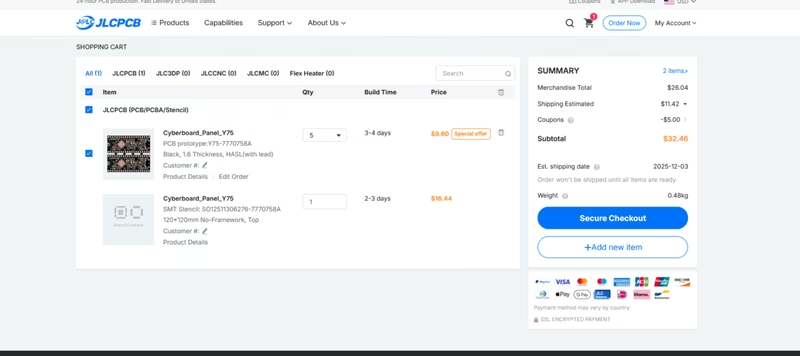
The project is designed with manufacturing efficiency in mind, utilizing a panelized layout that is cost-effective for services like JLCPCB. This approach makes it easier to produce small batches of the board for fleet deployment or testing.
By combining the STM32 ecosystem with the Pico’s physical footprint, the Cyberboard V2 offers a high-performance alternative for developers who need integrated wireless capabilities and advanced sensing in a compact, battery-ready package.
Related Projects
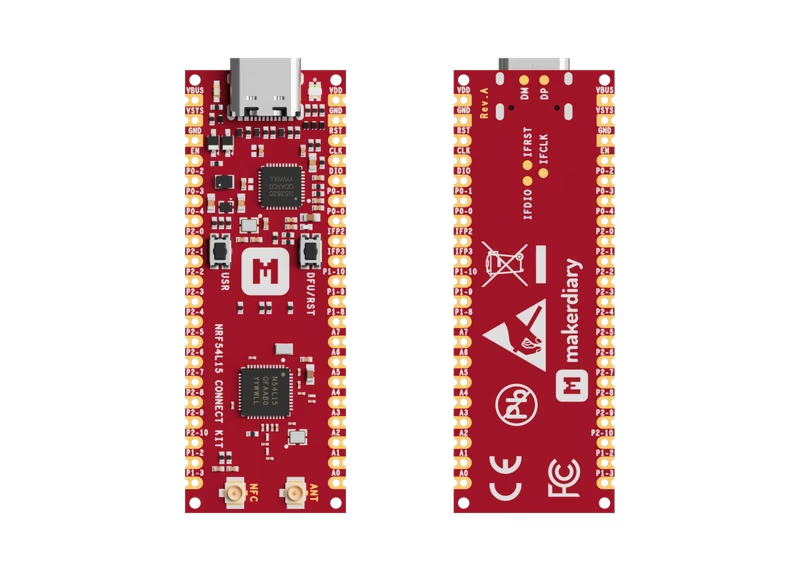
nRF54L15 Connect Kit
The nRF54L15 Connect Kit is a rapid prototyping platform for next-generation IoT devices based on the Nordic nRF54L15 multiprotocol SoC. It utilizes the Zephyr RTOS and nRF Connect SDK to support Bluetooth Low Energy 6.0, Thread, Matter, and Zigbee. The hardware features an integrated nRF52820-based Interface MCU for onboard debugging and a high-efficiency TPS63901 buck-boost converter for flexible power management.
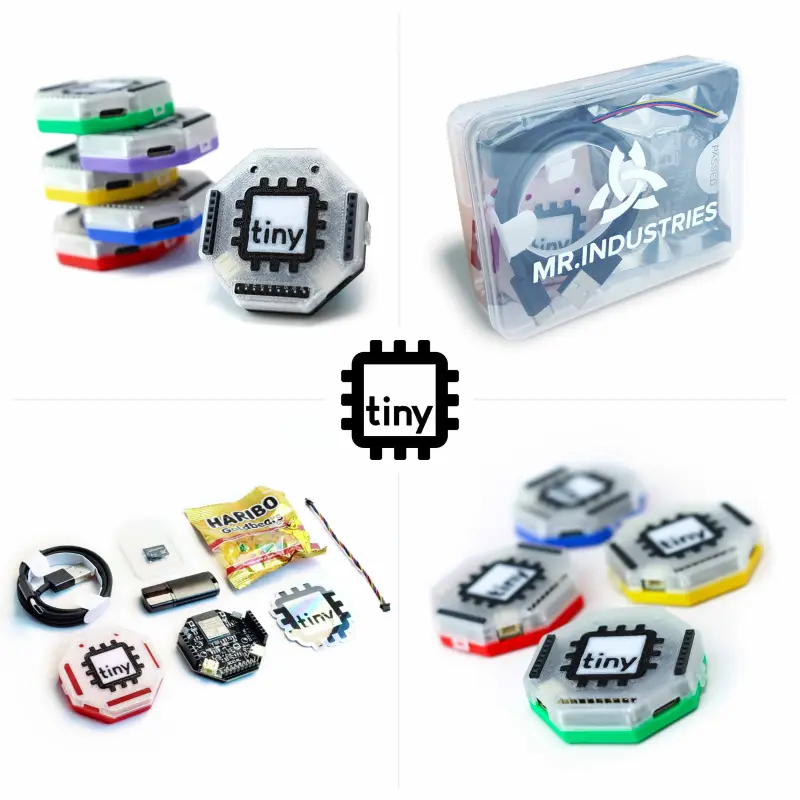
tinyCore ESP32-S3 Learning Platform
An open-source engineering learning platform based on the ESP32-S3 microcontroller designed to bridge the gap between academic study and industrial application. It features integrated sensors like the LSM6DSO IMU, dual-core processing, and extensive connectivity options including WiFi, Bluetooth, and STEMMA/QWIIC I2C connectors.
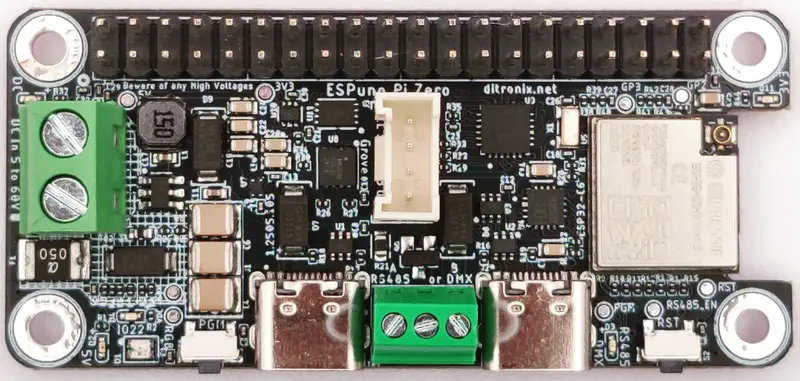
ESPuno Pi Zero
An ESP32-C6 based development board in the Raspberry Pi Zero form factor, designed for high-voltage industrial and IoT applications. It features integrated support for Wi-Fi 6, Bluetooth, Zigbee, and Thread, alongside RS-485/DMX interfaces and a wide 5-60V DC power input range.