Chess Pro — Smart Hardware Chess Board
A sophisticated physical chess board utilizing Hall effect sensors for piece detection and dual displays for game status and clock. It runs on Go-powered Raspberry Pi or Orange Pi hardware, featuring deep Lichess integration, local Stockfish analysis, and a custom DietPi-based OS image with power-loss protection.

Chess Pro is an ambitious open-source project that bridges the gap between traditional over-the-board chess and the modern digital ecosystem. Built around a Raspberry Pi Zero 2W or Orange Pi Zero 2W, this smart board transforms a physical chess set into a connected device capable of playing online matches on Lichess, analyzing positions with a local Stockfish engine, and providing real-time visual feedback through a combination of displays and LED lighting.
Hardware Architecture and Sensing
At the heart of the board’s input system is a matrix of 64 A3144 Hall effect sensors—one embedded beneath every square. By placing small neodymium magnets into the base of standard chess pieces, the system can detect piece presence and movement without the need for specialized, expensive electronic pieces. These sensors are polled via four PCF8575 16-bit I2C GPIO expanders, allowing the software to compute board state differences in real-time.
The board provides feedback through a dual-display system. A 1.54-inch SSD1681 e-paper display shows the current board position with custom pixel-art pieces, utilizing fast partial refreshes to update only the squares involved in a move. Simultaneously, a 1.3-inch SH1106 OLED display functions as the chess clock and status center, showing engine evaluations, game events, and connection status. For move highlights and alerts, a WS2812B RGB LED strip is routed around the perimeter or under the squares to indicate valid moves, last moves, and check conditions.
Software and Intelligence
Written in Go, the firmware manages a complex state machine that handles move validation, capture detection, and premove queuing. The system integrates directly with the Lichess Board API, allowing players to play against human opponents online where the opponent’s moves are signaled on the physical board. For offline play, a local instance of the Stockfish engine provides high-level analysis and an adjustable-strength opponent.
One of the most interesting technical aspects is the inclusion of a hardware safety circuit. To prevent the high current draw of 64 LEDs from tripping power bank protections, an Arduino Nano monitors current via an INA219 sensor and controls a power MOSFET. This provides a soft-start PWM ramp and an independent hardware cutoff that protects the system even if the primary application firmware encounters a bug.
Robust Embedded Linux Environment
Recognizing the challenges of running a Linux-based system in a “plug-and-play” hardware device, Chess Pro utilizes a custom-built DietPi image. This environment is specifically optimized for power-loss protection, featuring a read-only root overlay that prevents SD card corruption. Persistent data, such as PGN game history and configuration files, are stored on a dedicated journaled partition.
Data integrity is further ensured through a Go-based storage API that uses SQLite in WAL mode with atomic “SafeWrite” operations. This ensures that the board can be unplugged at any moment without risking the loss of game history or system stability.
Connectivity and Configuration
To keep the user experience seamless, the project includes a BLE GATT server for WiFi provisioning. Users can configure network credentials via a companion Android app, eliminating the need to connect a keyboard or edit configuration files manually. The project also features a web-based UI for reviewing saved games, complete with a PGN viewer and Stockfish analysis, making it a comprehensive tool for both play and improvement.
Related Projects
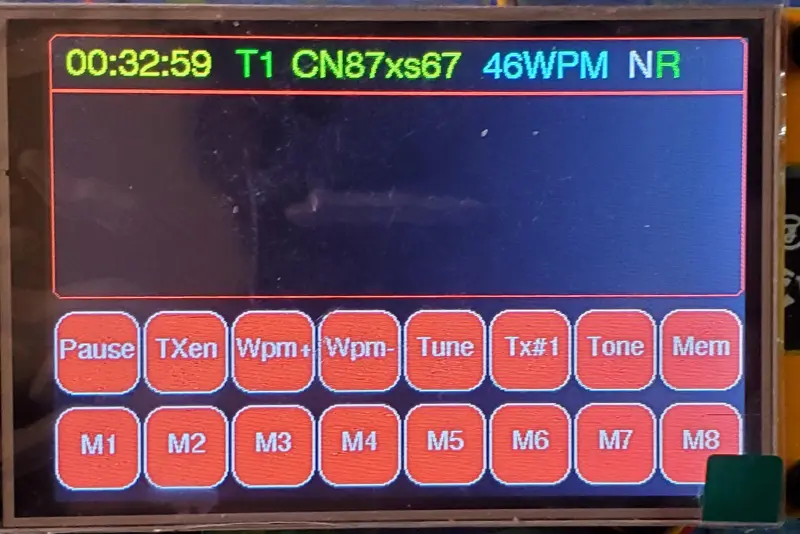
K3NG CW Keyer for ESP32 and Pico 2W
An advanced Morse code keyer based on the K3NG project, ported to ESP32 and Raspberry Pi Pico 2W hardware. It features integrated Bluetooth keyboard support, high-resolution TFT touch displays, and GPS-based location tracking, utilizing dual-core processing to maintain precise keying timing.
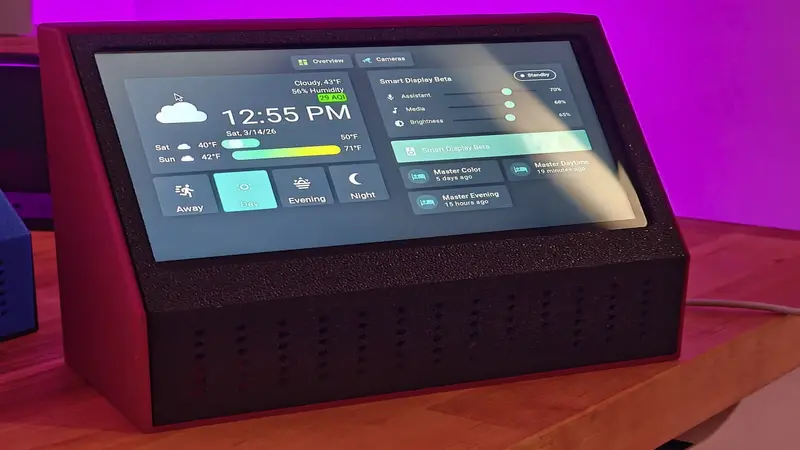
TuneoutDisplay
A countertop smart display project for Raspberry Pi 4B that integrates Home Assistant, voice assistant functionality, and high-quality audio playback. It features wake word detection via OpenWakeWord, MQTT auto-discovery for device entities, and a custom touch-to-scroll daemon for Wayland-based kiosk interfaces.
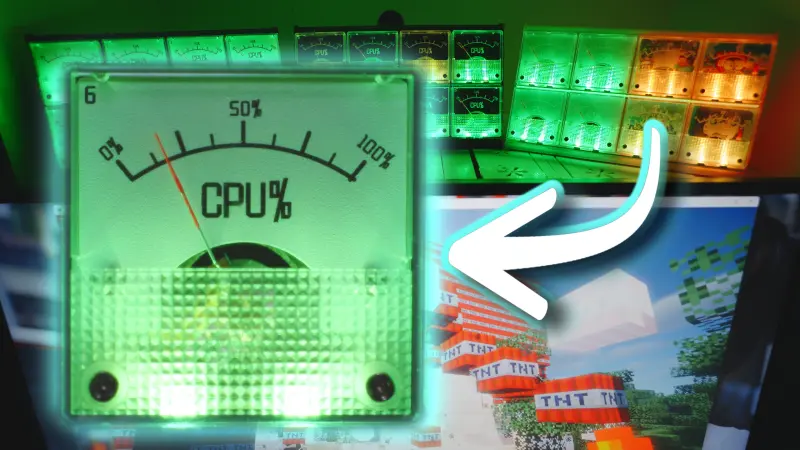
bbMonitor
An ESP32-based hardware performance monitor that visualizes computer system metrics through physical analog gauges and RGB lighting. The project leverages the Arduino framework and WebSockets to receive real-time data from a desktop companion app, providing a tactile and vintage-inspired dashboard for modern PC monitoring. It includes complete hardware design files, including PCB schematics and CAD drawings for the enclosure.
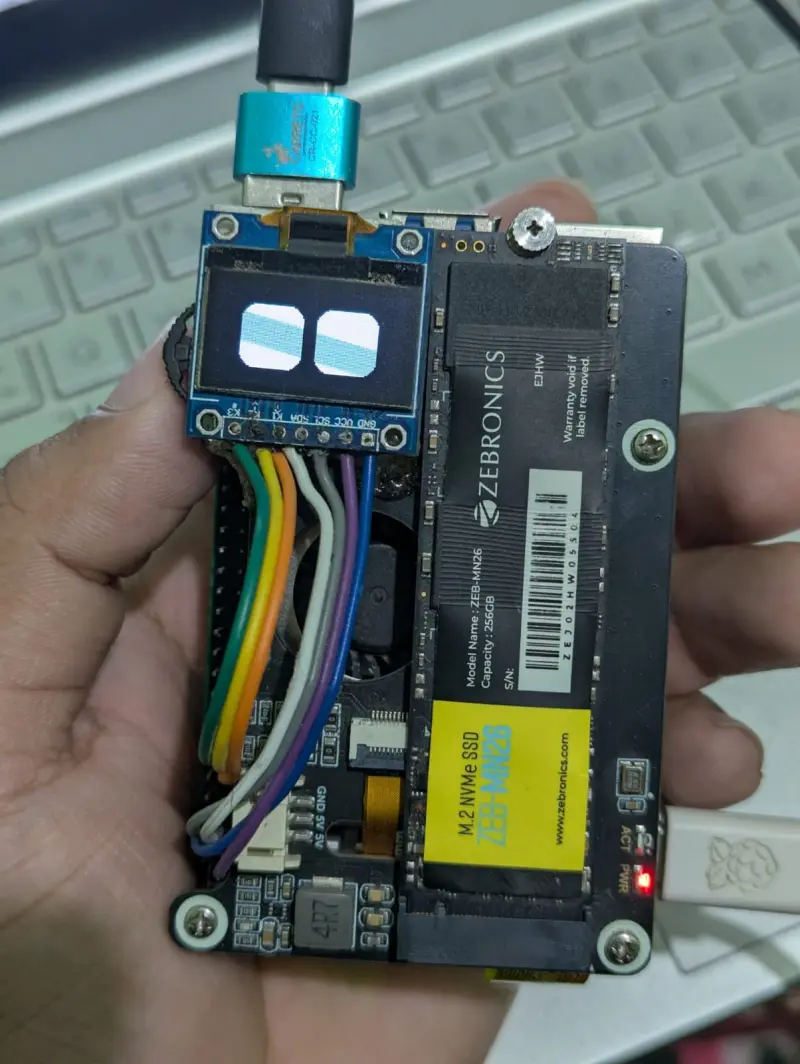
Multi-Modal AI Assistant on Raspberry Pi 5
A fully offline, edge AI assistant for the Raspberry Pi 5 integrating local LLM (Gemma 3), YOLOv8 object detection, and RAG-based memory. It features a hardware interface with an OLED display, physical buttons for control, and voice interaction via Vosk STT and espeak TTS.
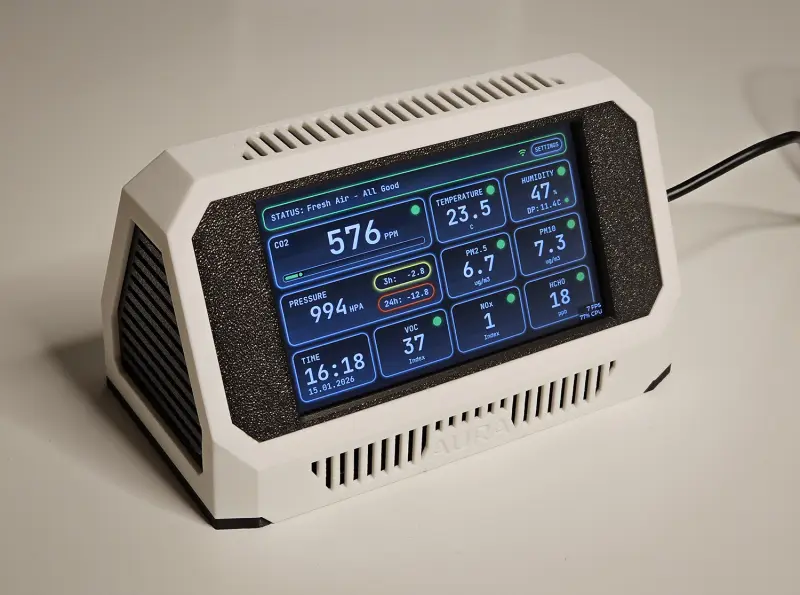
Project Aura
An open-source air-quality station based on the ESP32-S3, featuring a professional-grade sensor suite and a touch-enabled LVGL user interface. It integrates MQTT for Home Assistant discovery and provides a local web portal for configuration and telemetry monitoring.
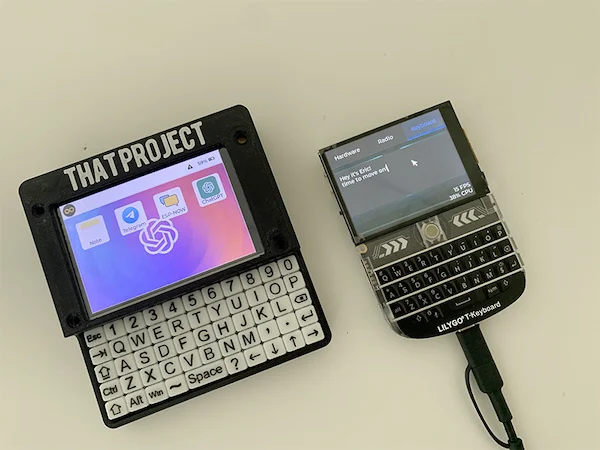
ESP32Berry
A comprehensive handheld OS-like application for the LilyGO T-Deck, leveraging LVGL for its user interface and LovyanGFX for high-performance display driving. It features a ChatGPT client, dynamic WiFi configuration, and system-level controls for audio and brightness.