ATtiny85 MNIST RNN EEPROM
This project implements a Recurrent Neural Network (RNN) on an ATtiny85 microcontroller to perform MNIST digit recognition with approximately 95% accuracy. It utilizes the device's internal 512-byte EEPROM to store quantized model weights and biases, enabling deep learning inference on a highly resource-constrained 8-bit platform.
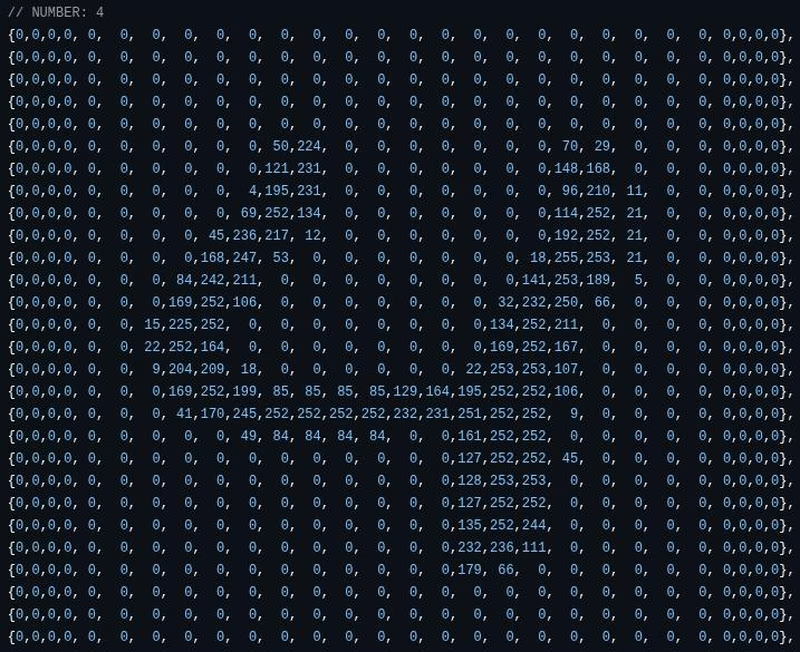
This project demonstrates the capability of running a lightweight Recurrent Neural Network (RNN) model on the ATtiny85 microcontroller. Despite the hardware’s significant constraints, the model achieves approximately 95% accuracy in recognizing handwritten digits from the MNIST dataset. The core of the implementation relies on utilizing the internal 512-byte EEPROM to store the model’s parameters, allowing the device to perform inference without exhausting its limited SRAM.
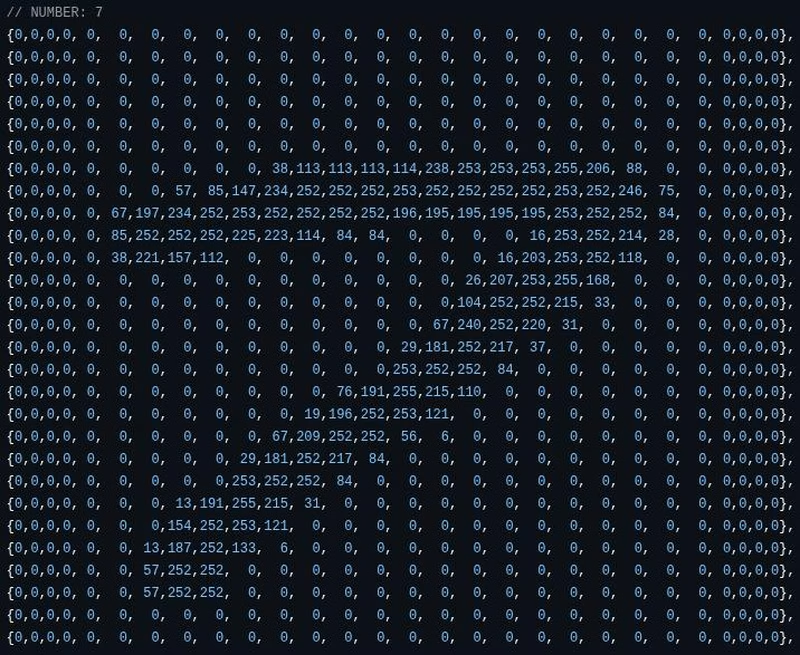
Implementation Workflow
The project is structured into three primary phases to prepare the hardware and execute the neural network.
First, the environment must be configured with the appropriate board support and libraries. This includes the ATTinyCore for Arduino IDE and a specialized NeuralNetwork library designed for embedded systems.
Second, the model parameters must be persisted. Because the ATtiny85 has very limited program memory and RAM, the pre-trained, int8-quantized RNN weights, biases, and layer configurations are written directly to the internal EEPROM. This is handled by a dedicated utility sketch that transfers the model from program memory (PROGMEM) to the non-volatile EEPROM storage.
Finally, the inference sketch is flashed to the device. This application reads the input pixel data, performs the matrix operations required by the RNN architecture, and outputs the predicted digit. In the provided example, the result is signaled via an onboard LED, such as the one found on a DigiSpark board.
Testing and Validation
To verify the legitimacy of the results, the model can be tested natively on a standard operating system. By cloning the repository and compiling the provided C++ source with g++, users can run the same inference logic against the full MNIST training and test CSV files. This environment allows for high-speed validation of the model’s accuracy before deploying it to the 8-bit hardware.
g++ -std=c++11 main.cpp -o main.o -O3 -march=native -ffast-math
./main.o
Visualizations
The internal workings and historical iterations of the model provide insight into how the network interprets digit data. These visualizations show the mathematical representations and activations within the layers as the RNN processes the input stream.
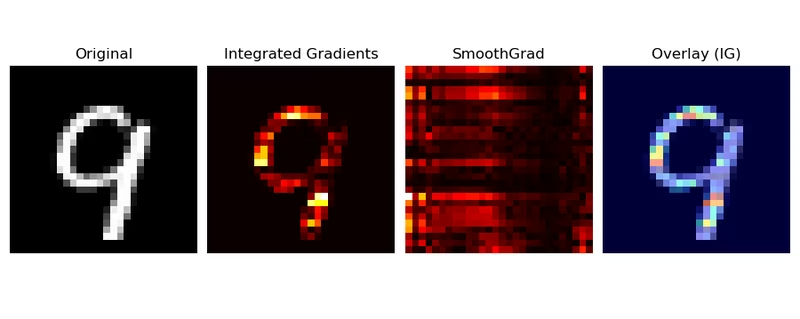
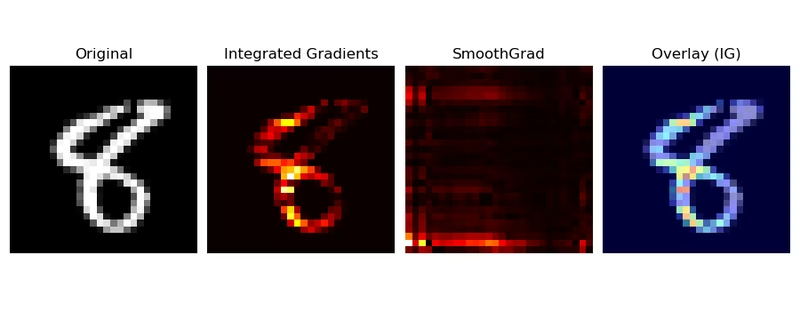
By combining efficient int8 quantization with clever use of the ATtiny85’s internal storage, this project serves as a powerful example of “TinyML”—bringing machine learning to the smallest class of microcontrollers.
Related Projects
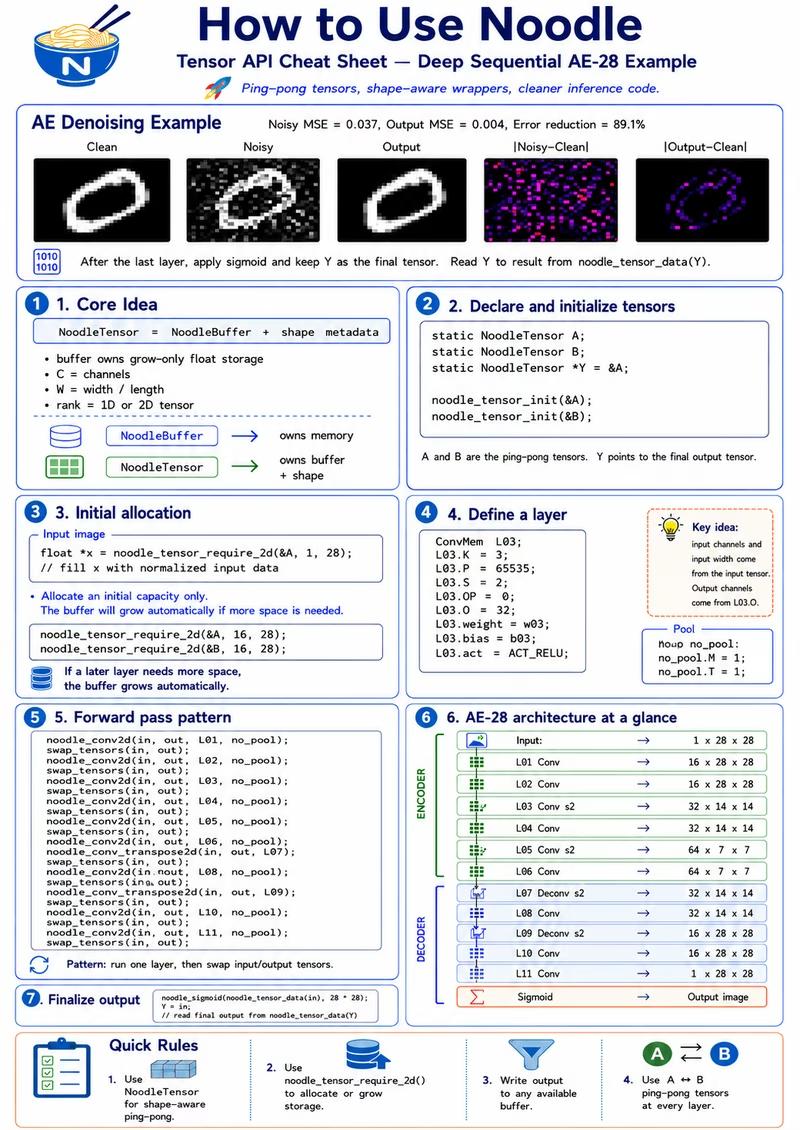
Noodle Neural Network Inference Engine
Noodle is a lightweight neural network inference engine designed to bring machine learning to resource-constrained microcontrollers like the Arduino Uno, Mega, and ESP32. By streaming activations and weights from external storage such as SD cards or flash memory, Noodle bypasses the typical RAM limitations that often prevent low-tier MCUs from running complex models.