NimBLE
nimble_1_10_0_tagFeatures
-
Full Bluetooth 5.4 specification compliance for both Host and Controller layers.
-
Support for Data Length Extension (DLE) enabling up to 251-byte packet sizes.
-
Concurrent operation of Broadcaster, Observer, Peripheral, and Central roles.
-
Scalable connection management supporting up to 32 simultaneous connections.
-
Security Manager Protocol (SMP) with support for Legacy and Secure Connections (SC).
-
Support for Advertising Extensions (AE) for increased data capacity in advertisements.
-
Support for Periodic Advertising for synchronized data broadcasting.
-
Physical layer support for 2M PHY and Coded PHY (Long Range) communications.
-
Integrated Bluetooth Mesh subsystem for many-to-many device networking.
-
NimBLE Porting Layer (NPL) for integration with various RTOS environments like FreeRTOS and RIOT.
-
Flexible Host-Controller Interface (HCI) implementation for standard interfacing.
-
Multiple transport options including UART, emSPI, and shared RAM for combined builds.
-
Comprehensive implementation of L2CAP, ATT, GAP, and GATT protocols.
-
Low-level radio drivers for Nordic nRF51, nRF52, nRF5340, and Renesas DA1469x.
-
Support for Nordic UART / Serial Port Emulation service (bleuart).
-
Privacy features including support for Resolvable Private Addresses (RPA).
Architecture
Apache NimBLE is architected as a modular Bluetooth Low Energy stack, strictly separating the Controller (Link Layer) from the Host layer. This separation allows for flexible deployments where the Host and Controller can run on the same MCU (using shared RAM transport) or on separate processors (using UART or SPI via HCI). The Controller manages real-time radio timing, hardware-specific transceiver drivers, and the Link Layer state machine, while the Host implements high-level protocols including L2CAP, the Attribute Protocol (ATT), and the Security Manager (SM).
A critical architectural component is the NimBLE Porting Layer (NPL). The NPL provides a set of OS-agnostic primitives for tasks, mutexes, semaphores, and callouts. This abstraction layer is what enables NimBLE to be highly portable, allowing it to function as the default BLE stack for Apache Mynewt while also being integrated into external ecosystems like the Espressif ESP-IDF, RIOT OS, and the Open IOT SDK.
Core Components
- Controller: Includes the Link Layer (LL) and hardware-specific drivers for Nordic and Renesas radios.
- Host: Implements GAP, GATT, ATT, L2CAP, and the Security Manager.
- Mesh: A complete Bluetooth Mesh implementation integrated into the Host subsystem.
- Transport: Provides HCI implementations over various physical and virtual interfaces.
- NPL: The abstraction layer facilitating portability across different operating systems.
Use Cases
This library is ideal for:
- Industrial Mesh Networking: Deploying large-scale, many-to-many device networks for industrial automation or smart lighting using the integrated Mesh subsystem.
- High-Density Sensor Hubs: Creating central devices that must maintain up to 32 simultaneous connections with peripheral sensors.
- Long-Range IoT: Utilizing Coded PHY support to extend the range of BLE communications in outdoor or obstructed environments.
- Secure Wearables: Implementing secure bonding and encrypted communications for consumer electronics using LE Secure Connections.
- Cross-Platform Development: Projects that require a consistent BLE API across different hardware architectures and RTOS environments.
- HCI Controller Emulation: Turning a supported SoC into a dedicated BLE controller for use with a Linux-based host running BlueZ.
Getting Started
To get started with NimBLE, it is recommended to use the Newt build tool provided by the Apache Mynewt project. Developers can begin by exploring the apps/ directory within the repository, which contains several reference applications. For example, bleprph provides a template for a basic peripheral, while btshell offers a command-line interface to exercise the stack’s full functionality.
For integration into non-Mynewt projects, developers should refer to the porting/ directory, which contains NPL implementations for various environments. Detailed documentation, including API references for GAP, GATT, and Mesh, is available through the Apache Mynewt documentation portal. Community support is primarily handled via the Apache Mynewt developer mailing list and Slack channel.
Related Projects (88)
View All 88 Projects →HijelHID_BLEMouse
HijelHID_BLEMouse is an ESP32 Bluetooth Low Energy (BLE) Human Interface Device (HID) mouse library built on NimBLE-Arduino. It provides both an interrupt-safe base layer for hardware sensor integration and a high-level macro layer for scripted automation and emulation. The library targets ESP32 microcontrollers with BLE radio support across Windows, macOS, Linux, Android, and iOS platforms.
Vibe Watch
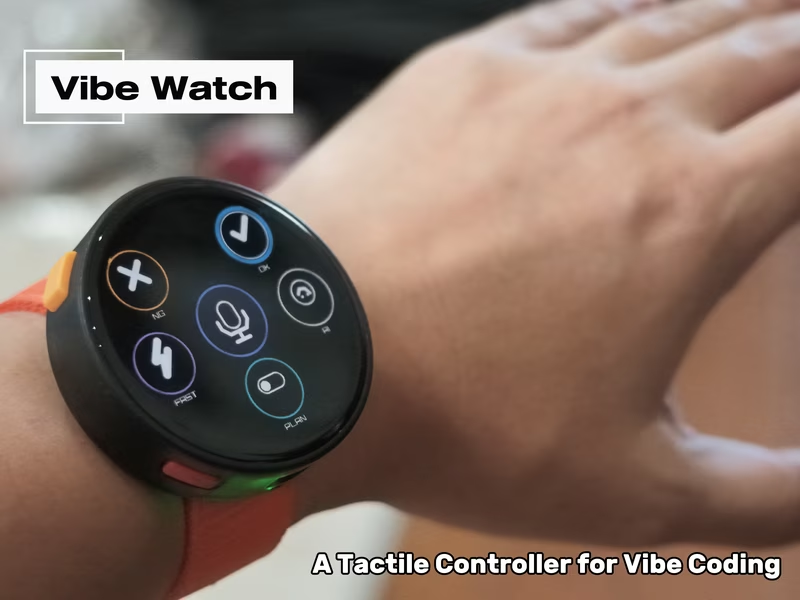
Vibe Watch is a wearable, tactile control surface for parallel AI-assisted coding built on the M5Stack StopWatch. Powered by an ESP32-S3, it leverages a 466 × 466 round touchscreen, tactile buttons, sound, and haptics alongside Bluetooth Low Energy to monitor up to six AI agent sessions and provide instant physical approval and voice controls.
ESP32-S3 Ebook
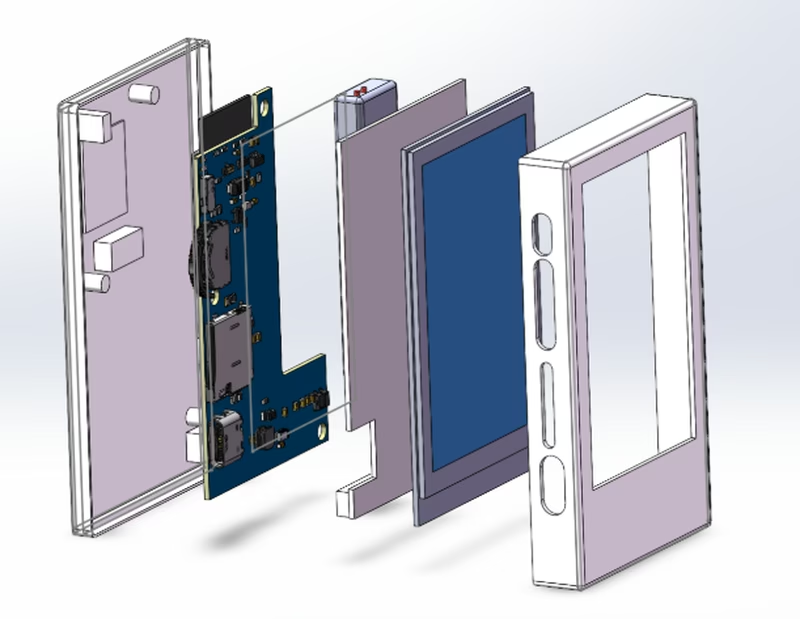
An advanced ESP32-S3-based e-book reader featuring a 2.7-inch E-ink display and a custom-built UI framework. It integrates Wi-Fi/BLE connectivity, audio playback via the ES8311 codec, and a diverse application ecosystem including a reader, notepad, and file manager.
Slave I
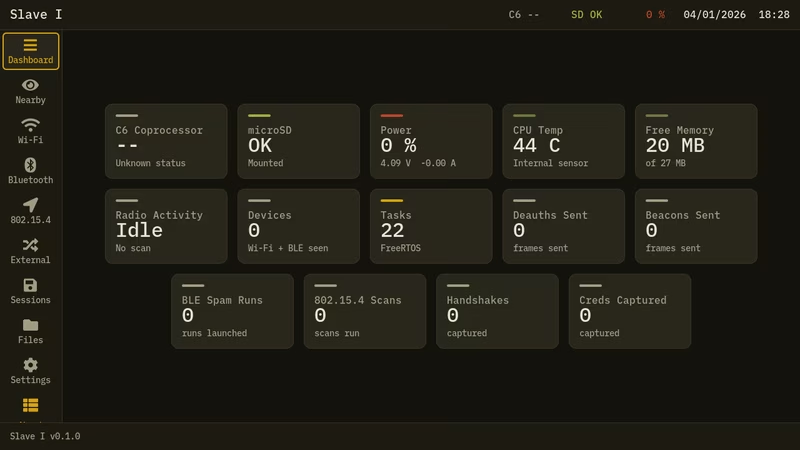
Slave I is a wireless research firmware for the M5Stack Tab5, utilizing a dual-chip architecture with the ESP32-P4 and ESP32-C6. It provides a toolkit for Wi-Fi, BLE, and 802.15.4 protocol analysis, built on FreeRTOS and featuring a sophisticated LVGL-based touch interface.
Midad
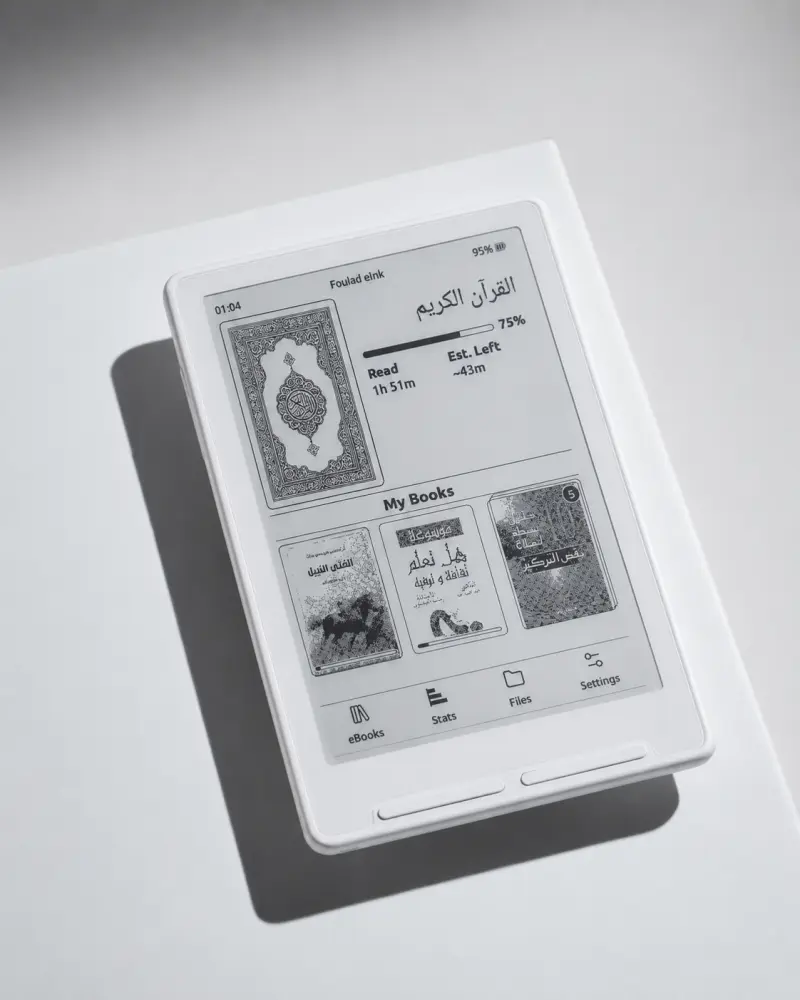
Midad is an open-source firmware for Xteink e-ink devices, specifically engineered for Arabic script and right-to-left languages. Running on the ESP32-C3 platform with FreeRTOS, it provides a comprehensive e-reading experience with advanced text shaping, OTA updates, and a unique suite of integrated applications like a gym logger and Tasbih counter.
CyberKey
CyberKey is a biometric TOTP authenticator built for the M5StickC Plus 2 (ESP32) that types 2FA codes over Bluetooth. By combining a fingerprint sensor with encrypted storage and BLE HID emulation, it provides a seamless and secure way to enter one-time passwords without a phone or manual copy-pasting.
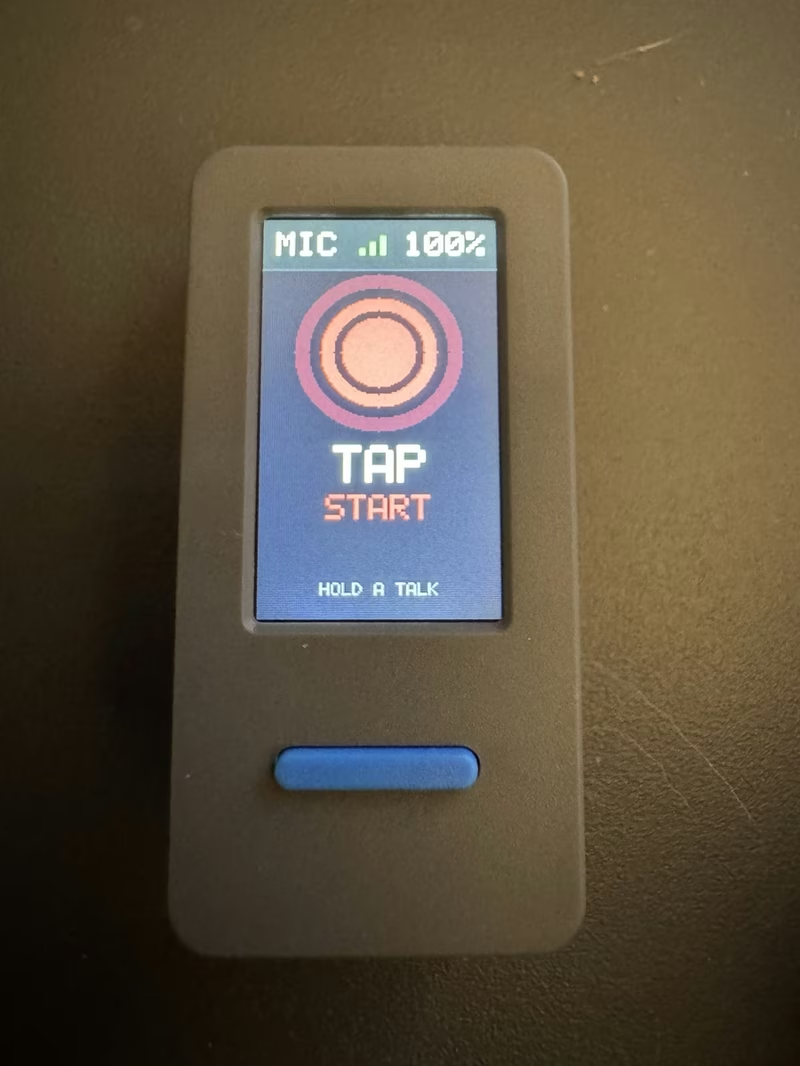
m5mic
A high-performance microphone solution for the M5StickS3, featuring Rust-based firmware and companion applications for macOS and iOS. It supports both plug-and-play USB Audio Class functionality and wireless streaming via WebSockets or Bluetooth LE, utilizing the ESP32-S3 and an ES8311 audio codec.
FlightPortrait Firmware
FlightPortrait is an open-source firmware for an ESP32-S3-powered 13.3" color e-ink frame that visualizes local aviation traffic. Built using the ESP-IDF framework, it leverages FreeRTOS and NimBLE to provide a secure, low-power display solution that retrieves images via HTTPS. The project emphasizes a "simple by design" approach, featuring a robust state machine for provisioning, polling, and deep sleep cycles to maximize battery life.